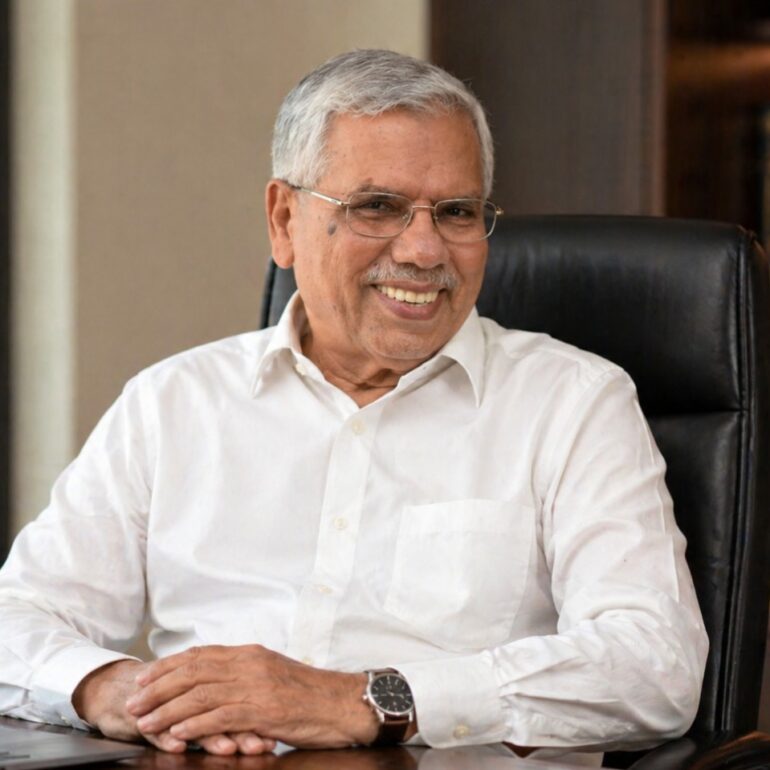

Mohammed Hisamuddin
Founder & CEO of Entri
Mohammed Hisamuddin is the Founder & CEO of Entri, a leading vernacular language learning platform in India. Entri has garnered over 1 million students and aims to reach 5 million students in the next year. The platform offers resources for public exam preparation in various regional languages, including Hindi, Tamil, Kannada, and Telugu. Hisamuddin has previously co-founded SMSGYAN, which grew to over 10 million users and answered over 100 million queries. He is also involved in various philanthropic efforts, such as volunteering for the nonprofit Kasaracode, which focuses on nurturing coders in his hometown of Kasargod, Kerala.
Key Facts
Full Name: Mohammed Hisamuddin
Place: Kasargod, Kerala, India
Title: Founder & CEO, Entri
Occupation: Entrepreneur, EdTech Founder
Known For: Building vernacular learning platforms, scaling Entri, co-founding SMSGYAN
The Language Divide
For decades, India’s education system has been shaped by an unspoken assumption, serious learning happens in English. From engineering textbooks to competitive exam coaching, access has often depended less on ability and more on language fluency. This gap becomes stark in Tier 2 and Tier 3 India, where millions of students navigate ambition through a second language.
It is this structural mismatch that Mohammed Hisamuddin set out to address. His work with Entri is rooted not in disruption for its own sake, but in correcting a long-standing imbalance, making high-quality learning accessible in the languages people are most comfortable with.
Early Life and Origins
Hisamuddin’s story begins in Kasargod, a district in northern Kerala known for its linguistic diversity as much as its geographic distance from the state’s economic hubs. Growing up in such an environment, exposure to multiple languages and cultural contexts was part of everyday life.
While detailed accounts of his early education remain limited in public sources, what emerges consistently is a strong inclination toward technology and problem-solving. Unlike founders who come from elite institutions or established startup ecosystems, Hisamuddin’s trajectory reflects a more grounded entry into entrepreneurship, shaped by observation rather than access.
Kasargod also represents a broader reality of Kerala’s migration economy, where education is often seen as the primary route to upward mobility. This context would later inform his understanding of the gaps in accessible, job-oriented learning.
The First Break: SMSGYAN
Before Entri, there was SMSGYAN, an earlier venture that would play a defining role in shaping Hisamuddin’s entrepreneurial instincts. At a time when smartphones were not yet ubiquitous, SMS-based information services filled a critical gap.
SMSGYAN allowed users to query information through simple text messages, effectively creating a low-tech, high-impact solution for information access. The platform reportedly scaled to over 10 million users and handled more than 100 million queries, a significant achievement in pre-app India.
The success of SMSGYAN was not just about numbers. It demonstrated a pattern that would later define Hisamuddin’s approach, building for underserved users with simple, scalable solutions. It also offered a key insight: access is often more valuable than sophistication.
However, as mobile internet penetration increased and user behavior shifted toward apps, the limitations of SMS-based platforms became evident. The transition from SMSGYAN to Entri was not merely a pivot, but an evolution aligned with changing technological realities.
The Birth of Entri
Entri was founded in 2015 in Kochi, at a time when India’s EdTech sector was beginning to gain momentum, but remained largely English-centric. The initial focus was narrow but strategic, providing study materials for Kerala Public Service Commission (PSC) exams in Malayalam.
This was a calculated entry point. Government exams in Kerala attract a massive number of aspirants, many of whom prefer or require content in Malayalam. By focusing on a specific segment with a clear demand, Entri was able to build early traction without competing directly with larger national platforms.
The choice of vernacular was not incidental. It was central to the product. Entri’s early success suggested that the problem was not a lack of demand for learning, but a lack of accessible formats.
Scaling Entri
From its Malayalam beginnings, Entri expanded into multiple Indian languages, including Hindi, Tamil, Kannada, and Telugu. This multilingual approach positioned the platform as more than a regional player, it became a pan-India vernacular EdTech solution.
The platform now offers coaching for over 100 government exams, covering a wide spectrum of aspirants. With more than one million learners on the platform and an ambition to reach five million, Entri’s growth reflects both product-market fit and the scale of the opportunity.
The business model appears to combine free and paid offerings, a common approach in EdTech, allowing users to experience value before committing financially. This is particularly important in price-sensitive markets where trust must be earned gradually.
What differentiates Entri is not just content availability, but contextual relevance. Courses are designed not only in regional languages but also tailored to specific exam patterns and regional nuances.
Global Recognition and Ecosystem Support
Entri’s inclusion in LearnLaunch, a Boston-based EdTech accelerator, marked a significant milestone. It was reportedly the first Indian startup to enter the program, signaling international recognition of its approach.
Participation in initiatives like FBStart and AWS EdStart further indicates that Entri has been able to align itself with global technology ecosystems. These programs typically provide access to infrastructure, mentorship, and visibility, all critical for scaling.
While such affiliations do not guarantee success, they often serve as validation of a startup’s potential and credibility. For a company operating in a relatively underrepresented segment of EdTech, this recognition is particularly noteworthy.
Vision: Democratizing Education
At its core, Entri is built around a simple mission, making education accessible in the language of the learner. In a country where internet growth is increasingly driven by non-English users, this vision aligns with broader digital trends.
India’s vernacular internet user base has been expanding rapidly, driven by affordable data and smartphone penetration. Yet, content quality and depth in regional languages often lag behind.
By focusing on this gap, Entri positions itself not just as a test preparation platform, but as part of a larger movement toward inclusive digital education. The goal of reaching five million learners reflects both ambition and the scale of unmet demand.
Leadership and Philosophy
Hisamuddin’s leadership style appears to be shaped by pragmatism rather than ideology. His ventures, from SMSGYAN to Entri, share a common thread, solving real problems with accessible solutions.
There is a noticeable absence of hyper-scaling rhetoric often associated with startup culture. Instead, the focus seems to be on steady growth, product relevance, and user trust.
This approach may be particularly suited to the EdTech sector, where long-term engagement matters more than rapid acquisition. Building a learning platform requires not just attracting users, but retaining them through consistent value.
Social Impact and Philanthropy
Beyond business, Hisamuddin has been involved in initiatives such as Kasaracode, a nonprofit focused on nurturing coders in his hometown of Kasargod. While details of the scale and structure of this initiative are limited in public documentation, it reflects a broader commitment to community development.
Such efforts are aligned with his work in education, extending the idea of access beyond formal learning platforms. In regions like Kasargod, where opportunities in technology are still emerging, such initiatives can have a meaningful impact.
Challenges and Market Context
Entri operates in a highly competitive EdTech market dominated by players like Byju’s, Unacademy, and a growing number of regional platforms. While its vernacular focus offers differentiation, it also presents unique challenges.
Monetization in vernacular markets can be more complex, given lower average spending capacity. Retention is another challenge, as users often switch between platforms based on price and perceived value.
There is also the question of content quality at scale. Expanding into multiple languages requires not just translation, but localization, a process that demands both expertise and resources.
Despite these challenges, the segment itself is expanding. As more users come online in regional languages, the opportunity for platforms like Entri continues to grow.
Future Outlook
Looking ahead, Entri’s trajectory will likely depend on its ability to deepen engagement and expand its offerings beyond test preparation. Skill development, job-oriented courses, and potentially global education pathways could form the next phase of growth.
There is also scope for leveraging data and personalization to enhance learning outcomes. As the platform scales, maintaining quality while expanding reach will remain a critical balancing act.
For Hisamuddin, the long-term vision appears to extend beyond building a successful startup. It is about reshaping how education is accessed and consumed in a linguistically diverse country.
Reflection
Mohammed Hisamuddin’s journey is less about disruption and more about inclusion. By focusing on vernacular education, he has tapped into a segment that is both underserved and expansive. Entri’s growth reflects a broader shift in India’s digital landscape, where language is no longer a barrier but a gateway.
In an ecosystem often dominated by scale-first narratives, his approach offers a quieter, more grounded alternative. It is an outstanding reminder that in a country like India, the most meaningful innovations are often those that bring opportunity closer to where people already are.