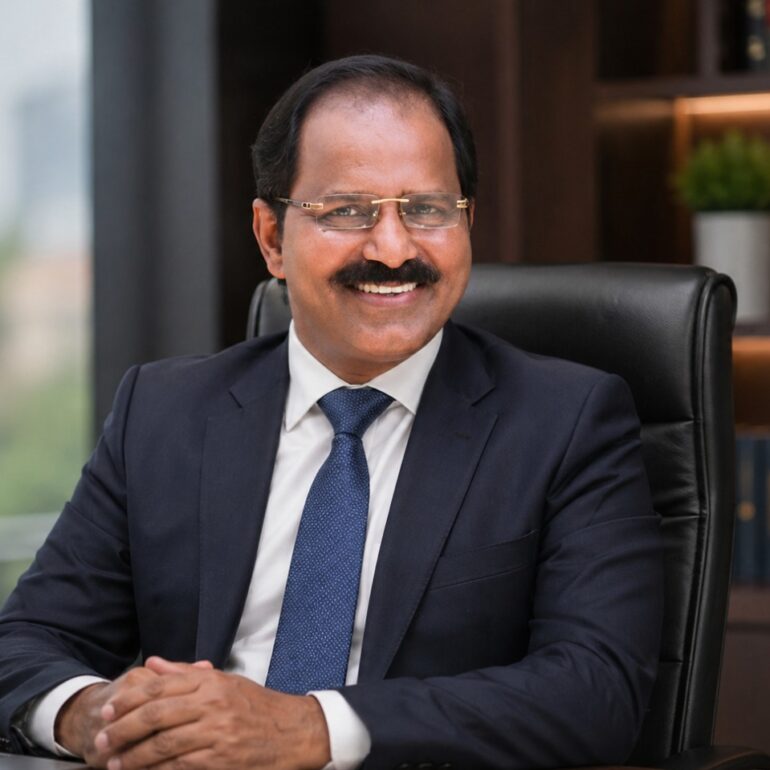

Shijo K. Thomas
Founder and CEO of Oxygen Group
Shijo K Thomas is a leading businessman hailing from Kerala in India. He is the founder and CEO of Oxygen Group, the company that operates a chain of electronics retail stores by the name of ‘Oxygen Digital Shop’. Oxygen stores span all the major cities south of Kerala with their wide presence and ever-increasing number of stores. The brand has a loyal following of customers due to their sincere efforts in providing the best buying experience.
Key Facts
Name: Shijo K Thomas
Founder: Oxygen Digital
A Store Full of Signals
By late evening, the showroom is still buzzing. Customers move between smartphone counters and laptop displays, negotiating, comparing, asking the same question in different ways: what’s the best choice? Sales executives respond with practiced patience, translating specs into decisions. In this choreography of retail, every interaction carries weight. For Shijo K. Thomas, this is where the business is truly built, not in strategy decks, but in moments of trust between seller and buyer. The rise of Oxygen Digital is not just about expansion or revenue. It is about understanding a customer who is informed yet uncertain, aspirational yet cautious. It is an outstanding story of how retail, when done right, becomes less about products and more about credibility.
A Reluctant Entrepreneur
Shijo K. Thomas did not begin with a clear blueprint to build a retail chain. His early life in Kanjirappally, a town not known for spawning large-scale entrepreneurs, was rooted in a middle-class environment where stability mattered more than risk.
There was no inherited business ecosystem to step into, no ready-made network of capital or mentorship. Like many from similar backgrounds in Kerala, his early trajectory leaned toward employment rather than entrepreneurship.
The turning point came not from ambition alone, but from circumstance and exposure. Early work experiences introduced him to the emerging world of computers and technology at a time when India’s digital economy was still in its infancy.
What he saw was not a booming market, but a gap. And that gap, uncertain and underdeveloped as it was, became an entry point.
Starting with limited capital, the decision to move into business was less about confidence and more about conviction built slowly through observation.
The First Bet: Ozone Systems
In the late 1990s, Shijo founded Ozone Systems, a venture focused on assembling and selling computers. It was a bold move for its time, but not in the way startup narratives often frame boldness today.
The Indian market for personal computers was still limited. Demand was concentrated in institutions, offices, and a small segment of early adopters. For most households, computers were not yet a necessity.
This created a paradox. The opportunity existed, but the market was not ready.
Ozone Systems operated within this tension. Sales were slow, margins uncertain, and growth inconsistent. There were periods when the business struggled to maintain momentum.
Yet this phase was critical. It provided something more valuable than early success, it offered clarity.
Shijo learned how customers approached technology, what held them back, and what eventually convinced them to buy. He also learned the operational realities of the business, inventory risks, supplier dependencies, and the importance of after-sales service.
These lessons would later define Oxygen’s strategy.
Reading the Market Before It Moves
The early 2000s marked a transition in India’s technology landscape. Laptops began replacing desktops. Mobile phones evolved from communication tools into computing devices. Connectivity improved. Consumption patterns shifted.
Many businesses reacted to these changes. Shijo anticipated them.
The move from assembling computers to building a retail-focused model was not immediate, but it was deliberate. He recognized that the future would not be driven by individual product categories, but by ecosystems.
Customers would not just buy a device. They would buy into a lifestyle built around technology. This insight led to the conceptual shift that would eventually become Oxygen Digital.
Building Oxygen: From Store to Brand
The launch of Oxygen Digital Shop marked a new phase.
Unlike Ozone Systems, which was product-driven, Oxygen was designed as a customer-facing brand. The emphasis moved from selling devices to creating a retail experience.
Expansion followed steadily. Stores opened across Kerala, not just in major cities but also in tier-2 and tier-3 markets where organized electronics retail was still underdeveloped.
This strategy mattered. While larger national chains focused on metros, Oxygen built presence where competition was less structured but demand was growing.
Brand-building became central. Consistent store layouts, product availability, and customer engagement created familiarity. Over time, Oxygen evolved from a store into a recognizable name. Trust, more than pricing, became its differentiator.
Scaling Challenges and Turning Points
Growth did not come without friction. There were years when expansion outpaced profitability. Retail, especially electronics, operates on thin margins and high inventory risk. Unsold stock depreciates quickly. Price fluctuations can erode earnings overnight.
Managing cash flow became critical. Hiring and training staff across multiple locations introduced complexity. Maintaining consistency in service quality across stores was an ongoing challenge.
The turning points came not from a single breakthrough, but from incremental improvements.
Better supplier relationships ensured product availability. Improved inventory management reduced losses. Stronger team structures allowed scaling without losing operational control. Over time, the model stabilized.
Why Oxygen Worked
Oxygen’s success lies in a combination of strategic choices rather than a single defining advantage.
Location strategy played a key role. By expanding into smaller towns, the brand captured demand that was underserved by national players.
The product mix evolved continuously. From desktops to laptops, from feature phones to smartphones, and eventually into a broader electronics ecosystem, each shift reflected changes in consumer behavior.
Partnerships with major technology brands strengthened credibility. Being an authorized retailer ensured access to inventory and pricing support.
The integration of offline and online channels became increasingly important. While e-commerce disrupted pricing expectations, Oxygen responded by emphasizing immediacy, in-store experience, and service support.
In a market where customers often research online but purchase offline, this hybrid approach proved effective.
Leadership Philosophy
Shijo K. Thomas’s approach to leadership is grounded in practical realities rather than abstract frameworks. He places significant emphasis on trust, not just as a customer-facing value but as an internal principle.
Decisions are often guided by long-term sustainability rather than short-term gains. Risk-taking is present, but measured.
Expansion is pursued with caution, ensuring that operational systems can support growth.
Team-building is another cornerstone. Retail is a people-driven business. Sales staff are not just employees, they are the interface between the brand and the customer. Investing in training and culture becomes essential.
Brand, Culture, and Market Position
Oxygen’s positioning within Kerala’s retail landscape is distinct.
It operates as a regional powerhouse rather than a national chain. This allows it to remain closer to customer preferences while maintaining scale.
Branding efforts, including marketing campaigns and endorsements, have reinforced visibility. But the core strength remains experiential.
Customers associate Oxygen with reliability. In a category where products are often identical across retailers, perception becomes the differentiator.
The emotional connection, built through consistent service, creates loyalty that pricing alone cannot.
Beyond Retail
The next phase for Oxygen Digital will likely involve both geographic and strategic expansion. Moving beyond Kerala presents opportunities but also introduces new complexities. Each market has its own dynamics.
Emerging technology categories, including smart home devices, AI-driven products, and possibly robotics, offer growth potential. At the same time, digital integration will become non-negotiable.
Retail is no longer purely physical. It is an ecosystem. Oxygen’s ability to navigate this transition will determine its long-term trajectory.
The Idea of Oxygen
Shijo K. Thomas represents a specific kind of entrepreneur, one shaped not by rapid disruption, but by steady, disciplined execution.
His journey reflects the realities of building a business in a market that evolves continuously but rewards consistency.
Oxygen Digital is not just a retail chain. It is a case study in timing, in understanding when to enter, when to pivot, and when to scale.
More importantly, it is about trust. In a category where products change every year, trust remains the only durable asset.
That is what makes this story outstanding, not because it is dramatic, but because it is precise, grounded, and quietly transformative.