
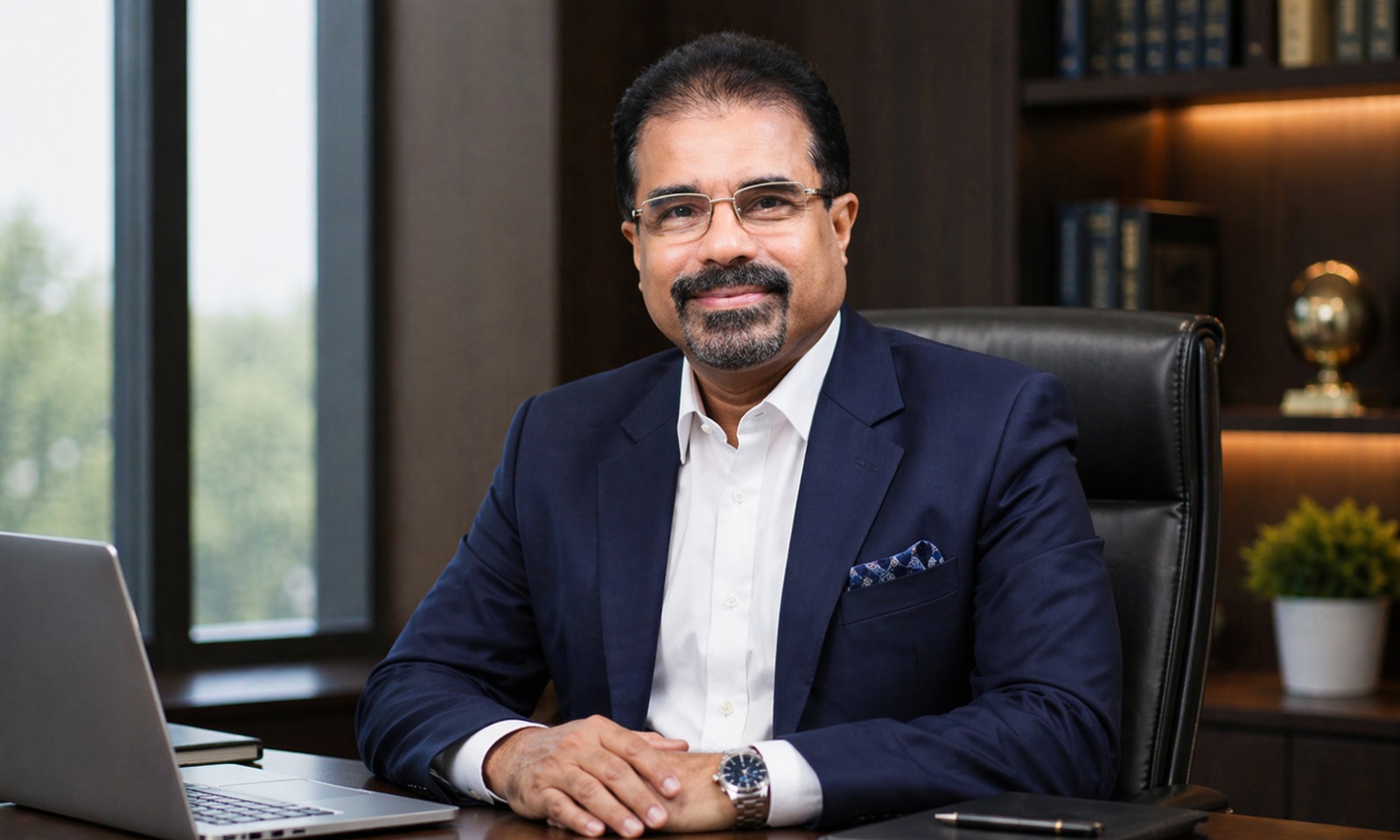
Dr. K. G. Alexander
Founder of Baby Memorial Hospital
Dr Alexander K G is a General Physician, Chairman and Managing Director at Baby Memorial Hospital. He has 44 years of experience and has worked as an expert in different cities in India. He has contributed to handling numerous complex medical cases in several hospitals. He is known for his attention to accurate diagnosis and treating patients empathetically. The speciality interests of Dr Alexander include comprehensive management of medical disorders. He did his MBBS in 1980 and MD Internal Medicine in 1985. He has also participated in research work and various workshops under the Internal Medicine department and published many papers. At the centre of that transformation stands Dr. K. G. Alexander, a physician who chose to extend his role beyond diagnosis and treatment into institution-building. Over nearly four decades, he has shaped one of North Kerala’s most prominent private healthcare networks, navigating the complex intersection of medicine, management, and public trust. His journey reflects an outstanding example of how doctor-led enterprises can influence both the availability and the quality of care in a region.
Key Facts
Full Name: Dr. K. G. Alexander
Place: Kerala, India (Kozhikode context)
Title: Chairman & Managing Director, Baby Memorial Hospital
Occupation: Physician, Healthcare Entrepreneur
Known As: Founder of Baby Memorial Hospital, pioneer in private healthcare in North Kerala
The Beginning: A Doctor with a Vision
Dr. K. G. Alexander’s professional foundation is firmly rooted in clinical medicine. Trained with an MBBS, completed in 1980, followed by an MD in Internal Medicine in 1985, he entered the healthcare system at a time when Kerala’s public infrastructure was relatively strong but unevenly distributed in terms of advanced care.
His early years as a physician exposed him to a recurring pattern. Patients in North Kerala often faced delays in diagnosis and treatment, not because of lack of medical expertise, but due to limited institutional capacity. Specialized care, advanced diagnostics, and intensive treatment facilities were concentrated in a few urban centers, forcing patients to travel long distances.
It is within this context that his stated vision, often described in institutional narratives as providing “affordable, accessible, and quality healthcare,” begins to take shape. Unlike many entrepreneurs who enter healthcare from business backgrounds, Alexander’s entry point was clinical observation. The gaps he identified were not theoretical; they were experienced daily in patient interactions.
The Birth of Baby Memorial Hospital
In 1987, Dr. Alexander founded Baby Memorial Hospital in Kozhikode with a modest capacity of around 50 beds. The hospital was named in memory of his father, K. C. Varghese, known as “Baby,” embedding a personal dimension into what would become a large institutional project.
At the time, private healthcare in Kerala was still in a relatively early phase of organized development. While small nursing homes and clinics existed, large multi-speciality hospitals were limited. The decision to establish such a facility in Kozhikode was both ambitious and context-driven.
The early years would have required navigating capital constraints, building a team of doctors and nurses, and, perhaps most critically, earning patient trust. In healthcare, reputation accumulates slowly. A hospital’s credibility is built case by case, outcome by outcome.
What distinguished the initiative was not just the infrastructure, but the attempt to integrate multiple specialties under one roof. This model, now common, was still evolving in Kerala during the late 1980s.
Building an Institution
From its initial footprint, Baby Memorial Hospital expanded steadily over the decades. Today, it is widely recognized as a large multi-speciality hospital with several hundred beds, offering services across a wide spectrum of medical disciplines.
The growth trajectory reflects both demand and deliberate scaling. Departments were added incrementally, critical care units were developed, and advanced diagnostic facilities were introduced. Over time, the hospital expanded beyond its original campus into a broader network, including facilities in other parts of Kerala such as Kannur.
Accreditations, including NABH (National Accreditation Board for Hospitals & Healthcare Providers), have been associated with the institution, indicating adherence to standardized quality protocols. However, as with many healthcare organizations, accreditation is part of a broader process rather than a definitive marker of quality.
What is more telling is the hospital’s ability to handle increasing patient volumes while maintaining operational continuity. Scaling a hospital is not merely about adding beds. It involves complex coordination across clinical departments, supply chains, and administrative systems.
Leadership Philosophy
Dr. Alexander’s leadership appears to be shaped by his dual identity as both physician and administrator. This duality is central to understanding the institution’s trajectory.
In many corporate hospital chains, management and clinical leadership are often separated. In contrast, founder-led hospitals like Baby Memorial Hospital tend to retain a stronger integration between medical and managerial decision-making.
His approach emphasizes affordability alongside quality, a balance that is particularly relevant in Kerala, where patients are both price-sensitive and highly informed. Delivering advanced care at accessible price points requires operational efficiency, cross-subsidization, and careful resource allocation.
There is also a focus on ethical practice, at least as articulated in institutional messaging. In a sector often scrutinized for over-medicalization and cost escalation, maintaining trust becomes a strategic as well as moral imperative.
Innovation and Healthcare Impact
Over time, the hospital has introduced specialized units, including critical care services and departments catering to complex medical needs. While specific timelines for each innovation are not always consistently documented in public sources, the overall direction points toward increasing specialization.
The development of intensive care units, advanced imaging facilities, and surgical capabilities has contributed to elevating the standard of care available in the Malabar region. This, in turn, reduces the need for patients to travel to cities like Kochi or Chennai for certain treatments.
In addition to clinical services, the institution has been involved in medical education, including nursing and allied health sciences. Such initiatives serve a dual purpose. They address workforce shortages while also creating a pipeline of trained professionals aligned with the hospital’s systems.
Recognition and Influence
Dr. K. G. Alexander has received recognition within healthcare and business circles, though the exact list of awards and honors varies across sources. Mentions of accolades such as “Healthcare Personality of the Year” appear in institutional narratives, while references to national-level recognitions like the B. C. Roy Award are less consistently documented and should be approached with caution unless confirmed by authoritative records.
Beyond awards, his influence is more clearly visible in the institutional footprint he has created. In North Kerala, Baby Memorial Hospital is often cited among the key private healthcare providers that have shaped patient access and expectations.
He has also been associated with professional and industry bodies, contributing to discussions around healthcare delivery, though detailed documentation of these roles is limited in publicly accessible sources.
Challenges and Expansion
The growth of private healthcare institutions in Kerala has been accompanied by increasing competition, regulatory oversight, and rising operational costs. Hospitals must navigate pricing pressures, insurance dynamics, and evolving patient expectations.
For founder-led institutions, scaling introduces additional complexity. Systems that work at a smaller scale often require restructuring as the organization grows. Decision-making becomes less centralized, and professional management layers need to be introduced.
In recent years, parts of Kerala’s private healthcare sector have seen interest from private equity investors. While there have been reports of investment activity involving the Baby Memorial group, details vary and should be interpreted cautiously unless confirmed through official disclosures.
What is clear is that expansion, whether through new facilities or service lines, requires significant capital and strategic alignment. Balancing growth with financial sustainability remains a constant challenge.
The Man Behind the Institution
Public portrayals of Dr. Alexander suggest a disciplined and low-profile personality, more focused on operational continuity than public visibility. This aligns with a broader pattern among healthcare founders in Kerala, where institutional identity often takes precedence over individual branding.
His continued association with clinical practice, particularly in internal medicine, reinforces his identity as a doctor first. This is not merely symbolic. It influences how decisions are framed, often with a stronger emphasis on patient outcomes.
Philanthropic activities, including health camps and subsidized treatments, are part of the hospital’s outreach, though detailed, independently verified data on the scale of such initiatives is limited in public reporting.
The Road Ahead
Today, Baby Memorial Hospital occupies a significant position in Kerala’s private healthcare landscape, particularly in the Malabar region. Its growth from a 50-bed facility in 1987 to a large multi-speciality network reflects both institutional ambition and sustained demand.
Dr. K. G. Alexander’s journey represents a model of doctor-led entrepreneurship that continues to be relevant in India. Unlike purely corporate healthcare systems, such models often retain a closer connection to clinical priorities, even as they scale.
Looking ahead, the healthcare sector in Kerala faces new challenges, digital health integration, rising costs, and increasing patient expectations. Institutions like Baby Memorial Hospital will need to adapt to these shifts while maintaining the trust they have built over decades.
In the broader context, his work contributes to a larger narrative, one where regional healthcare ecosystems evolve through a combination of public infrastructure and private initiative. It is a story of incremental change rather than disruption, and in that steady progression lies its outstanding significance.