Anjali Menon
Indian film director and screenwriter
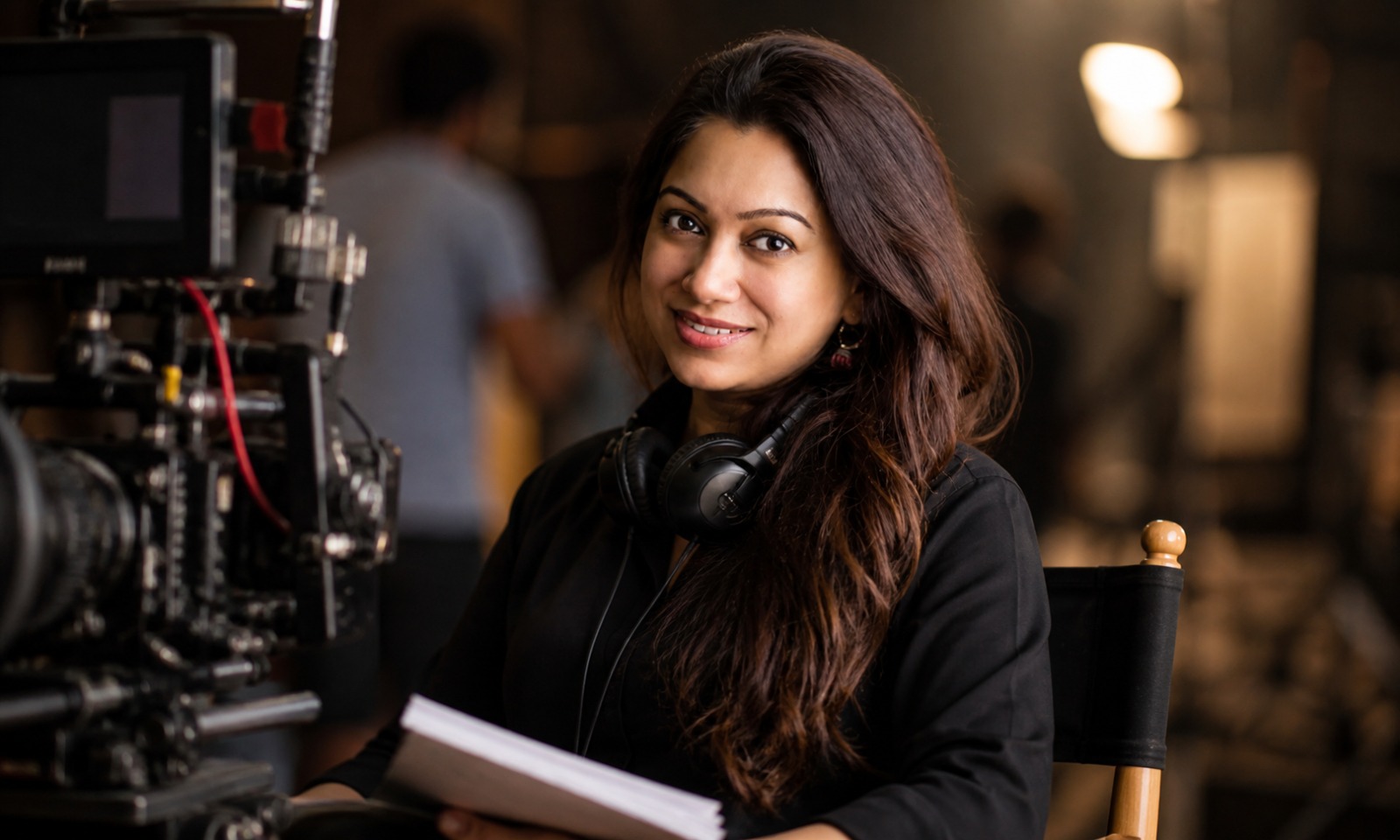
Anjali Menon is an Indian film director and screenwriter who predominantly works in Malayalam cinema. Anjali has won international, national and state awards for her work and is best known for her feature films Manjadikuru, Kerala Cafe (Happy Journey), Ustad Hotel, Bangalore Days, Koode and Wonder Women. She is counted among the change agents in Indian cinema whose work gets attention from the audience and the critics. Anjali is the founder of Little Films a film company based in Mumbai and Kerala that produces fiction and non-fiction works. Anjali is one of the founders of the Women in Cinema Collective (WCC), an organization that focuses on gender equality in the Malayalam film industry. She is the board member of Mumbai Academy of the Moving Image.
Key Facts
Full Name: Anjali Menon
Place: Kozhikode, Kerala, India
Occupation: Film Director, Screenwriter, Producer
Known For: Manjadikuru, Kerala Cafe (Happy Journey), Ustad Hotel. Bangalore Days, Koode, Wonder Women
Other Roles: Founder of Little Films; Co-founder of Women in Cinema Collective; Board Member of Mumbai Academy of the Moving Image
There is a moment in Bangalore Days where three cousins stand on a terrace, looking out at a city that promises reinvention. It is a familiar image, migration, aspiration, dislocation, yet in Anjali Menon’s hands, it feels deeply personal. The scene is not about spectacle; it is about emotional geography, how people carry their homes within them. This is the core of Menon’s cinema. She builds worlds that feel lived-in, where relationships unfold with quiet authenticity rather than dramatic excess.
Her storytelling rarely announces itself loudly. Instead, it lingers, allowing characters to breathe, to falter, to evolve. That ability to create emotional continuity is what has made her one of Malayalam cinema’s most distinct contemporary filmmakers.
Early Life and Formation
Born in Kozhikode and raised partly in Dubai, Anjali Menon’s early life unfolded across geographies. This duality, Kerala’s rootedness and the transnational experience of the Gulf, would later become a defining layer in her storytelling.
Her academic path reflects a deliberate engagement with both communication and craft. After graduating from Providence Women’s College in Kozhikode, she pursued a master’s degree in Communication Studies from Pune University before moving to the London Film School, where she trained in film direction, producing, and editing, graduating with honours in 2003.
Parallel to her academic journey, she trained in Indian classical dance and music, disciplines that often cultivate a strong sense of rhythm and emotional nuance. These influences are visible in her films, not overtly, but in the way scenes are paced and emotions are layered.
Her diasporic upbringing gave her a vantage point that was neither entirely local nor entirely global. Instead, it allowed her to observe the friction and fluidity between cultures, a recurring theme in her work.
Entry into Cinema
Before entering mainstream filmmaking, Menon worked in documentary production, editing, and feature writing. These early roles sharpened her technical and narrative instincts.
Her graduation film, Black Nor White, produced at the London Film School, marked an important early milestone. Premiered at the Palm Springs International Film Festival, it went on to win the British Film Institute’s Imagine Asia Award, signaling the arrival of a filmmaker with a distinctive voice.
Her feature debut, Manjadikuru (2008), however, was anything but a straightforward launch. The film, a coming-of-age story set in the 1980s, faced production setbacks that delayed its release by nearly four years. Eventually completed under her own banner, Little Films, the film received critical acclaim but a limited theatrical run.
This phase is crucial to understanding Menon’s career. It reveals a filmmaker willing to persist through structural challenges, prioritising narrative integrity over expedience.
Breakthrough and Critical Recognition
While Manjadikuru established her artistic credibility, it was her segment “Happy Journey” in Kerala Cafe (2009) that introduced her to a wider audience. The anthology format allowed her to experiment within a compact narrative, exploring gender politics with humour and subtlety.
Her breakthrough as a writer came with Ustad Hotel (2012), directed by Anwar Rasheed. The film, centred on the relationship between a young man and his grandfather, combined culinary metaphor with emotional storytelling. It resonated widely, both critically and commercially, and earned Menon the National Film Award for Best Screenplay (Dialogues).
Ustad Hotel exemplified her ability to embed universal themes, identity, aspiration, intergenerational conflict, within culturally specific contexts. It marked her emergence as a writer capable of bridging art and commerce.
Mainstream Success with Depth
With Bangalore Days (2014), Menon moved decisively into mainstream success without abandoning her narrative sensibilities. The film, which follows three cousins navigating life in Bengaluru, became a cultural phenomenon.
Beyond its box office success, the film played a significant role in expanding Malayalam cinema’s reach. It became an entry point for non-Malayali audiences, offering a relatable, urban narrative while retaining cultural specificity.
Importantly, Bangalore Days did not rely on formulaic storytelling. Its strength lay in character development, emotional arcs, and an ensemble cast that felt organically connected. Menon demonstrated that commercial success need not come at the cost of narrative depth.
Mature Phase and Thematic Depth
Menon’s later works reflect a shift toward more introspective storytelling. Koode (2018), an adaptation of a Marathi film, explores themes of grief, memory, and healing. While retaining her signature warmth, the film ventures into darker emotional terrain, addressing issues such as migrant labour and childhood trauma.
Her OTT debut, Wonder Women, marks another evolution. Set around a prenatal class, the film brings together diverse women navigating motherhood, identity, and bodily autonomy. Released on SonyLIV, it reflects her willingness to engage with new platforms and audiences.
Across these works, certain themes persist: migration, belonging, gender, and the complexities of family. Yet, each film approaches these themes from a different angle, avoiding repetition.
Voice, Vision, and Feminist Intervention
Beyond her films, Menon has played an active role in reshaping the Malayalam film industry’s discourse around gender.
As a co-founder of the Women in Cinema Collective (WCC), she has been part of efforts to address structural inequities and advocate for safer, more inclusive working environments.
Her films, too, reflect this commitment. Female characters in her narratives are rarely peripheral. They are complex, flawed, and central to the emotional fabric of the story.
This dual engagement, on-screen and off-screen, positions her not just as a filmmaker but as a cultural participant influencing industry practices.
Craft and Influences
Menon’s cinematic language is marked by restraint and observational detail. She avoids overt dramatization, instead allowing emotions to unfold organically.
Her influences are eclectic, ranging from filmmakers like Mira Nair and Padmarajan to international auteurs such as Krzysztof Kieslowski and Robert Altman. This blend of influences is evident in her work, where global storytelling techniques intersect with local narratives.
Visually, her films favour naturalistic aesthetics. Narratively, they prioritise character over plot, creating stories that feel intimate and immersive.
Beyond Cinema
Menon’s engagement extends beyond filmmaking into public discourse and mentorship. She is a frequent speaker at forums such as TED, TISS, and industry platforms, addressing topics ranging from filmmaking to gender equity.
Through Little Films, she has supported both fiction and non-fiction projects, contributing to a broader ecosystem of storytelling. Her work in documenting cultural performers and traditions reflects a commitment to preserving Kerala’s cultural memory.
As a board member of the Mumbai Academy of the Moving Image (MAMI), she also contributes to institutional frameworks that shape Indian cinema’s global presence.
Legacy and Continuing Relevance
Anjali Menon occupies a unique space in contemporary Indian cinema. She is neither confined to the margins of independent filmmaking nor absorbed entirely into commercial frameworks. Instead, she operates at an intersection where both can coexist.
Her films resonate because they are grounded in lived experiences. They capture the nuances of Malayali life while remaining accessible to wider audiences. This duality has ensured her relevance across generations.
In an industry often driven by speed and spectacle, Menon’s work stands out for its patience and empathy. She has not only contributed memorable films but has also influenced how stories are told and who gets to tell them.
That enduring impact is what secures her place as an outstanding Malayali filmmaker, one whose voice continues to shape the contours of Indian cinema with quiet authority.
Awards
BFI’s Imagine Asia award for Best short film – silver
World Premiere at Palm Springs International Film Festival
2008 – Hassankutty Award for Best Debut Director
FIPRESCI Prize for Best Malayalam Film[57][58
2012 – 60th National Film Awards for Best Dialogues
Kerala State Film Award for Best Screenplay
2013 – Asianet Film Awards – Best Screenplay
2014 – Kerala State Film Award for Best Screenplay (Original)
2015 – Filmfare Awards South – Best Director
Asianet Film Awards – Best Director and Best Popular Film
Vanitha Film Awards – Best Director and Best Popular Film
SIIMA Film Awards – Best Director and Best Film