
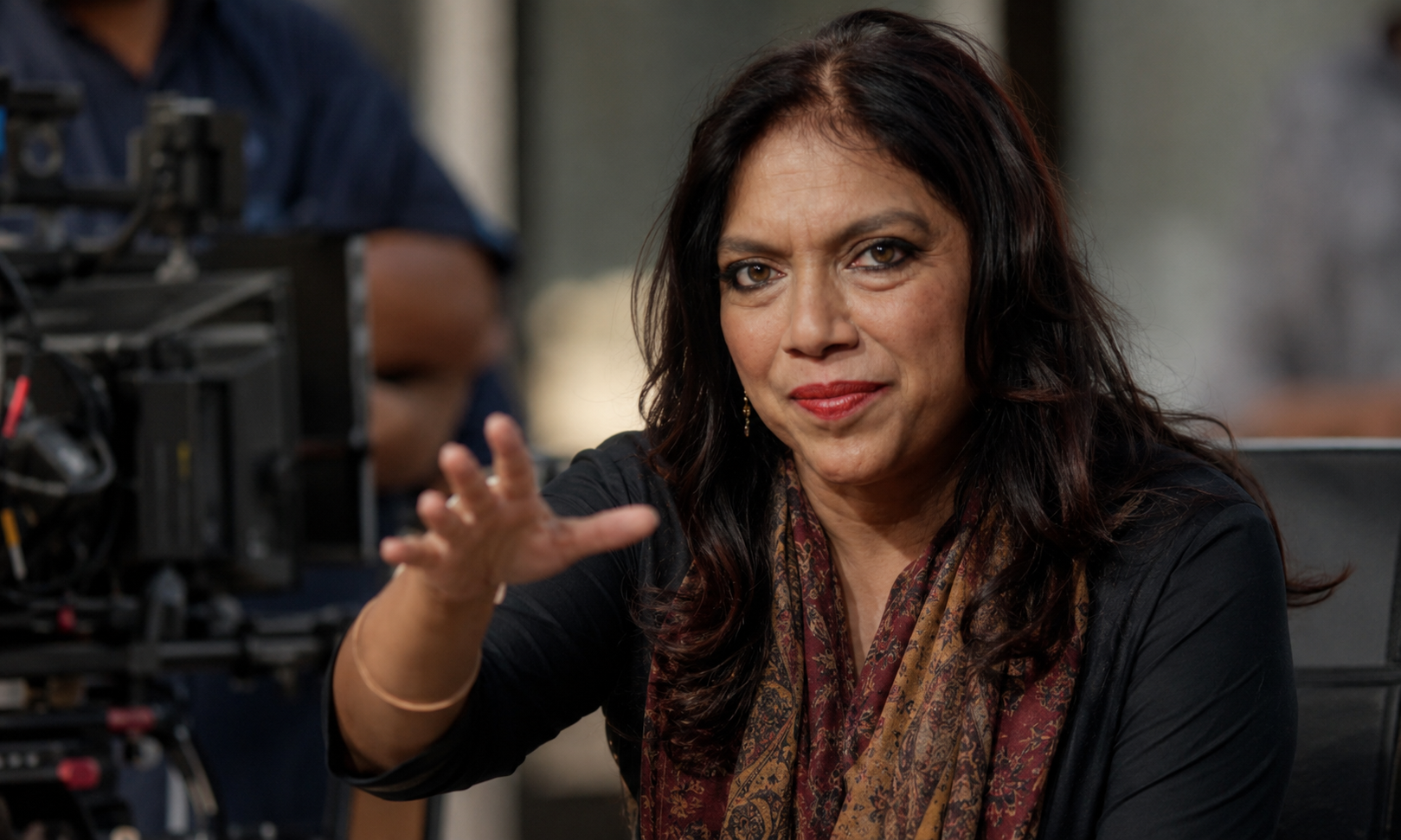
Mira Nair
Indian-American filmmaker
Mira Nair is an Indian American filmmaker. Born and raised in India, Nair moved to the U.S. to attend Harvard University, and was married to photographer Mitch Epstein from the early to late 1980s. She then lived for a few years in Uganda with her second husband, political scientist Mahmood Mamdani, but they later returned to the United States. Their son, Zohran Mamdani, has served as Mayor of New York City since 2026.
Key Factors
Full Name: Mira Nair
Born: 15 October 1957
Occupation: Filmmaker, Director, Producer
Known For: Independent cinema, diaspora storytelling, politically conscious filmmaking
Production Company: Mirabai Films
Spouse(s): Mitch Epstein (former), Mahmood Mamdani
Children: Zohran Mamdani
There is a moment in Salaam Bombay! when the camera lingers not on spectacle, but on survival. A child moves through the chaos of Bombay’s streets with exhaustion in his eyes and resilience in his body. The scene contains the emotional grammar that would come to define Mira Nair’s cinema for decades: intimacy inside upheaval, tenderness inside displacement, humanity inside systems that often erase it. Few filmmakers of Indian origin have carried local stories into global consciousness with such consistency and emotional intelligence. Born into a Malayali family, educated in Delhi and later at Harvard, Nair emerged as an outstanding filmmaker whose work crossed borders without losing cultural specificity. Whether portraying street children in Mumbai, immigrant longing in Mississippi, family tensions during a Punjabi wedding, or the ambitions of a Ugandan chess prodigy, her films have repeatedly explored migration, identity, gender, class, and belonging with rare empathy. In world cinema, Mira Nair became not simply an Indian director abroad, but a storyteller of fractured modern lives everywhere.
For more than four decades, Mira Nair has occupied a unique place in global cinema, somewhere between documentary realism and emotional lyricism, between political critique and deeply personal storytelling. From the crowded streets of Bombay to immigrant homes in Mississippi, from postcolonial anxieties to family celebrations bursting with music and chaos, her films consistently examine what it means to belong in a changing world. Born in India and later educated at Harvard University, Nair first gained international attention through documentary filmmaking before transforming independent cinema with works like Mississippi Masala, Monsoon Wedding, The Namesake, and Queen of Katwe. Her cinema rarely offers easy sentimentality. Instead, it captures contradiction, migration, loneliness, desire, memory, and survival with remarkable honesty. In the process, Mira Nair became one of the most respected filmmakers of the South Asian diaspora and one of the most influential Indian-origin directors in contemporary world cinema.
Early Life and Malayali Identity
Though born in Rourkela in Odisha, Mira Nair’s family roots were Malayali, shaped by the intellectual and cultural traditions of Kerala even while living outside it. Her father, Amrit Lal Nair, was an Indian Administrative Service officer, disciplined and intellectually demanding. Her mother, Praveen Nair, a social worker, had a more emotionally expansive influence on her daughter.
Nair has often spoken in interviews about the contradictions within her childhood. Her father represented authority and structure, while her mother embodied independence, empathy, and social awareness. Those tensions later surfaced repeatedly in her films, especially in stories dealing with patriarchy, gender roles, and emotional silences inside families.
She grew up in a household filled with literature, poetry, music, and argument. As a teenager, she learned sitar, wrote poetry, painted, acted in theatre productions, and immersed herself in English literature.
At Miranda House in Delhi, where she studied sociology, Nair became increasingly drawn toward performance and political theatre. She worked with theatre figures like Barry John and participated in experimental and street theatre movements connected to larger political conversations happening in India during the 1970s.
Those years shaped her understanding of class, gender, and public space. Long before she became a filmmaker, she had already become an observer of social contradictions.
Harvard and the Discovery of Cinema
At nineteen, Nair made a decision that would alter her life permanently. She rejected a scholarship offer from Cambridge University and moved instead to the United States to attend Harvard.
Migration changed her artistic consciousness.
In America, she experienced what would later become a recurring emotional condition in her films: being simultaneously inside and outside a culture. She was Indian yet global, rooted yet displaced.
Initially, acting remained her primary passion. But exposure to photography and documentary filmmaking gradually transformed her interests. A film course taught by documentary pioneer Richard Leacock at MIT introduced her to cinéma vérité traditions, observational realism, and filmmaking as lived experience rather than artificial spectacle.
At Harvard, she made Jama Masjid Street Journal, an intimate black-and-white documentary about the streets surrounding Delhi’s Jama Masjid. The film revealed many of the instincts that would later define her work: curiosity toward ordinary people, sensitivity to urban textures, and a refusal to romanticize poverty while still finding dignity within it.
Migration had not distanced her from India. Instead, it sharpened her gaze.
Documentary Filmmaking and Fearless Social Commentary
Before becoming known internationally for feature films, Mira Nair built her voice through documentaries that confronted uncomfortable realities in Indian society.
So Far from India examined the loneliness of immigration through the life of an Indian newspaper seller in New York. It was not merely about migration as opportunity, but migration as emotional rupture.
Then came India Cabaret, perhaps one of her most controversial early works. The documentary explored the lives of women working in Bombay strip clubs while exposing the hypocrisy of patriarchal morality. Many male viewers condemned the film for depicting female sexuality so directly, while some feminists criticized aspects of its gaze and representation.
Nair did not retreat from controversy.
Instead, she followed it with Children of a Desired Sex, a disturbing examination of female foeticide and son preference in India.
These documentaries mattered because they arrived at a time when Indian cinema rarely confronted such issues with honesty. Nair’s work was observational rather than preachy, emotionally engaged without becoming simplistic.
She treated cinema as inquiry.
Salaam Bombay! and International Breakthrough
The making of Salaam Bombay! was chaotic, underfunded, emotionally draining, and ultimately historic.
Working with writer Sooni Taraporevala, Nair immersed herself in the lives of Bombay street children. Many non-professional actors in the film came directly from the streets themselves. The production struggled financially, and completion money arrived only at the last moment.
But the film carried an urgency impossible to manufacture artificially.
Premiering at the Cannes Film Festival in 1988, Salaam Bombay! received a fifteen-minute standing ovation and won the Caméra d’Or. It later earned an Academy Award nomination for Best Foreign Language Film.
More importantly, it altered how Indian independent cinema was perceived internationally.
Unlike mainstream Bollywood exports built around spectacle and fantasy, Salaam Bombay! showed a brutal urban reality without exoticizing suffering. Yet the film was never emotionally cold. Nair’s camera observed hardship while preserving humanity.
The success also led to the creation of the Salaam Baalak Trust, which worked with street children in India, reflecting her belief that cinema and activism could remain interconnected.
Cinema of Diaspora, Race, and Identity
If Salaam Bombay! established her international reputation, films like Mississippi Masala and The Namesake deepened her exploration of migration and identity.
Mississippi Masala examined relationships between Black and Indian communities in the American South while tracing the emotional aftermath of Idi Amin’s expulsion of Asians from Uganda. The film rejected simplistic racial binaries and explored prejudice within immigrant communities themselves.
Meanwhile, The Namesake, adapted from Jhumpa Lahiri’s novel, portrayed second-generation immigrant alienation with unusual tenderness. The film captured the subtle ache of cultural inheritance, the tension between assimilation and memory, and the emotional distance between immigrant parents and their children.
Similarly, The Reluctant Fundamentalist examined post-9/11 suspicion, Islamophobia, and fractured global identities.
Nair’s diaspora cinema never reduced identity to slogans. Her characters exist in emotional in-between spaces, carrying multiple histories simultaneously.
Monsoon Wedding and Global Recognition
When Monsoon Wedding released in 2001, it became both a commercial triumph and a cultural landmark.
Shot in just thirty days with a relatively small crew, the film unfolded around a Punjabi wedding bursting with colour, music, chaos, humour, and buried trauma.
Beneath the celebration, however, lay uncomfortable realities: patriarchy, class inequality, family secrecy, globalization, and emotional repression.
The film’s brilliance came from its tonal balance. Nair moved effortlessly between joy and pain, intimacy and spectacle.
Winning the Golden Lion at the Venice Film Festival, she became the first woman filmmaker to receive the honour. International audiences embraced the film because it felt culturally specific yet emotionally universal.
For many viewers outside India, Monsoon Wedding offered a vision of Indian family life beyond cliché.
Mira Nair’s Filmmaking Style
Mira Nair’s cinema resists neat categorization.
Visually, her films often combine documentary realism with vibrant emotional energy. Crowded interiors, layered conversations, music, movement, and overlapping relationships create a lived-in atmosphere.
Unlike polished mainstream Bollywood narratives built around fantasy, her films remain grounded in social textures and human contradictions.
Yet unlike colder strands of arthouse cinema, Nair’s work rarely abandons emotional accessibility.
She is deeply interested in ensemble storytelling, migration, generational conflict, female interiority, and political realities hidden inside domestic life. Her films frequently reveal how large systems, colonialism, racism, nationalism, patriarchy, shape intimate relationships.
Even in moments of pain, her cinema retains warmth.
Activism, Politics, and Global Voice
Outside filmmaking, Nair has consistently linked art with social engagement.
She founded the Salaam Baalak Trust for vulnerable children and later established the Maisha Film Lab in Uganda, dedicated to training young East African filmmakers.
Her politics have also remained visible.
In 2013, she publicly boycotted the Haifa International Film Festival in protest against Israeli policies toward Palestinians, aligning herself with broader cultural boycott movements. The decision drew both praise and criticism internationally.
Whether through activism or filmmaking, Nair repeatedly returned to a core belief: storytelling can challenge systems of power and invisibility.
Personal Life and Global Family
Nair’s personal life reflects the transnational world her films often depict.
Her first marriage to photographer Mitch Epstein connected her deeply to documentary and visual art circles in New York. Later, while researching Mississippi Masala, she met political scientist Mahmood Mamdani.
Their relationship brought her to Uganda and later South Africa before the family settled largely in New York.
Their son, Zohran Mamdani, later entered American politics, extending the family’s public engagement into a new generation.
Despite decades abroad, Nair’s work continues to carry traces of Indian and specifically Malayali cultural sensibilities: intellectual curiosity, emotional complexity, political awareness, and attachment to storytelling traditions.
Legacy and Cultural Importance
Today, Mira Nair occupies a singular place in global cinema.
She helped open international space for Indian independent filmmaking long before streaming platforms globalized cross-cultural storytelling. She proved that stories rooted in local realities could resonate worldwide without sacrificing complexity or authenticity.
For women filmmakers of South Asian origin, her success expanded possibilities. For diaspora audiences, her films articulated emotional experiences rarely represented with honesty. For Indian cinema itself, she demonstrated that political seriousness and emotional accessibility could coexist powerfully on screen.
Most importantly, she humanized migration.
Her cinema understands displacement not simply as geography, but as memory, longing, language, family, race, and survival.
Across documentaries, feature films, activism, and mentorship, Mira Nair remains an outstanding Malayali-origin filmmaker whose work transformed the way the world sees India and the way migrants see themselves, not as fixed identities trapped between nations, but as complicated human beings forever carrying many homes within them.
Recognition and awards
At the Los Angeles Film Critics Association Awards 1988, Nair was awarded the New Generation Award, a career achievement award, by the Los Angeles Film Critics Association.
In 2012, Nair was awarded India’s third highest civilian award, the Padma Bhushan
Many of Nair’s films have won awards, including:
- 1988: Audience Award, Cannes Film Festival: Salaam Bombay!
- 1988: Golden Camera (Best First Film), Cannes Film Festival: Salaam Bombay!
- 1988: National Film Award for Best Feature Film in Hindi: Salaam Bombay!
- 1988: National Board of Review Award for Top Foreign Films: Salaam Bombay!
- 1988: “Jury Prize”, “Most Popular Film”, and “Prize of the Ecumenical Jury” at Montreal World Film Festival: Salaam Bombay!
- 1991: Golden Osella (Best Original Screenplay), Venice Film Festival: Mississippi Masala (with Sooni Taraporevala)
- 1991: Critics Special Award, São Paulo International Film Festival: Mississippi Masala
- 2001: Golden Lion (Best Film), Venice Film Festival: Monsoon Wedding
- 2001: Laterna Magica Prize, Venice Film Festival: Monsoon Wedding
- 2003: Harvard Arts Medal
- 2007: “Golden Aphrodite” award, at Love is Folly International Film Festival (Bulgaria), for The Namesake
- 2012: “IFFI Centenary Award” for The Reluctant Fundamentalist
Many of her films have also been nominated for some significant awards; a selection of these follow.
- 1988: Runner-up (2nd to Wings of Desire) Los Angeles Film Critics Association Awards, Best Foreign Film
- 1989: 61st Academy Awards, Academy Award for Best International Feature Film, for Salaam Bombay!
- 1989: César Award for Best Foreign Film (Meilleur film étranger): Salaam Bombay!
- 1989: Golden Globe Award for Best Foreign Language Film: Salaam Bombay!
- 1990: BAFTA Award for Best Film Not in the English Language: Salaam Bombay!
- 1991: Golden Lion (Best Film), Venice Film Festival: Mississippi Masala
- 1993: Independent Spirit Award for Best Feature: Mississippi Masala
- 1996: Golden Seashell, San Sebastián International Film Festival: Kama Sutra: A Tale of Love
- 2001: Golden Globe Award for Best Foreign Language Film: Monsoon Wedding
- 2002: BAFTA Award for Best Film Not in the English Language: Monsoon Wedding
- 2003: Golden Star, International Film Festival of Marrakech: Hysterical Blindness
- 2004: Golden Lion (Best Film), Venice Film Festival: Vanity Fair
- 2007: Gotham Award for Best Film: The Namesake