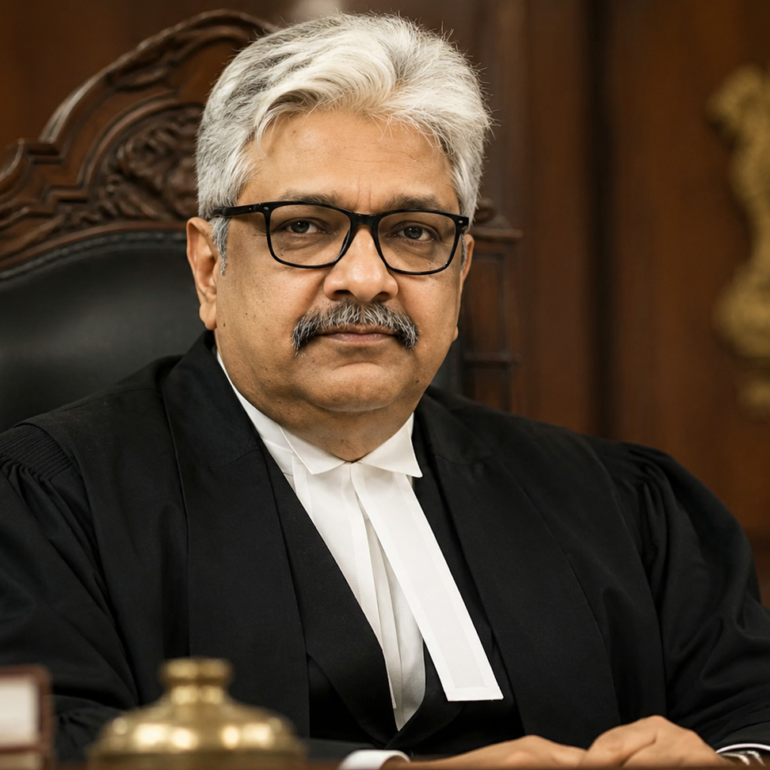
M. C. Dathan
Real Name: Madhavan Chandradathan
Place: Varkala, Thiruvananthapuram, India
Education: Birla Institute of Technology, Govt. Engg. College, Thrissur, SN College, Varkala
Title: Space scientist
Known for: Indian Space Program, Chandrayaan, Mars Orbiter Mission
Institutions: Indian Space Research Organisation, VSSC, LPSC, SDSC, Government of Kerala
The Invisible Moment of Lift-Off
When a rocket lifts off from Sriharikota, the spectacle belongs to flame and motion, to countdowns and cameras. But the decisive moment arrives earlier, in the ignition of a system most people never see. Deep within the vehicle, propellants mix, valves open with unforgiving precision, and thrust builds in a controlled surge that must neither falter nor exceed its limits. It is here, in the chemistry of motion, that missions are won or lost. For decades, M. C. Dathan worked in this domain, where failure is not dramatic but instantaneous, and success is measured in sustained reliability. It is an outstanding form of engineering, largely invisible, yet fundamental to India’s ascent in space.
From Kerala to Engineering Systems
M. C. Dathan was born in Kerala, a state that has produced a remarkable number of scientists and engineers who have contributed to India’s technological institutions. Like many of his generation, his early education unfolded within a system that emphasized strong fundamentals in mathematics and science, often without access to advanced infrastructure.
He pursued engineering, specializing in chemical engineering and the chemistry of solid propulsion systems. His academic formation coincided with a period when India’s scientific institutions were still consolidating, building indigenous capabilities in the face of limited external access.
What distinguishes Dathan’s trajectory is not just his technical training but the timing of his entry into the Indian space program. He belonged to a generation that did not inherit mature systems; they built them.
Entry into ISRO and Early Contributions: Learning in a Developing Program
Dathan joined the Indian Space Research Organisation at a time when the country’s launch vehicle program was transitioning from experimental phases to more structured development.
Early Indian rockets relied heavily on solid propulsion systems, which are simpler in design but less flexible in operation. As ISRO’s ambitions grew, particularly with the development of vehicles like the Polar Satellite Launch Vehicle (PSLV), the need for more sophisticated propulsion systems became evident.
Dathan’s early work placed him within this transition.
He was involved in the development and refinement of liquid propulsion systems, which offer greater control over thrust and burn duration compared to solid systems. This phase required not just engineering skill but the ability to work within constraints, limited access to advanced materials, restricted international collaboration, and evolving institutional frameworks.
The learning curve was steep. Failures were frequent. But each iteration contributed to a growing body of indigenous knowledge.
Leadership at Liquid Propulsion Systems Centre: Building the Engine Room
M. C. Dathan eventually rose to become the Director of the Liquid Propulsion Systems Centre (LPSC), one of ISRO’s most critical facilities.
LPSC is responsible for the design, development, and testing of liquid and cryogenic propulsion systems, the components that determine how efficiently and reliably a rocket can reach orbit.
As Director, Dathan’s role extended beyond engineering. He was responsible for:
- Coordinating complex, multi-disciplinary teams
- Ensuring reliability across multiple mission-critical systems
- Aligning technological development with mission timelines
During his tenure, LPSC played a central role in the evolution of both the PSLV and the GSLV programs.
The PSLV, known for its reliability, relies on a combination of solid and liquid stages. The liquid stages, powered by engines such as the Vikas engine, require precise control and consistent performance. The GSLV, designed for heavier payloads, introduced even greater complexity with cryogenic upper stages.
Dathan’s leadership contributed to stabilizing and advancing these systems, ensuring that propulsion did not become a bottleneck in mission execution.
Technical Contributions and Strategic Impact: Toward Self-Reliance
One of the defining aspects of India’s space program has been its emphasis on self-reliance.
For propulsion systems, this was particularly challenging.
Cryogenic Technology Barrier
Cryogenic engines, which use super-cooled propellants like liquid hydrogen and liquid oxygen, are essential for launching heavy satellites into higher orbits. However, access to this technology was restricted due to international agreements and geopolitical considerations.
India faced setbacks in acquiring cryogenic technology from abroad in the 1990s, forcing ISRO to develop its own systems.
Scientists like Dathan were part of the institutional effort that navigated this challenge.
The development of indigenous cryogenic engines involved:
- Mastering materials that can withstand extremely low temperatures
- Designing turbopumps capable of handling high rotational speeds
- Ensuring stable combustion under complex conditions
These were not incremental improvements. They were foundational challenges.
Impact
The eventual success of India’s cryogenic program, culminating in successful GSLV missions, represented a major milestone in technological independence.
While no single individual can claim sole credit for such achievements, Dathan’s role within LPSC placed him at the center of these developments.
Role Beyond ISRO: Science, Policy, and Defense Interfaces
After his tenure at LPSC, Dathan continued to contribute to India’s scientific ecosystem in advisory capacities.
He has been associated with roles that bridge civilian space research and national security frameworks, including advisory positions linked to defense research and strategic technologies.
His experience in propulsion systems, which have applications beyond space launch vehicles, made his expertise relevant to missile development and other defense technologies.
Such roles require a different orientation from laboratory work. They involve policy considerations, inter-agency coordination, and long-term strategic planning.
Dathan’s transition into these roles reflects a broader pattern within India’s scientific institutions, where senior scientists contribute to both technological development and policy formulation.
The Science Behind His Work: Why Propulsion Matters
To understand Dathan’s contribution, it is essential to understand the systems he worked on.
Liquid Propulsion
In liquid propulsion systems, fuel and oxidizer are stored separately and mixed in a combustion chamber. This allows engineers to control thrust by adjusting flow rates.
This flexibility is critical for:
- Fine-tuning a rocket’s trajectory
- Restarting engines in space
- Managing complex mission profiles
Cryogenic Engines
Cryogenic engines use propellants at extremely low temperatures. Liquid hydrogen, for example, must be stored at around -253°C.
These engines are highly efficient, meaning they produce more thrust per unit of fuel. This efficiency is essential for carrying heavier payloads into higher orbits.
Why It Matters
Without advanced propulsion systems:
- Satellites cannot reach intended orbits
- Launch vehicles remain limited in capability
- Space programs remain dependent on external providers
Dathan’s work contributed to ensuring that India could design, build, and operate these systems independently.
Personality, Work Ethic, and Leadership Style: Engineering Without Noise
Colleagues often describe M. C. Dathan as methodical and understated.
He is not a public-facing figure in the way some scientists become. His work has been largely within institutions, focused on systems rather than visibility.
His leadership style reflects engineering principles:
- Emphasis on reliability over experimentation without validation
- Structured decision-making processes
- Attention to detail in both design and execution
He is known for encouraging rigorous testing and iterative improvement, recognizing that in propulsion systems, small errors can lead to mission failure.
His influence on younger scientists lies less in rhetoric and more in example, demonstrating how sustained, disciplined work contributes to long-term institutional success.
Continuing Relevance: The Infrastructure of Space
M. C. Dathan’s legacy is embedded in systems that continue to function.
India’s success in missions such as Chandrayaan and the Mars Orbiter Mission rests on the reliability of its launch vehicles. That reliability, in turn, depends on propulsion systems developed and refined over decades.
His contributions are part of a broader institutional achievement, but they represent a crucial layer within it.
In the current global space race, where private companies and new national players are reshaping the landscape, propulsion remains a core determinant of capability.
India’s ability to compete, to launch satellites, explore deep space, and support strategic objectives, is tied to the systems that scientists like Dathan helped build.
His career illustrates a particular kind of scientific contribution, one that does not seek visibility but sustains possibility.
It is an outstanding legacy, not defined by singular breakthroughs alone, but by the steady construction of systems that continue to carry India forward, mission after mission.
Awards &Honours
2006 – Individual Service Award from ISRO
2009 – Performance Excellence Award from ISRO
2009 – Outstanding Chemical Engineer Award from the Institution of Engineers (India) (IEI)
2014 – Padma Shri By Government of India