Unni Balakrishnan
Senior Journalists and Writer
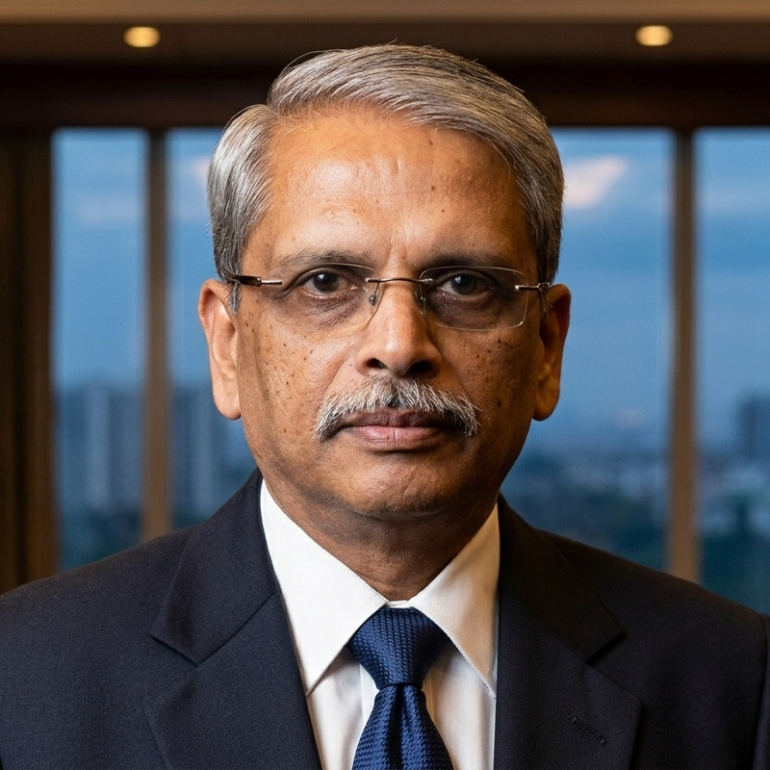
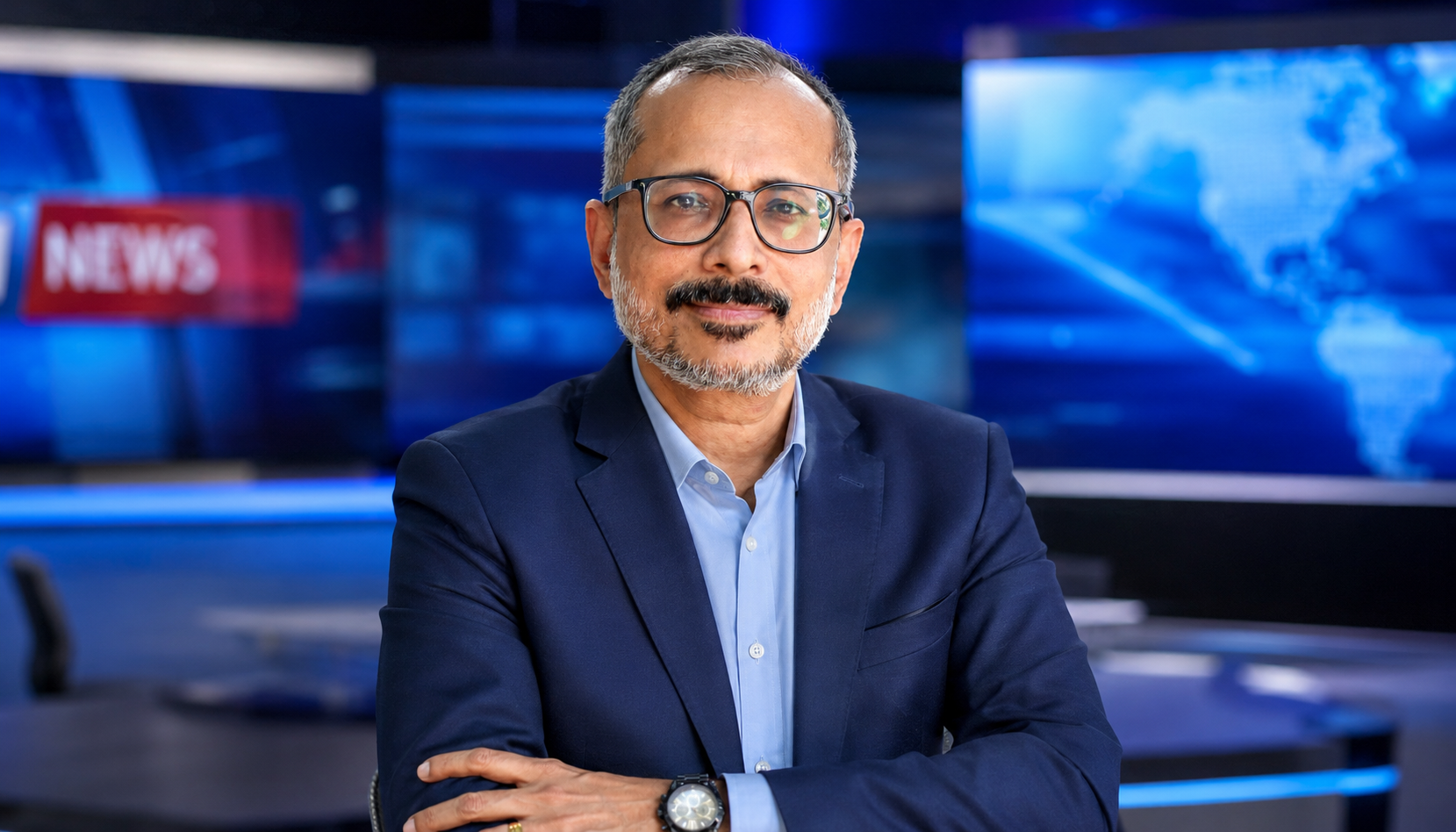
Unni Balakrishnan is one of the senior journalists and writers in Kerala. [1] He was born in Alappuzha in 1969. In 1994, he started his career as a sub-editor of the weekly Kalakaumudi. He wrote short stories and articles on social and literary topics in several periodicals. Over three decades, he became not merely a television journalist but an interpreter of India’s political shifts for Kerala’s viewers. From reporting the Kargil conflict and the Kandahar hijack to leading major Malayalam newsrooms, he helped shape the language, rhythm, and credibility of modern television journalism in Kerala.
Key Factors
Full Name: Unni Balakrishnan
Born: 1969
Birthplace: Alappuzha, Kerala, India
Occupation: Journalist, Editor, Writer
Titles Held: Bureau Chief, Regional Editor, Editor, Chief of News, Digital Head
Organizations Worked With: Kalakaumudi, Asianet News, Mathrubhumi News, Reporter TV
The Making of a Journalist
Unni Balakrishnan was born in Alappuzha in 1969, in a Kerala that still viewed journalism primarily through the lens of print culture. Newspapers and weeklies were not merely information platforms during the 1980s and 1990s. They were ideological spaces. Political awareness in Kerala evolved through editorials, literary essays, serialized fiction, and intense public debate.
That atmosphere shaped him deeply.
Before television transformed the media landscape, Malayalam journalism was heavily text-driven. Writers were expected to understand politics, literature, and social movements with equal seriousness. Young journalists often moved fluidly between reporting and literary writing.
Unni Balakrishnan belonged to that tradition.
In 1994, he began his professional journey as a sub-editor at the weekly Kalakaumudi, a publication known for its literary and socio-political influence. It was a formative period. Malayalam media in the 1990s was undergoing transition. Liberalization had begun altering Indian society, satellite television was emerging, and political journalism was becoming faster and more competitive.
At Kalakaumudi, he worked not only on editorial responsibilities but also wrote short stories and articles on social and literary subjects across several publications. Those early years established a pattern that would continue throughout his career: journalism rooted in observation, but informed by literary sensibility.
Even later, when he became known primarily as a television journalist, traces of the writer remained visible in his style. He often approached political developments not merely as events, but as human narratives unfolding within larger historical shifts.
From Print to Television: The Asianet Years
In 1996, Unni Balakrishnan joined Asianet News as a sub-editor. The timing was significant. Malayalam television journalism itself was still finding its identity.
Until then, news on television in Kerala had largely been formal, restrained, and bulletin-oriented. Asianet News changed that equation. It introduced faster reporting, live political coverage, field-based journalism, and eventually round-the-clock news culture.
For journalists entering television during that period, the shift required reinvention.
Unlike print journalism, television demanded immediacy. Reporters had to explain national events visually and emotionally while maintaining editorial clarity. It was not enough to simply deliver facts. One had to interpret them in real time.
Unni Balakrishnan adapted quickly.
Over the years, he worked in multiple editorial capacities at Asianet News, gradually becoming one of the recognizable faces and analytical voices of Malayalam television journalism. His rise coincided with the expansion of political news culture in Kerala, where audiences increasingly demanded sophisticated national coverage in Malayalam.
That demand would eventually take him to Delhi.
Delhi Years: Reporting Power and Crisis
Between 1998 and 2010, Delhi became the operational center of Unni Balakrishnan’s journalism career.
Those twelve years were among the most politically volatile periods in modern Indian history. Coalition politics reshaped governance. The Vajpayee era altered national political language. The first UPA government emerged amid economic transformation and global geopolitical shifts. Terror attacks repeatedly tested India’s institutions.
For Malayali audiences, Delhi often felt geographically distant but politically crucial.
Unni Balakrishnan became one of the journalists who translated that complex national reality into accessible, nuanced Malayalam reporting.
As Bureau Chief and Regional Editor, he reported from the heart of political power during defining moments: the Kargil War, the Kandahar plane hijack, the Delhi bombings, the Mumbai terror attacks, and successive Lok Sabha elections.
Television journalism during those years carried enormous pressure. Reporters operated within rapidly changing situations where information evolved minute by minute. Yet credibility depended not on speed alone, but on accuracy and restraint.
That balance became central to Unni Balakrishnan’s reputation.
During the Kargil conflict, Malayalam viewers were not merely looking for battlefield updates. They wanted context about military strategy, diplomacy, and political consequences. Similarly, during the Kandahar hijack crisis, television journalism entered a new phase of real-time national anxiety.
Journalists covering Delhi during that era witnessed the transformation of Indian television news itself, from relatively restrained reporting into increasingly competitive and personality-driven broadcasting.
Unni Balakrishnan largely avoided theatrical presentation. Instead, he developed a style rooted in calm analysis and grounded political understanding.
His access to national political developments also expanded significantly. In 2002, he was part of the media delegation accompanying then Prime Minister Atal Bihari Vajpayee during the Islamabad visit, an important diplomatic moment in Indo-Pak relations. In 2005, he visited the United States as part of the media delegation accompanying Prime Minister Manmohan Singh.
He also reported on major international diplomatic engagements including the United Nations conference and the India-France Summit.
For Malayalam audiences, journalists like Unni Balakrishnan became crucial intermediaries between Kerala and the wider political world.
Editorial Leadership and Reinvention
By the time he moved to Mathrubhumi News in 2012, Malayalam television journalism had entered another phase entirely.
Digital media was disrupting traditional news cycles. Social media accelerated political polarization. Television channels increasingly faced pressure to combine speed, ratings, and editorial credibility.
At Mathrubhumi News, Unni Balakrishnan worked as editor and later served as Chief of News until 2021. His role now extended beyond reporting into institutional leadership.
Managing a modern newsroom required balancing editorial ethics with technological transformation. The old linear news model was collapsing. Newsrooms had to think simultaneously about television broadcasts, digital publishing, audience fragmentation, and real-time engagement.
Colleagues and industry observers frequently described him as a newsroom leader who valued editorial discipline over spectacle.
Later, he worked as the digital head of Reporter TV, reflecting another important shift in Malayalam journalism: the migration from television-centric news culture into hybrid digital ecosystems.
Eventually, after many years away, he returned to Asianet News, completing a professional cycle closely tied to the evolution of Malayalam television journalism itself.
The Analyst and Public Intellectual
Over time, Unni Balakrishnan’s identity expanded beyond newsroom management or field reporting.
He increasingly became known as a political analyst whose observations carried credibility across ideological divides. In Kerala’s highly polarized media environment, that credibility is difficult to sustain.
Part of his appeal lies in his communication style. He rarely relies on rhetorical aggression. Instead, his analysis tends to emerge from historical understanding, electoral reading, and institutional memory.
This became particularly visible during discussions surrounding the 2024 Lok Sabha elections. His assessment of the likely electoral outcome attracted widespread attention, especially after subsequent results aligned closely with his analysis.
That moment reinforced a perception long held by many viewers: Unni Balakrishnan was not simply reading political developments, he was interpreting deeper structural patterns within Indian politics.
In an age dominated by instant reactions and ideological noise, such analytical restraint became increasingly rare.
Literary Side of Unni Balakrishnan
Parallel to his journalism career runs another quieter but important thread: writing.
Unlike many television personalities whose public identity remains tied exclusively to broadcasting, Unni Balakrishnan maintained an active literary engagement. His books include I’m Not Getting Old, Standing as Trees, Our Turban, and Stories: Unni Balakrishnan.
These works reflect a sensibility shaped by observation rather than abstraction.
His writing often explores memory, social transitions, aging, identity, and the emotional undercurrents of everyday life. Journalism appears to have sharpened his attentiveness to detail, while literature gave him space to move beyond deadlines and headlines.
There is a noticeable humanism in his literary voice. Political reporting exposed him to conflict, ambition, tragedy, and institutional power. Literature allowed those experiences to be processed more reflectively.
This dual identity, journalist and writer, places him within a longer Kerala tradition where media figures frequently crossed into literature and public intellectual discourse.
Personal Legacy and Influence
For younger journalists in Kerala, Unni Balakrishnan represents a generation that entered television journalism before celebrity culture fully overtook news broadcasting.
His influence is visible not only through his reports but through newsroom culture itself. Several journalists who worked under him have spoken publicly about editorial rigor, political understanding, and the importance of contextual reporting.
His public image also remains unusually grounded for a television figure. While recognizable across Kerala, he cultivated the persona of a journalist rather than a media celebrity.
His relationship with fellow journalist and anchor Venu Balakrishnan occasionally draws public interest, but their careers evolved with distinct identities and styles within Malayalam journalism.
Ultimately, what distinguishes Unni Balakrishnan is consistency. Across changing political climates, shifting technologies, and evolving newsroom cultures, he maintained a reputation for seriousness and editorial credibility.
Reflection
The story of Unni Balakrishnan is inseparable from the story of Malayalam television journalism itself. He entered the profession when news was still transitioning from print authority to broadcast immediacy, and he remained relevant through the digital transformation that followed. From the tense corridors of Delhi during war and political upheaval to Kerala’s increasingly competitive media landscape, he built a career grounded not in spectacle, but in understanding.
In an era where loudness often replaces insight, Unni Balakrishnan’s journalism continues to stand out for its clarity, restraint, and intellectual depth. That enduring credibility, earned across decades of reporting, editing, analysis, and writing, is precisely why he remains an outstanding Malayali voice in India’s public discourse.
Awards
2014 – State Television Award for Best Interviewer
2016 – State Media Award