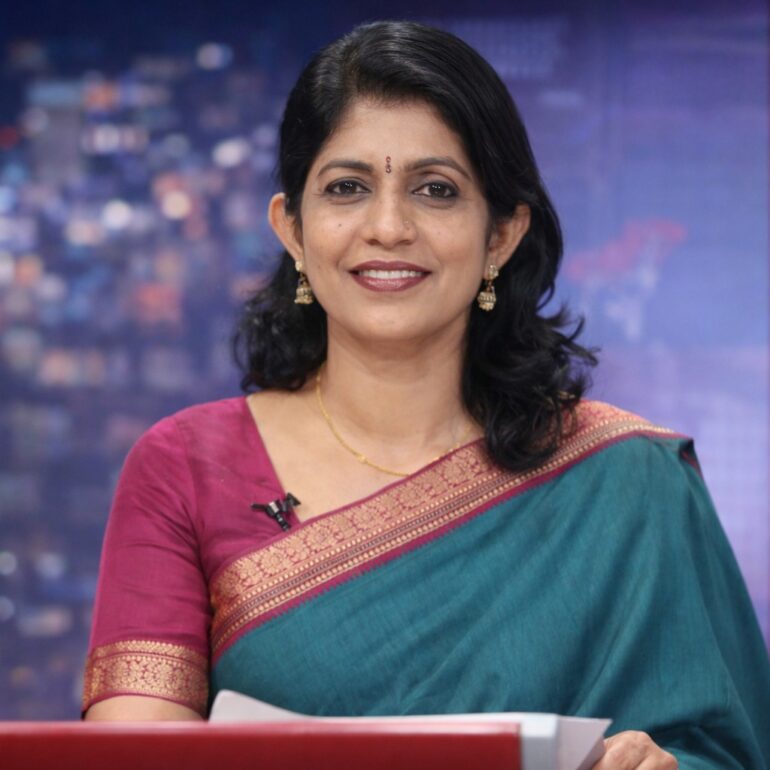
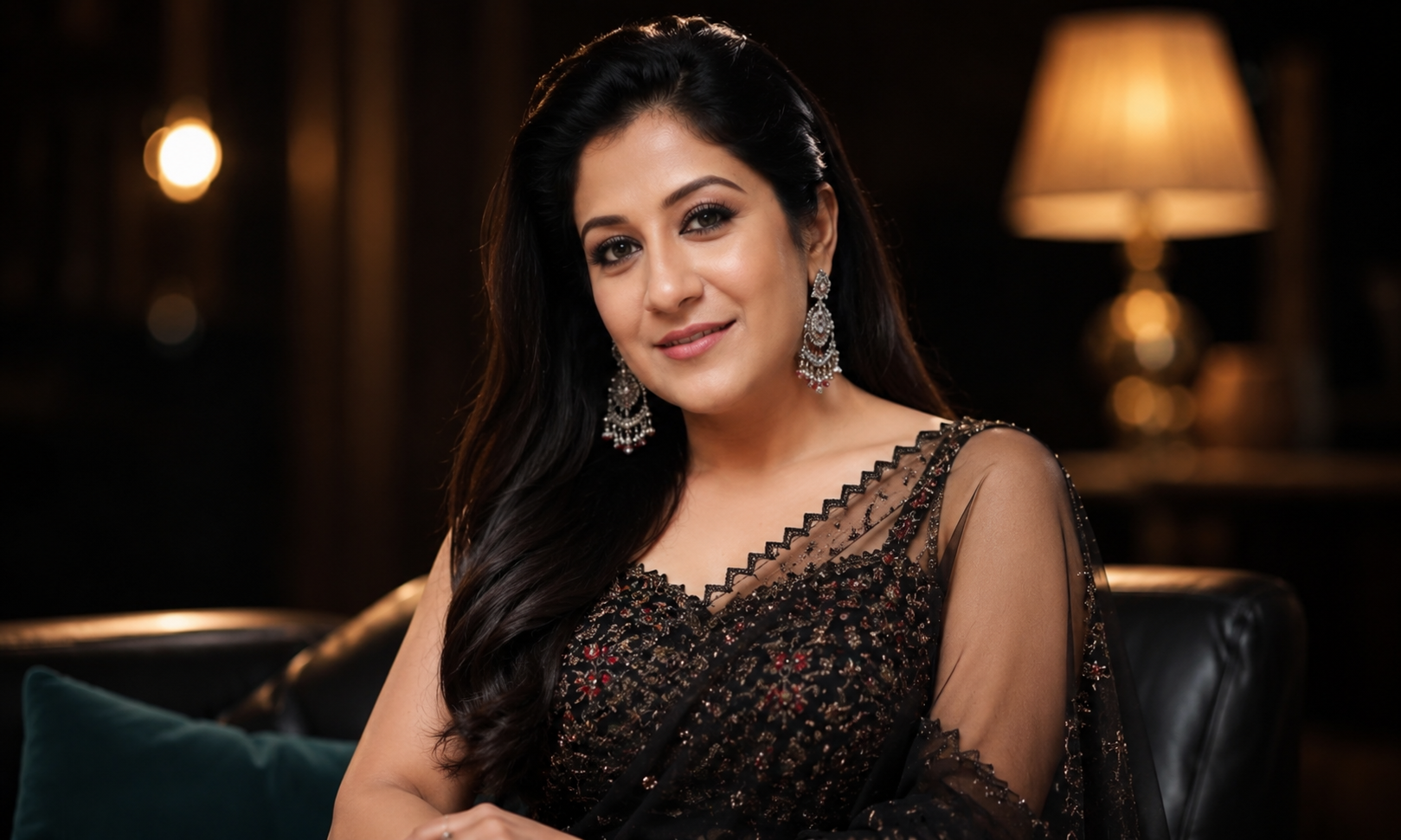
Shweta Mohan
Playback Singer & Music Producer
Shweta Mohan is an Indian playback singer and music producer. She has recorded songs for films and albums in all the four south Indian cinema namely Tamil, Malayalam, Telugu and Kannada, besides few Hindi films and Bengali albums. Born to playback singer Sujatha Mohan and Krishna Mohan, Shweta has received six Filmfare Awards South for Best Female Playback Singer, one Kerala State Film Award and one Tamil Nadu State Film Award. She was also honoured by the Government of Tamil Nadu with the Kalaimamani award, the highest civilian award from that state, in 2023.
Key Factors
Full Name: Shweta Mohan
Date of Birth: 19 November 1985
Birthplace: Chennai, Tamil Nadu, India
Occupation: Playback Singer, Music Producer
Genres: Film Music, Carnatic, Devotional, Independent Music
Languages Worked In: Malayalam, Tamil, Telugu, Kannada, Hindi
Shweta Mohan has spent more than two decades building one of the most emotionally versatile and technically refined careers in contemporary Indian playback music. Though she entered the public eye as the daughter of legendary singer Sujatha Mohan, Shweta gradually carved out a musical identity entirely her own, intimate yet expansive, classically disciplined yet emotionally immediate. Across Malayalam, Tamil, Telugu, Kannada, Hindi, and independent music spaces, her voice has become associated with melody-driven storytelling, emotional nuance, and an outstanding ability to adapt to changing musical eras without losing artistic sincerity.
From romantic ballads and heartbreak anthems to devotional melodies and modern chartbusters, Shweta Mohan’s singing carries a rare balance between technical control and emotional vulnerability. Whether performing for a packed arena with A. R. Rahman or recording a quiet Malayalam melody that later becomes deeply personal to listeners, she consistently brings warmth and emotional clarity into every composition. Over time, she has evolved beyond playback singing into a respected live performer, independent artist, music producer, and one of South India’s defining contemporary female voices.
The Voice That Learned to Belong to Itself
How Shweta Mohan transformed legacy into individuality and became one of South India’s most emotionally resonant playback singers
The stage lights dim inside a packed concert arena. Somewhere in the audience, thousands wait for a familiar melody they already carry within memory. Then the opening lines begin, soft at first, almost fragile, before slowly unfolding into emotional intensity. It is Shweta Mohan singing live, and the silence inside the crowd becomes as important as the applause itself.
That is the peculiar emotional power of her voice.
Over the years, Shweta Mohan has become one of the most outstanding and emotionally recognizable playback singers in Indian cinema, not through spectacle, but through consistency, sensitivity, and emotional truth. Her voice moves easily across languages and genres, from deeply layered Malayalam melodies to youthful Tamil chartbusters, devotional compositions, independent music, and large-scale cinematic anthems. Yet regardless of the composition, listeners often experience the same thing: intimacy.
It is perhaps because Shweta never sings merely to impress. She sings to inhabit emotion.
For audiences across South India, her songs have quietly become part of everyday emotional memory, long drives, heartbreaks, weddings, hostel nostalgia, festival playlists, and solitary midnight listening sessions. In an industry shaped by rapid transitions and shifting musical trends, she has remained remarkably relevant by refusing to lose emotional sincerity.
Growing Up Inside Music
In many ways, Shweta Mohan was born inside music long before she consciously chose it.
Growing up in Chennai, she inhabited a home where recording studios, rehearsals, composers, and concert tours formed part of ordinary life. Her mother, Sujatha Mohan, was already one of South India’s most beloved playback singers, admired for her expressive clarity and emotional elegance. Her father Krishna Mohan, though outside cinema, shared a deep love for music and nurtured a household where art was treated with seriousness and warmth.
For a child, this environment could have easily become overwhelming.
Recording studios were familiar spaces. Legendary composers and musicians moved through conversations casually. Yet Shweta did not immediately dream of becoming a singer herself. In several interviews over the years, she has spoken about her initial hesitation, the awareness of expectations attached to her surname, and the uncertainty of stepping into an industry where her mother already occupied iconic status.
The turning point reportedly came during school cultural competitions, where she slowly discovered not merely talent, but emotional connection with performance itself.
That distinction mattered.
She was not trying to imitate Sujatha Mohan. She was trying to discover her own voice.
Training Beyond Inheritance
One of the most significant aspects of Shweta Mohan’s career is that despite being born into musical privilege, her artistry was built through rigorous training rather than inherited reputation.
She underwent formal Carnatic and Hindustani classical training, studying under respected musicians including Binni Krishnakumar. She also explored Western vocal techniques and piano training, developing unusual flexibility for a playback singer.
This multidimensional training later became central to her versatility.
Carnatic discipline strengthened her precision and breath control. Hindustani influences expanded emotional fluidity. Western training improved tonal adaptability and phrasing. Together, these elements allowed her to move naturally between classical-based compositions, contemporary film songs, and independent music.
Even before becoming widely recognized as a playback singer, she was already working in chorus sections for A. R. Rahman. Those early experiences inside Rahman’s recording environment exposed her to an entirely different philosophy of film music, layered textures, emotional minimalism, and sonic experimentation.
For a young singer, it was an invaluable education.
Stepping Into Playback Singing
Every star child entering cinema carries invisible pressure. For Shweta Mohan, the pressure was especially complex because playback singing is an art form intensely associated with vocal individuality.
Listeners compare instantly.
Her entry into cinema came through composer Karthik Raja in the film Three Roses. Soon after, Malayalam cinema noticed her through songs in By the People.
The early years were marked by uncertainty familiar to many young singers. Opportunities existed, but sustaining visibility inside South Indian playback music required far more than lineage. It demanded adaptability, emotional intelligence, and consistency.
Fortunately, Shweta possessed all three.
What composers recognized quickly was her unusual emotional elasticity. She could sound youthful without sounding immature, classical without sounding rigid, modern without losing melody.
Gradually, the industry stopped introducing her merely as “Sujatha’s daughter.”
She became Shweta Mohan.
The Rise of a Multilingual Voice
By the late 2000s and early 2010s, Shweta Mohan had firmly established herself across multiple South Indian industries.
Songs like “Vizhiyil Un Vizhiyil,” “Nee Paartha Vizhigal,” “Innum Konjam Neram,” “Enna Solla,” “Maya Nadhi,” and “Vaa Vaathi” showcased not only vocal beauty but emotional adaptability. Each composition demanded a different emotional texture, longing, youthful flirtation, melancholy, tenderness, or restrained passion.
Shweta rarely approached songs with vocal excess.
Instead, she specialized in emotional calibration.
Her pronunciation across languages also became one of her major strengths. Whether singing Malayalam, Tamil, Telugu, Kannada, or Hindi, she respected linguistic musicality deeply. This helped her connect authentically with audiences across regions.
Collaborations with composers such as Ilaiyaraaja, Yuvan Shankar Raja, Anirudh Ravichander, G. V. Prakash Kumar, Vidyasagar, and especially A. R. Rahman revealed different dimensions of her voice.
Rahman often used her emotional softness. Ilaiyaraaja leaned into melodic depth. Younger composers explored her modern tonal flexibility.
Very few singers transition across generations of composers this seamlessly.
Malayalam Music and Emotional Intimacy
Though she became a multilingual playback star, Shweta Mohan’s emotional relationship with Malayalam music remains especially profound.
Malayalam film music traditionally values lyrical intimacy and melodic subtlety, qualities perfectly suited to her singing style.
Songs like “Kolakkuzhal Vili Ketto,” “Yamuna Veruthe,” “Shyama Hare,” and “Oru Puzhayarikil” revealed her remarkable ability to communicate vulnerability through minimalism. Rather than overpowering compositions, she often dissolves gently into them.
Malayali listeners, especially, connected deeply with this emotional transparency.
There is something uniquely conversational about her Malayalam singing. The emotions feel lived rather than performed.
This may explain why so many of her Malayalam songs continue surviving through nostalgia playlists, FM radio memory culture, and emotionally significant personal moments for listeners.
Surviving the Streaming Era
Playback singing changed dramatically during the streaming age.
Musical trends accelerated. Viral popularity shortened song lifespans. Electronic production altered vocal aesthetics. Several singers associated strongly with melody-heavy eras struggled to adapt.
Shweta Mohan did not.
Instead, she evolved carefully without abandoning musical identity.
She continued collaborating with younger composers, adapting to modern arrangements while preserving emotional sincerity. Songs like “Vaa Vaathi” proved her ability to remain relevant to younger audiences without sounding artificially youthful.
This balance between evolution and continuity became central to her longevity.
Beyond Cinema: The Performer and Independent Artist
Over time, Shweta increasingly expanded beyond traditional playback singing.
Her live concerts with A. R. Rahman and Ilaiyaraaja established her as a commanding stage performer capable of balancing technical perfection with emotional spontaneity.
Unlike studio recordings, live performance exposes emotional authenticity instantly. Shweta thrives in that environment.
She also ventured into independent music and music production, exploring artistic identities beyond cinematic expectations. These projects revealed a more personal creative voice, one less constrained by film narratives and more connected to emotional self-expression.
Recognition, Respect, and Legacy
Awards followed steadily across her career, Filmfare Awards South, Kerala State Film Awards, Tamil Nadu State Film Awards, and the prestigious Kalaimamani recognition.
But perhaps more meaningful than awards is the unusual respect she commands across generations of musicians.
Senior composers admire her discipline. Younger musicians admire her adaptability. Audiences trust her emotional sincerity.
In contemporary Indian playback culture, where trends shift rapidly, Shweta Mohan represents stability through artistry rather than branding.
She has become one of the defining female playback voices of her generation precisely because she never chased noise.
She pursued emotional truth instead.
Conclusion
What makes Shweta Mohan enduring is not merely vocal brilliance, though her technical control remains extraordinary. It is emotional reliability.
Listeners know what her voice offers: honesty, warmth, vulnerability, and emotional grace.
Across Malayalam melodies, Tamil romances, Telugu chartbusters, Kannada compositions, Hindi collaborations, and independent music projects, she consistently transformed songs into emotional experiences rather than mere performances. Her music entered people’s lives quietly, through headphones during heartbreaks, family road trips, festival evenings, and memories attached to cinema itself.
In many ways, Shweta Mohan represents a rare bridge between classical discipline and modern emotional accessibility. She inherited a rich musical legacy, but built her own identity with patience, intelligence, and artistic integrity.
Years from now, when listeners revisit the emotional soundscape of contemporary South Indian film music, Shweta Mohan’s voice will remain unmistakable, graceful, intimate, technically refined, and enduringly outstanding.