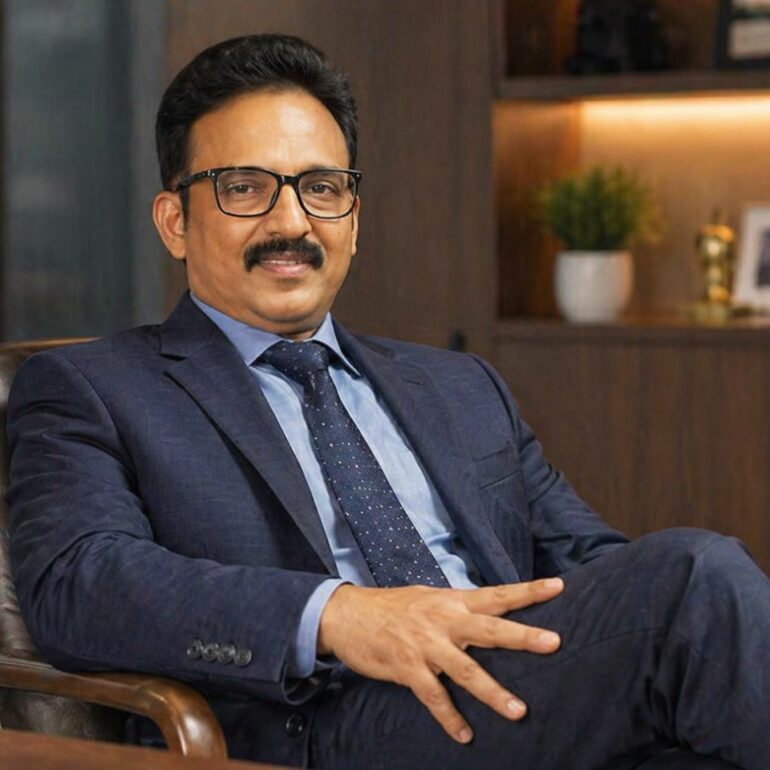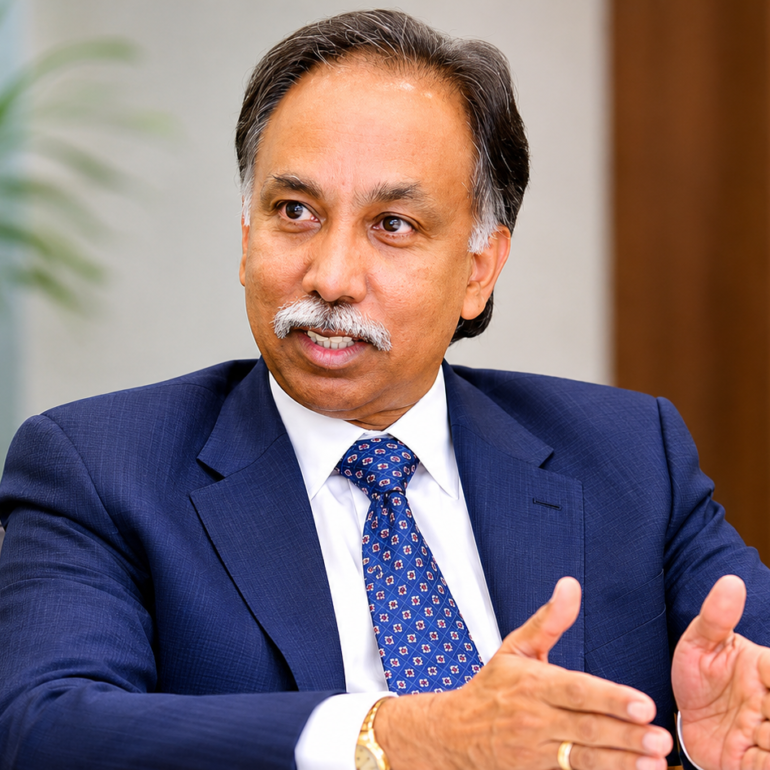
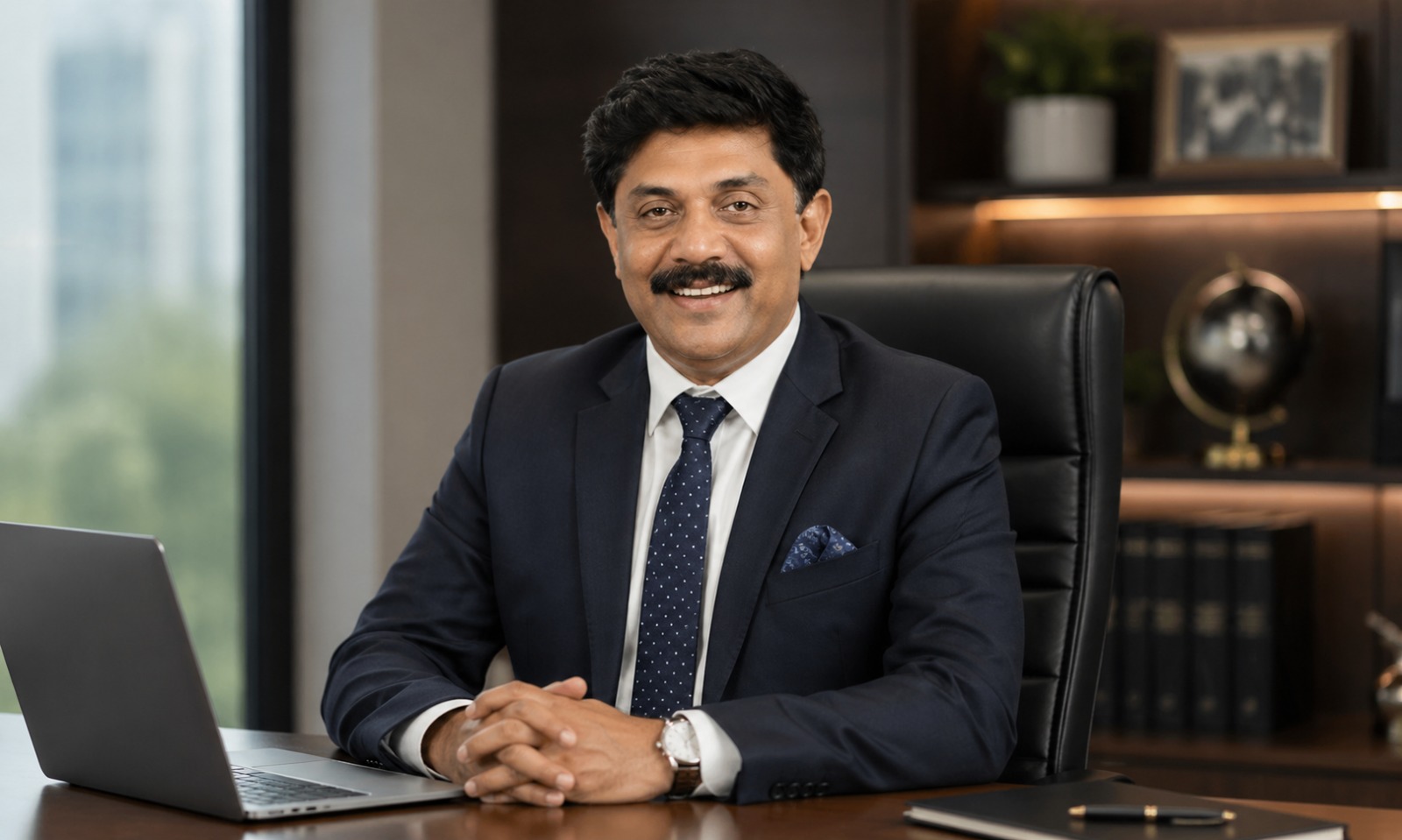
Mehroof I Manalody
Indian entrepreneur and education leader
Mehroof I Manalody is the founder, chairman, and managing director of G-TEC Education. He established the institution in 2001, starting in the Malabar region of Kerala before expanding it into a global education network. He is an economics graduate from Madras University with a PG Diploma in computers. Specializes in IT training, skill development, and managing large-scale educational institutions. Under his leadership, G-TEC has grown to over 600+ centers globally, providing education to millions of students.
Key Facts
Full Name: Mehroof I. Manalody
Education: Economics graduate, University of Madras; PG Diploma in Computers
Origin: Malabar region, Kerala, India
Title: Founder, Chairman & Managing Director
Organization: G-TEC Education
Industry: Skill Development, IT Training, Education Franchise
Known For: Building a global network of IT training institutes and advancing employability-focused education
In a modest training center somewhere in Malabar at the turn of the millennium, a handful of students sat before bulky desktop computers, learning basic programming and office applications. The internet was slow, job opportunities uncertain, but the hunger to learn was unmistakable. For many, this was not just a class, it was a pathway out.
Behind that classroom was Mehroof I. Manalody, not yet the head of a global network, but an entrepreneur with a clear reading of the moment. India was changing, technology was becoming the new currency, and education systems were not keeping pace. What began as a small initiative to bridge that gap would evolve into G-TEC Education, a sprawling network of skill training centers operating across continents.
Early Life and Educational Foundation
Mehroof Manalody’s journey is rooted in Kerala’s Malabar region, a geography shaped by migration, remittance economies, and a long-standing emphasis on education as social mobility. His academic path, an economics degree from the University of Madras followed by a postgraduate diploma in computers, reflects an early convergence of theory and application.
This combination would prove critical. Economics offered him a structural understanding of labour markets and development, while computer training exposed him to the emerging language of global work. At a time when IT education was still concentrated in urban centers, he recognized both a gap and an opportunity.
Kerala, with its high literacy but limited local employment opportunities, was particularly fertile ground for skill-based education. The demand was not just for degrees, but for capabilities that could translate into jobs, either within India or abroad.
The Entrepreneurial Spark
Before G-TEC became a brand, Mehroof’s early efforts were grounded in setting up computer training institutes across the Malabar region. These were not high-capital ventures. They were small, often resource-constrained centers that relied heavily on local demand and trust.
What distinguished his approach was a practical understanding of what students needed. Unlike traditional education models, which often prioritized theoretical knowledge, these institutes focused on job-oriented training, basic IT skills, accounting software, and office productivity tools.
Scaling, however, was not straightforward. Each center required local management, infrastructure, and quality control. The absence of standardized curricula and fragmented demand made replication difficult. Yet, these challenges would eventually shape the framework of what G-TEC would become.
Birth of G-TEC
In 2001, Mehroof formalized his vision with the founding of G-TEC Education. The idea was simple in articulation but complex in execution: to create an accessible, standardized, and scalable model of skill education.
G-TEC was not positioned as a traditional academic institution. It was designed as a training ecosystem, focused on employability rather than certification alone. Courses were structured around industry needs, particularly in IT, accounting, and professional skills.
The early business model leaned toward decentralization. Instead of building large, centralized campuses, G-TEC adopted a franchise-led approach, enabling rapid expansion while leveraging local entrepreneurship. This would become one of the defining features of the organization.
Scaling a Franchise-Led Education Network
Over the next two decades, G-TEC expanded beyond Kerala into other parts of India and eventually into international markets, including the Middle East and Africa. The network has grown to hundreds of centers, with estimates often placing it in the range of 600 or more globally.
The scale is significant. G-TEC trains a large number of students annually, with figures often cited in the range of over 100,000 learners each year. This positions it among the more prominent private players in India’s skill development ecosystem.
The franchise model has been central to this growth. By enabling local partners to operate centers under a standardized framework, G-TEC has managed to scale rapidly without the capital intensity typically associated with educational institutions.
However, this model also introduces complexity. Maintaining consistency in quality, curriculum delivery, and student outcomes across geographically dispersed centers is an ongoing challenge, one that Mehroof and his leadership team have had to continuously address.
Innovation in Skill Development
G-TEC’s evolution has been closely tied to its ability to adapt to changing skill demands. Beyond basic IT training, the organization has expanded into areas such as finance, digital marketing, and professional certification programs.
One notable aspect is the emphasis on “finishing school” concepts, integrating soft skills, communication training, and interview preparation alongside technical education. This reflects a broader understanding of employability, where technical competence alone is insufficient.
In a labour market increasingly shaped by global standards, such integration becomes critical. Employers often seek candidates who are not only technically proficient but also capable of functioning in professional environments.
Mehroof’s approach here has been pragmatic. Rather than attempting to compete with formal higher education, G-TEC positions itself as a complement, a bridge between education and employment.
Leadership Style and Strategic Thinking
Managing a distributed network of training centers requires a distinct leadership approach. Mehroof Manalody’s style is often described as decentralized but structured. Decision-making authority is distributed across franchise partners, but within a framework defined by standardized processes and quality benchmarks.
His long-term vision appears anchored in scalability rather than short-term expansion. The focus has been on building systems that can sustain growth, rather than rapid, unstructured proliferation.
This includes investments in curriculum development, certification standards, and institutional partnerships. It also involves navigating regulatory environments, particularly as skill development increasingly becomes a focus area for government policy.
Recognition and Credibility
Over the years, Mehroof and G-TEC have received recognition from various industry bodies and media platforms. These include acknowledgments from publications such as The Times of India and The Economic Times, as well as international accreditation-related recognitions.
While awards provide visibility, their significance lies in reinforcing credibility in a sector often characterized by uneven quality. For a franchise-driven education network, trust is both a brand asset and an operational necessity.
G-TEC has also engaged with government initiatives and skill development programs, positioning itself within broader national efforts to address employability challenges.
The Larger Context: India’s Skill Gap
To understand G-TEC’s trajectory, it is essential to situate it within India’s broader skill development landscape.
India faces a persistent gap between education and employability. While millions graduate each year, a significant proportion lack job-ready skills. This has led to the emergence of private training institutions as critical intermediaries.
Organizations like G-TEC operate in this space, offering shorter, targeted programs designed to align with industry needs. However, the sector is not without its challenges.
Quality assurance remains uneven, with variations across institutions and geographies. There is also the question of outcomes, whether training translates into sustainable employment. For franchise models in particular, maintaining consistency becomes a structural challenge.
Mehroof’s work can be seen as part of a broader experiment, attempting to build scalable, decentralized education systems in a country where demand is vast but resources are unevenly distributed.
Legacy and Future Outlook
After more than two decades, Mehroof I. Manalody’s legacy is tied not just to the scale of G-TEC, but to its role in shaping how skill education is delivered.
The organization’s future will likely depend on its ability to adapt to emerging trends, digital learning platforms, hybrid education models, and evolving industry requirements. Technology will play an increasingly central role, both in delivery and assessment.
There is also the question of global positioning. As G-TEC expands internationally, it enters markets with different regulatory frameworks and competitive landscapes. Balancing localization with standardization will be key.
For Mehroof, the journey appears less about building a single institution and more about constructing an ecosystem, one that connects learners, trainers, and industries across geographies.
Reflection
Back in that early classroom in Malabar, the ambition was simple, to equip students with skills that could change their lives. Today, that ambition has scaled across borders, touching hundreds of thousands of learners.
Yet, the core question remains the same: can education be both accessible and meaningful, scalable and personal, structured yet adaptable?
Mehroof I. Manalody’s work suggests that it can, though not without complexity. In an education system often defined by rigid hierarchies, his model offers an alternative, imperfect, evolving, but undeniably impactful.
And in that quiet, persistent effort to align learning with livelihood, there is something enduring, something necessary, and at its best, something truly outstanding.
Recognitions
Named a “Brand Icon 2016” by Times of India/Economic Times and “Global Edupreneur of 2023” by WMC, USA.