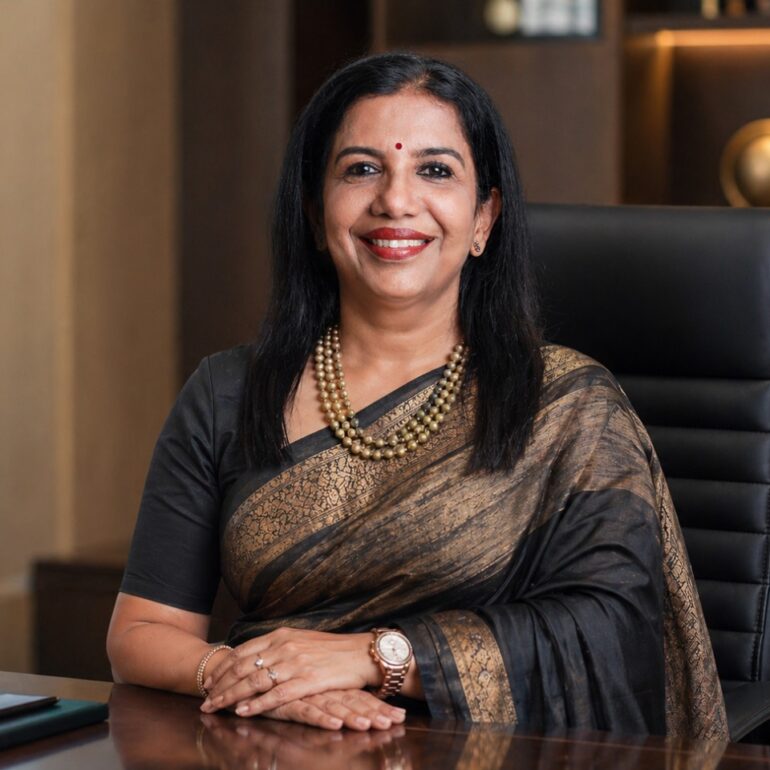
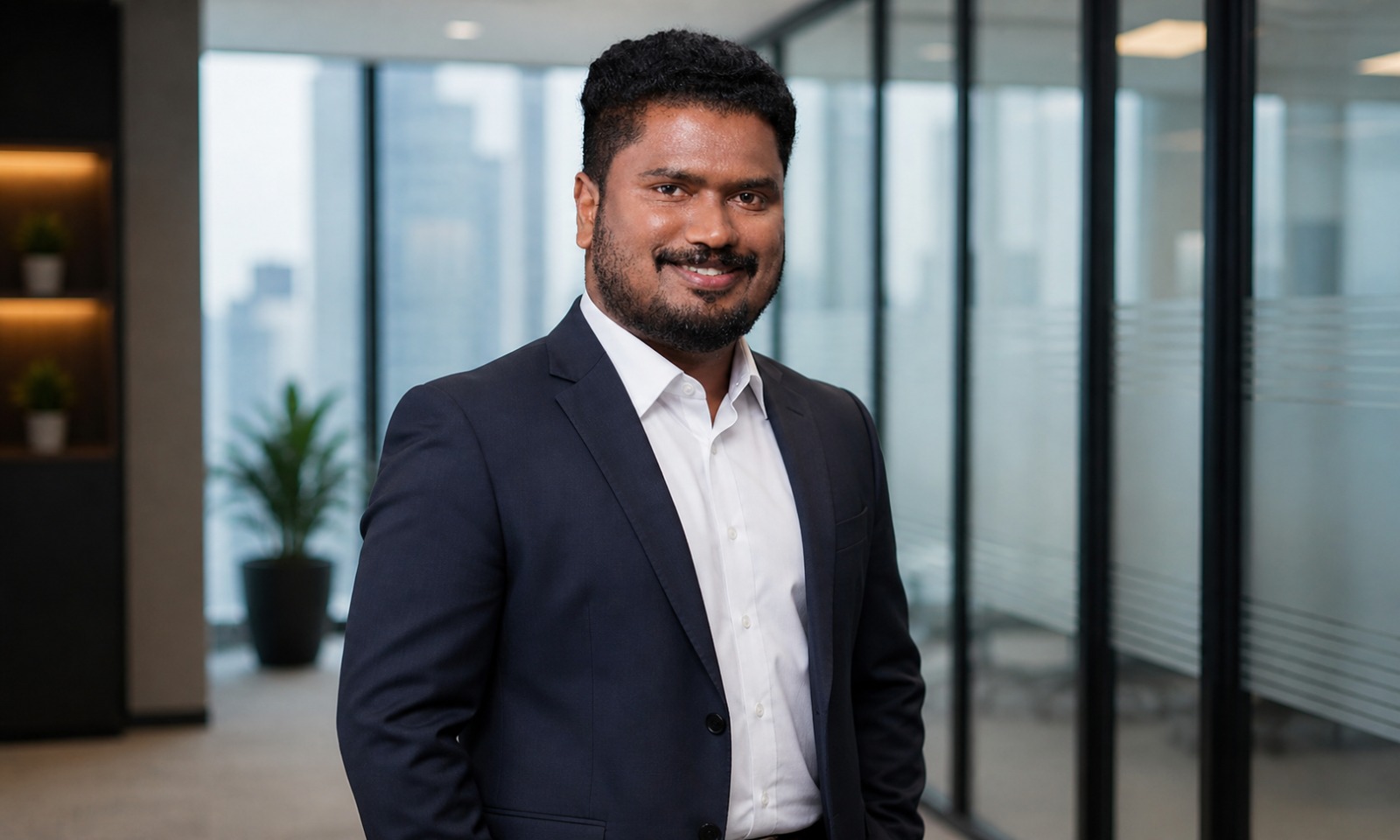
Orwell Lionel
Founder, Chairman, and Managing Director of IIC Lakshya
Orwell Lionel is the founder, Chairman, and Managing Director of the Indian Institute of Commerce Lakshya (IIC Lakshya). Orwell Lionel is the Founder and Managing Director of Indian Institute of Commerce Lakshya. A name synonymous with innovation and transformation in the realm of commerce education, he founded Indian Institute of Commerce Lakshya in the year 2011. The institution provide specialized education for commerce professional courses, including CA, ACCA, and CMA. Orwell Lionel is recognized for his role in transforming commerce education in India and has led the institution to educate over 60,000 students (as of 2022).
Key Facts
Full Name: Orwell Lionel
Place: Kerala, India
Title: Founder, Chairman & Managing Director of Indian Institute of Commerce Lakshya
Occupation: Entrepreneur, Education Leader
Known For: Transforming commerce education delivery and scaling Lakshya into a multi-campus institution
On any given day at Lakshya’s Kochi campus, the tension is palpable. Students preparing for Chartered Accountancy or ACCA exams sit through tightly structured sessions, alternating between conceptual lectures and timed problem-solving drills. The stakes are high. These are not generic degrees but professional qualifications with notoriously low pass rates.
This environment is by design. Orwell Lionel did not set out to build just another coaching centre. He built an institution around a specific promise, outcomes. In a segment where success is measurable in ranks, pass percentages, and placements, Lakshya’s identity is closely tied to performance.
Identifying a Gap in Commerce Education
When Lionel co-founded Lakshya in 2011 alongside Adheesh Damodaran, Kerala already had a strong education ecosystem. The state produced large numbers of graduates, particularly in commerce, but there was a visible gap between academic degrees and professional certifications.
Courses like CA, CMA, and ACCA required a different kind of preparation, deeper conceptual clarity, exam discipline, and sustained mentorship. Traditional colleges were not equipped to deliver this, and existing coaching centres often operated in fragmented, informal ways.
Lionel’s insight was to treat commerce education not as tutoring, but as a structured system. The idea was to build an institution that combined academic rigor with operational discipline, something closer to a professional training ecosystem than a conventional classroom.
The Early Build: From Single Centre to Structured Model
The early years of Lakshya were shaped by execution rather than scale. Starting in Kochi, the founders focused on building credibility in a results-driven segment where reputation spreads quickly, and failures are equally visible.
Unlike many coaching centres that rely heavily on individual star faculty, Lakshya attempted to institutionalize its teaching model. Curriculum design, testing schedules, and mentorship processes were standardized. This reduced dependence on individuals and made the model more scalable.
However, scaling such a system was not without challenges. Maintaining quality across batches, ensuring faculty consistency, and managing student expectations required constant calibration. The business was not just about teaching but about managing outcomes in a highly competitive environment.
From Academy to Brand
Over time, Lakshya expanded beyond Kochi into multiple cities across Kerala, including Kozhikode, Thrissur, Kottayam, Thiruvananthapuram, and Kannur. The expansion was both geographic and strategic.
Each new centre was not just an addition but a replication of a system. Infrastructure, teaching formats, and student support mechanisms were designed to maintain uniformity. This consistency became a key part of the brand’s positioning.
The move into Dubai marked a different kind of ambition. It signaled an attempt to tap into the Gulf’s large Indian student population and position Lakshya as a global player in commerce education. While international expansion in education is often complex, it aligns with the broader aspiration of building a cross-border learning brand.
Structure, Mentorship, and Scale
At its core, Lakshya operates on a hybrid education model that combines offline, online, and blended learning formats. This flexibility has become increasingly important in the post-pandemic education landscape.
The institution emphasizes mentorship alongside instruction. Students are not only taught subjects but guided through exam strategies, time management, and career planning. This integrated approach attempts to address a key gap in professional education, the transition from learning to application.
Faculty composition is another critical element. Lakshya’s teaching ecosystem includes Chartered Accountants and industry trainers, aiming to bridge theoretical knowledge with practical insights. While such positioning is common across top-tier coaching institutions, the challenge lies in consistency.
The use of regular mock exams, performance tracking, and structured feedback loops reflects a system designed to mimic the pressures of actual examinations. In many ways, Lakshya’s model resembles a training program rather than a traditional educational institution.
Between Numbers and Narratives
Lakshya’s reported metrics, including tens of thousands of students trained, hundreds of ranks, and high pass rates, form a significant part of its public narrative. However, in the education sector, such numbers require context.
Professional exam outcomes depend on multiple variables, student quality, individual effort, and external factors. While institutional support plays a role, attributing success solely to the training provider can be complex.
What is more tangible is Lakshya’s presence in the market. The brand has achieved visibility in a competitive segment and built a reputation among commerce aspirants, particularly in Kerala. Its network of hiring partners and placement assistance programs suggests an attempt to extend value beyond exams into employability.
System Over Personality
Orwell Lionel’s leadership appears to be rooted in systems rather than personality-driven branding. Unlike many education entrepreneurs who position themselves as the face of their institutions, Lakshya’s identity is more institutional.
This approach has advantages. It allows the organization to scale without being overly dependent on a single individual. It also aligns with the operational discipline required in a multi-centre education business.
At the same time, it places greater pressure on processes. When brand identity is tied to outcomes rather than individuals, consistency becomes non-negotiable.
Competing in a Changing Education Market
The commerce coaching segment in India has become increasingly competitive. National players, digital-first edtech platforms, and regional institutes all compete for the same pool of students.
For Lakshya, differentiation lies in its structured approach and regional dominance. However, sustaining this position requires continuous adaptation.
Edtech platforms have introduced scalability and accessibility at lower costs. Students now have access to recorded lectures, AI-driven analytics, and flexible learning options. Traditional institutions must integrate technology without diluting their core strengths.
Lakshya’s hybrid model suggests an awareness of this shift, but the long-term challenge will be balancing physical infrastructure with digital scalability.
The Quality Question
Scaling education institutions inevitably raises questions about quality control. Maintaining high pass rates and consistent teaching standards across multiple centres is complex.
Faculty recruitment, training, and retention become critical factors. The ability to deliver a uniform learning experience across locations determines whether expansion strengthens or dilutes the brand.
For Lakshya, this remains a key test. Growth without quality can quickly erode credibility, particularly in a results-driven segment.
Beyond Kerala: The Next Phase
Looking ahead, Lakshya’s trajectory will likely depend on its ability to expand beyond its regional stronghold. The Indian market for professional commerce education is large but fragmented, offering opportunities for institutions that can combine scale with quality.
International markets, particularly in the Gulf, present another avenue. However, global expansion in education requires navigating regulatory frameworks, cultural differences, and competition from established international providers.
Technology will also play a defining role. Integrating digital tools, personalized learning systems, and data-driven insights could enhance the institution’s offering and improve scalability.
Reflection
Orwell Lionel’s journey with Lakshya reflects a broader shift in India’s education landscape, from informal coaching to structured, outcome-oriented training systems. His contribution lies not just in building an institution, but in attempting to standardize a segment that has historically been fragmented. Whether Lakshya evolves into a national or global brand will depend on how it balances growth with quality, and ambition with execution. For now, it stands as a case study in disciplined expansion, where the pursuit of results, rather than rhetoric, defines its trajectory, and at its best, that pursuit is quietly outstanding.