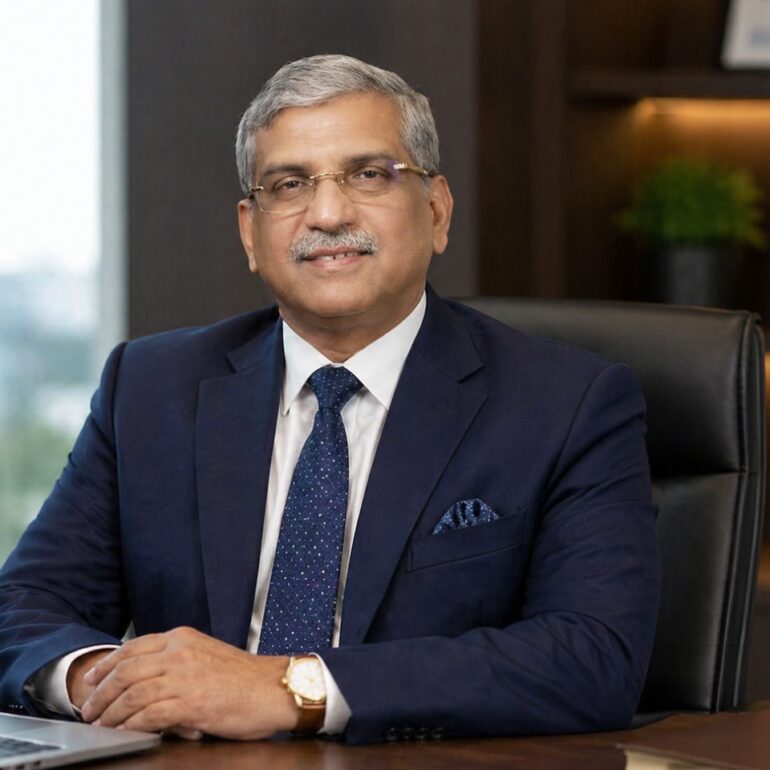

Shan Kadavil
Entrepreneur, Technology Leader
Shan Kadavil is the co-founder and CEO at Freshtohome.com. Shan is an entrepreneur and multi-functional leader who has jump-started many of the popular technology companies and start-ups in the United States and India. In his previous role as the India Founder & Country Manager, Shan is credited for having built the first and largest studio outside the US for Zynga (NASDAQ: ZNGA), a leader in social gaming and maker of popular titles such as Farmville, CityVille, Draw Something, Words with Friends and Mafia Wars. Under Shan’s leadership, Zynga India had witnessed a rocket speed growth owning and launching a number of titles that are the largest at Zynga. Prior to Zynga, Shan ran products department at Support.com (NASDAQ: SPRT), a California-based company considered as the market leader in the support automation domain as their Vice President of Products. Shan has also served in senior management and advisory roles across a number of leading companies in the world. Shan has done his BSc in computer engineering from the Model Engineering College in Cochin (95-99) and his schooling at the Sharjah Indian School (passed out from 12th standard in 1995).
Key Facts
Full Name: Shan Kadavil
Place: Kerala roots; raised in Sharjah, UAE
Title: Co-Founder & CEO, FreshToHome
Other Roles: Chairman, Dbaux Technologies
Occupation: Entrepreneur, Technology Leader
Known For: Building FreshToHome; scaling Zynga India; supply chain disruption in fresh food
A System Problem, Not a Product Idea
The origin story of FreshToHome is often framed as a startup narrative, but at its core, it is a supply chain problem. In India and much of the Middle East, the fish and meat ecosystem has historically been fragmented, dependent on middlemen, inconsistent in quality, and opaque in pricing.
Kadavil’s insight was not simply that consumers wanted fresher food. It was that the system itself was inefficient, both for producers and buyers. Fishermen were underpaid, consumers overpaid, and quality was compromised in transit. The problem was structural, and solving it would require more than an app.
That framing shaped FreshToHome’s approach from the beginning.
Early Life: Between Kerala and the Gulf
Shan Kadavil’s formative years were split between Kerala and the UAE, a dual exposure that is increasingly common among Indian-origin entrepreneurs building global businesses.
He studied at Model Engineering College, one of Kerala’s prominent engineering institutions, after schooling in Sharjah. This combination, a technical education in India and early exposure to international markets, would later influence his approach to business.
Growing up in the Gulf also meant understanding supply chains from a consumer’s perspective. The region depends heavily on imports, and the movement of goods is visible in everyday life. That awareness, while subtle, becomes relevant when building businesses that operate across borders.
Silicon Valley: Learning Product at Scale
Before entrepreneurship, Kadavil spent years in the technology sector, including a senior role at Support.com, where he served as Vice President of Products.
This phase is critical to understanding his later decisions. Silicon Valley is not just about building products; it is about scaling them. It teaches discipline in user experience, automation, and system thinking.
At Support.com, the focus was on remote support and automation, areas that require precision in execution. The experience exposed Kadavil to large-scale product deployment and the importance of building systems that can operate efficiently across geographies.
That mindset, product-first, system-oriented, would later be applied to something far less digitized: the food supply chain.
Zynga India: Building Fast, Scaling Faster
Kadavil’s next major chapter came with Zynga, where he helped set up and scale its India operations.
Zynga, at its peak, was one of the fastest-growing gaming companies globally, driven by titles like FarmVille. The India team played a significant role in product development and scaling operations.
Building Zynga India required speed, coordination, and the ability to manage large teams working on global products. It also demanded a culture of execution, where iteration cycles were short and expectations high.
This experience sharpened Kadavil’s operational instincts. It also demonstrated that India could be more than a back-office location; it could be a core part of global product development.
But it was also a corporate environment. The next step would be more uncertain.
The Birth of FreshToHome
FreshToHome was founded in 2015, co-created with Mathew Joseph, with a focus on delivering fresh fish and meat directly to consumers.
The problem they targeted was specific and widely understood in India. Fish, in particular, often passed through multiple intermediaries before reaching markets. Concerns about formalin and other preservatives had also begun to surface in public discourse.
Kadavil and his co-founder approached the issue differently. Instead of building a marketplace that aggregated suppliers, they focused on vertical integration. The idea was to control sourcing, processing, and delivery.
This meant working directly with fishermen and farmers, setting quality standards, and building logistics infrastructure capable of handling perishable goods.
Early challenges were predictable but complex. Supply chains for fresh food are inherently volatile. Weather affects supply, demand fluctuates daily, and logistics must be tightly coordinated.
Unlike digital products, there is no margin for error when dealing with perishables.
Disrupting the Supply Chain
FreshToHome’s model rests on three pillars: direct sourcing, quality assurance, and technology-enabled logistics.
By sourcing directly from fishermen and farmers, the company reduces the role of intermediaries. This has implications for both pricing and income distribution. Producers can potentially earn more, while consumers pay for better quality.
The focus on chemical-free and antibiotic-free products is central to its positioning. While such claims require ongoing verification and regulatory alignment, they have resonated with urban consumers increasingly concerned about food safety.
Technology plays a less visible but critical role. Managing inventory, predicting demand, and coordinating deliveries require sophisticated backend systems. Unlike traditional e-commerce, where goods can be stored, fresh food requires just-in-time operations.
This is where Kadavil’s product background becomes relevant. The company operates as much as a logistics platform as it does a retail brand.
Scale and Expansion
FreshToHome has expanded across multiple Indian cities and into the UAE, positioning itself as a cross-border food-tech company.
Publicly reported figures suggest significant scale, though exact numbers vary over time. The company has handled millions of orders and built a sizable customer base in urban markets.
It has also attracted high-profile investors, including Amazon, Peter Thiel, and Abu Dhabi’s sovereign-backed ADQ.
Such backing signals confidence in the model, but it also raises expectations. Investors in this category typically look for scale, efficiency, and eventual profitability.
The UAE expansion is particularly strategic. The region’s dependence on imports and its high purchasing power make it an attractive market for premium food delivery services.
Leadership and Work Culture
Kadavil has been associated with early adoption of flexible work structures, including remote and distributed teams. This approach predates the pandemic-driven shift toward remote work and reflects his background in global product teams.
Managing operations across India and the UAE requires a decentralized approach. Teams must operate autonomously while maintaining alignment on quality and execution.
His leadership style appears to emphasize systems over hierarchy. In industries like food logistics, where operations are complex, clarity in processes often matters more than individual decision-making.
Dbaux Technologies: A Parallel Track
Beyond FreshToHome, Kadavil is also associated with Dbaux Technologies.
The company operates in areas related to cybersecurity and infrastructure, including solutions for critical systems. Public information suggests involvement in indigenous technology development, particularly in sectors aligned with government and enterprise needs.
This dual focus, consumer-facing food-tech and deep-tech infrastructure, is unusual but not unprecedented. It reflects a broader trend where entrepreneurs leverage experience from one domain to explore opportunities in another.
However, detailed operational and financial data about Dbaux remains limited in the public domain, and its full scale and impact are less widely reported compared to FreshToHome.
Recognition and Industry Influence
Kadavil has been featured in various industry recognitions, including listings by The Economic Times and Exhibit Magazine.
FreshToHome itself has been the subject of academic and business case discussions, including references in educational contexts such as Stanford Graduate School of Business.
Participation in forums like the World Economic Forum further positions him within global conversations around supply chains and food systems.
Such recognition reflects not just company growth, but also the relevance of the problem being addressed.
Challenges and Market Realities
Despite its growth, FreshToHome operates in a difficult sector.
Fresh food logistics is capital-intensive. Maintaining cold chains, ensuring timely delivery, and managing wastage all add to costs. Margins are thinner compared to traditional e-commerce categories.
Competition is also intensifying. Other food-tech platforms, both startups and established players, are entering the space, often with aggressive pricing strategies.
The broader debate around profitability versus scale remains unresolved. Like many startups, FreshToHome must balance expansion with financial sustainability.
There are also regulatory considerations. Claims around chemical-free or antibiotic-free products require ongoing compliance and verification, particularly as the company expands into new markets.
Legacy and the Road Ahead
Shan Kadavil’s work with FreshToHome sits at the intersection of technology, agriculture, and consumer behavior.
If the model succeeds at scale, it could reshape how perishable goods are sourced and distributed, not just in India but in other emerging markets.
The impact extends beyond consumers. By connecting directly with fishermen and farmers, the platform has the potential to influence income structures and reduce inefficiencies in the supply chain.
Yet, the long-term outcome remains contingent on execution. Building a system is one challenge; sustaining it profitably is another.
In India’s startup ecosystem, where narratives often focus on rapid growth, Kadavil’s approach stands out for its emphasis on infrastructure. It is less about creating a new category and more about fixing an old one.
And in that attempt, to bring transparency, efficiency, and accountability to one of the most fundamental systems in daily life, there is something quietly ambitious, and undeniably outstanding.
Achievements
He has been named twice in the Exhibit magazine “100 Top Tech Indians” list
Economic Times “Most Promising Entrepreneur of 2019”
Honored by the Prime Minister of India as part of the “Champions of Change” program
Shan holds several patents in the areas of Big Data & Cloud Computing
Participated in the World Economic Forum
Shan’s journey in building Freshtohome is now a case study at the Stanford Business School.