Kathakali
Classical Dance-Drama Art Form
Born: 17th Century (origin period)
Place: Kerala, India
Originated from: Krishnanattam, Ramanattam, Temple Arts Traditions
Type: Classical Dance-Drama Art Form
Main Elements: Acting, Dance, Music, Facial Expressions, Mudras
Language: Malayalam & Sanskrit-based Attakatha texts
Major Institution: Kerala Kalamandalam
Global Recognition: One of India’s most celebrated classical performing arts traditions
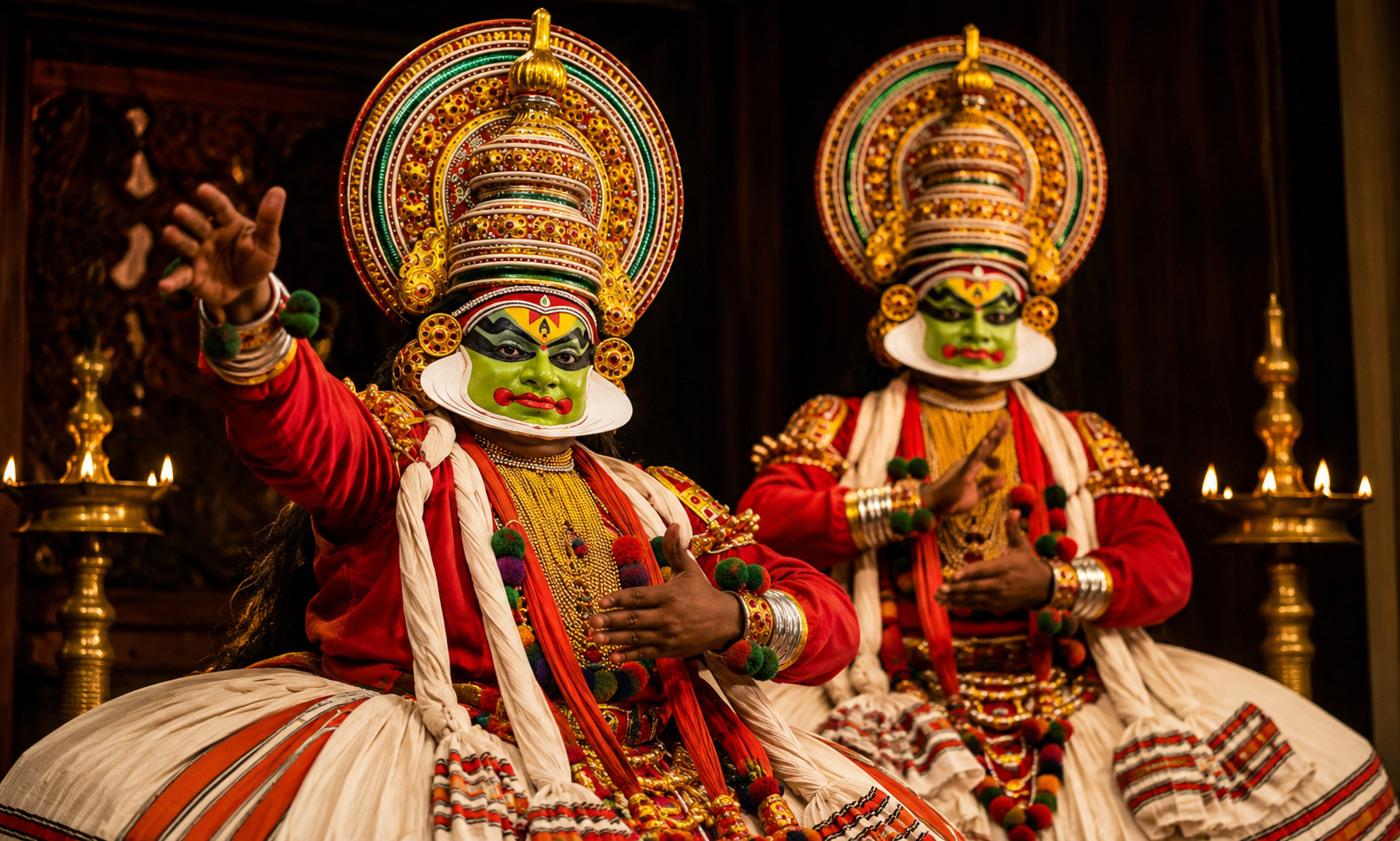
When the drums begin to echo through a temple courtyard in Kerala and a performer slowly steps onto the stage with a painted green face, towering crown, and glowing costume, the atmosphere changes instantly. The air feels dramatic, spiritual, and alive with storytelling. Eyes widen, hands move gracefully, and every facial expression carries emotion stronger than words.
This is Kathakali, one of the most iconic forms of Kerala traditional art and one of the world’s most visually striking performance traditions. Known for its elaborate makeup, expressive acting, classical music, and mythological storytelling, Kathakali is deeply connected to Kerala’s culture, spirituality, and history.
For centuries, this classical dance-drama has entertained, educated, and inspired audiences through stories from Indian epics like the Ramayana and Mahabharata. Today, Kathakali remains an important symbol of Kerala cultural tourism, attracting visitors from around the world who come to experience its magic firsthand.
More than just a performance, Kathakali is a living cultural heritage that combines theatre, dance, music, martial arts, devotion, and storytelling into one unforgettable experience.
What is Kathakali?
Kathakali is a traditional dance-drama from Kerala that combines dance, acting, music, storytelling, facial expressions, and symbolic hand gestures known as mudras. The word “Kathakali” comes from two Malayalam words: Katha, meaning story, and Kali, meaning play or performance. Together, the name simply means “story play.”
Recognized as one of the eight classical dance forms of India, Kathakali is famous for its dramatic presentation style. Unlike many other performance traditions, Kathakali artists usually do not speak during the performance. Instead, they communicate entirely through expressions, movements, and gestures.
Most Kathakali stories are inspired by Indian epics and mythological texts such as the Ramayana, Mahabharata, and Puranas. Heroes, kings, demons, gods, and warriors come alive on stage through powerful performances filled with emotion and symbolism.
A Kathakali performance is not rushed. Every movement has meaning. Every eye movement, hand gesture, and expression helps tell the story. This slow and detailed storytelling style is one of the reasons why Kathakali feels so unique and mesmerizing to audiences around the world.
History and Origin
The origins of Kathakali can be traced back to Kerala during the 16th century. Over time, it developed into a highly refined art form that blended theatre, dance, music, and martial traditions.
Kathakali evolved from older temple and ritual performance arts such as Koodiyattam and Krishnanattam. Koodiyattam, one of India’s oldest surviving Sanskrit theatre traditions, influenced Kathakali’s expressive acting style and dramatic storytelling. Krishnanattam contributed devotional storytelling elements and costume traditions.
Temple culture played an important role in Kathakali’s development. Performances were often organized during temple festivals and royal celebrations. Kings and local rulers supported artists and helped the art form grow across Kerala.
Kathakali was also influenced by Kerala’s ancient martial art, Kalaripayattu. This connection can still be seen in the performers’ strong body control, flexible movements, and energetic fight scenes.
Over centuries, Kathakali became more organized with its own performance techniques, training systems, costumes, music styles, and storytelling traditions. Today, it remains one of Kerala’s most respected cultural treasures.
Makeup and Costumes
One of the most unforgettable aspects of Kathakali is its elaborate makeup and costume design. Few performance traditions in the world are as visually dramatic.
Kathakali artists wear massive layered skirts, detailed ornaments, colorful jackets, and enormous crowns that instantly transform them into mythological characters. The costumes are designed to appear larger than life, especially under traditional oil lamps used during performances.
The facial makeup is highly symbolic. Different colors represent different personality types and moral qualities.
- Green faces usually represent noble heroes, gods, and righteous kings.
- Red and black designs are often used for villains, demons, and aggressive characters.
- Yellow and orange shades are associated with softer or female characters.
The makeup process itself is an art form. Artists may spend several hours preparing before a performance. Layers of natural colors, rice paste, and detailed facial designs are carefully applied by skilled makeup artists.
One of the most recognizable features is the white frame-like structure around the face called Chutti, made using rice paste and paper. This enhances facial expressions and gives Kathakali performers their iconic appearance.
Even before the performance begins, watching artists prepare backstage is considered a fascinating experience for many tourists.
Expressions, Dance and Storytelling
Kathakali storytelling depends almost entirely on expressions and movement. Performers communicate emotions and dialogues without speaking directly.
Artists use highly controlled eye movements, facial expressions, mudras, and body movements to tell the story. Years of training are required to master these techniques.
A central concept in Kathakali is the Navarasas, or the nine emotions:
- Sringara expresses Rati (love, pleasure, delight)
- Hasya expresses Hasa (comic, laugh, mocking)
- Karuna expresses Shoka (pathetic, sad)
- Raudra expresses Krodha (anger, fury)
- Vira expresses Utsaha (vigor, enthusiasm, heroic)
- Bhayanaka expresses Bhaya (fear, concern, worry)
- Bibhatsa expresses Jugupsa (disgust, repulsive)
- Adbhuta expresses Vismaya (wondrous, marvel, curious)
- Shanta expresses Sama (peace, tranquility).
A skilled Kathakali artist can shift between these emotions with incredible precision using only facial muscles and eye movements.
The performances are emotionally intense and visually powerful. Fight scenes, emotional moments, and dramatic confrontations are performed with energy and rhythm that keep audiences deeply engaged.
Even viewers who do not understand the language can follow the emotions and storytelling because of the performers’ expressive power.
Music and Instruments
Music plays a vital role in every Kathakali performance. Traditional singers narrate the story through rhythmic singing while musicians create emotional intensity using percussion instruments.
The most important instruments include:
- Chenda – a loud cylindrical drum known for its powerful sound
- Maddalam – a softer drum played with the hands
- Idakka – a traditional hourglass-shaped drum capable of producing melodic tones
The rhythm of the drums controls the pace of the performance. Slow beats create tension and emotion, while fast drumming builds excitement during action scenes.
Together, the music and performance create an atmosphere that feels deeply connected to Kerala’s temple and cultural traditions.
Famous Kathakali Centres and Places in Kerala
Several important cultural institutions and destinations in Kerala are closely associated with Kathakali.
- Kerala Kalamandalam
Located in Cheruthuruthy near Thrissur, Kerala Kalamandalam is the most famous institution dedicated to Kerala classical arts. Established in 1930, it has trained generations of Kathakali artists and helped preserve the tradition.
- Kochi
Fort Kochi is one of the best places for tourists to watch Kathakali performances. Cultural centers organize daily evening shows specially designed for visitors, often including makeup demonstrations before the performance.
- Thiruvananthapuram
The capital city hosts several cultural venues and festivals where Kathakali performances are regularly held.
- Temple Festivals
Many temple festivals across Kerala continue to present all-night Kathakali performances as part of religious and cultural celebrations.
Watching a live Kathakali show while visiting Kerala is considered one of the most memorable cultural experiences in the state.
Kathakali in Modern Times
While Kathakali remains deeply traditional, it has also adapted to modern audiences.
Traditional performances once lasted throughout the night, but today shorter versions are often presented for tourists and cultural programs. These compact performances introduce newcomers to the art form in a more accessible way.
Women have also increasingly entered the world of Kathakali performance, which was historically dominated by men.
Kathakali has gained international recognition as well. Artists now perform around the world, and experimental productions based on Shakespeare and global stories have expanded the art form’s reach.
Even as it evolves, Kathakali continues to preserve its classical techniques, spiritual roots, and storytelling traditions.
Why Kathakali is Important to Kerala
Kathakali is far more than entertainment. It is one of the strongest symbols of Kerala’s cultural identity.
The art form preserves centuries of mythology, storytelling, music, costume design, theatre traditions, and spiritual expression. Through every performance, ancient stories continue to live for new generations.
Kathakali also represents the discipline and dedication of artists who spend years mastering expressions, movement, music, and performance techniques.
Today, Kathakali is recognized globally as one of India’s greatest classical performance traditions and remains a major attraction within Kerala cultural tourism.
For many visitors, watching Kathakali becomes a deeper cultural experience, one that reveals Kerala’s artistic soul.
Conclusion
Kathakali is not simply a dance performance. It is a living tradition shaped by centuries of Kerala’s history, spirituality, theatre, music, and storytelling.
From painted faces and dramatic costumes to powerful expressions and rhythmic drums, every part of Kathakali carries emotion and meaning. It connects ancient mythology with human emotions in a way that feels timeless and universal.
For travelers visiting Kerala, experiencing a live Kathakali performance is more than sightseeing. It is an opportunity to witness one of the world’s most extraordinary cultural traditions up close.
In every eye movement, every drumbeat, and every gesture, Kathakali continues to keep the spirit of Kerala alive.