kolkali
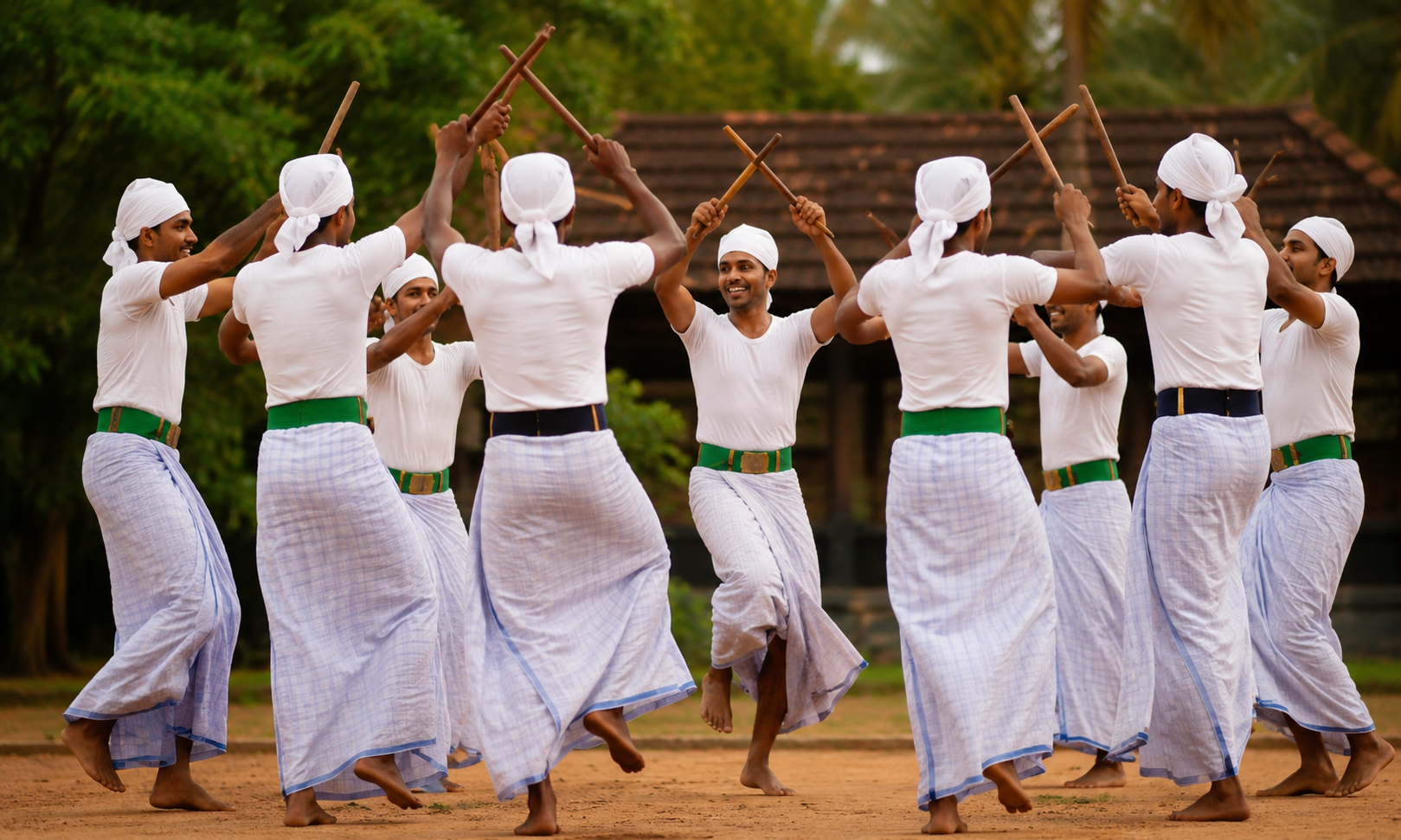
Group folk dance performed with sticks
This is Kolkali, one of Kerala’s most vibrant and visually striking folk art traditions. Deeply connected to the cultural life of the Malabar region, Kolkali combines rhythm, teamwork, movement, martial discipline, and community celebration into a single energetic performance.
Known for its synchronized stick movements, circular dance formations, and strong connection with Kerala’s martial traditions, Kolkali continues to remain an important symbol of Kerala’s folk heritage, especially through village festivals and school cultural competitions.
Location / Region
Mainly performed in the Malabar region of northern Kerala, especially in districts such as:
- Malappuram
- Kozhikode
- Kannur
- Kasaragod
What is Kolkali?
Kolkali is a traditional folk art form of Kerala in which performers dance in circles while rhythmically striking small wooden sticks together. The word “Kol” means stick, while “Kali” means play or performance.
The performance is usually presented by groups moving in synchronized circular formations. The dancers sing traditional songs while coordinating their footwork, stick movements, and body rhythm with remarkable precision.
At first, the performance begins slowly and calmly. But as the rhythm builds, the circles move faster, the movements become sharper, and the entire performance transforms into an energetic display of teamwork and discipline.
One of the most fascinating aspects of Kolkali is the unity among performers. Every movement depends on timing, concentration, and coordination. A single mistake can disrupt the rhythm of the entire group.
This strong sense of collective movement makes Kolkali feel both artistic and deeply communal.
Traditionally performed during village festivals, social gatherings, and celebrations, Kolkali remains one of the most recognizable folk arts of northern Kerala.
Origin and Historical Background
The origins of Kolkali are believed to be ancient, deeply connected to Kerala’s martial traditions and community life in the Malabar region.
Over generations, the art form evolved as both a cultural performance and a physical discipline that encouraged coordination, agility, teamwork, and rhythmic movement.
Kolkali is strongly influenced by Kalaripayattu, Kerala’s ancient martial art tradition. Many of the body movements, footwork patterns, and training methods used in Kolkali resemble techniques found in Kalaripayattu.
The performers’ quick reflexes, balance, posture, and synchronized movements reflect martial discipline combined with artistic expression.
In earlier times, village communities passed down Kolkali traditions orally and through practical training. Local teachers trained younger generations in rhythm, movement, stick coordination, and performance discipline.
Because of its martial roots and community participation, Kolkali became more than just entertainment. It represented unity, physical skill, discipline, and shared cultural identity.
Even today, traces of Kerala’s warrior traditions can still be seen in the energetic style of the performance.
Performance Style and Techniques
A Kolkali performance is filled with rhythm, precision, and energy.
The performers usually stand in circular formations and begin moving rhythmically while striking their sticks together in carefully timed patterns. As the performance progresses, the circles expand and contract smoothly, creating visually dynamic movements.
The footwork is fast, coordinated, and deeply rhythmic. Every performer must move in perfect synchronization with the others while maintaining continuous stick patterns and body balance.
The striking of sticks creates a strong rhythmic sound that becomes the heartbeat of the performance.
Singing is also an important part of Kolkali. Traditional songs guide the rhythm and flow of movements while adding emotional energy to the performance.
One of the most exciting aspects is the gradual rise in tempo. The performance usually begins at a slower pace and steadily grows faster and more intense until it reaches a dramatic climax.
For audiences, watching Kolkali feels almost hypnotic. The rhythm, movement, and collective coordination create an atmosphere of excitement and celebration.
Different Types of Kolkali
Kolkali exists in several forms and regional variations across Kerala.
- Actual Kolkali
This is the traditional form of Kolkali practiced mainly in Malabar villages. It emphasizes synchronized circular movement, rhythmic stick striking, and community participation.
- Thekkan Koladi
Thekkan Koladi is a more structured and widely performed variation that survives strongly today through school arts competitions and cultural festivals.
This style is especially popular in the Kerala School Kalolsavam, where students across Kerala compete in traditional art performances.
- Thacholikali
Thacholikali is a martial variation connected more strongly with warrior traditions and combat-style movements inspired by Kalaripayattu.
- Rajasooyam
Rajasooyam is another traditional variation that combines rhythmic performance with ceremonial and martial elements.
Today, some older forms of Kolkali are slowly disappearing because of changing lifestyles and reduced community practice. However, school festivals and cultural organizations continue to help preserve important variations of the art form.
Kolkali in Modern Kerala
In modern Kerala, Kolkali continues to survive mainly through cultural festivals, educational institutions, and school competitions.
One of the biggest platforms for preserving the art form is the Kerala School Kalolsavam, considered one of Asia’s largest cultural festivals. Thousands of students participate in folk art competitions every year, including Kolkali performances.
These school festivals play a major role in introducing younger generations to Kerala’s traditional arts.
For many students, learning Kolkali becomes a source of cultural pride and teamwork. Teachers and trainers work hard to preserve traditional songs, movement patterns, and rhythmic techniques while adapting performances for modern stages.
In the Malabar region especially, Kolkali remains closely connected to local identity and cultural memory.
Though village-based traditional performances have become less common than before, stage performances and school competitions continue to keep the spirit of Kolkali alive.
Cultural Importance
Kolkali represents many important values within Kerala’s folk culture.
At its core, the art form celebrates:
- Unity
- Discipline
- Teamwork
- Rhythm
- Community bonding
Every performer depends on the group, making cooperation and trust essential to the performance.
Kolkali also reflects Kerala’s long connection between martial traditions and artistic expression. Through rhythm and movement, the performance preserves traces of ancient warrior culture while remaining joyful and accessible.
For the people of Malabar, Kolkali is more than entertainment. It is a cultural memory carried through generations, festivals, schools, and community celebrations.
The art form continues to remind audiences of Kerala’s rich folk traditions and the importance of preserving local cultural identities in a rapidly changing world.
Conclusion
Kolkali is not simply a folk dance performed with sticks. It is a living expression of Kerala’s rhythm, unity, discipline, and community spirit.
From village grounds in Malabar to the bright stages of Kerala School Kalolsavam, the art form continues to bring people together through movement, music, and collective energy.
Its circular formations, rising tempo, and synchronized movements create an unforgettable visual experience that reflects the strength and beauty of Kerala’s folk heritage.
As modern life changes traditional village culture, preserving Kolkali becomes increasingly important for future generations. Through schools, festivals, and dedicated artists, this vibrant art form continues to survive as one of Kerala’s proud cultural treasures.