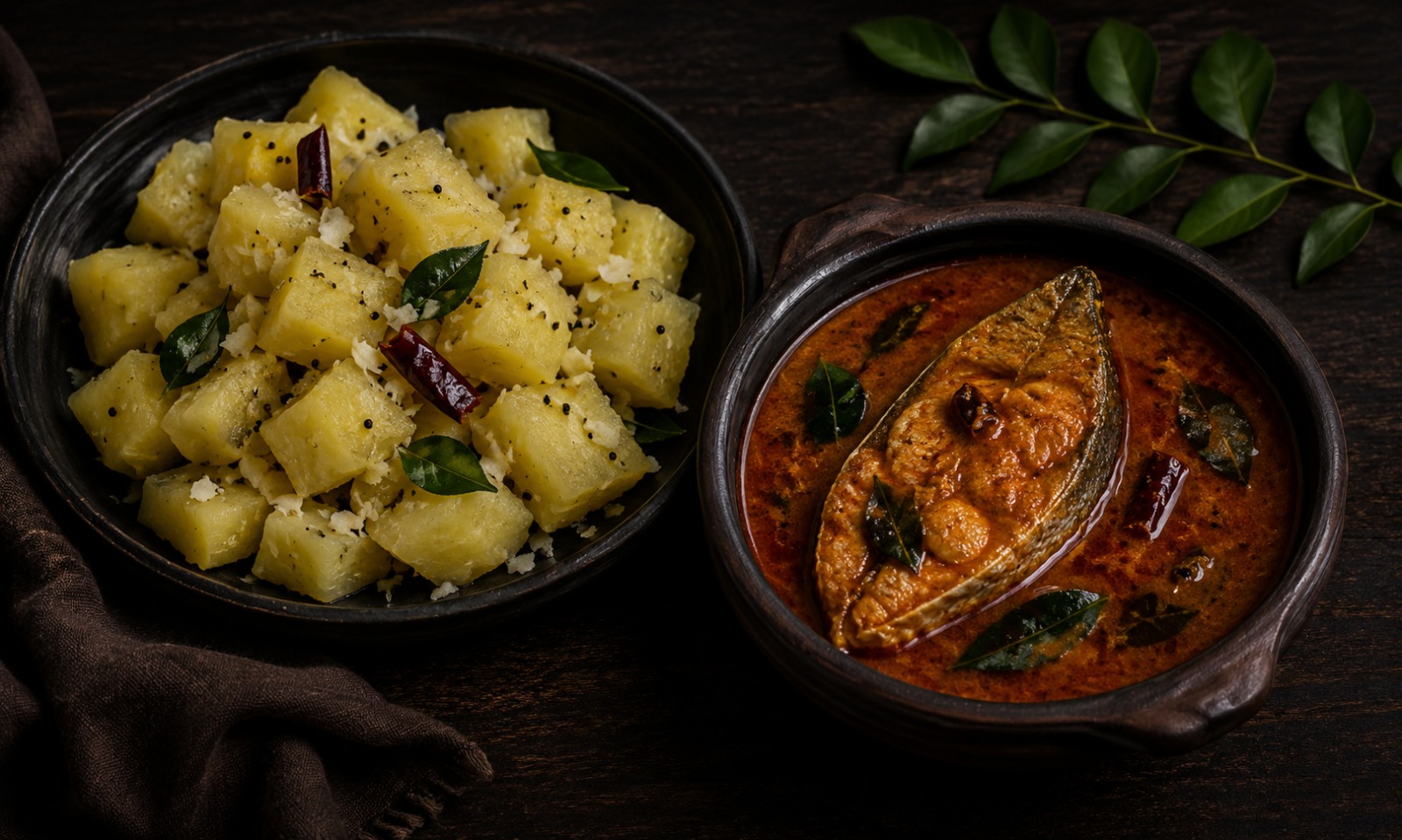
Kappa and Meen Curry is one of Kerala’s most loved traditional meals, combining soft boiled tapioca with spicy fish curry flavoured with kudampuli, red chilli, curry leaves, and coconut oil. Once closely associated with rural homes, fishing communities, and toddy shops, the dish has become a popular part of Kerala’s food culture. Simple, filling, and full of flavour, it remains a comforting taste of Kerala’s everyday culinary traditions.
The Rustic Flavours of Kerala
Simple in ingredients yet deeply emotional in meaning, the dish has long belonged to fishermen, farmers, toddy shop regulars, and working-class households across the state. Kappa, or tapioca, paired with spicy fish curry is not merely food in Kerala. It is memory, labor, survival, and comfort served together on a plate. The softness of boiled tapioca absorbs the sharp, smoky intensity of meen curry with remarkable balance, creating one of Malayalam cuisine’s most enduring pairings.
The identity of the dish begins with its ingredients, each carrying its own story. Tapioca arrived in Kerala centuries ago and slowly rooted itself into everyday life. Fish, abundant along Kerala’s coastline and backwaters, naturally became its companion. Kudampuli, the smoked Malabar tamarind used in many traditional fish curries, lends the gravy its signature sour depth. Red chilli brings heat and color, while curry leaves and coconut oil create the unmistakable aroma of Kerala kitchens.
Most importantly, the curry is traditionally cooked in a manchatti, the earthen clay pot that shapes both flavor and memory. The porous clay softens the sharpness of spices while intensifying smokiness and warmth. In Kerala homes, fish curry cooked in a manchatti often tastes even better the next day, after the flavors deepen overnight.
The Story of Tapioca in Kerala
Tapioca was not always beloved in Kerala. Historically, it arrived during periods of food scarcity when rice shortages threatened poorer communities. During the reign of Maharaja Visakham Thirunal in Travancore during the nineteenth century, tapioca cultivation was encouraged as a practical solution to famine and agricultural instability.
What began as survival food slowly became cultural identity.
Easy to cultivate and capable of growing even in difficult conditions, tapioca entered the kitchens of laborers, farmers, and rural households. Over time, Kerala transformed the root from necessity into comfort food. Boiled kappa became central to daily meals because it was affordable, filling, and sustaining.
In many villages, particularly across central and southern Kerala, evenings often revolved around large vessels of steaming tapioca shared among family members returning from fields, fishing boats, or construction work.
The Soul of the Meen Curry
If kappa provides comfort, meen curry provides fire.
Traditional Kerala fish curry is built around sharp contrasts, sourness from kudampuli, heat from red chilli, richness from coconut oil, and the earthy aroma of curry leaves. Fish such as sardine, mackerel, seer fish, or pearl spot are simmered gently inside clay pots until the flesh absorbs every layer of spice.
The curry itself is visually unforgettable. Deep crimson in color, slightly smoky from roasted spices, and glossy with coconut oil, it arrives carrying an aroma that announces itself long before the first bite.
Regional differences shape the curry across Kerala’s coastline. In some areas, coconut paste softens the gravy. In others, especially along southern Kerala, the curry remains intensely sharp and fiery with minimal coconut richness.
Yet regardless of variation, the emotional purpose remains the same, to bring warmth, intensity, and satisfaction to a humble plate of boiled kappa.
A Meal of Fishermen and Villages
For generations, kappa and meen curry belonged to ordinary life.
Fishermen returning from the sea after dawn often ate the dish because it was inexpensive, filling, and rich in energy. Agricultural workers relied on tapioca for sustenance during long days in fields and plantations. In village homes, the meal became associated with simplicity and resilience.
There is something profoundly unpretentious about it. Unlike ceremonial feasts reserved for festivals, kappa and meen curry belonged to daily survival. Yet precisely because of that, it developed extraordinary emotional weight among Malayalis.
Even today, many associate the dish with childhood afternoons in ancestral homes, rainy evenings beside wood-fired kitchens, or meals shared silently after exhausting workdays.
Toddy Shops and Cultural Identity
No discussion of kappa and meen curry is complete without Kerala’s toddy shops.
Across the state, especially in Alappuzha, Kottayam, and Kollam, toddy shops elevated the dish into cultural iconography. Served beside fresh toddy in modest wooden interiors, kappa and meen curry became inseparable from Kerala’s working-class food culture.
The meal’s popularity in toddy shops helped carry it beyond village homes into wider public identity. Eventually, restaurants and tourism campaigns embraced it as a defining symbol of authentic Kerala cuisine.
Today, upscale eateries may plate kappa elegantly for travelers, but the dish still feels most truthful inside small roadside shops where fish curry bubbles quietly in blackened clay pots.
Nostalgia, Memory, and Malayalam Culture
Malayalam cinema and literature have long embraced kappa and meen curry as shorthand for home, rural life, and emotional authenticity. The dish appears repeatedly in films depicting village kitchens, coastal families, and ordinary Malayali existence.
For Malayalis living abroad, especially in Gulf countries, few meals trigger nostalgia as instantly. The scent of kudampuli fish curry alone can transport someone back to monsoon evenings in Kerala.
That emotional power explains why the dish continues to endure across generations.
In modern Kerala, where global cuisines increasingly dominate urban food culture, kappa and meen curry has survived not through reinvention but through honesty. Younger chefs now revisit traditional cooking methods, while tourists actively seek authentic toddy shop experiences centered around the dish.
Health-conscious diners also rediscover tapioca as a minimally processed traditional food deeply connected to Kerala’s agricultural roots.
But beyond trends, the meal survives because it carries something larger than flavor.
Kappa and meen curry remains a story of Kerala itself, of hardship transformed into identity, of coastal spice traditions, of clay pots simmering through rain-heavy evenings, and of families gathering around food that asks for nothing extravagant except hunger and togetherness. Even today, this outstanding dish continues to stand as one of Kerala’s most powerful edible memories, humble, fiery, comforting, and deeply alive with the spirit of the land.