Sahal Abdul Samad
Indian Footballer
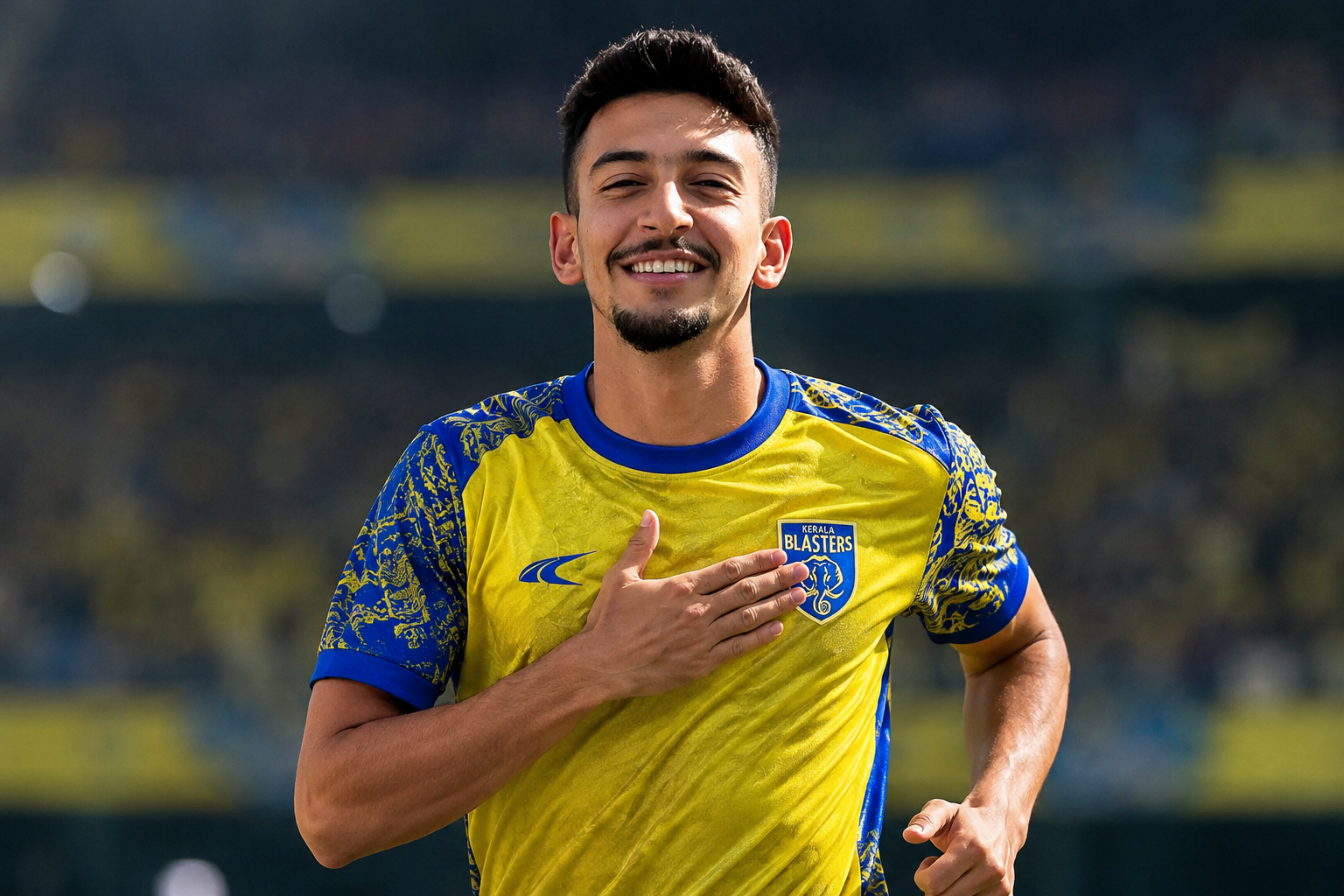
Sahal Abdul Samad is a professional footballer who plays as a midfielder for Indian Super League club Mohun Bagan. Born in the United Arab Emirates, he plays for the India national team. Sahal was born in Al Ain, UAE, to Malayali parents from Kerala, India and completed his 14 years of schooling at New Indian Model School in Al Ain. He started to play football at the age of eight.
Key Factors
Full Name: Sahal Abdul Samad
Date of Birth: 1 April 1997
Position: Attacking Midfielder / Winger
Known For: Dribbling, creativity, ball control, midfield intelligence
Sahal Abdul Samad emerged at a time when Indian football was desperately searching for artistry. In an era increasingly dominated by systems, athleticism, and rigid tactical structures, Sahal arrived with something rarer, elegance. His close control, drifting movement between midfield lines, and ability to glide past defenders turned him into one of the most emotionally adored footballers in modern Indian football. Born in Al Ain in the United Arab Emirates to Malayali parents from Kannur, Sahal carried with him the dreams of Kerala’s football-obsessed culture and the emotional identity of Gulf Malayalis who grew up loving the sport from afar.
From university tournaments in Kerala to becoming the face of Kerala Blasters FC and later making a high-pressure move to Mohun Bagan Super Giant, his journey has mirrored the evolution of Indian football itself. To fans, Sahal was never merely a midfielder. He became a symbol of creativity, calmness, and footballing imagination in a game that often rewards efficiency over beauty.
The Midfielder
From Gulf playgrounds to packed stadiums in Kochi and Kolkata, Sahal Abdul Samad became the emotional heartbeat of a generation of Indian football fans
The noise inside the Jawaharlal Nehru Stadium in Kochi often arrives before the ball reaches him.
A midfielder checks over his shoulder, receives possession under pressure, and suddenly thousands rise in anticipation. One feint. One turn. One glide past a defender. Then another. In those moments, Sahal Abdul Samad transformed football matches into something emotional rather than merely tactical.
For Kerala Blasters supporters, Sahal was not simply an Indian Super League footballer. He became an experience. A player whose movements carried imagination in a sport that Indian audiences often consume through statistics, league tables, and imported stars.
Long before he became one of Indian football’s most technically gifted midfielders, Sahal was a Malayali child growing up in the Gulf, surrounded by football dreams shared by an entire migrant generation.
Growing Up Between Al Ain and Kerala
Sahal was born on 1 April 1997 in Al Ain in the United Arab Emirates, where thousands of Malayali families had built lives far away from Kerala. His parents were originally from Payyanur in Kannur district, a region where football is woven deeply into local culture.
For Gulf Malayali children, football often becomes more than recreation. It is community identity.
Evenings in residential grounds, improvised tournaments, arguments over European clubs, and endless conversations about football shaped childhoods across expatriate communities. Sahal grew up inside that atmosphere.
He studied at the New Indian Model School and joined the Al-Ethihad Football Academy, where his technical relationship with the ball began developing seriously. Coaches quickly noticed something distinctive about him, his comfort in tight spaces.
While many young players relied on physicality or direct running, Sahal seemed instinctively drawn toward control, rhythm, and spatial intelligence. He enjoyed carrying the ball through pressure rather than avoiding it.
Yet Gulf football culture and Kerala football culture are emotionally different worlds.
The Gulf offered infrastructure and exposure. Kerala offered obsession.
When Sahal moved to Kerala for higher studies and football opportunities, he entered a landscape where football carried emotional intensity unlike anything he had previously experienced.
The Kerala Football Ecosystem
Kerala’s football culture exists outside the mainstream structures of Indian football power. Unlike states built around institutional academies or corporate clubs, Kerala football thrives through emotional participation.
Local sevens tournaments, university football, district competitions, and packed local grounds create an ecosystem where technical players are celebrated passionately.
Sahal flourished there.
While studying in Kannur, he began attracting attention through university football and state-level competitions. His performances in the Santosh Trophy circuit became especially significant. The competition has historically acted as a bridge between grassroots football and professional opportunities in India.
Scouts noticed not only his dribbling ability but also his calmness under pressure.
Indian football has traditionally produced hardworking midfielders and athletic runners. Technically expressive midfielders capable of manipulating space creatively have been rarer.
Sahal looked different.
The Kerala Blasters Transformation
His signing with Kerala Blasters FC reserves marked the beginning of a transformation that would eventually redefine his public identity.
Initially, he captained the club’s B team and impressed in the I-League 2nd Division. Coaches within the system quickly realised his technical ceiling was unusually high by Indian football standards.
Then came the senior-team opportunity.
Sahal made his ISL debut memorably by replacing legendary striker Dimitar Berbatov, a symbolic moment that quietly hinted at Kerala Blasters’ changing future.
By the 2018–19 season, he exploded into prominence.
That year changed everything.
His performances carried flair without arrogance. He drifted between midfield lines intelligently, connected attacks smoothly, and retained possession under pressure with uncommon composure. Fans immediately connected with the way he played.
In Kerala, football audiences often value artistry as much as results.
Sahal embodied that aesthetic instinct.
Winning the ISL Emerging Player award confirmed what supporters already believed: Kerala Blasters had found their footballing identity.
More Than a Footballer in Kerala
After Sandesh Jhingan departed the club, Sahal gradually became Kerala Blasters’ emotional centre.
That transformation carried enormous pressure.
Kerala football culture is deeply emotional and intensely demanding. Players are adored passionately but also scrutinised relentlessly. Expectations from local stars become overwhelming quickly.
Yet Sahal retained a calm public personality.
Even amid transfer rumours linking him to bigger clubs, he stayed connected to supporters in ways that strengthened emotional loyalty. Young fans across Kerala copied his hairstyle, celebrated his dribbling clips online, and wore his jersey as cultural identity.
For many supporters, Sahal represented something beyond club football.
He represented Malayali football dreams becoming nationally visible.
The Beauty and Frustration of His Playing Style
Technically, Sahal remains one of Indian football’s most naturally gifted midfielders.
His first touch is exceptionally soft. He receives the ball comfortably under pressure and uses body orientation intelligently to escape markers. His dribbling relies less on raw pace and more on balance, rhythm shifts, and close control.
He excels particularly in half-spaces, those narrow attacking areas where quick decisions determine whether attacks collapse or progress.
Over time, coaches used him across multiple positions: attacking midfielder, winger, central creator, even deeper linking roles.
Yet his career has also included criticism.
For years, observers questioned his consistency, end product, and statistical output. While aesthetically impressive, he sometimes struggled to convert influence into goals and assists consistently.
That criticism was not entirely unfair.
Indian football increasingly demands measurable efficiency from attacking players. Sahal occasionally appeared caught between artistic instinct and tactical expectation.
The Season That Changed Perceptions
The 2021–22 ISL season became the turning point.
After enduring a long goal drought, Sahal suddenly found rhythm in front of goal. He scored in consecutive matches, attacked spaces more aggressively, and played with greater confidence inside the penalty area.
His performances became decisive rather than merely attractive.
That season, Kerala Blasters FC reached the ISL final, and Sahal emerged as one of the league’s most influential Indian players. Analysts and pundits who once questioned his productivity began acknowledging his tactical maturity.
The transformation felt psychological as much as technical.
He was no longer simply entertaining.
He was becoming decisive.
The Emotional Departure to Mohun Bagan
Then came one of the most emotionally charged transfers in modern Indian football.
Sahal’s move to Mohun Bagan Super Giant triggered heartbreak among Kerala Blasters fans. Social media filled with emotional tributes, farewell edits, and nostalgic clips.
For many supporters, the transfer felt personal.
Yet football careers demand evolution.
Joining Mohun Bagan represented ambition, pressure, and reinvention simultaneously. Kolkata football culture differs sharply from Kerala’s. The emotional intensity is harsher, the expectations heavier, and the scrutiny constant.
At Mohun Bagan, success is not admired.
It is demanded.
For Sahal, adapting to that environment meant redefining himself again within a squad filled with elite expectations and continental ambitions.
India Career and National Expectations
Sahal’s rise naturally carried into the India national football team setup.
His performances in the SAFF Championship and important goals against teams like Afghanistan, Nepal, and Mongolia strengthened his role within the national squad. Coaches viewed him as a midfielder capable of progressing possession creatively, something India has historically lacked consistently.
Yet national-team expectations remain complicated.
Indian football supporters often project enormous hopes onto technically gifted players. Sahal increasingly became seen as someone who could elevate India stylistically, not merely competitively.
Whether under defensive systems or possession-based structures, fans wanted him to become India’s creative leader.
Beyond the Pitch
Off the field, Sahal’s personality remains notably understated.
Despite growing fame, endorsements with brands like Puma and Predator Energy, and strong social-media visibility, he retains a quiet public image.
He contributed to COVID-relief initiatives and has consistently maintained close engagement with fans. His marriage to Reza Farhath added another deeply personal chapter to a life already closely followed by Kerala football supporters.
Unlike many modern athletes shaped by hyper-commercial branding, Sahal still appears emotionally accessible to fans.
That relatability matters enormously in Kerala.
Sahal and the Identity of Modern Kerala Football
Kerala football culture has always celebrated flair players emotionally.
From local sevens tournaments to ISL nights in Kochi, supporters admire footballers who create moments rather than merely complete systems.
Sahal became symbolic of that tradition.
He also represents the identity of Gulf Malayalis whose children grew up balancing two emotional homes, the Gulf where they were raised, and Kerala where cultural belonging remained rooted.
For younger footballers across Kerala, Sahal’s rise carried enormous significance. He proved that technically elegant footballers from the state could become nationally important figures.
Not merely participants.
Icons.
Conclusion
Modern football increasingly prioritises systems, athletic intensity, and efficiency. In that environment, players like Sahal Abdul Samad feel emotionally important because they remind audiences that creativity still matters.
From the football grounds of Al Ain to the roaring stadiums of Kochi and Kolkata, Sahal’s journey has become intertwined with the emotional story of modern Indian football itself. He is not the loudest footballer, nor always the most statistically dominant. But few Indian players have made supporters feel the game quite the way he does.
For Kerala fans especially, Sahal represents more than goals or trophies. He represents imagination, elegance, vulnerability, and the enduring romance of football culture in a state where the sport is experienced not just as entertainment, but as identity.
Honours
Mohun Bagan
- Durand Cup: 2023
- ISL Cup: 2025
- IFA Shield: 2025
- Indian Super League Shield : 2023–24, 2024–25
India
- SAFF Championship: 2021, 2023
- Tri-Nation Series: 2023
- Intercontinental Cup: 2023
Individual
- ISL Emerging Player of the Season: 2018–19
- AIFF Emerging Player of the Year: 2018–19