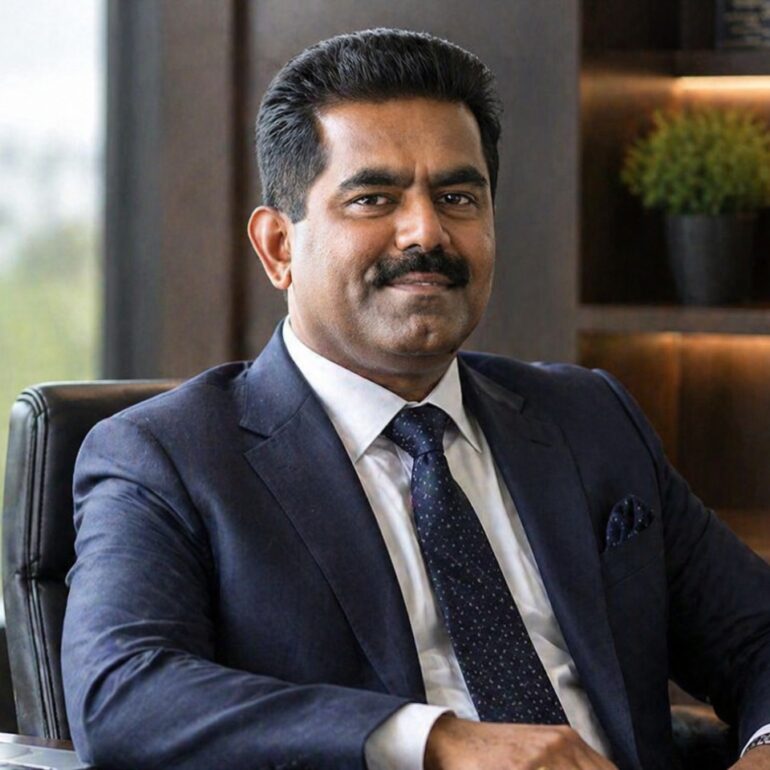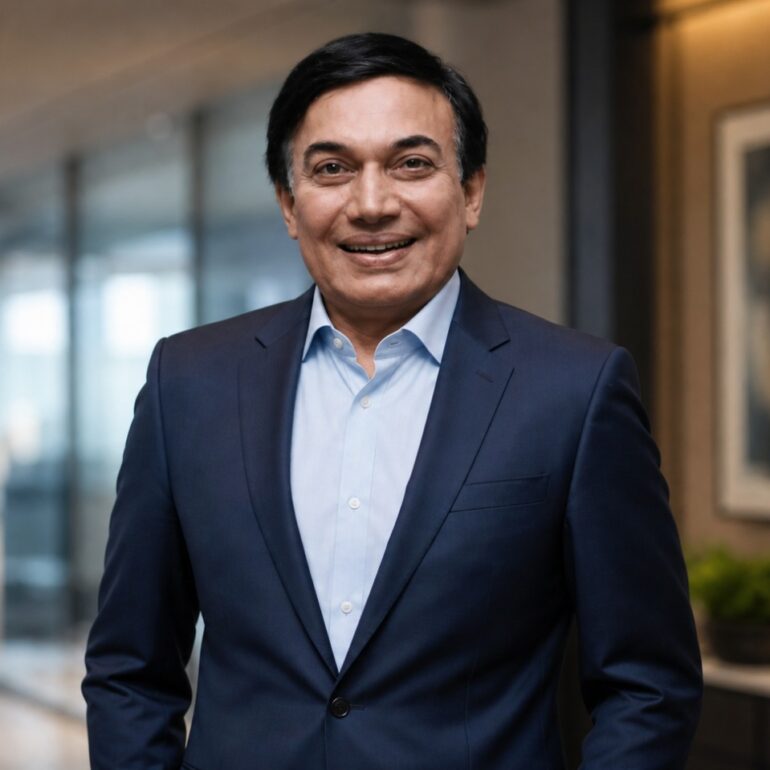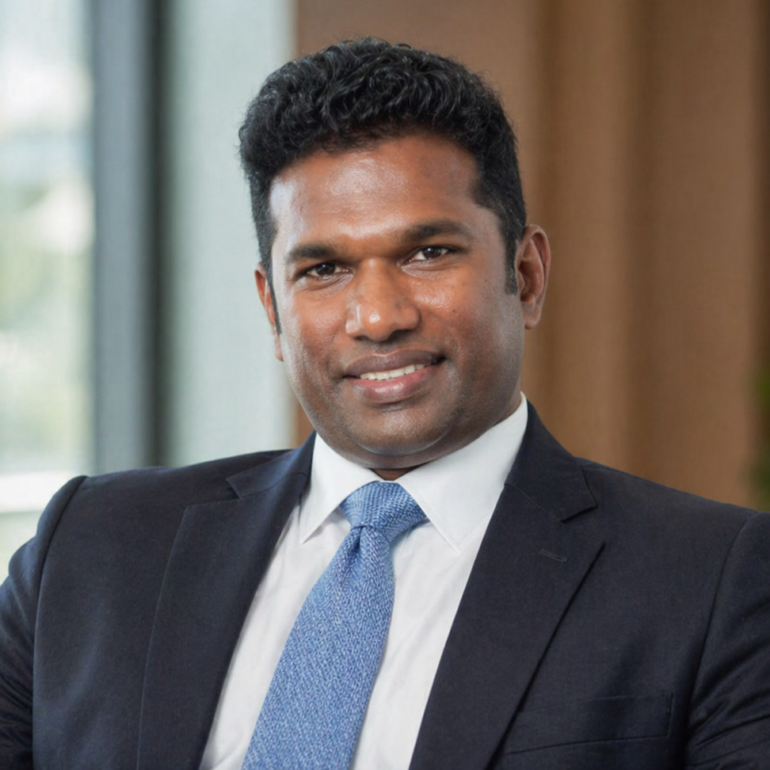

K.G. Anilkumar
Founder, Chairman, and Managing Director (CMD) of ICL Fincorp
K.G. Anilkumar is the founder, Chairman, and Managing Director (CMD) of ICL Fincorp, a rapidly growing Non-Banking Financial Company (NBFC) based in Thrissur, Kerala. He has led the company since its inception in 1991, expanding it from a single location to a pan-India presence with over 350 branches. He holds a BA, MBA, and LLB, and is a noted leader in the financial services sector. Alongside his wife, Uma Anil Kumar (CEO & Whole-time Director), he has grown ICL Fincorp into a diversified group, including ICL Fincorp Ltd, ICL Chits Ltd, ICL Builders Ltd, and ICL Tours & Travels. He leads the company’s growth in gold loans, business loans, and other financial services, recently expanding into Northern India. He stands as an outstanding example of how localized finance models can scale without losing their core customer base.
Key Facts
Full Name: K.G. Anilkumar
Place: Kerala, India
Title: Founder, Chairman & Managing Director
Occupation: Entrepreneur, Financial Services Leader
Known For: Building ICL Fincorp into a diversified NBFC group with multi-vertical operations
In the early 1990s, Kerala’s financial landscape operated on a mix of formal banks and deeply entrenched informal credit systems. It was in this environment, in 1991, that K.G. Anilkumar set up what would eventually become ICL Fincorp Ltd. The early office was modest, operating in a market where trust mattered more than scale, and where lending was as much about relationships as it was about capital.
Those first years were defined by caution rather than speed. Unlike venture-backed financial startups of today, growth came incrementally, built on repayment cycles, customer familiarity, and operational discipline. What began as a small financial services initiative would, over time, evolve into a multi-vertical NBFC group with hundreds of branches across India.
Early Life and Education
K.G. Anilkumar’s academic background reflects a blend of commerce, management, and legal awareness, an uncommon combination among first-generation financial entrepreneurs of his time. With a Bachelor’s degree followed by an MBA and later a law degree (LLB), he entered the business world with both analytical and regulatory awareness.
This educational grounding proved critical. The NBFC sector in India has historically been shaped by evolving compliance frameworks, capital adequacy norms, and regulatory scrutiny. Entrepreneurs without a grasp of these dynamics often struggled to sustain growth.
While detailed accounts of his early life remain limited in the public domain, it is evident that his entry into finance was not accidental. It was shaped by an understanding of market gaps, particularly in serving customers underserved by traditional banking institutions.
The Founding of ICL Fincorp
The early 1990s were a transitional period for India’s economy. Liberalization had begun, but formal financial access remained limited, especially in semi-urban and rural regions.
In Kerala, this gap was particularly visible. While the state had high literacy and remittance inflows from the Gulf, access to structured credit remained uneven. Informal lenders filled the void, often at high interest rates and with limited accountability.
ICL Fincorp was founded within this context. The initial business model focused on providing accessible credit solutions, particularly to individuals and small businesses who found it difficult to secure loans from banks.
The early challenges were significant. Capital constraints, regulatory compliance, and customer acquisition all posed hurdles. More importantly, building trust in a financial business required consistency over time. Unlike trading or manufacturing, finance operates on credibility, a fragile asset in the early stages of any NBFC.
Anilkumar’s approach appears to have been conservative but deliberate. Instead of aggressive expansion, the focus was on stabilizing operations and ensuring repayment discipline.
Scaling the Business
Over the next three decades, ICL Fincorp expanded from a single office into a network of more than 350 branches across India. This growth was not linear; it reflected shifts in product strategy, geographic expansion, and regulatory adaptation.
One of the key growth drivers was diversification within lending verticals. The company entered segments such as gold loans, which have long been a cornerstone of Kerala’s NBFC ecosystem. Gold loans offer secured lending with relatively lower risk, making them an attractive product for both lenders and borrowers.
In addition to gold loans, the company expanded into business loans and other financial services, broadening its asset portfolio. This diversification allowed ICL to reduce dependency on a single revenue stream, a critical factor in managing risk within the NBFC sector.
Operationally, scaling required building a decentralized branch network while maintaining centralized control over credit policies and compliance. This balance is often difficult to achieve, particularly in geographically dispersed operations.
Anilkumar’s growth philosophy appears to have prioritized steady expansion over rapid scaling, a strategy that aligns with the inherently risk-sensitive nature of financial services.
Building a Diversified Group
As ICL Fincorp matured, the group expanded beyond core lending into multiple verticals. This diversification reflects both opportunity-seeking and risk distribution.
ICL Chits Ltd operates in the chit fund segment, a traditional financial instrument widely used in Kerala. While regulated, chit funds require strong operational discipline and trust, both of which are built over time.
ICL Builders Ltd represents a move into real estate, a sector that often intersects with financial services through housing finance and investment. This vertical allows the group to participate in asset creation rather than just financing.
ICL Tours & Travels adds another dimension, connecting with Kerala’s strong travel and migration ecosystem. While seemingly unrelated to finance, such diversification often leverages existing customer relationships.
The logic behind this multi-vertical approach lies in creating an ecosystem rather than isolated businesses. Customers interacting with one vertical can be cross-leveraged into others, enhancing overall engagement.
Leadership and Partnership
A notable aspect of ICL Fincorp’s leadership structure is the involvement of Uma Anil Kumar, who serves as CEO and Whole-time Director. In family-led enterprises, leadership continuity often depends on such partnerships.
The dynamics of shared leadership can be both an advantage and a challenge. On one hand, it allows for distributed decision-making and operational focus. On the other, it requires alignment in strategy and execution.
In the case of ICL, the leadership model appears to balance entrepreneurial vision with operational management. While Anilkumar provides strategic direction, the broader leadership team ensures execution across branches and verticals.
His leadership style, based on available insights, leans toward structured growth, with an emphasis on compliance, customer trust, and operational discipline rather than aggressive risk-taking.
Expansion Beyond Kerala
For many Kerala-based NBFCs, expansion beyond the state represents both opportunity and complexity. Differences in customer behavior, regulatory environments, and competition require adaptation.
ICL Fincorp’s move into North India marks a significant strategic shift. These markets are larger but also more competitive, with established NBFCs and banks operating at scale.
Entering such markets requires not just capital but also localized understanding. Branch-level operations, customer acquisition strategies, and product customization become critical.
The expansion suggests a willingness to move beyond the comfort of regional familiarity, while still leveraging the operational model built in Kerala.
Industry Context and Impact
The NBFC sector in India has undergone significant transformation over the past three decades. From loosely regulated entities in the 1990s to tightly supervised institutions today, the operating environment has changed dramatically.
Kerala’s NBFC ecosystem, in particular, has been shaped by gold loan companies and chit funds, with players like Muthoot and Manappuram setting benchmarks in scale.
Within this context, ICL Fincorp occupies a regional but growing position. Its contribution lies in extending financial services to segments that remain underserved by traditional banks.
Financial inclusion, often discussed at a policy level, is operationally driven by institutions like NBFCs. By offering accessible credit, these entities play a role in supporting small businesses, households, and informal sector participants.
Challenges and Market Realities
The NBFC sector is inherently cyclical and sensitive to macroeconomic shifts. Liquidity crises, regulatory tightening, and asset quality issues have periodically impacted the industry.
For a company like ICL Fincorp, managing these risks involves maintaining asset quality, ensuring adequate capitalization, and adhering to regulatory norms set by the Reserve Bank of India.
Competition is another factor. The rise of fintech companies and digital lending platforms has introduced new dynamics, particularly in customer acquisition and service delivery.
Balancing growth with stability remains a central challenge. Rapid expansion can strain operational systems, while overly cautious strategies may limit market share.
Future Outlook
Looking ahead, the trajectory of ICL Fincorp will likely be shaped by two key factors: digital transformation and geographic expansion.
The NBFC sector is increasingly moving toward technology-driven operations, from loan origination to customer service. Adapting to this shift will be essential for maintaining competitiveness.
At the same time, expanding into new markets offers growth opportunities, but also requires careful calibration of risk and resources.
Anilkumar’s long-term vision appears to center on building a stable, diversified financial services group that can operate across regions while maintaining its core values of trust and accessibility.
Reflection
K.G. Anilkumar’s journey reflects the evolution of India’s NBFC sector itself, from small, relationship-driven enterprises to structured, regulated financial institutions. His approach has not been about rapid disruption, but about building systems that endure.
In a sector where failures are often swift and visible, longevity becomes a measure of credibility. ICL Fincorp’s three-decade journey suggests a model built on patience, discipline, and incremental growth.
It is a story that does not rely on spectacle, but on consistency, a quiet but outstanding reminder that in finance, sustainability often matters more than speed.
Achievements
Awarded the Business Excellence Award by Zee Hindustan-Udaan.