Festivals of Kerala
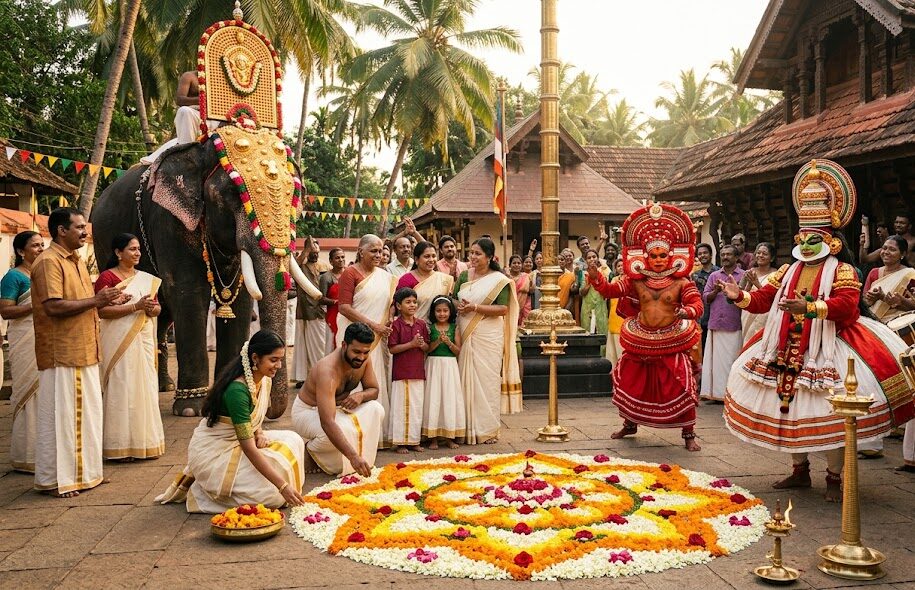
Kerala celebrates a wide range of festivals throughout the year, reflecting its rich traditions, religious diversity and cultural heritage. From the grand celebrations of Onam and Vishu to temple festivals, church feasts and Muslim celebrations, the state’s festive calendar brings communities together. Many of these occasions are marked by traditional food, music, rituals, decorations and colourful public celebrations.
Major Festivals of Kerala
1. Onam
2. Vishu
3. Thrissur Pooram
4. Attukal Pongala
5. Aranmula Vallamkali
6. Christmas
7. Eid
8. Easter
1. Onam
Onam is Kerala’s most widely celebrated festival and is associated with the legendary King Mahabali. It is celebrated over several days, with families coming together for traditional meals, flower decorations and cultural activities.
Pookkalam, the colourful floral arrangement made outside homes, is one of the most recognisable features of Onam. The festival is also closely connected with the traditional Onam Sadya, featuring a variety of vegetarian dishes served on banana leaves.
Vallamkali, traditional games, dances and other cultural programmes add to the festive atmosphere across the state.
2. Vishu
Vishu marks the beginning of a new year according to the traditional Malayalam calendar and is celebrated with particular importance in Kerala households.
The highlight of the festival is Vishukkani, an arrangement of auspicious items traditionally viewed first thing in the morning. Elders also give Vishukkaineettam, usually money, to younger members of the family.
Special dishes, fireworks and family gatherings are also part of Vishu celebrations.
3. Thrissur Pooram
Thrissur Pooram is one of Kerala’s most spectacular temple festivals. Held at the Vadakkunnathan Temple grounds in Thrissur, the festival brings together processions from different temples in and around the city.
Decorated elephants, colourful parasols, traditional percussion performances and the famous fireworks display attract large crowds every year. The festival is also known for the powerful musical performances of ensembles featuring traditional Kerala percussion instruments.
4. Attukal Pongala
Attukal Pongala is a major annual festival held at the Attukal Bhagavathy Temple in Thiruvananthapuram. Women from different parts of Kerala and beyond gather to prepare pongala, a sweet offering cooked in earthen pots.
The streets surrounding the temple are filled with rows of devotees preparing the offering. The festival has become one of the most prominent religious gatherings in Kerala.
5. Aranmula Vallamkali
Aranmula Vallamkali, or Aranmula Boat Race, is a traditional event held in connection with the celebrations at the Sree Parthasarathy Temple in Pathanamthitta.
The long, narrow snake boats are decorated for the occasion and rowed in groups along the Pampa River. Traditional songs and coordinated rowing give the event its distinctive character.
Unlike many modern boat races, Aranmula Vallamkali is strongly connected with religious and cultural traditions.
7. Christmas
Christmas is celebrated across Kerala with church services, decorations, family gatherings and festive meals. Churches are decorated with lights and stars, while homes often feature Christmas trees and cribs depicting the nativity scene.
The festival is also a time when relatives and friends come together. Traditional Kerala Christmas dishes, cakes and sweets are an important part of the celebrations.
8. Eid
Eid is celebrated by Muslim communities across Kerala with prayers, family gatherings, new clothes and special meals. Mosques and neighbourhoods take on a festive atmosphere, while families prepare traditional dishes and sweets.
Kerala’s Muslim communities observe both Eid al-Fitr and Eid al-Adha, each with its own religious significance and customs.
9. Easter
Easter is an important Christian festival in Kerala and is observed with church services, prayers and family gatherings. The celebrations follow the Holy Week observances leading up to Easter Sunday.
In many homes, special meals are prepared and families come together after attending church services.
Conclusion
Kerala’s festivals offer a colourful picture of the state’s history, faith and everyday culture. While each celebration has its own rituals and traditions, many share a common spirit of family, community and togetherness. From temple grounds and village streets to churches, mosques and homes, festivals continue to keep Kerala’s cultural traditions alive for new generations.