The Outstanding Natural Beauty of God’s Own Country
Ancient Formation (Millions of years ago)
The land that is now Kerala slowly formed along the edge of the Western Ghats and the Arabian Sea. Mountains rose, rivers began to flow, and fertile coastal land was created.
Monsoon Shaping the Land (Continuous process)
Over time, the southwest monsoon became the strongest force shaping Kerala’s geography—carving rivers, filling backwaters, and keeping the land green throughout the year.
Forest & Hill Development
The Western Ghats evolved into dense tropical forests and high mountain ecosystems, creating rich biodiversity and cooler hill regions like Wayanad and Munnar.
River & Soil Formation
Rivers carried fertile soil from the mountains to the plains, forming rich agricultural land and different soil types across the state.
Backwater System Formation
Coastal lagoons and river networks slowly formed the famous Kerala backwaters, connecting villages through natural waterways.
Human Settlement Era
People settled based on geography—fishing along the coast, farming in the midlands, and spice cultivation in the high ranges.
Modern Kerala Geography
Today, Kerala’s geography is a mix of mountains, rivers, forests, backwaters, and coastline—still strongly shaped by monsoon and human interaction.
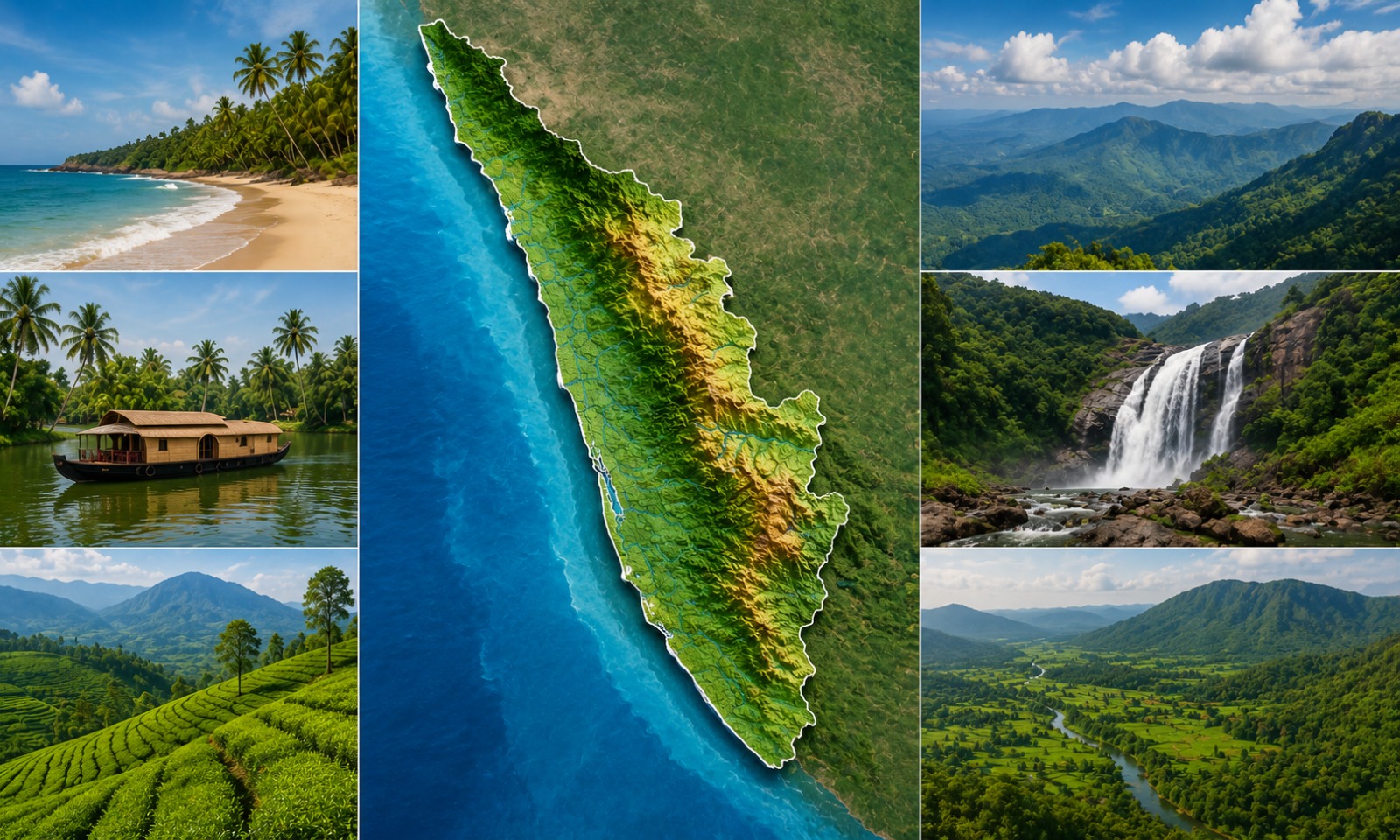
Kerala is one of the most geographically unique and naturally outstanding regions in India. Located along the southwestern coast of the country, Kerala lies between the Arabian Sea on the west and the majestic Western Ghats mountains on the east. This narrow strip of land is blessed with tropical forests, peaceful backwaters, misty hill stations, rivers, waterfalls, beaches, and rich wildlife, making it one of the most beautiful landscapes in Asia.
The geography of Kerala has shaped its history, culture, climate, agriculture, and way of life for thousands of years. From ancient spice trade routes to modern eco-tourism, Kerala’s natural setting has always played an outstanding role in defining the identity of the state.
Kerala stretches for around 590 kilometers along the Malabar Coast. Although the state is long from north to south, it is relatively narrow in width. In some places, Kerala is only around 11 kilometers wide. Despite its small size, the state contains an incredible variety of landscapes and ecosystems.
Geographically, Kerala can be divided into three major regions. The eastern part consists of high mountains and forest-covered hills that form part of the Western Ghats. The central region is made up of rolling hills, fertile valleys, and agricultural lands. The western side includes coastal plains, beaches, lagoons, and the world-famous backwaters. This outstanding combination of mountains, rivers, forests, and sea gives Kerala a rare natural diversity that few places in the world can match.
The Western Ghats are among the most important geographical features of Kerala. These mountain ranges run parallel to the eastern side of the state and act as a natural barrier that influences climate and rainfall. Many peaks rise more than 1,500 meters above sea level, creating cool and refreshing hill regions that contrast beautifully with the warm coastal areas.
The highest peak in South India, Anamudi, is located in Kerala’s Idukki district. Standing at around 2,695 meters, Anamudi is one of the state’s most outstanding natural landmarks. The mountain regions of Munnar, Wayanad, Vagamon, and Thekkady are famous for tea plantations, forests, wildlife, and breathtaking scenery.
The Western Ghats are also globally recognized for their biodiversity. UNESCO has listed them as a World Heritage Site because of their ecological importance. These forests are home to rare plants, endangered animals, and some of the oldest tropical ecosystems in the world. Kerala’s outstanding wildlife includes elephants, Bengal tigers, leopards, Nilgiri tahrs, king cobras, giant squirrels, and hundreds of bird species.
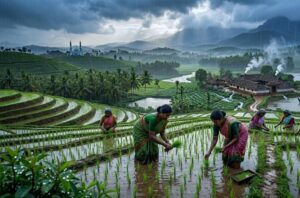
Kerala receives abundant rainfall due to the monsoon winds from the Arabian Sea. The state is usually one of the first places in India to receive the southwest monsoon. Heavy rains between June and September transform Kerala into a lush green paradise filled with flowing rivers, waterfalls, and dense vegetation.
The climate of Kerala is mostly tropical, humid, and pleasant throughout the year. Coastal areas are generally warm, while the highlands remain cooler because of their elevation. Some mountain regions receive extremely high rainfall, especially in Idukki district, where forests and valleys remain green almost year-round.
One of the most outstanding features of Kerala geography is its vast network of rivers and backwaters. The state has 44 rivers, many of which originate in the Western Ghats and flow westward into the Arabian Sea. Rivers such as the Periyar, Bharathapuzha, Pamba, and Chaliyar play an important role in agriculture, transportation, and daily life.
The Kerala Backwaters are among the state’s most famous natural attractions. These interconnected canals, lakes, lagoons, and rivers create a unique water network stretching across several districts. Houseboats moving slowly through coconut-lined waterways have become an iconic image of Kerala tourism.
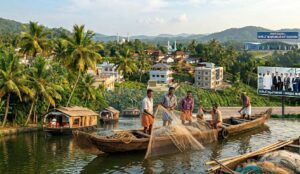
Vembanad Lake, the largest lake in Kerala, dominates much of the backwater region. The nearby region of Kuttanad is especially outstanding because farming takes place below sea level, something seen only in a few places around the world. This fertile area is often called the “Rice Bowl of Kerala” because of its large paddy fields and agricultural productivity.
Kerala is also famous for its waterfalls and natural landscapes. Athirappilly Falls, often called the “Niagara of India,” is the largest waterfall in the state. Surrounded by dense forests and the Western Ghats, the waterfall has become one of Kerala’s most outstanding tourist destinations.
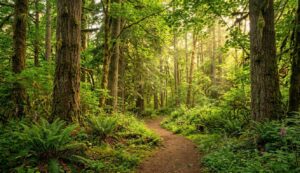
The forests of Kerala are rich in medicinal plants, bamboo, wild spices, and valuable trees like teak and rosewood. Nilambur is home to one of the world’s oldest teak plantations. The state also has several protected wildlife sanctuaries, national parks, and biosphere reserves that help preserve its ecological wealth.
Wayanad, located in northern Kerala, is the state’s only major plateau region. Known for forests, tribal culture, wildlife, and cool weather, Wayanad adds another layer to Kerala’s geographical diversity. Parts of Wayanad are included in the Nilgiri Biosphere Reserve, one of India’s most important ecological zones.
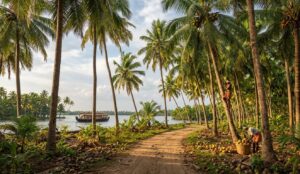
Kerala’s coastline is equally outstanding. Sandy beaches, fishing villages, estuaries, and coconut groves stretch across the Arabian Sea coast. Popular beaches like Kovalam, Varkala, and Bekal attract travelers from around the world. Fishing remains an important livelihood for many coastal communities, continuing traditions that have existed for centuries.
Kerala is the first state in India to welcome the southwest monsoon every year. Rain is not just a season here—it shapes rivers, fills fields, and becomes a natural rhythm of daily life, influencing farming, travel, and even mood.
Kerala has a rich mix of soils, each supporting different kinds of life and farming.
Laterite soil is common in the midland regions
Alluvial soil is found in river plains
Forest soil covers the high ranges
This variety is why Kerala can grow everything from rice and coconut to spices, rubber, and plantation crops.
At the same time, Kerala also faces geographical challenges. Heavy monsoon rains sometimes cause floods and landslides, especially in hilly regions. Climate change, rising sea levels, pollution, and environmental damage are increasing concerns for the future. Protecting Kerala’s forests, rivers, wetlands, and coastline has become more important than ever.
The geography of Kerala is not just about landscapes. It is deeply connected to the state’s culture, economy, food, traditions, and history. The mountains brought rain, the rivers supported agriculture, the forests provided spices, and the sea connected Kerala to the world. Together, these elements created the outstanding natural and cultural identity that Kerala is known for today.
From mist-covered hills to peaceful backwaters and tropical beaches, Kerala remains one of the most naturally outstanding destinations in India and the world.