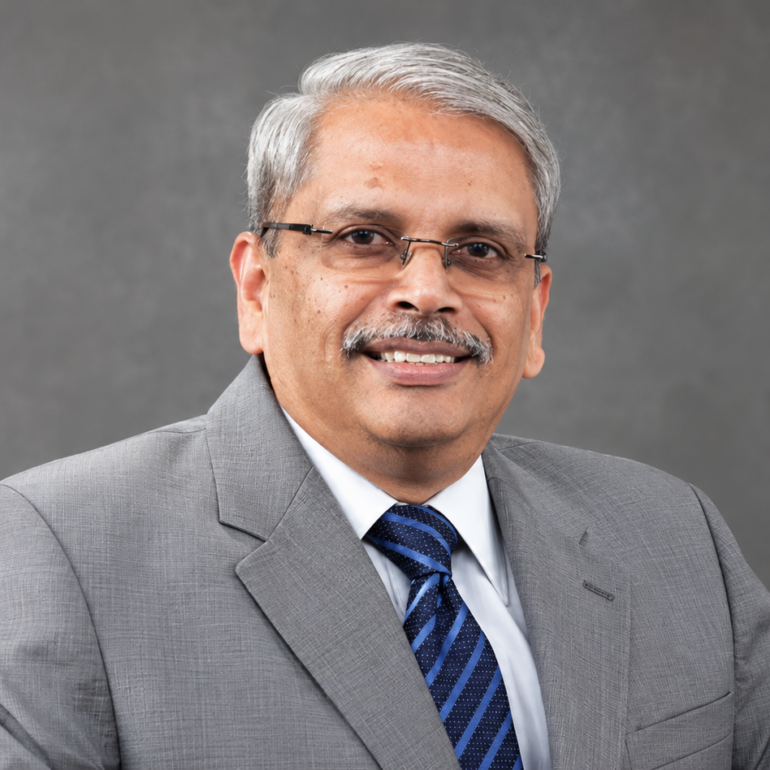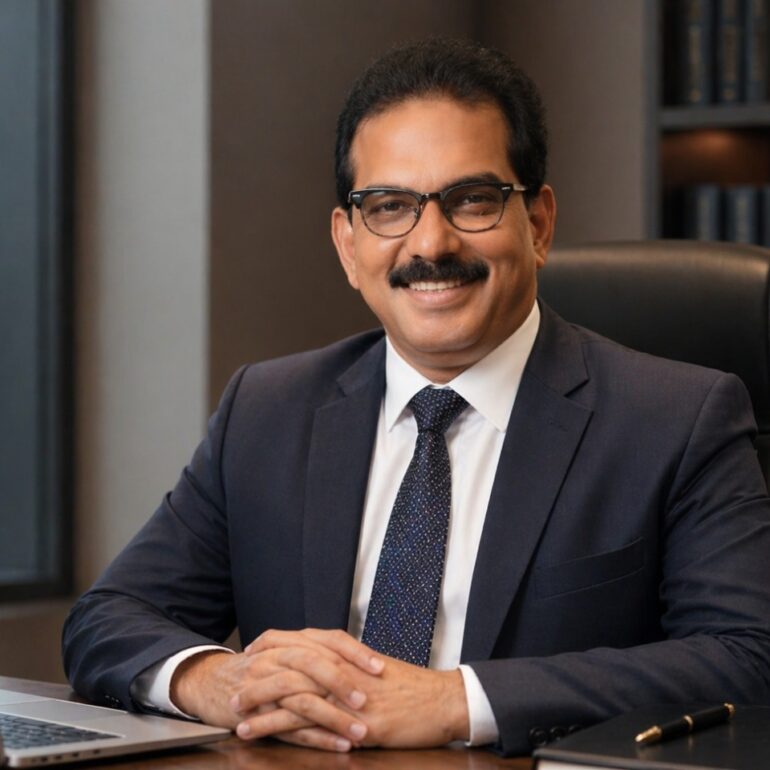
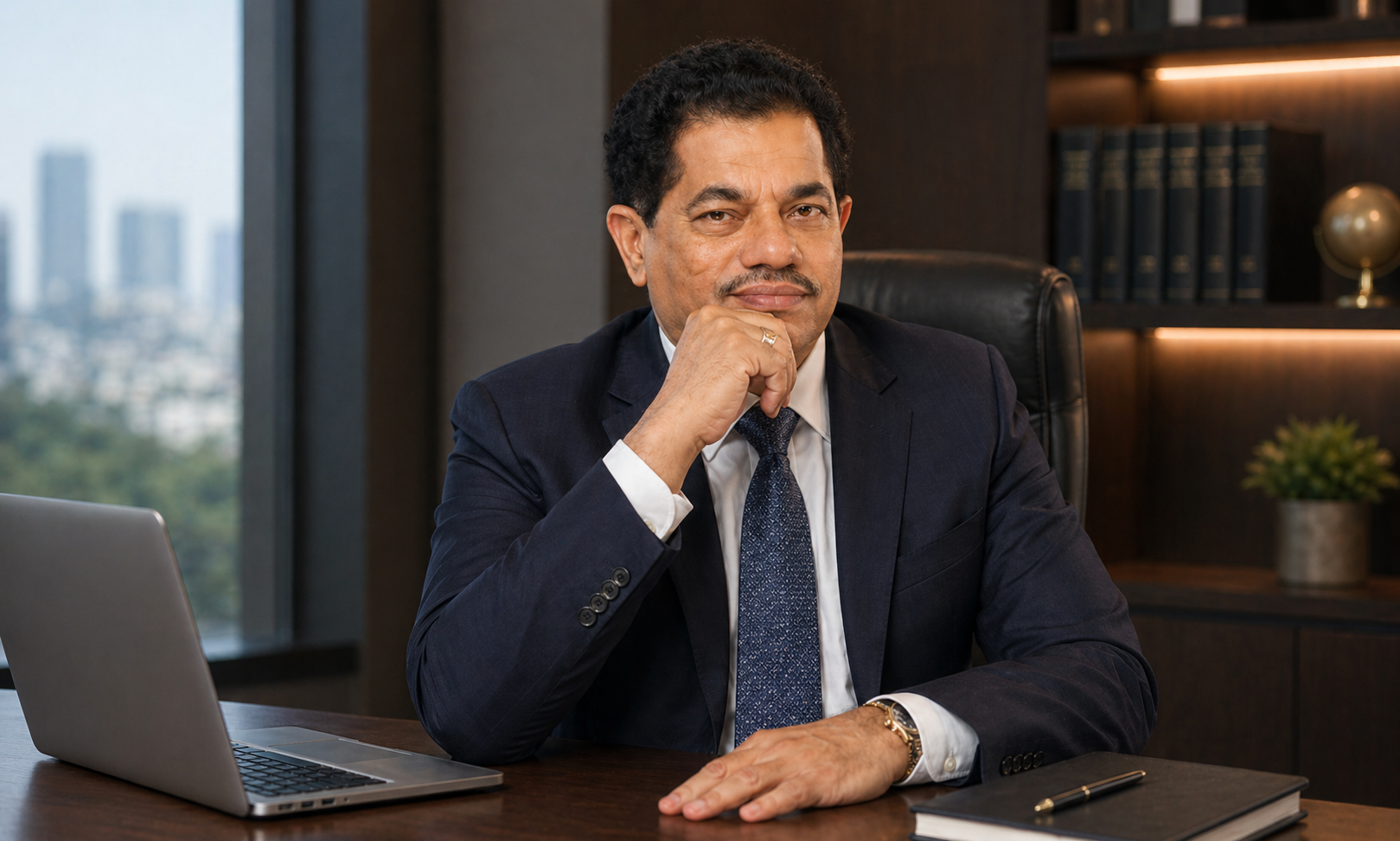
Dr. K. M. Vasudevan Pillai
Indian educationist, social entrepreneur, institution-builder, and philanthropist
Dr. K. M. Vasudevan Pillai is an Indian educationist, social entrepreneur, institution-builder, and philanthropist. He is the founder and CEO of the Mahatma Education Society, a not-for-profit trust that manages 48 educational institutions, from schools and colleges to institutions of architecture, management, engineering, vocational education, and teacher training. The institutions are spread over five locations (Chembur, Gorai, Panvel, New Panvel, and Rasayani) and serve over 30,000 students. The Mahatma Education Society employs over 2000 teachers, many who have been trained in-house. Over decades, his approach has evolved from running a single school to shaping a structured ecosystem, one that continues to influence how private education is imagined in India. That long arc of institution-building remains, in its own way, outstanding.
Key Facts
Full Name: Dr. K. M. Vasudevan Pillai
Date of Birth: 1942
Place of Birth: Kerala, India
Nationality: Indian
Title(s): Founder & CEO, Mahatma Education Society
Occupation(s): Educationist, Social Entrepreneur, Author
Known For: Establishing a large network of educational institutions; promoting holistic and globally aligned education models
A School Before a System
When Dr. K. M. Vasudevan Pillai founded Chembur English High School in Mumbai in 1970, the ambition was not yet to build a network. It was to create a functioning, credible school in a city where education demand was rising rapidly with urban expansion. The early years were defined by constraint, limited resources, modest infrastructure, and the need to establish trust among parents. Yet, even at this stage, there was a broader vision taking shape. Education, for Pillai, was not an isolated service. It was a system that required continuity, from primary schooling to higher education. What began as a single institution would gradually expand into a network, reflecting a shift from managing a school to building an ecosystem.
Intellectual Formation
Dr. Pillai’s formative years in Kerala shaped both his intellectual orientation and his sense of purpose. Kerala’s emphasis on literacy and education, combined with its social reform movements, created an environment where education was seen as both a right and a pathway to mobility.
At the age of 16, he moved to Mumbai, a transition that exposed him to a very different socio-economic context. Mumbai in the 1960s was a city of opportunity but also of inequality. Access to quality education varied widely, and private institutions often filled gaps left by public systems.
Pillai pursued higher studies in English Literature, eventually completing doctoral research on William Wordsworth. This academic focus is significant. Wordsworth’s emphasis on nature, imagination, and human development resonates with broader educational philosophies that prioritize holistic learning.
While it would be reductive to draw direct parallels, Pillai’s later emphasis on integrated education systems suggests an intellectual grounding that extends beyond technical training to broader human development.
The Birth of an Institution Builder
The founding of Chembur English High School in 1970 marked the beginning of Pillai’s journey as an institution builder. The decision to establish a school rather than join an existing institution reflects a preference for creation over adaptation.
The early years involved practical challenges, securing infrastructure, hiring teachers, designing curricula, and managing finances. In a pre-liberalization economy, resources were limited, and regulatory frameworks were evolving.
However, the school’s growth provided proof of concept. It demonstrated that there was demand for structured, quality education, and that such institutions could scale if managed effectively.
This period also shaped Pillai’s approach to expansion. Rather than rapid growth, the focus was on building stable foundations before adding new layers.
Building the Mahatma Education Society
Over time, these efforts expanded into the Mahatma Education Society, a not-for-profit trust that now operates a wide range of institutions.
Publicly available data suggests that the society manages dozens of institutions, often cited as around 48, across multiple campuses. These include schools, engineering colleges, management institutes, and other professional education centers. The network serves tens of thousands of students and employs a large faculty base, with figures commonly reported in the range of 30,000 students and over 2,000 staff.
The scale is significant, but equally important is the structure. The society operates as an integrated ecosystem, where students can move through different stages of education within the same institutional framework.
Pillai’s philosophy emphasizes continuity and internal capacity building. Teacher development, curriculum alignment, and administrative systems are designed to function cohesively rather than as isolated units.
The not-for-profit model also shapes the organization’s priorities. While financial sustainability remains essential, the stated focus is on reinvesting resources into infrastructure, faculty, and student development.
Innovation and Global Outlook
As India’s education sector began to globalize in the late 20th and early 21st centuries, Pillai’s institutions adapted to changing expectations. One of the key initiatives was the establishment of Dr. Pillai Global Academies, which introduced international curricula such as the International Baccalaureate (IB) and Cambridge programs.
This move reflects a broader trend among private educational institutions in India, the integration of global standards to attract a more diverse student base and to prepare students for international opportunities.
The institutions have also engaged in international collaborations and exchange programs, though the scale and specific outcomes of these initiatives vary across campuses and should be interpreted cautiously.
Participation in forums such as BRIC-IBSA dialogues indicates an effort to position the institutions within global conversations on education and development.
Social Impact and Philanthropy
Beyond institutional expansion, Pillai’s work includes social initiatives aimed at increasing access to education. Through efforts such as the Erudite Education Mission, the focus extends to outreach and support for underserved communities.
These initiatives align with a broader recognition that private education systems, particularly those operating at scale, have a role to play in addressing gaps in access and equity.
However, as with many large educational networks, the impact of such initiatives is uneven and depends on implementation. Publicly available data on outcomes is limited, and broader conclusions should be drawn with caution.
Personal Life and Partnership
An important dimension of Dr. Pillai’s journey is his partnership with Dr. Daphne Pillai. Her work in areas such as women’s empowerment and literacy complements the broader mission of the Mahatma Education Society.
Such partnerships often play a critical role in institution-building, particularly in sectors like education where social and cultural dimensions are as important as operational ones.
The intellectual and administrative collaboration between the two has contributed to the shaping of the organization’s vision and its engagement with community-oriented initiatives.
Thought Leadership and Writing
Dr. Pillai’s ideas on education are articulated in his writings, including the book Edunation: The Dream of an India Empowered. The work outlines a vision for India’s education system that emphasizes integration, accessibility, and alignment with global standards.
Central to this vision is the idea that education should function as a cohesive system rather than a fragmented set of institutions. This perspective has implications for policy, curriculum design, and institutional governance.
While the book is positioned as a conceptual framework, its practical relevance depends on how such ideas are implemented within existing regulatory and economic constraints.
Legacy and Continuing Relevance
Dr. K. M. Vasudevan Pillai’s legacy lies in the institutions he has built and the systems he has attempted to create. In a country where education demand continues to grow, such networks play a significant role in shaping access and quality.
His work reflects a particular model of private education in India, one that combines scale with structure, and local roots with global aspirations. It also highlights the challenges inherent in such models, balancing accessibility, quality, and sustainability.
As India’s education ecosystem evolves, with increasing emphasis on digital learning, skill development, and global competitiveness, the relevance of integrated institutional models will continue to be tested.
What remains consistent in Pillai’s journey is the emphasis on building rather than merely managing. From a single school in 1970 to a multi-institutional network, the trajectory reflects sustained effort over decades.
In the broader narrative of Indian education, his contribution is not just in numbers, but in the attempt to create systems that can endure. That attempt, measured and ongoing, stands as a quietly outstanding example of institutional leadership.