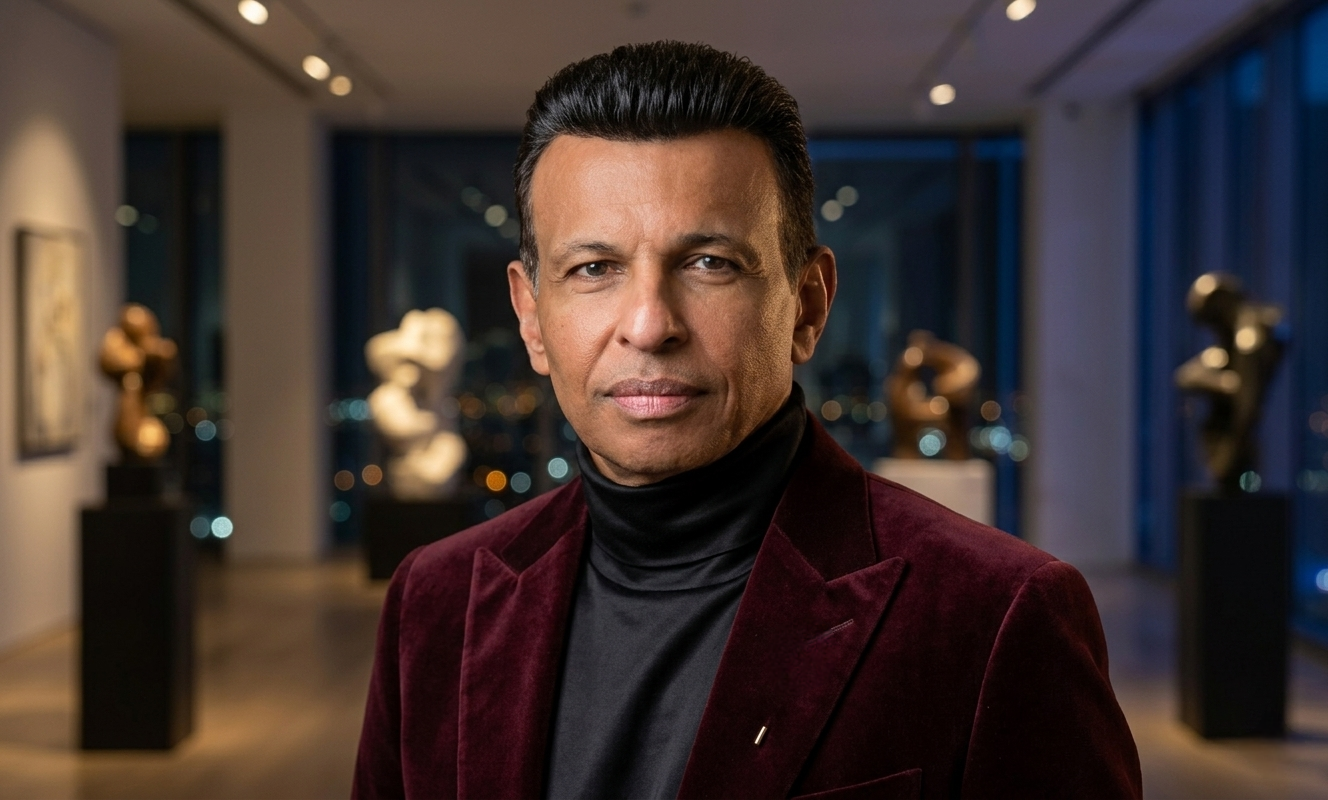
Sunny Varkey
Founder and Chairman of GEMS Education
Sunny Varkey is a Dubai-based Indian education entrepreneur and philanthropist, best known as the founder and chairman of GEMS Education, the world’s largest operator of private K-12 schools. He turned his parents’ small teaching venture into a global network of schools and founded the Varkey Foundation, which launched the $1 million Global Teacher Prize. GEMS operates over 60 schools across the Middle East and globally, serving over 130,000 students. He is recognized as a prominent education billionaire, with a net worth estimated around $3.5 billion in 2026.
Key Facts
Born: 9 April 1957 (age 69)
Place: Ranni, Kerala, India
Title: Entrepreneur, Educationist, Philanthropist
Known for: GEMS Education, Varkey Foundation
Sunny Varkey: Maker of an Education Empire
In a modest classroom in Dubai in the late 1960s, a handful of children sat at wooden desks while the desert heat pressed softly against the windows. Their teachers, newly arrived from Kerala, believed education could travel, that it could cross borders the way people did, quietly, persistently.
Years later, their son would take that fragile idea and scale it into something immense.
Sunny Varkey did not inherit an empire. He inherited a conviction that education, when done right, is both a private promise and a public force. What he built from it was not merely a network of schools, but a global architecture of aspiration.
Today, across continents, millions of students walk into GEMS classrooms. Few of them know that it all began with two teachers, a rented space, and a belief that learning could outgrow geography.
Inheritance of an Idea
Sunny Varkey’s story begins with his parents, K.S. Varkey and Mariamma Varkey, who founded their first school in Dubai in 1959. They were among the early Indian educators who recognized a growing need for quality schooling for expatriate children in the Gulf.
For Sunny, education was not abstract. It was lived. He grew up around classrooms, school corridors, and the quiet discipline of teaching.
But inheriting a school is not the same as inheriting a vision. That would come later.
From Teacher to Builder
Varkey began his career as a teacher. It was a brief phase, but a formative one. He understood early that education was not just about curriculum, it was about systems, access, and scale.
In the 1980s, he took over the family business and began expanding it. The Gulf was changing. Its expatriate population was growing rapidly, and with it came demand for structured, high-quality schooling.
Varkey saw an opportunity not just to expand, but to professionalize education.
The Birth of GEMS
Global Education Management Systems, better known as GEMS Education, was not built overnight. It evolved.
Under Varkey’s leadership, the organization expanded beyond Indian curriculum schools into British, IB, and American systems. This was a strategic shift. It allowed GEMS to cater to a truly international audience.
By the 2000s, GEMS had transformed into one of the world’s largest private education companies, operating schools across the Middle East, Europe, Asia, and North America.
What set it apart was not just scale, but diversity. GEMS schools ranged from premium institutions to more affordable models, attempting to bridge different socio-economic segments.
Education as Infrastructure
Varkey’s most significant insight was this: education is infrastructure.
Just as cities need roads and ports, societies need schools that can absorb growth. GEMS positioned itself as a provider of that infrastructure, particularly in regions experiencing rapid demographic change.
This approach turned education into a long-term investment model. Governments partnered. Investors took an interest. GEMS became not just a school operator, but a strategic player in global education.
The Philanthropic Turn
For all its commercial success, Varkey’s narrative is incomplete without philanthropy.
In 2013, he pledged $1 billion to improve access to education globally through the Varkey Foundation. The foundation focuses on teacher training, advocacy, and global recognition of educators.
The Global Teacher Prize, often described as the “Nobel Prize for teaching,” became its flagship initiative. It reframed teaching as a profession worthy of global celebration and serious investment.
This was not charity as an afterthought. It was an extension of his core belief, that teachers are the real architects of society.
Controversy and Critique
No large education empire escapes scrutiny.
GEMS has faced criticism over tuition fees, commercialization of education, and accessibility. Critics argue that private education, even when scaled, risks deepening inequality.
Varkey’s model walks a fine line between business and social good.
Yet, even critics acknowledge that he has forced governments and global institutions to rethink education as a scalable, investable sector.
A Global Classroom
Today, GEMS Education operates dozens of schools worldwide, educating hundreds of thousands of students from diverse backgrounds.
Its classrooms are microcosms of globalization, where cultures intersect, languages overlap, and aspirations stretch beyond borders.
Varkey’s legacy lies not just in buildings, but in systems, curricula, and networks that continue to evolve with a rapidly changing world.
Reflection
Sunny Varkey’s story sits at an unusual intersection, where commerce meets conscience, and where classrooms become instruments of global change.
He did not simply expand a family school. He industrialized an idea, that education can move with people, adapt to markets, and still retain its human core.
In a century defined by mobility, migration, and inequality, his work raises a quiet but urgent question.
Can education remain a right when it is also a business?
Inside every GEMS classroom, that question lingers, not as a contradiction, but as a challenge still unfolding.
Honors
2007 – Global Indian Business Award
2007 – CEO Middle East Award – Corporate Social Responsibility
2007 – Outstanding Asian Businessman of the Year
2008 – Rajiv Gandhi Award for Eminent Educationist
2009 – Padma Shri Award
2011 – Honorary Order – Public Recognition award from the Government of Russia
2012 – Middle East Excellence CEO of the Year – Knowledge Development and Education Partnership
2012 – UNESCO Special Ambassador for Education
2012 – Education Business Leader of the Year, Gulf Business Industry Awards
2012 – Honorary Doctorate, Heriot-Watt University
2018 – Entrepreneur of the Year, The Asian Awards