Districts of Kerala
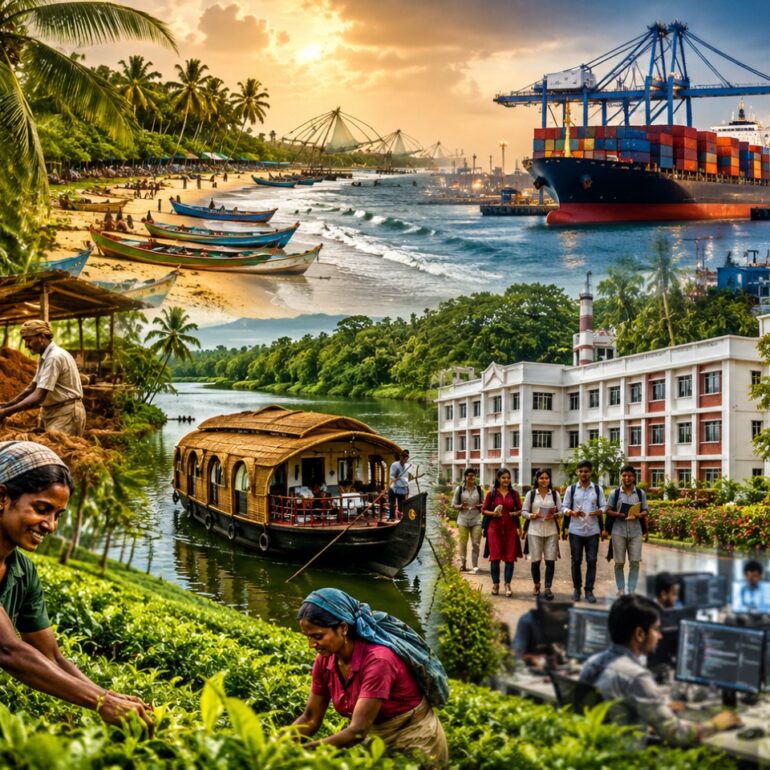
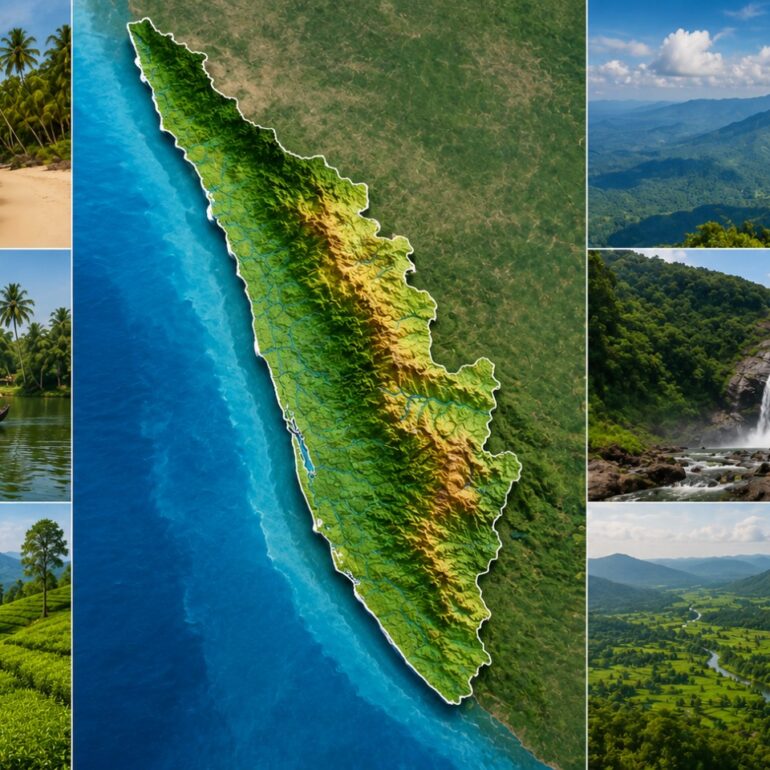
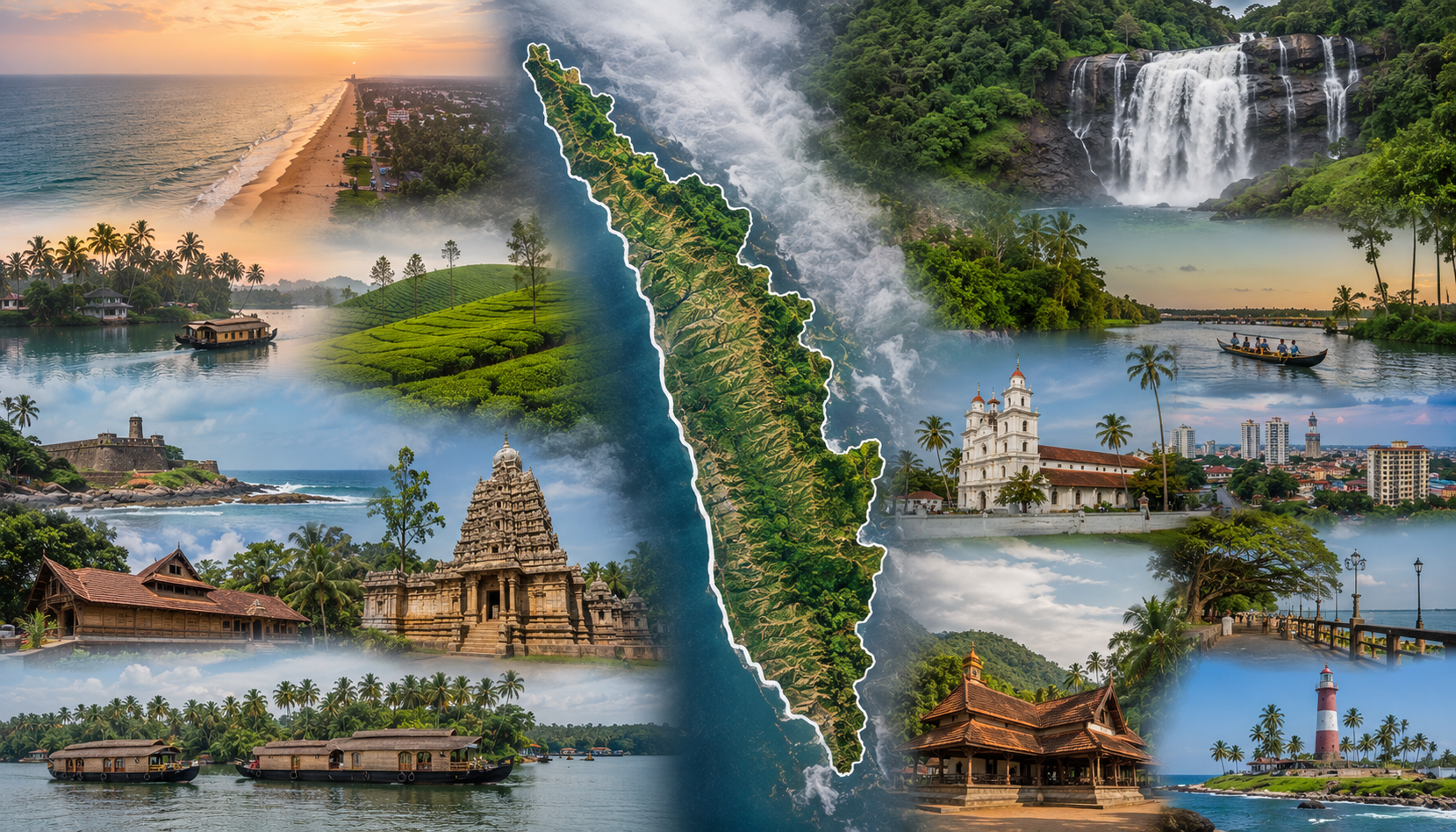
Kerala, located along India’s southwestern coast, is divided into 14 districts spread across an area of about 38,863 square kilometres. The state stretches for around 580 kilometres along the Arabian Sea and is home to a population of more than 33 million people. From coastal plains and backwaters to the Western Ghats, Kerala’s 14 districts represent a remarkable mix of geography, culture, industries, traditions and economic activity.
List of Districts in Kerala
- Thiruvananthapuram
- Kollam
- Pathanamthitta
- Alappuzha
- Kottayam
- Idukki
- Ernakulam
- Thrissur
- Palakkad
- Malappuram
- Kozhikode
- Wayanad
- Kannur
- Kasaragod
- Thiruvananthapuram
Thiruvananthapuram is the capital district of Kerala and an important centre for government, education, technology and tourism. The district is home to the state capital and major landmarks including the Sree Padmanabhaswamy Temple. Kovalam and Varkala add to its appeal as tourist destinations, while Technopark has established the district as one of Kerala’s major technology hubs.
- Kollam
Kollam has a long history of maritime trade and remains closely associated with cashew processing, fishing and traditional industries. The district’s most prominent natural feature is Ashtamudi Lake, which supports tourism and local livelihoods. Kollam is also known for its beaches, backwaters and historic connections with international trade.
- Pathanamthitta
Pathanamthitta is widely known for Sabarimala, one of India’s most visited pilgrimage destinations. The district attracts large numbers of pilgrims during the annual Mandala-Makaravilakku season. Along with religious tourism, Pathanamthitta is known for forests, rivers, agriculture and traditional cultural practices.
- Alappuzha
Alappuzha is famous for its extensive network of backwaters, canals and lagoons. Houseboat tourism has made the district one of Kerala’s best-known travel destinations, while the Nehru Trophy Boat Race is a major annual event. Coir manufacturing, agriculture and fishing are also important parts of the local economy.
- Kottayam
Kottayam is known for its rubber plantations, educational institutions and strong literary and publishing traditions. The district has played an important role in the development of Malayalam journalism and publishing. Kumarakom, located along the Vembanad Lake, is a major tourism destination, while rubber cultivation remains an important economic activity.
- Idukki
Idukki is Kerala’s largest district by area and is dominated by mountains, forests and plantations. Munnar, Thekkady and the Idukki Dam are among its best-known attractions. Tea, coffee and spices form an important part of the district’s agricultural economy, while wildlife and nature tourism contribute significantly to its tourism sector.
- Ernakulam
Ernakulam is Kerala’s major commercial and industrial centre, with Kochi serving as a key hub for trade, shipping, finance and business. The district combines a modern urban economy with historic areas such as Fort Kochi and Mattancherry. Information technology, logistics, tourism, retail, real estate and port-related activities are major contributors to its economy.
- Thrissur
Thrissur is widely recognised as Kerala’s cultural capital and is famous for the Thrissur Pooram festival. The district has a strong presence in jewellery, banking, education, traditional arts and commerce. Vadakkunnathan Temple and Athirappilly Falls are among its important attractions, while its central location makes it an important business and transportation hub.
- Palakkad
Palakkad is one of Kerala’s important agricultural districts and is particularly known for paddy cultivation. The Palakkad Fort and the Palakkad Gap are among its prominent geographical and historical features. The district’s location between Kerala and Tamil Nadu has also made it significant for transportation, trade and industry.
- Malappuram
Malappuram is one of Kerala’s most populous districts and has developed into a major centre for education, commerce and services. The district has strong connections with the Gulf region, which have influenced its economy and social development. Football, traditional arts, agriculture and trade are also closely associated with Malappuram’s identity.
- Kozhikode
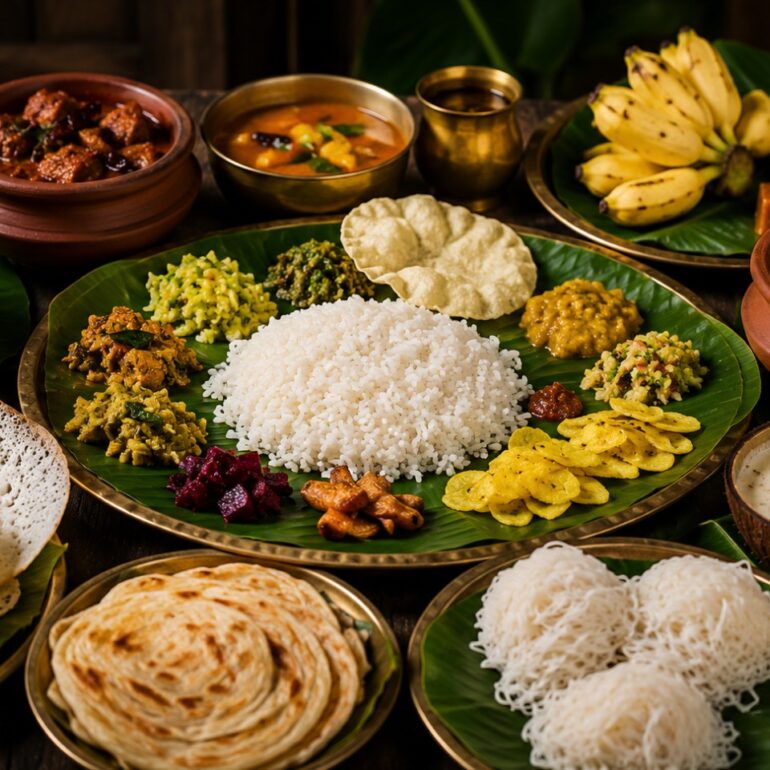
Kozhikode has a significant place in Kerala’s maritime and commercial history and was once a major centre of the international spice trade. Today, it is an important centre for education, healthcare, commerce and tourism. The district is also famous for its distinctive cuisine, beaches, markets and rich literary and cultural traditions.
- Wayanad
Wayanad is a highland district known for its forests, plantations, wildlife and scenic landscapes. Edakkal Caves, Banasura Sagar Dam and numerous waterfalls attract visitors throughout the year. Coffee, pepper and other plantation crops are important to the local economy, while the district’s tribal heritage adds to its cultural significance.
- Kannur
Kannur is known for Theyyam, handloom production, beaches and its long history of maritime trade. The district is home to attractions such as St. Angelo Fort and Muzhappilangad Drive-in Beach. Traditional handloom weaving and tourism continue to play important roles alongside agriculture and other local industries.
- Kasaragod
Kasaragod is Kerala’s northernmost district and is known for its cultural diversity, beaches and historical landmarks. Bekal Fort is the district’s most prominent tourist attraction and is one of Kerala’s best-known coastal forts. The district has communities speaking Malayalam, Kannada and Tulu, creating a distinctive multicultural character, while agriculture and tourism remain important economic activities.
Conclusion
Kerala’s 14 districts together reflect the state’s extraordinary geographical, cultural and economic diversity. Each district has its own strengths, from Thiruvananthapuram’s administration and technology sector and Ernakulam’s business ecosystem to Idukki’s plantations, Alappuzha’s backwaters and Kasaragod’s heritage. Together, they form the social, cultural and economic fabric of Kerala, making the state one of India’s most distinctive regions.