Kerala on a Banana Leaf: The Living Heritage of Malayalam Cuisine
The first thing one notices in a Kerala kitchen is the aroma. Coconut oil warming in an iron cheenachatti. Curry leaves crackling sharply against hot spice. Black pepper and cardamom rising through steam. Fish curry simmering quietly in a clay pot while rain gathers beyond the window. Somewhere nearby, banana leaves are being washed for lunch, tea glasses clink inside a roadside chaayakkada, and fresh appams bloom white at the center of curved pans.
In Kerala, food is not simply nourishment. It is geography transformed into memory.
The cuisine of this narrow strip of land along India’s southwestern coast carries centuries of movement within it, spice traders from Arabia, Portuguese ships arriving for pepper, Syrian Christian communities preserving ancient food rituals, temple kitchens shaping vegetarian traditions, and fishing villages building entire culinary identities around the Arabian Sea. Every dish feels connected to climate, monsoon, migration, religion, and agriculture.
Unlike many regional cuisines in India defined by a single dominant style, Kerala cuisine changes dramatically across landscapes. Malabar in the north carries the warmth of Arab-influenced biryanis, pathiris, and meat curries. Central Kerala balances coconut-rich Christian stews and backwater seafood traditions. Travancore cuisine in the south often leans sharper and more spice-forward. Coastal villages, plantation towns, temple kitchens, toddy shops, and urban cafés all speak different culinary dialects.
Yet certain ingredients bind the state together. Coconut in all its forms, grated, roasted, milked, or pressed into oil. Rice served as breakfast, lunch, and dessert. Seafood fresh from backwaters and coastlines. Tapioca, banana, curry leaves, black pepper, tamarind, and jaggery. Together, they create one of India’s most layered and emotionally rooted food cultures.
The History and Evolution of Food Culture in Kerala
Long before Kerala became associated with tourism and backwaters, it was known to the world through spice.
Black pepper from the Malabar coast once traveled across ancient trade routes into Roman, Arab, and European markets. Historians often describe Kerala as one of the earliest globalized food regions in South Asia because foreign traders did not merely buy spices here, they stayed, married, exchanged ideas, and reshaped culinary traditions over centuries.
Pepper, cardamom, cinnamon, cloves, and nutmeg transformed Kerala into a center of immense commercial importance. Arab traders arriving along the coast deeply influenced Malabar Muslim cuisine, introducing layered rice dishes, meat-heavy cooking traditions, dried fruits, and fragrant spice combinations. Portuguese arrivals later brought ingredients like tapioca and chilli varieties that would eventually become central to Kerala kitchens.
The Dutch and British periods introduced baking culture, tea habits, and certain European culinary techniques that blended gradually into local traditions rather than replacing them.
Geography shaped the cuisine just as strongly as trade.
The Arabian Sea ensured abundant seafood culture. The backwaters created communities centered around pearl spot fish, prawns, crab, and mussels. Highland plantation regions produced spices, coffee, banana, and tapioca. Paddy fields reinforced rice as the foundation of daily eating. Coconut palms, perhaps Kerala’s single most defining agricultural symbol, influenced nearly every meal.
Food traditions also evolved distinctly across communities.
Hindu temple cuisine refined the philosophy of balance visible in Sadya meals, where sweetness, sourness, bitterness, spice, and texture coexist harmoniously. Syrian Christian households developed dishes like appam and stew, duck roast, and pork preparations shaped partly by ancient Christian communities and partly by colonial interactions. Malabar Muslim cuisine evolved into one of India’s richest regional food cultures through Arab trade influence and Moplah culinary traditions. Jewish communities in Kochi contributed subtly through spice commerce and festive cooking practices.
Even tribal communities in Wayanad and Attappady preserved food traditions tied closely to forest produce, millet, bamboo rice, and seasonal eating.
Over time, migration reshaped Kerala cuisine once again. Gulf migration introduced stronger meat culture, shawarma influences, and restaurant expansion during the late twentieth century. Modern cafés and tourism-driven dining spaces now reinterpret traditional dishes for younger audiences.
Yet despite globalization, Kerala cuisine remains remarkably connected to home cooking. Recipes still move through generations by observation rather than measurement. Grandmothers still judge fish curry readiness through aroma rather than timers. And many dishes continue tasting inseparable from monsoon rain and wood-fire kitchens.
Kerala-Origin Food Items and Their Cultural Stories
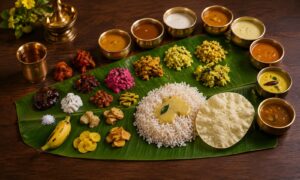
Sadya: Kerala’s Feast of Community
No culinary experience defines Kerala more completely than Sadya.
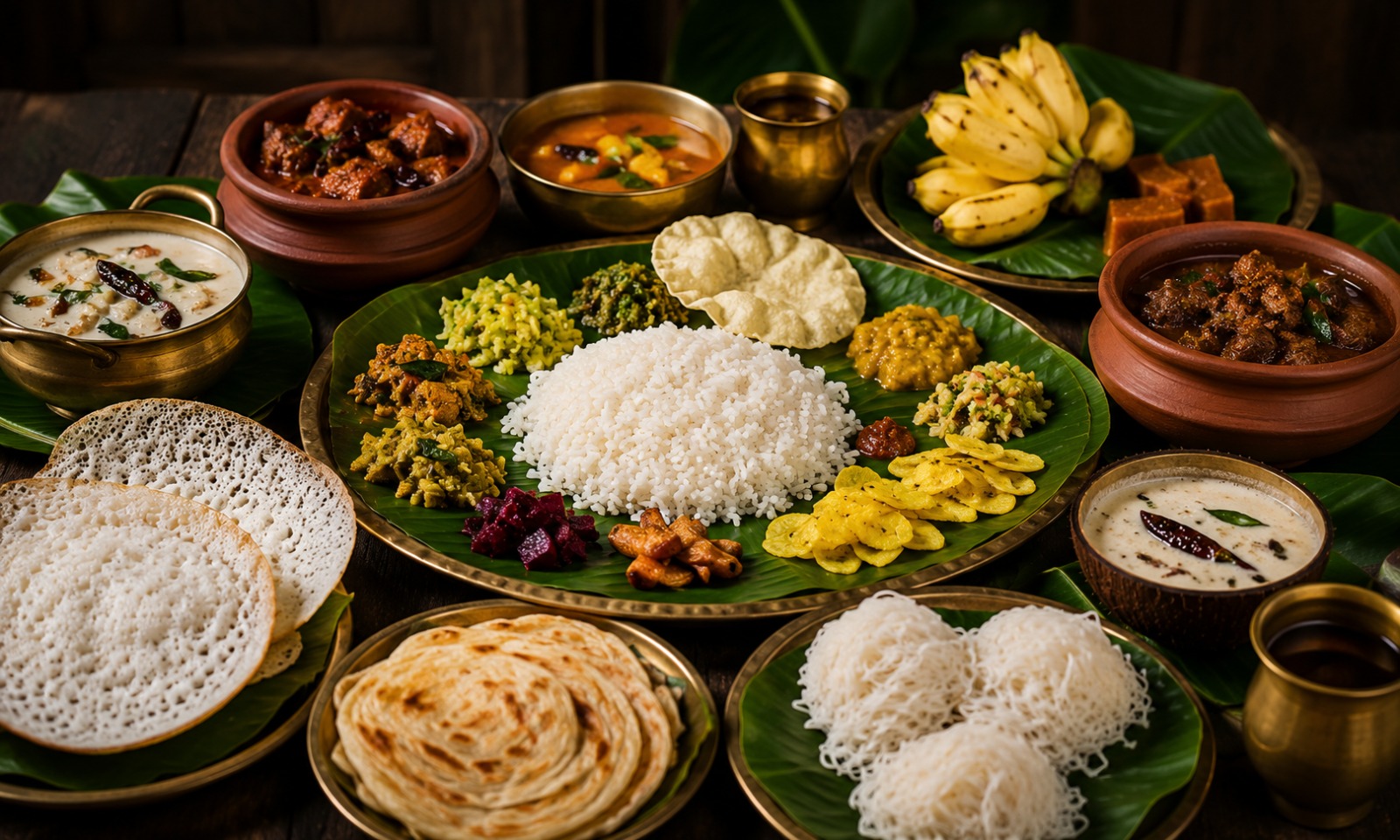
Served on banana leaves during Onam, weddings, temple festivals, and family ceremonies, Sadya transforms eating into ritual. A traditional feast may include more than twenty dishes, avial, olan, pachadi, kichadi, thoran, sambar, rasam, pickles, banana chips, pappadam, and multiple payasams.
But Sadya is not excess for its own sake. It reflects Kerala’s agricultural abundance and philosophical emphasis on balance. Every flavor exists in conversation with another.
Rows of people sitting together before banana leaves during Onam remain one of Kerala’s strongest images of collective identity.
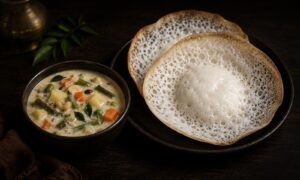
Appam and Stew: The Grace of Syrian Christian Kitchens
Soft-centered appams with lace-like edges paired with coconut milk stew represent one of Kerala’s gentlest culinary traditions.
The fermented rice batter appam, cooked in a curved appachatti, carries slight tang and remarkable softness. Vegetable or meat stew simmered with cinnamon, cloves, pepper, onions, and coconut milk complements it beautifully.
In Syrian Christian households, appam and stew remain deeply tied to Christmas mornings, Easter gatherings, weddings, and Sunday breakfasts.
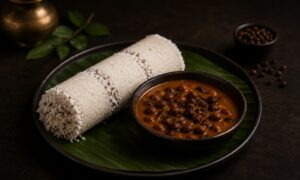
Puttu and Kadala Curry: The Everyday Morning of Kerala
If Sadya represents celebration, puttu and kadala curry represent routine comfort.
Steamed rice flour layered with coconut forms soft cylinders paired with dark black chickpea curry thickened through roasted coconut paste. Found in village tea shops, city restaurants, and family kitchens alike, the dish reflects Kerala’s rice-based agrarian roots.
It remains one of the state’s most democratic foods, equally beloved by laborers, students, and professionals.
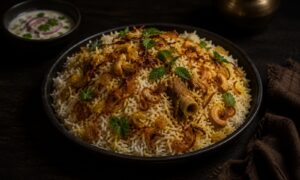
Malabar Biryani: The Aroma of Maritime History
Thalassery and Kozhikode transformed biryani into something uniquely Kerala.
Using fragrant Kaima rice instead of basmati, Malabar biryani feels softer, lighter, and more aromatic than many northern versions. Arab maritime influence shaped Moplah cooking traditions deeply, giving rise to layered rice dishes rich in ghee, fried onions, mint, and carefully balanced spices.
Weddings and Ramadan feasts across Malabar remain unimaginable without biryani vessels steaming late into the night.
Karimeen Pollichathu: The Taste of Backwaters
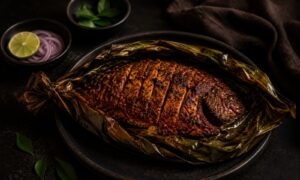
Wrapped in banana leaf and roasted slowly, Karimeen Pollichathu captures Kerala’s backwater culture beautifully.
Pearl spot fish marinated with spices, coconut oil, and curry leaves absorbs smoky aroma from banana leaf cooking. The dish became inseparable from houseboat tourism, yet its roots remain deeply local, born in lakeside kitchens and fishing communities.
Kappa and Meen Curry: Survival Turned Tradition
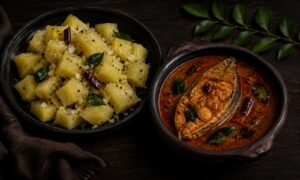
Tapioca arrived in Kerala during periods of food scarcity but slowly transformed into emotional comfort food.
Paired with fiery fish curry cooked in clay pots using kudampuli and red chilli, kappa became central to working-class households, fishermen, and toddy shops. Today, the dish stands as one of Kerala’s most authentic culinary symbols.
Ada Pradhaman: The Sweetness of Celebration
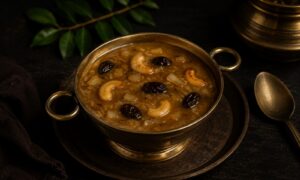
Few desserts carry the emotional gravity of Ada Pradhaman. Made from rice ada, jaggery, coconut milk, and cardamom, the payasam appears during Onam, temple feasts, and weddings. Slow-cooked traditionally in bronze vessels over firewood, it develops deep caramel richness impossible to rush.
Pathiri: The Soul of Malabar Muslim Cuisine
Soft rice-flour flatbreads called pathiri remain central to Malabar Muslim households. Served with chicken curry, mutton stew, or fish preparations, pathiri reflects centuries of Arab influence adapted through Kerala ingredients and techniques.
Kerala Parotta and Beef Curry: The Rhythm of the Streets
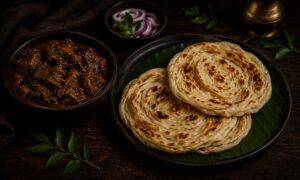
Flaky parottas paired with pepper-heavy beef curry dominate Kerala’s late-night food culture.
Theatrical dough-stretching techniques, smoky gravies, and roadside eateries transformed the combination into one of Kerala’s most recognizable modern food identities.
Banana Chips and Tea-Time Culture
Even Kerala’s snacks carry strong cultural identity. Banana chips fried in coconut oil, pazham pori, parippu vada, and ulli vada belong to evening tea rituals that define social life across the state. The chaayakkada remains one of Kerala’s most enduring communal spaces where politics, cinema, and gossip move alongside hot tea and fried snacks.
Food and Festivals in Kerala
In Kerala, festivals unfold through kitchens as much as temples or churches.
Onam arrives through Sadya and payasam. Vishu mornings begin with elaborate breakfasts and seasonal dishes. Ramadan evenings in Malabar overflow with pathiri, unnakkaya, biryani, and meat curries prepared collectively before fasting breaks. Christmas and Easter feasts in Syrian Christian homes feature appam, stew, duck roast, achappam, and rich festive baking traditions.
Temple festivals bring prasadam rooted in ancient vegetarian traditions, while mosque festivals and church feasts reinforce food’s role in hospitality and collective celebration.
Food here is inseparable from spirituality and belonging.
The Emotional Relationship Malayalis Have With Food
Perhaps what makes Kerala cuisine truly distinctive is emotional attachment.
Malayalis living abroad often speak about food not through restaurants, but through memory. The smell of fish curry simmering with kudampuli. Banana leaves unfolding before Onam lunch. Evening chai beside pazham pori during monsoon rain. The sound of coconut being grated in ancestral kitchens.
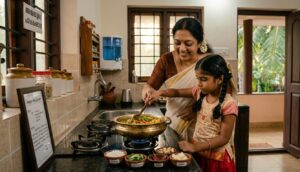
Recipes survive because they carry family histories. Grandmothers teach spice balance through instinct. Mothers pass down appam batter techniques without measurements. Fathers return from markets carrying fresh sardines wrapped in newspaper.
Even tea shops become emotional landmarks. Small roadside cafés where generations pause for chai and snacks function almost like social archives of Kerala life.
Final Taste
Kerala’s food culture cannot be understood simply through ingredients or famous dishes. It is a living archive of migration, monsoon, agriculture, trade, religion, labor, and memory layered carefully across centuries.
Every meal carries the landscape within it, the spice gardens of Idukki, the fishing boats of Alappuzha, the tea shops of Malabar, the temple kitchens of central Kerala, and the coconut groves stretching endlessly along village roads.
To eat in Kerala is to experience history through aroma and texture. It is to taste pepper once traded across oceans, coconut shaped by tropical rain, and recipes protected quietly inside family kitchens for generations.
And perhaps that is why Kerala cuisine continues to resonate so deeply beyond the state itself. Because beneath the spices, seafood, rice, and coconut lies something profoundly human, the desire to gather, to share, to remember, and to turn food into a language of home.