Danesa Raghulal
Executive Director of Elite Foods & Innovations Group
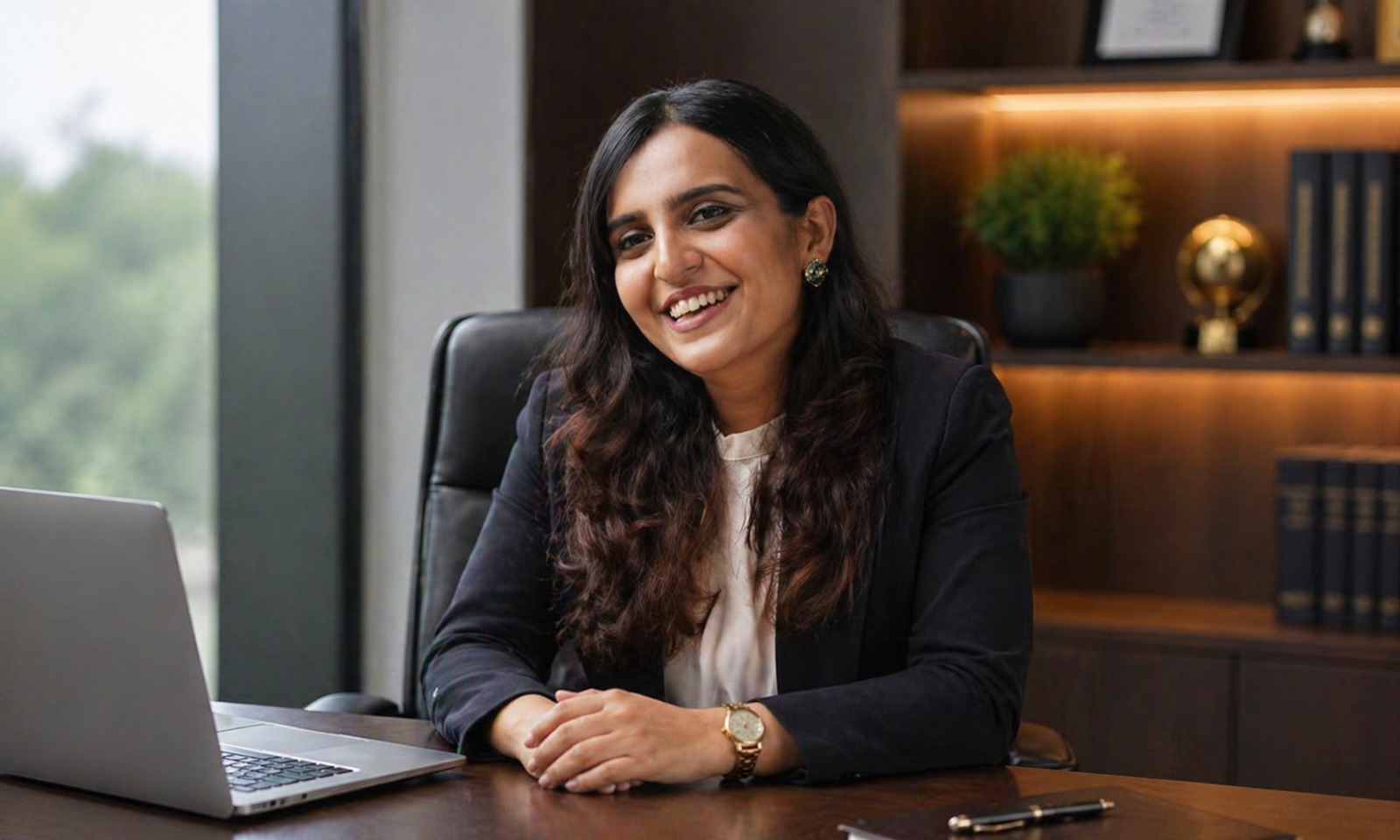
Danesa Raghulal is the Executive Director of Elite Foods & Innovations Group. She represents a new generation of Indian FMCG leadership, one that inherits legacy but refuses to be defined by it. As the executive director of Elite Foods, started by her father TR Raghulal in 1986, Danesa Raghulal is steering the company towards new and innovative products and a rapid market expansion.
Key Factors
Full Name: Danesa Raghulal
Place: Kerala, India
Title: Executive Director
Organization: Elite Foods & Innovations Group
Occupation: Business Leader, FMCG Strategist
Known For: Modernizing Elite Foods, driving product innovation, repositioning a legacy brand for younger consumers
There is a quiet clarity in the memory she often recalls, a young girl, not yet a teenager, writing a poem about one day joining her father’s company. It was not ambition in the conventional sense. It was proximity. She had already begun visiting factories at the age of seven, watching machines hum and products take shape, absorbing a business not as an abstract idea but as a lived environment.
That early immersion, half observation, half instinct, would eventually define her leadership style. Years later, when she stepped into Elite Foods, she was not entering a company. She was returning to a system she had quietly been studying all along.
Legacy and Foundation
Elite Foods was founded in 1986 by T. R. Raghulal, a decision shaped as much by absence as by opportunity. After spending time in the United States, he returned to Kerala with a simple observation: while bread was widely consumed, the quality did not match global standards.
The solution was not incremental improvement but structural change. He imported machinery, introduced new production technologies, and built systems that were uncommon in India’s bakery sector at the time.
From bread, the company expanded through integration. Flour milling followed, then cakes, and eventually a broad portfolio of food products. What began as a bakery evolved into a multi-category FMCG operation.
This foundation matters. It created a company that was not just product-driven but process-oriented, a distinction that would later ease Danesa’s transition into leadership.
Growing Up Inside a Brand
For Danesa, Elite was less a business to be discovered and more an ecosystem to grow within.
Her early exposure went beyond factory visits. Even in high school, she found herself drawn to conversations around branding, marketing, and product development.
This is significant because it signals a shift in generational orientation. Where the founder’s focus was on building infrastructure and ensuring quality, Danesa’s interest leaned toward consumer perception, positioning, and innovation.
Her upbringing across cities, from Thrissur to Ahmedabad, also exposed her to diverse consumer contexts, subtly shaping her understanding of markets beyond Kerala.
Education and Entrepreneurial Training
Her formal training at Babson College in Boston, widely known for its entrepreneurship programs, added structure to instinct.
At Babson, entrepreneurship was not theoretical. It was experiential. Students were required to pitch ideas, secure funding, and build ventures within an academic framework. Danesa recalls participating in projects ranging from event ventures to a consumer product initiative involving campus beekeeping.
This environment instilled two critical capabilities: rapid experimentation and iterative thinking. Both would later influence her approach at Elite.
Importantly, her initial plan was not to immediately join the family business. She envisioned building something in the food space independently, possibly in the United States. That she eventually returned to Elite reflects less a default choice and more a convergence of opportunity and familiarity.
Return to Elite: Transition and Integration
When she joined Elite full-time roughly six years ago, the transition was not disruptive in the conventional sense.
The company already had systems in place, something she attributes to her father’s foresight. Unlike many legacy businesses that struggle with informal structures, Elite had invested in processes early on.
Yet, what she observed was a different gap, energy.
The organization, while stable, lacked the dynamism required for a rapidly evolving FMCG market. Her initial focus was not on restructuring operations but on injecting momentum, rethinking how the company approached products and consumers.
Leadership Style and Strategic Shift
Danesa’s leadership can be described as interventionist but not disruptive.
She did not dismantle the existing structure. Instead, she layered it with a new emphasis on innovation and relevance. Her role spans strategy, marketing, and development, but her core focus remains product and positioning.
A key shift under her leadership has been the orientation toward younger consumers. Traditional bakery products, while strong in legacy value, risk stagnation without reinvention.
Her approach reflects a broader FMCG reality: brands must continuously evolve to remain culturally relevant.
Product Innovation and Market Relevance
Perhaps the most visible manifestation of this shift is the evolution of Elite’s product portfolio.
For decades, Elite’s plum cake was synonymous with festive consumption in South India. But Danesa identified a limitation. The product, while iconic, was dense and occasion-driven.
The introduction of pudding cakes was both a product innovation and a strategic repositioning. Lighter, more versatile, and available in multiple flavours, the new range expanded the brand’s usage occasions.
The response validated the approach. Older consumers adopted it for everyday consumption, while younger audiences found it more accessible.
This move reflects a broader principle in FMCG innovation: evolution does not always mean abandoning legacy, it often means reinterpreting it.
Expansion and Growth Strategy
Elite’s current portfolio includes over 200 SKUs, spanning bread, cakes, flour, mixes, and rice-based products.
Yet, brand perception continues to be anchored in plum cake. This creates a strategic challenge, how to communicate diversity without diluting identity.
Danesa’s response has been twofold: geographic expansion and portfolio visibility.
The company is strengthening its presence across South India, particularly in Tamil Nadu, Andhra Pradesh, and Telangana. Simultaneously, it is expanding its international footprint, already present in 15–20 countries.
The underlying objective is clear, reposition Elite as a comprehensive food brand rather than a category-specific player.
Values, Sustainability, and Social Impact
Despite its growth ambitions, Elite continues to anchor itself in foundational values.
One such principle, inherited from the founder, is product safety. Every product, as Danesa reiterates, must be safe for daily consumption, especially for children.
This emphasis on safety aligns with a broader shift in FMCG toward transparency and trust.
Sustainability is another emerging focus. The company has expressed ambitions toward carbon neutrality, reflecting a growing awareness of environmental responsibility within the food industry.
On the social front, initiatives such as donating a cake for every purchase and supporting educational scholarships indicate a move toward integrated CSR rather than isolated campaigns.
Challenges and Industry Context
The Indian FMCG sector is among the most competitive markets globally, particularly in the bakery and packaged foods segment.
Elite operates in a space dominated by both regional players and national giants, each with distinct advantages in distribution, branding, or scale.
For a legacy brand, the challenge is twofold. First, to defend its core market against larger competitors. Second, to expand into new categories without losing focus.
There is also the question of perception. Breaking out of a single-product identity requires sustained marketing investment and consumer education.
Danesa’s strategy appears to recognise these constraints, prioritising steady expansion over aggressive diversification.
Vision for the Future
Her stated ambition is to position Elite as the “food factory of India,” a phrase that signals both scale and integration.
The vision is not just about volume but about breadth, creating a platform that spans multiple food categories while maintaining quality and consistency.
Achieving this will require more than product expansion. It will demand stronger distribution networks, sharper brand communication, and continued investment in innovation.
The next phase for Elite is likely to be defined by how effectively it can balance these elements.
Reflection
Danesa Raghulal’s journey is less about inheriting a business and more about reinterpreting it.
She operates within the constraints of legacy but is not confined by it. Her work reflects a careful calibration, retaining what works, challenging what doesn’t, and building toward what could be.
In an industry where change is constant but trust is fragile, this balance becomes critical.
Whether Elite evolves into the “food factory of India” she envisions remains to be seen. What is already evident, however, is that under her leadership, the company is no longer standing still. It is moving, deliberately, strategically, and with an outstanding awareness of both its past and its possibilities.