
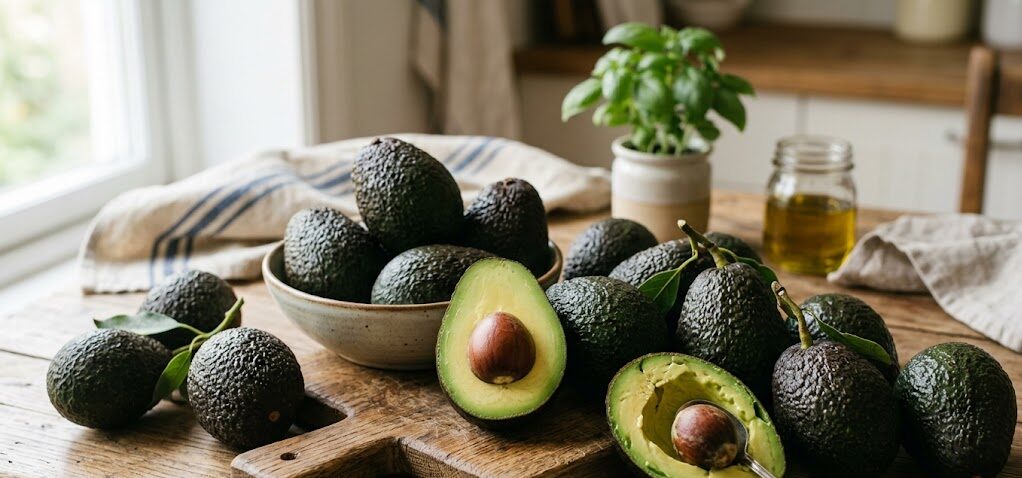
Avocado, once considered a relatively niche fruit in Kerala, is rapidly emerging as a promising commercial crop, with farmers, producer companies and agricultural entrepreneurs showing growing interest in its cultivation. The shift is being driven by rising consumer demand, interest in premium fruit varieties and the potential for value-added products such as avocado oil, vegetable butter and dried powder.
Wayanad has emerged as one of the key centres of this growing avocado economy. The region has been witnessing increasing cultivation as farmers explore alternatives and seek better returns from fruit crops. The Wayanad Hills Farmer Producer Company has been working to develop a broader value chain around avocado, including processing and market development.
From traditional butter fruit to commercial varieties
Avocado, commonly known in Kerala as vennappazham or butter fruit, is no longer limited to traditional varieties. Farmers are increasingly experimenting with commercially popular cultivars, including Hass and other hybrid varieties that are being promoted for different climatic conditions.
Agricultural reports indicate that Kerala’s varied climate allows different avocado groups, including Mexican, Guatemalan and West Indian types, to be cultivated in suitable locations. Proper site selection, sunlight, drainage and soil management remain important factors for successful production.
The growing interest is also visible in the demand for planting material. In Piravom, Ernakulam, farmer Sinaj has developed and propagated what he calls the ‘Piravom K3’ avocado, attracting enquiries for saplings from different parts of Kerala.
Wayanad looks beyond fresh fruit
The expansion of avocado cultivation has also exposed farmers to the challenges of relying entirely on the fresh-fruit market. Falling prices in producing regions have encouraged farmer organisations to explore processing and value addition.
The Wayanad Hills Farmer Producer Company is working on products including avocado oil, vegetable butter and dried avocado powder. Cookies and cupcakes made using avocado have also been introduced as part of efforts to diversify the market for the crop.
The organisation has also entered into a partnership with the Kerala Climate Resilient Agri-Value Chain Modernization (KERA) project and signed an MoU with CSIR-CFTRI to strengthen research and processing opportunities. KERA is a Kerala government initiative supported by the World Bank that focuses on modernising agricultural value chains and improving market opportunities for farmers.
Technology enters avocado farming
Farmers are also looking at advanced cultivation techniques to improve productivity and the quality of planting material.
Some commercial growers in Kerala are experimenting with microcloning and multiple grafting techniques, while premium varieties such as Hass, Maluma Hass, Pinkerton and Fuerte are attracting interest. The suitability of individual varieties depends on local climate and growing conditions.
Pollination and drainage are among the important considerations in commercial cultivation. Avocado varieties are generally classified into Type A and Type B flowering patterns, and growers may use complementary varieties to improve pollination. Proper drainage is particularly important in Kerala because excessive moisture can increase disease risks.
India’s agricultural research system has also developed commercial avocado varieties. ICAR lists Arka Supreme and Arka Coorg Ravi among its avocado varieties, with the latter classified as a Type B variety and reported to have high yield potential.
A market with both opportunity and risk
The growing popularity of avocado reflects a wider change in Kerala’s agricultural landscape. Farmers are increasingly diversifying into exotic and high-value fruit crops as climate pressures affect traditional agriculture and consumer demand changes.
However, the avocado opportunity is not without risks. Prices can fluctuate significantly, and farmers need reliable planting material, technical knowledge and established markets before making large investments. The expansion of processing facilities could help reduce dependence on fresh-fruit prices by creating additional outlets for produce.
With cultivation spreading beyond traditional pockets and new efforts focused on processing, research and organised marketing, avocado is gradually moving from an exotic fruit to a potential commercial crop in Kerala.
The next phase of the state’s avocado story may therefore depend not simply on growing more trees, but on building a complete farm-to-market value chain around the fruit.