
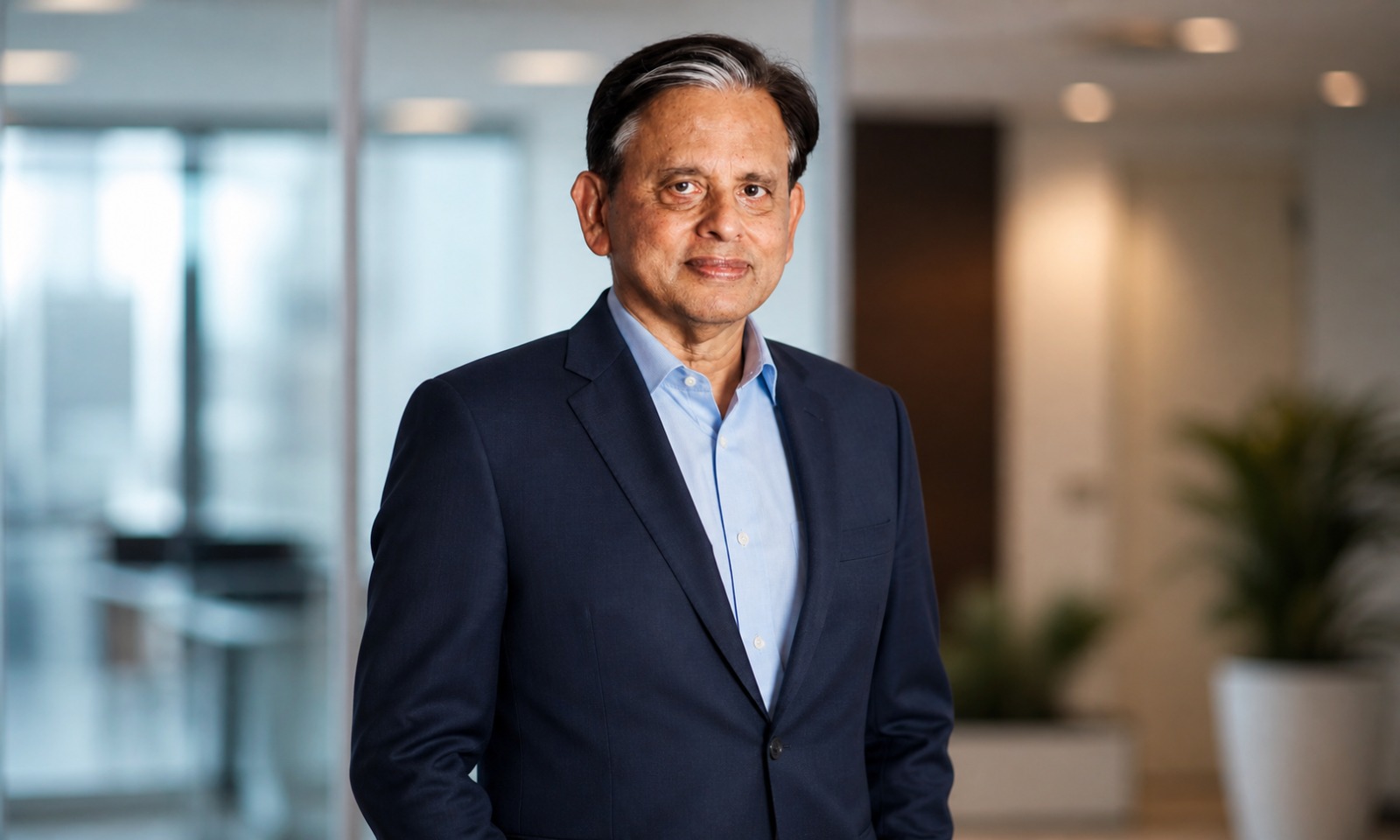
Abraham M. George
Key Facts
Full Name: Abraham M. George
Place of Birth: Thiruvananthapuram, Kerala, India
Nationality: Indian-American
Titles: Businessman, Academic, Author, Philanthropist
Occupation: Founder of The George Foundation; Founder of Shanti Bhavan
Known For: Social impact initiatives, education reform, philanthropy
Early Life and Kerala Roots
Abraham M. George’s story begins in Thiruvananthapuram, a city that has historically produced thinkers, administrators, and reformers shaped by both intellectual discipline and public consciousness. Born into a family that valued education and structure, George’s formative years were marked by an early exposure to rigor.
At just fourteen, he entered the National Defence Academy in Khadakwasla, a decision that would define his worldview. This was not simply an academic institution; it was a crucible of discipline, hierarchy, and national duty. The experience instilled in him a structured approach to problem-solving and a resilience that would later surface in very different contexts.
Even at this stage, his trajectory seemed oriented toward service, though its eventual form would take decades to crystallize.
Soldier on the Edge of Conflict
George’s early career as an artillery officer placed him at the frontline of geopolitical tension. His posting at Sela Pass in the North-East Frontier Agency, near the Sino-Indian border, exposed him to the realities of military life in volatile terrain.
It was here, amid the harsh conditions of the Himalayas, that he experienced a life-altering incident, an injury caused by a dynamite explosion. This moment forced a reassignment and eventually led to his departure from the Army as a captain.
The transition was not merely professional. Military service had embedded in him a sense of purpose tied to national duty. Leaving that framework created a vacuum, one that would later be filled, though in an entirely different domain.
America: Reinvention and Culture Shock
George’s move to the United States in the early 1970s marked the beginning of a profound reinvention. He arrived in Alabama during the era of segregationist Governor George Wallace, a context that exposed him to racial tensions and social divisions starkly different from those he had known.
He would later describe the experience as overwhelming, a cultural dislocation that forced him to reassess identity, belonging, and opportunity.
From this disorientation emerged focus. He enrolled at New York University’s Stern School of Business, earning an MBA in 1973 and a PhD in international finance by 1975.
These years were transformative. They shifted him from a military framework to an analytical, financial one, equipping him with the tools to navigate global markets.
Rise in Finance and Entrepreneurship
George’s entry into the financial world began at Chemical Bank, where he gained exposure to institutional finance and global systems. But his ambitions quickly moved beyond corporate roles.
In 1976, he founded Multinational Computer Models Inc. (MCM), a company that specialized in financial systems for multinational corporations. The timing was significant. Global finance was becoming increasingly complex, and MCM positioned itself at the intersection of technology and financial modelling.
The company’s partnership with Credit Suisse First Boston further expanded its reach, with George serving as chief consultant and managing director.
By 1998, MCM had been acquired by SunGard Data Systems, marking the financial peak of his entrepreneurial journey.
From an external perspective, this was the culmination of success, wealth, recognition, and influence. But for George, it was also the beginning of a question: what next?
The Turning Point: Return to India
In 1995, even before the acquisition of his company, George made a decision that would redefine his life. He returned to India and established The George Foundation.
This was not philanthropy in the conventional sense. George was not interested in episodic charity. His approach was systemic, rooted in the belief that poverty and inequality required structural intervention.
The decision itself was unusual. At a time when global Indian entrepreneurs were consolidating their positions abroad, George chose to re-engage with the complexities of India’s socio-economic landscape.
It was a shift from wealth creation to institution building.
Building Institutions that Change Lives
The George Foundation became the platform through which his ideas took shape. Its initiatives spanned education, healthcare, and rural development, but its most visible and ambitious project was Shanti Bhavan.
Conceived as a residential school for children from socioeconomically disadvantaged backgrounds, Shanti Bhavan was built on a long-term model. Students were not simply enrolled; they were supported over a 17-year educational journey, from early childhood to higher education.
This continuity was crucial. It addressed one of the core failures of many social interventions, the lack of sustained engagement.
Over time, the model expanded, leading to the development of a second campus, Shanti Bhavan 2.
Parallel initiatives such as the Baldev Medical & Community Center and the Indian Institute of Journalism & New Media further extended the Foundation’s reach into healthcare and media education.
Public Health Impact
Among the Foundation’s earliest interventions was a nationwide study on childhood lead poisoning. The findings were stark: over half of children in Indian cities had elevated blood lead levels.
This was not just data. It became a tool for advocacy.
The study contributed to the policy momentum that led to India’s nationwide phase-out of leaded petrol in 2000.
This episode illustrates a defining aspect of George’s approach, combining research with policy engagement, rather than operating in isolation from the state.
Global Recognition and Media Presence
Shanti Bhavan’s work gained international visibility through the Netflix documentary Daughters of Destiny, which chronicled the lives of its students.
The documentary did more than showcase an institution. It humanized the long-term impact of educational intervention, making George’s model accessible to a global audience.
His work and philosophy have also been covered in publications such as Indo American News and LA Weekly, while his 2026 appearance on The Kelly Clarkson Show further expanded his reach.
These platforms positioned him not just as a philanthropist, but as a thinker engaging with global conversations on inequality and education.
Author and Thought Leader
George’s intellectual engagement extends into writing. His works on international finance reflect his academic grounding, while later publications address social development and inequality.
His memoir, Mountains to Cross: Finding Life’s Purpose in Service (2026), encapsulates his journey from finance to philanthropy.
The book’s reception, including its presence on bestseller lists, indicates a broader resonance with readers navigating questions of purpose and impact.
What emerges from his writing is a consistent theme, the idea that professional success must eventually confront moral responsibility.
Philosophy and Legacy
At the core of George’s work is a rejection of transactional philanthropy. His emphasis is on dignity, long-term investment, and systemic change.
His association with organizations such as Human Rights Watch and the International Center for Journalists further situates him within a global network of advocacy and thought leadership.
Unlike many philanthropists who operate at a distance, George’s model is deeply embedded. It requires time, proximity, and sustained engagement.
Abraham M. George as an Outstanding Malayali
To understand Abraham M. George as a Malayali figure is to place him within a broader cultural tradition that values education, social mobility, and global engagement.
Kerala has long produced individuals who operate beyond its geographical boundaries while remaining connected to its intellectual ethos. George exemplifies this trajectory, but with a distinctive pivot, his return was not symbolic, it was operational.
He did not merely contribute resources; he built systems.
In doing so, he redefined what it means to succeed. His journey, from a young cadet in Kerala to a global finance professional and finally to a social architect, reflects a rare continuity of purpose shaped by changing contexts.
His legacy is not confined to institutions or policies. It lies in the lives transformed, the structures created, and the idea that success, at its most meaningful, must extend beyond the self.
In that sense, Abraham M. George remains an outstanding Malayali, not because of where he reached, but because of where he chose to return.
Awards
NYU Stern School of Business Stewart Satter Social Entrepreneurship Award.
Lifetime Achievers Award for Philanthropy – The Kerala Center
Community Service Award – Global Organization of People of Indian Origin (GOPIO)
Hind Rattan Award – NRI Welfare Society of India.
The BookFest First Place Award for Nonfiction – Memoirs – Transformational and Nonfiction – Self-Help – Inspiration
Book recognitions
Mountains to Cross – USA Today Bestseller (No. 16)
Mountains to Cross – Publishers Weekly Bestseller (No. 23)
Mountains to Cross – Porchlight Books Nonfiction Bestseller (No. 8, January 2026)
Mountains to Cross – Amazon #1 in nonprofit, philanthropy, and social impact categories