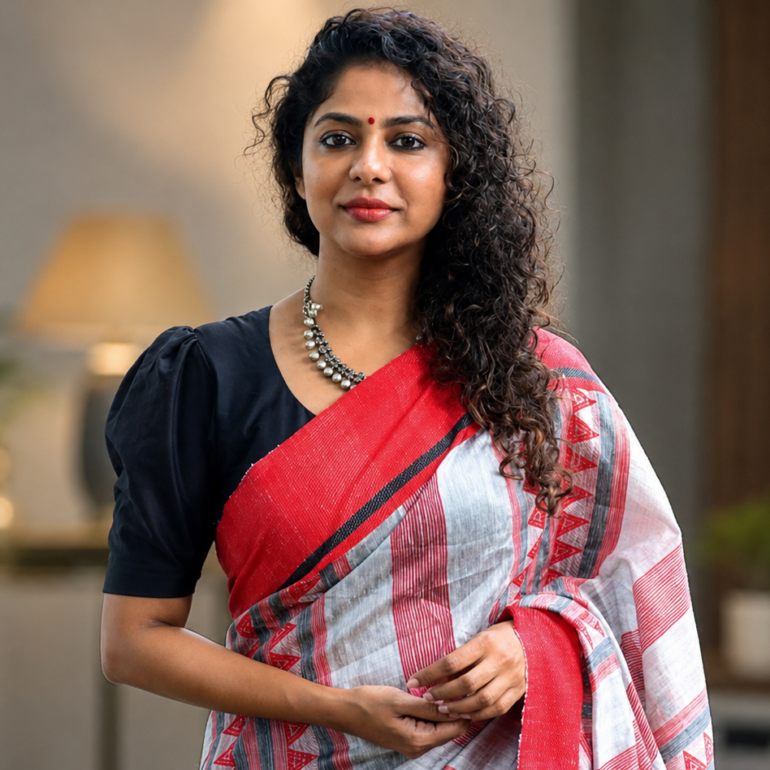
Soumya Swaminathan
Chess Player
Soumya Swaminathan is a chess player holding the title of International Master (IM) and Woman Grandmaster (WGM) from India. She won the World Junior Girls’ Championship 2009 held in Puerto Madryn, Argentina, edging out Deysi Cori and Betül Cemre Yıldız on tiebreak score.[1][2] She won the National Junior Girls Chess Championship (India) thrice in 2005, 2006 and 2008. She won the women’s edition of National Premier Chess Championship in 2010 at Bhubaneshwar, Odisha. She withdrew from the chess championships held in Iran in 2018 as a protest against the compulsory headscarf rule for women by Iran’s Islamic government.
Key Factors
Full Name: Soumya Swaminathan
Born: 21 March 1989 (age 37)
Place of Birth: Palakkad, India
Titles Held: International Master (IM), Woman Grandmaster (WGM)
Occupation: Professional Chess Player
Known For: World Junior Girls’ Champion 2009, Indian Women’s Chess Champion, principled stand against compulsory headscarf rules in Iran
In the intensely competitive world of international chess, where silence often hides enormous psychological pressure, Soumya Swaminathan built her reputation not through spectacle, but through clarity of mind, strategic discipline, and quiet conviction. Over the years, she became one of India’s most respected women chess players, earning titles such as International Master and Woman Grandmaster while representing the country across world championships, Olympiads, and elite tournaments. Yet what makes her journey especially compelling is not only her success on the chessboard. It is the way she combined intellect with principle. Whether defeating top international opponents in tense endgames or withdrawing from a major tournament in protest against compulsory dress regulations, Soumya emerged as an outstanding Malayali sportswoman whose career reflects courage as much as calculation. In a sporting culture that often celebrates aggression and celebrity, her story stands apart for its calm intelligence, personal dignity, and unwavering sense of self.
Among India’s accomplished generation of women chess players, Soumya Swaminathan occupies a unique place. A World Junior Girls’ Champion, International Master, Woman Grandmaster, and multiple-time national champion, she became known not only for her achievements in competitive chess but also for the thoughtful independence that shaped her public identity. Over nearly two decades, she represented India in major global tournaments, helped strengthen the country’s growing presence in women’s chess, and consistently earned respect for her strategic maturity and composed playing style. Her rise coincided with a transformative phase in Indian chess, when young women players were beginning to challenge long-standing global hierarchies. Yet Soumya’s journey was never merely about rankings or medals. It was also about discipline, resilience, and the courage to make difficult choices based on personal conviction. For many young players, especially women entering competitive sport, she became a symbol of intelligence paired with integrity.
Early Life and Kerala Connection
Though her chess career unfolded on national and international stages, Soumya Swaminathan’s identity remained deeply connected to Kerala’s intellectual culture and disciplined academic environment. Like many Malayali families that value education and analytical thinking, her upbringing encouraged concentration, persistence, and self-motivation, qualities that later became visible in her approach to chess.
Her fascination with the game began early. Unlike physically demanding sports that rely on visible athleticism, chess rewards patience, memory, pattern recognition, emotional control, and long-term thinking. Soumya displayed these qualities from childhood.
Indian chess during the late 1990s and early 2000s was undergoing rapid transformation. The global rise of Viswanathan Anand had inspired an entire generation of young Indian players, including girls who increasingly saw chess as a legitimate professional pursuit rather than a niche intellectual hobby.
For a young player emerging from southern India during that period, the environment was both exciting and demanding. Opportunities were expanding, but competition was becoming far more intense. Soumya’s progress through junior circuits quickly attracted attention because of her consistency and maturity under pressure.
What distinguished her even as a teenager was composure. She rarely appeared emotionally rattled at the board. Coaches and fellow players often observed her calm decision-making, particularly in complex positional battles.
Rise of a Chess Prodigy
Soumya’s rise through Indian junior chess was methodical rather than dramatic. She became the Indian Junior Girls Champion three times, in 2005, 2006, and 2008, establishing herself as one of the country’s strongest emerging players.
These victories mattered enormously within Indian chess circles. Junior national championships are not merely youth tournaments. They are often indicators of future international success.
At a time when Indian women’s chess was becoming increasingly competitive, Soumya managed to stand out through disciplined tournament performances and technical strength. She steadily accumulated international norms and experience against stronger opponents.
Earning the title of Woman Grandmaster marked a major milestone, but Soumya did not stop there. In an era when many elite women players focused exclusively on women’s titles, she pushed toward the International Master title in the open category, a more demanding benchmark requiring stronger overall performance ratings.
Crossing the 2400 rating mark in 2018 and completing the requirements for the International Master title represented years of sustained effort.
This achievement placed her among a relatively small group of Indian women who had crossed that level in open competition.
World Junior Girls’ Championship Triumph
If one tournament transformed Soumya Swaminathan into an internationally recognized chess player, it was the 2009 World Junior Girls’ Championship in Puerto Madryn, Argentina.
The competition featured some of the strongest young women players in the world, including Peru’s Deysi Cori and Turkey’s Betül Cemre Yıldız.
World junior championships are emotionally exhausting events. Players compete across multiple rounds under intense psychological pressure, knowing that one mistake can destroy months or years of preparation.
Soumya remained remarkably composed throughout the event.
The tournament eventually came down to tiebreaks, one of the most nerve-racking situations in chess. Under such conditions, emotional stability becomes as important as tactical calculation.
When Soumya secured the title, it was celebrated as a major moment for Indian women’s chess. India had already begun establishing itself as a rising chess power, but victories at world junior level carried symbolic importance. They demonstrated that Indian players could compete consistently against the best young talents globally.
For Soumya personally, the victory validated years of disciplined preparation and elevated her into the international spotlight.
National and International Success
Following her world junior triumph, Soumya continued building an impressive competitive career.
In 2010, she won the Indian Women’s National Premier Chess Championship in Bhubaneswar with an impressive score of 8½ out of 11. National championships in India are notoriously difficult because of the country’s deep pool of talented players.
Her success was not limited to India.
In 2012, she became Commonwealth Women’s Champion in Chennai, adding another major title to her growing résumé. Four years later, she produced a strong performance at the prestigious Moscow Open, tying for first place in the women’s section before narrowly finishing second on tiebreak.
That same year, she won the bronze medal at the Women’s Asian Individual Championship, reinforcing her reputation as one of India’s most reliable international competitors.
She also represented India at major team events, including the Women’s World Team Championships and Chess Olympiads.
At the 2012 Olympiad, the Indian women’s team finished fourth overall and secured first place in Category A, a significant achievement against stronger-rated teams. Soumya’s performances contributed to India’s growing credibility in women’s team chess.
Unlike highly aggressive tactical players who rely heavily on risk-taking, Soumya often approached games with positional patience and technical discipline. This made her especially dependable in team formats.
The Iran Protest and Her Principles
In 2018, Soumya Swaminathan made international headlines for reasons extending beyond chess.
She withdrew from the Asian Team Chess Championship in Iran, publicly objecting to the country’s compulsory headscarf regulations for women participants.
Her decision generated significant debate.
Some praised her for defending personal freedom and individual rights. Others argued that athletes should adapt to local laws when participating internationally. The discussion quickly expanded beyond chess into broader conversations about women’s autonomy, cultural expectations, and sporting ethics.
Soumya’s own explanation remained calm and measured. She stated that wearing the compulsory headscarf violated her personal rights and principles.
What made the moment significant was not loud activism or dramatic rhetoric, but the quiet firmness of her stand.
For many observers, the incident revealed an important aspect of her personality: intellectual independence.
In professional sport, where athletes are often encouraged to avoid controversy, choosing principle over participation can carry professional risks. Soumya nevertheless remained firm in her decision.
The episode elevated her public identity beyond chess circles and introduced her to audiences who admired her courage and self-respect.
Playing Style and Chess Identity
Within Indian chess circles, Soumya has long been respected for her strategic maturity and calm temperament.
Her style is rarely flamboyant. Instead, it is built around positional understanding, patient accumulation of advantages, and technical endgame control.
She often appeared most comfortable in games requiring long-term planning rather than chaotic tactical complications.
This approach reflected a broader psychological strength: emotional balance.
Chess at elite level is mentally brutal. Players spend hours under enormous concentration while navigating uncertainty and pressure. Soumya developed a reputation for handling these demands with composure.
Compared with some younger Indian stars who emerged during the faster, computer-influenced era of aggressive preparation, Soumya represented a more classical strategic school, rooted in structure, patience, and precision.
That balance made her especially respected among serious players and coaches.
Life Beyond the Board
In December 2020, Soumya married Ajinkya Kurdukar, marking a new chapter in her personal life.
Outside tournament halls, she has generally maintained a relatively private public image compared to more media-driven sports personalities.
Yet her influence remains significant, especially for young women entering chess.
Indian women’s chess has produced remarkable talents over the past two decades, but pathways remain challenging. Competitive travel, financial pressure, social expectations, and mental exhaustion continue to affect many players.
Soumya’s journey demonstrated that success in chess can coexist with individuality, intellectual confidence, and personal conviction.
She became more than a medal-winning player. She became an example of thoughtful professionalism.
Legacy and Influence
Today, Soumya Swaminathan occupies an important place in the story of Indian women’s chess.
She belongs to the generation that helped strengthen India’s international presence between the pioneering era of Viswanathan Anand and the explosive rise of India’s newer teenage prodigies.
Her achievements across junior world championships, national titles, Asian events, and Olympiads contributed quietly but significantly to India’s emergence as a global chess powerhouse.
Yet statistics alone do not fully explain her importance.
What continues to make her story resonate is the combination of intelligence, discipline, dignity, and moral clarity she brought to the game.
For many young players, especially women navigating competitive sport, Soumya represents a different kind of sporting role model, one built not on celebrity culture, but on integrity and inner confidence.
In the long and evolving history of Indian chess, she remains an outstanding Malayali achiever whose career proved that true strength is often expressed not through noise or spectacle, but through calm conviction, thoughtful resistance, and excellence pursued with grace.
Achievements
2007: Woman International Master (WIM)
2009: World Junior Champion
2010: Sahara Best Sportsperson Award (Girls)
2011: Lokmat Sakhi Gaurav Puruskar
2013–14: Shiv Chatrapati Award
2014: Pune Gaurav Puruskar