M. G. Sreekumar
Indian playback singer
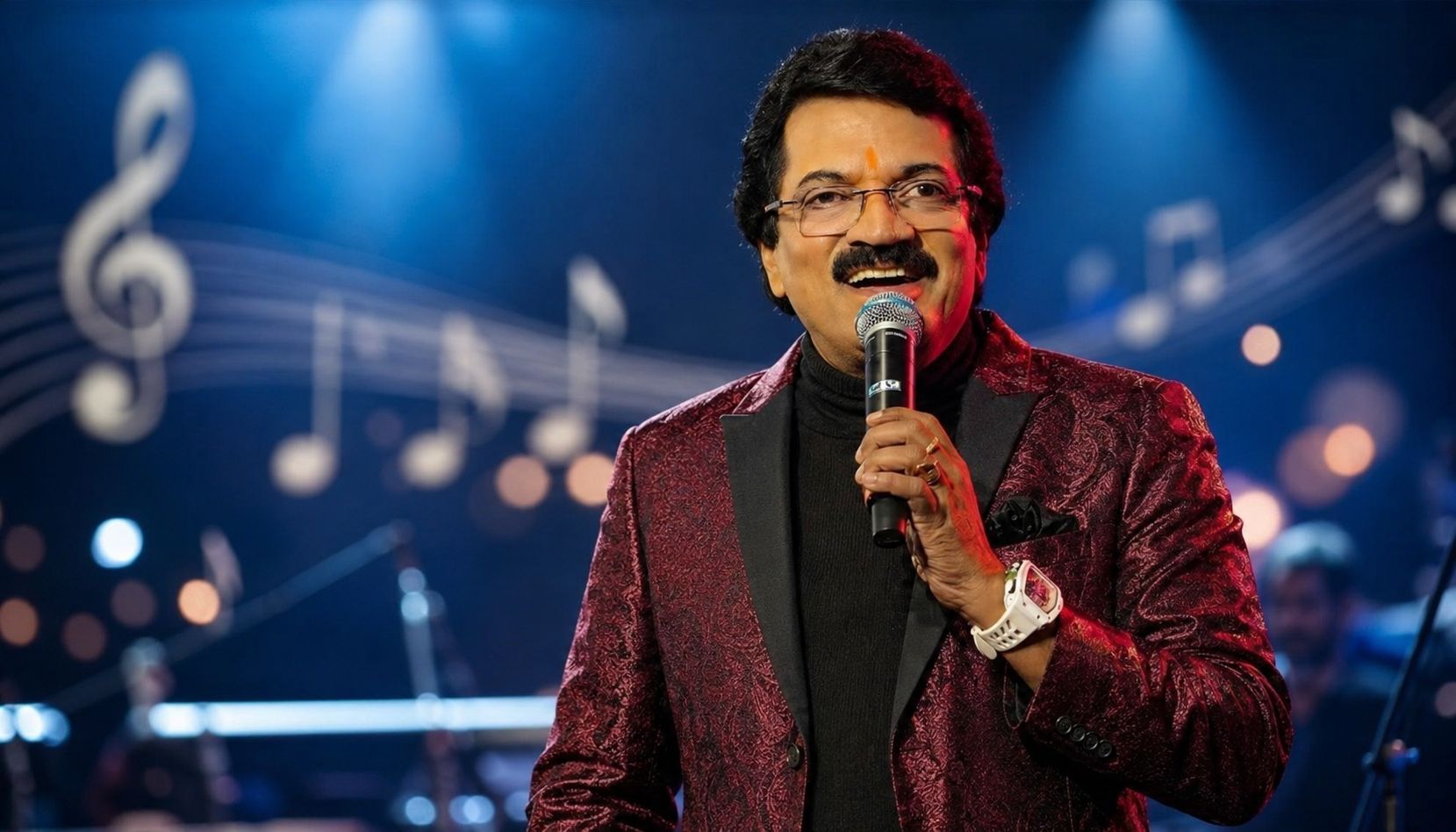
M. G. Sreekumar is an Indian playback singer, composer, music producer, television presenter and film producer, who works predominantly in Malayalam cinema. He has sung more than 2500 songs in various Indian languages including Malayalam, Tamil, Telugu, Kannada, Hindi, and Sanskrit. Sreekumar was born in Haripad, in Alappuzha district, Kerala as the younger son of music composer and harmonist Malabar Gopalan Nair and Harikatha exponent Kamalakshi Amma. He is the younger brother of popular music director M. G. Radhakrishnan and popular Carnatic musician Dr. K. Omanakkutty.
Key Factors
Full Name: M. G. Sreekumar
Born: 25 May 1957
Birthplace: Haripad, Alappuzha district, Kerala
Profession / Occupation: Playback Singer, Music Director, Composer, Television Presenter, Producer
Years Active: 1983 to present
Languages Sung In: Malayalam, Tamil, Telugu, Kannada, Hindi, Sanskrit
In the history of Malayalam cinema, very few playback singers have shaped the emotional atmosphere of films as profoundly as M. G. Sreekumar. A singer, composer, television personality, mentor, and cultural figure, he became one of the defining voices of Kerala’s cinematic golden era, especially during the late 1980s and 1990s. His songs, often associated with actors like Mohanlal and filmmakers such as Priyadarshan, helped create some of Malayalam cinema’s most beloved musical moments. Equally comfortable with romantic melodies, classical compositions, devotional songs, and energetic commercial tracks, Sreekumar developed a vocal style that felt deeply personal to Malayali audiences. Beyond playback singing, he expanded into music direction, television mentoring, and music education, becoming a familiar and influential cultural presence in Kerala homes. His career, stretching across more than forty years, reflects both the evolution of Malayalam film music and the enduring emotional power of melody in Malayali life.
There are certain voices that do more than sing songs. They travel through generations, settle inside memory, and become inseparable from the emotional life of a people. For Malayalis across decades, the voice of M. G. Sreekumar has carried romance, heartbreak, devotion, celebration, nostalgia, and longing with remarkable intimacy. Whether echoing through the crowded loudspeakers of a temple festival, playing softly from an old cassette deck during monsoon evenings, or accompanying iconic scenes in Malayalam cinema, his music has remained woven into Kerala’s collective cultural memory. With a career spanning more than four decades, thousands of songs across multiple Indian languages, and an unmistakable vocal identity, Sreekumar emerged as one of the most outstanding musical voices in modern Indian cinema. Yet his story is not merely about playback singing. It is also about Kerala’s musical heritage, artistic discipline, family legacy, reinvention across generations, and the emotional bond between a singer and his audience.
Early Life and Musical Roots
Long before he became one of Kerala’s most recognizable playback voices, M. G. Sreekumar was a boy growing up in the culturally rich town of Haripad in Alappuzha district, inside a household where music was not entertainment alone, but a way of life.
His father, Malabar Gopalan Nair, was a respected music composer and harmonist, while his mother Kamalakshi Amma was associated with the traditional storytelling art form of Harikatha. Music, rhythm, devotional expression, and classical discipline flowed naturally through the atmosphere of the home.
The artistic influence around him was extraordinary. His elder brother M. G. Radhakrishnan would later become one of Malayalam cinema’s most respected composers, while his sister K. Omanakkutty earned acclaim in Carnatic music.
Kerala during the 1960s and 1970s still maintained strong connections to classical music traditions, temple arts, radio culture, and literary consciousness. For young Sreekumar, these influences blended naturally. His later versatility, moving effortlessly between classical-based melodies and mainstream cinema songs, reflected this early environment.
Unlike singers shaped solely by commercial music, Sreekumar emerged from a deeply cultural ecosystem.
The Voice That Became Kerala’s Emotion
His entry into cinema arrived in 1983 through the film Coolie. Like many playback singers of his generation, the beginning was gradual rather than explosive. Malayalam cinema already had towering vocal legends, and finding a distinct space required patience.
But Sreekumar possessed something difficult to imitate: emotional accessibility.
His breakthrough years coincided with a transformative period in Malayalam cinema. By the late 1980s, filmmakers were increasingly blending realism, middle-class emotional drama, humour, and sophisticated music into mainstream storytelling. Playback singers were not merely background voices anymore. They became emotional narrators.
Then came Chithram.
The film changed everything.
Sreekumar sang all the songs in Chithram, and the soundtrack became inseparable from the film’s emotional identity. Songs like “Doore Kizhakkudikkum” and “Paadam Pootha Kaalam” transformed him into a household name.
Malayalis did not merely hear his voice. They felt it.
There was warmth in his singing, but also vulnerability. His delivery carried emotional intimacy without excessive ornamentation. The voice felt conversational yet musically disciplined, capable of conveying joy, loneliness, devotion, and heartbreak with equal conviction.
The Golden Era of Malayalam Cinema
To understand M. G. Sreekumar’s cultural importance, one must understand Malayalam cinema during the late 1980s and 1990s.
This was a period when filmmakers like Priyadarshan, Sathyan Anthikad, Fazil, and others were creating films rooted in middle-class Malayali life. Music played a central emotional role in these narratives, and Sreekumar’s voice became closely associated with many of them.
His collaborations with Mohanlal became particularly iconic. For many viewers, the emotional world of Mohanlal’s characters often felt incomplete without Sreekumar’s playback voice accompanying them.
His work with composers such as Johnson, Raveendran, M. G. Radhakrishnan, Ouseppachan, and Vidyasagar produced songs that remain deeply embedded in Kerala’s cultural memory.
The music of that era was melodically rich, lyrically poetic, and emotionally sincere. Sreekumar’s voice fit perfectly into that ecosystem.
Even today, many of his songs continue to circulate not simply as nostalgic classics, but as emotional markers of Malayali life itself.
Musical Style and Vocal Identity
What made M. G. Sreekumar’s singing distinctive was not merely technical ability, but emotional texture.
His voice carried elasticity. It could move from playful romanticism to devotional intensity without sounding artificial. He possessed strong classical grounding, yet never allowed technical complexity to overpower emotional communication.
There was also a natural conversational quality in his singing. Unlike heavily stylized playback voices, Sreekumar often sounded emotionally immediate, as though speaking directly to the listener.
This quality became especially powerful in romantic melodies and melancholic songs.
Malayalis across generations associate his voice with deeply personal memories: bus journeys during rain, cassette players in Gulf migrant homes, college festivals, temple celebrations, and late-night radio broadcasts.
His devotional songs also created immense cultural impact, particularly among audiences who valued the intersection between spirituality and music in Kerala’s artistic traditions.
Beyond Playback Singing
Unlike many playback singers who remained confined to recording studios, Sreekumar evolved continuously.
He entered music direction through films such as Chathurangam and Thandavam, later contributing music to projects like Kanchivaram.
Television brought him even closer to audiences.
Programs like SaReGaMa, Idea Star Singer, and Top Singer transformed him from playback singer into mentor and cultural personality.
His judging style combined humour, technical observation, emotional encouragement, and occasional bluntness. Younger singers often viewed him not merely as a celebrity judge, but as a bridge to Malayalam music’s golden generation.
Through KMG Musics and the Saregama School of Music in Thiruvananthapuram, he also invested in nurturing future talent and sustaining musical education.
Recognition, Awards, and Cultural Status
Over the decades, recognition followed naturally.
National Film Awards, Kerala State Film Awards, Filmfare Awards South, and the Harivarasanam Award acknowledged both artistic excellence and cultural contribution. In 2024, his appointment as Director of the UAE Government’s Music Academy further reflected his stature beyond India.
Yet awards alone do not explain his cultural position.
M. G. Sreekumar became one of those rare playback singers whose voice transcended cinema itself. His songs moved into family memory, religious spaces, public celebrations, television culture, and diaspora nostalgia.
For Malayalis living outside Kerala, especially in Gulf countries, his music often carried emotional connections to home.
Controversies and Public Perception
Like many prominent cultural figures in Kerala, Sreekumar’s public life has not remained free from controversy.
His appointment as chairman of the Kerala Sangeeta Nataka Akademi generated criticism due to perceptions regarding his political proximity to the Bharatiya Janata Party despite the appointment coming under the Left Democratic Front government.
Critics questioned political motivations, while supporters argued that artistic merit should remain separate from political assumptions.
Sreekumar himself has often occupied a complicated public position, admired for artistic achievement while occasionally facing criticism over political commentary and public statements.
Yet these debates also reflect Kerala’s intensely politicized cultural landscape, where artists frequently become subjects of ideological scrutiny.
Legacy and Lasting Influence
Today, M. G. Sreekumar occupies a unique position in Malayalam cultural history.
He belongs to a generation that transformed playback singing into emotional storytelling. His songs accompanied some of Malayalam cinema’s most beloved films, while his television presence helped shape newer generations of singers and listeners.
More importantly, his voice became deeply intertwined with Malayali memory itself.
In an era when musical trends change rapidly and playback voices often come and go, Sreekumar’s songs continue to survive because they carry emotional truth. They remind listeners not only of films and actors, but of places, relationships, seasons, and moments in their own lives.
That enduring emotional connection is perhaps his greatest achievement.
For millions of Malayalis across Kerala and the global diaspora, M. G. Sreekumar remains not just a playback singer, but an outstanding cultural presence whose voice continues to echo through the emotional landscape of Malayalam life.
Awards
National Film Awards:
- 1990 – Best Male Playback Singer – His Highness Abdullah (Song: “Nadha Roopini”)
- 1999 – Best Male Playback Singer – Vasanthiyum Lakshmiyum Pinne Njanum (Song: “Chanthu Pottum”)
Kerala State Film Awards:
- 1989 – Best Male Playback Singer – Kireedam (Song: “Kanneer Poovinte”) and Vadakkunokkiyantram (Song: “Mayamayooram Peeliveeshiyo”)
- 1991 – Best Male Playback Singer – Kilukkam (Song: “Kilukil Pambaram”) and Thudarkkadha (Song: “Aathiravaravayi”)
- 1992 – Best Playback Singer – Different films
Kerala Film Critics Awards
- 1998 – Best Male Playback Singer — Kottaram Veettile Apputtan, Punjabi House, Summer in Bethlehem
- 1999 – Best Male Playback Singer — Megham, Chandranudikkunna Dikkil, Vasanthiyum Lakshmiyum Pinne Njaanum
- 2000 – Best Male Playback Singer — Kattu Vannu Vilichappol
- 2001 – Best Male Playback Singer — Achaneyanenikkishtam, Praja
- 2002 – Best Male Playback Singer — Nandanam
- 2005 – Best Male Playback Singer — Mayookham, Balyam
- 2006 – Best Male Playback Singer — Keerthi Chakra, Pothan Vava
- 2011 – Best Music Director — Oru Marubhoomikkadha
Filmfare Awards South:
- 2016 – Filmfare Award for Best Male Playback Singer – Malayalam – Oppam – “Chinnamma”
Asianet Film Awards:
- 2003 – Best Male Playback Singer – Manassinakkare
- 2005 – Best Male Playback Singer – Thanmathra, Ananthabhadram
- 2008 – Best Male Playback – Innathe Chintha Vishayam
- 2010 – Best Music Director – Oru Naal Varum
Surya TV Awards:
- 2008 – Best Playback Singer – Innathe Chintha Vishayam
- 2010 – Best Playback Singer – Oru Naal Varum
Other awards:
- 2008 – Raju Pilakkattu Memorial Award
- 2008 – Jeevan TV – P. Jayachandran Award
- 2010 – Asiavision Movie Award for Best Music Director – Oru Naal Varum
- 2011 – Swaralaya Kairali Yesudas Award
- 2016 – Harivarasanam Award
- 2016 – Asiavision Award for Best Male Singer – Minungum Minnaminunge from the movie “Oppam”
- 2016 – Mazhavil Mango Music Awards – Special Jury Award – Chinnamma from the movie “Oppam”
- 2023 – V. M. Kutty Award instituted by the Ishal Samskarika Samithi