Shashi Tharoor
Member of the Lok Sabha
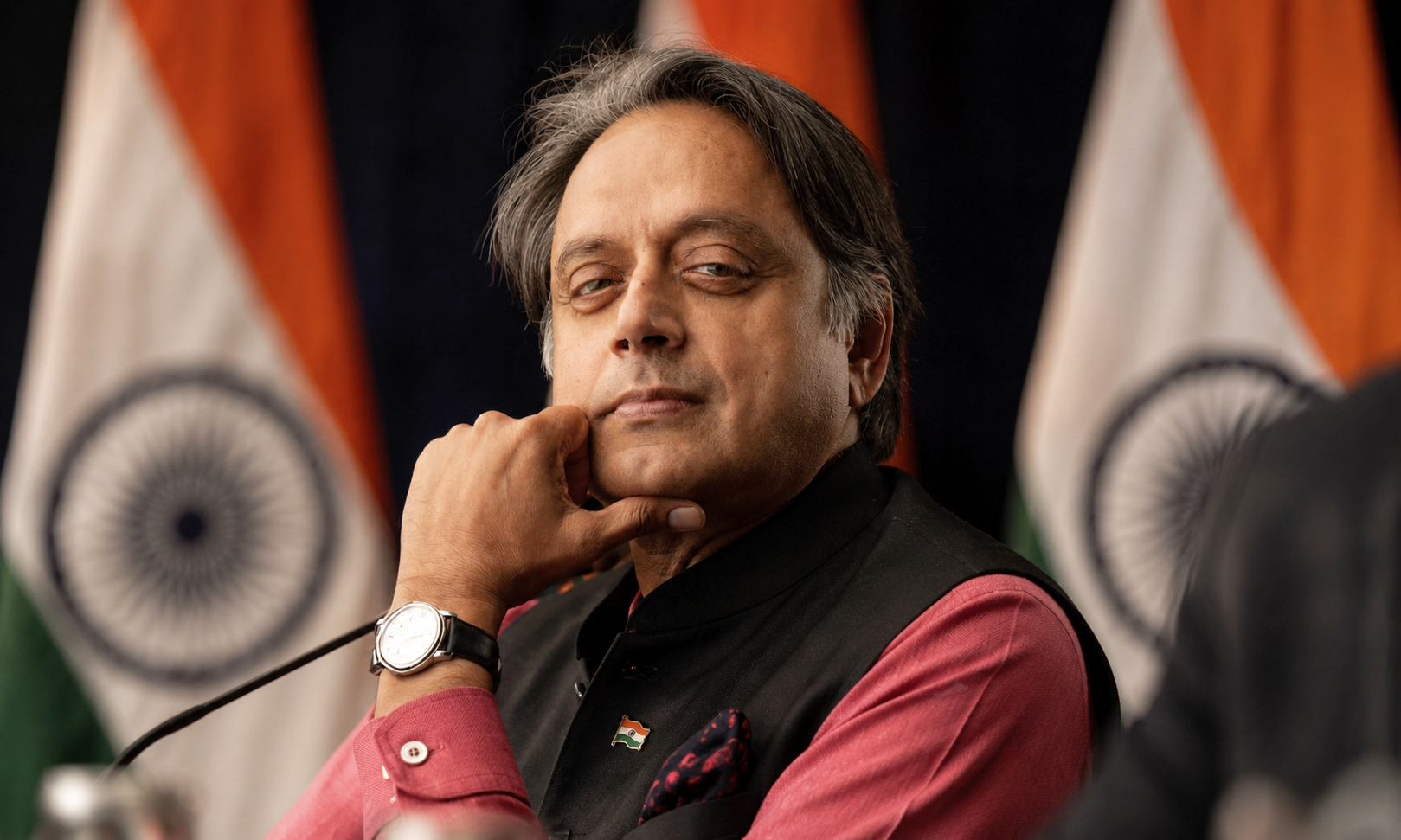
Shashi Tharoor is an Indian politician, author, public intellectual, and diplomat. A member of the Indian National Congress, he has represented Thiruvananthapuram, Kerala, in the Lok Sabha since 2009. He was formerly an Under-Secretary-General of the United Nations and ran for the office of Secretary-General in 2006, coming second. Born in London and raised in Bombay and Calcutta, Tharoor graduated from St. Stephen’s College, Delhi in 1975 and culminated his studies in 1978 with a doctorate in international relations and affairs from the Fletcher School of Law and Diplomacy, Tufts University. At the age of 22, he was the youngest person at the time to receive such an honour from the Fletcher School.
Key Factors
Full Name: Shashi Krishnan Chandrashekaran Tharoor
Born: 9 March 1956
Birthplace: London, England
Nationality: Indian
Profession: Politician, Author, Diplomat, Public Intellectual
Political Party: Indian National Congress
Education: St. Stephen’s College, Delhi University; Fletcher School of Law and Diplomacy, Tufts University
Major Positions Held: Former UN Under-Secretary-General, Member of Parliament from Thiruvananthapuram, Former Minister of State for External Affairs, Former Minister of State for Human Resource Development
Known For: Diplomacy, parliamentary speeches, political commentary, bestselling books, global public speaking
Major Books: The Great Indian Novel, India: From Midnight to the Millennium, An Era of Darkness, Why I Am a Hindu, The Paradoxical Prime Minister
There are politicians who dominate through slogans, diplomats who speak in measured restraint, and writers who shape public imagination through words. Shashi Tharoor occupies a rare intersection of all three. For decades, he has remained one of India’s most recognizable public intellectuals, an outstanding Malayali whose journey moved from the classrooms of Delhi and the corridors of the United Nations to the noisy, emotionally charged arena of Indian electoral politics. With his carefully constructed arguments, literary references, polished English oratory, and unmistakable cosmopolitan confidence, Tharoor became more than a parliamentarian from Kerala. He evolved into a cultural and political phenomenon, admired, debated, criticized, quoted, memed, and endlessly discussed across television studios, university campuses, diplomatic forums, and social media timelines. Yet beneath the global image lies something deeply rooted in Kerala’s intellectual tradition: a belief in education, debate, pluralism, and the power of ideas. Few contemporary Indian figures embody that combination as visibly as Shashi Tharoor.
For many Indians, Shashi Tharoor first appeared as a sophisticated diplomat speaking from the United Nations in crisp, elegant prose. For others, he emerged later as the parliamentarian from Thiruvananthapuram capable of transforming political debate into intellectual theatre. To readers across the world, he became the bestselling author who wrote passionately about colonialism, democracy, religion, nationalism, and India’s evolving identity. Across these roles, one characteristic remained constant: language. Tharoor’s command over words, whether in speeches, books, interviews, or parliamentary debates, helped him build an identity rare in Indian public life. Born in London, raised across multiple Indian cities, educated in Delhi and the United States, and shaped by nearly three decades at the United Nations, he brought a global sensibility into Indian politics without entirely abandoning his Malayali roots. In Kerala, especially among educated middle-class audiences and young aspirants, he came to symbolize intellectual confidence on a world stage.
Early Life and Malayali Roots
Though born in London in 1956, Shashi Tharoor’s cultural identity remained firmly connected to Kerala. His family belonged to Palakkad, one of Kerala’s most intellectually vibrant regions, known for producing scholars, civil servants, writers, and public thinkers. His father, Chandran Tharoor, worked in senior positions with The Statesman newspaper group, while his mother, Sulekha Menon, came from a well-educated Malayali family.
The family moved frequently because of his father’s profession. Tharoor spent parts of his childhood in Bombay, Calcutta, and Delhi, absorbing multiple languages, cultures, and urban realities. Yet Kerala remained emotionally present, through language, family memory, food, rituals, and identity.
His academic brilliance appeared early.
At St. Stephen’s College, he studied history and became deeply involved in debate culture and student leadership. Friends and classmates from that period often described him as intellectually restless, fiercely articulate, and unusually self-assured.
At just 22, he earned a doctorate in International Relations and Affairs from the Fletcher School of Law and Diplomacy, becoming one of the youngest individuals to receive such a distinction in the institution’s history.
Even then, the outlines of the public figure he would become were already visible.
The Diplomat Who Entered the World Stage
In 1978, Tharoor entered the United Nations system through the UN High Commissioner for Refugees in Geneva. It was the beginning of a nearly three-decade diplomatic career that would take him across some of the world’s most difficult geopolitical crises.
During the Vietnamese boat people crisis in Southeast Asia, he worked on refugee rescue and resettlement operations. Later, he became involved in peacekeeping and political affairs during the violent breakup of Yugoslavia in the 1990s.
The United Nations shaped him profoundly.
Unlike many Indian politicians whose worldview emerged primarily from domestic politics, Tharoor developed within a multinational institutional environment where diplomacy required negotiation, narrative control, cultural sensitivity, and intellectual agility.
By 2001, he had risen to the rank of Under-Secretary-General for Communications and Public Information under Kofi Annan.
At the UN, he developed a reputation for eloquence and strategic communication. He modernized aspects of UN outreach, promoted multilingualism, and helped reshape the institution’s media engagement during a period defined by terrorism, globalization, and international instability.
In 2006, India nominated him for the position of Secretary-General of the United Nations.
Though he ultimately lost to Ban Ki-moon, his candidacy itself became symbolically important. It represented India’s growing confidence on the global stage and introduced Tharoor to a wider Indian audience.
For many Malayalis, seeing someone from Kerala compete for one of the world’s most prestigious diplomatic positions created enormous pride.
The Writer and Public Thinker
Long before entering Indian politics, Tharoor had already established himself as a prolific writer.
His literary breakthrough came with The Great Indian Novel, an ambitious political satire that reimagined the Mahabharata within modern Indian history. The novel demonstrated his signature style: intellectually playful, historically layered, linguistically rich, and unapologetically ambitious.
Over the years, his books moved between fiction, political commentary, history, religion, and cultural analysis.
An Era of Darkness, later published internationally as Inglorious Empire, became one of his most influential works. Drawing from a widely circulated speech at the Oxford Union, the book sharply criticized British colonialism and argued that India’s economic and social decline under imperial rule had long-lasting consequences.
The book resonated deeply in postcolonial discourse.
Similarly, Why I Am a Hindu attempted to reclaim Hinduism from sectarian politics by emphasizing pluralism, philosophical openness, and spiritual diversity.
His writing style made complex historical and political themes accessible to broader audiences without oversimplifying them. Critics sometimes accused him of performative intellectualism, but even opponents acknowledged his unusual ability to transform public debate into literary conversation.
Entry into Indian Politics
When Tharoor entered Indian politics in 2009 through the Indian National Congress, many observers viewed him skeptically.
To critics, he was an elite outsider with global credentials but limited grassroots experience. His polished accent, international profile, and cosmopolitan persona appeared disconnected from the rough realities of Indian electoral politics.
Yet he won the Thiruvananthapuram Lok Sabha seat decisively.
The constituency itself mattered. Thiruvananthapuram, with its combination of bureaucracy, academia, urban middle classes, and politically conscious voters, became fertile ground for Tharoor’s brand of intellectual politics.
As Minister of State for External Affairs under Manmohan Singh, he handled relations involving Africa, Latin America, and Gulf nations while emphasizing public diplomacy and digital communication.
Later, as Minister of State for Human Resource Development, he focused on education, research, and institutional modernization.
Even after moving into opposition politics following 2014, Tharoor remained unusually visible through parliamentary speeches, television debates, lectures, and social media engagement.
Why Shashi Tharoor Stands Out
Indian politics rarely rewards intellectual nuance.
Tharoor nevertheless built his public identity around precisely that.
His speeches frequently combine historical references, literary quotations, constitutional principles, humour, and sharp political critique. Videos of his parliamentary interventions regularly circulate online, especially among younger urban audiences.
Social media amplified his visibility further.
At one point, he was India’s most-followed politician on Twitter before being overtaken by Narendra Modi.
Yet popularity also brought scrutiny.
His use of unusually sophisticated English vocabulary became both celebrated and mocked. Words like “farrago” and “rodomontade” turned into internet jokes and cultural memes, ironically expanding his popularity among young Indians.
Tharoor appeared comfortable inhabiting contradiction: serious intellectual and viral personality simultaneously.
Shashi Tharoor and Kerala Identity
Among Malayalis, Tharoor occupies a unique symbolic space.
Kerala has long valued education, public debate, global awareness, and literary sophistication. Tharoor reflects all those characteristics while operating visibly on international platforms.
To many young Malayalis, especially students and professionals, he represents a version of Kerala identity that is globally confident yet culturally rooted.
His speeches often reference pluralism, secularism, and democratic ethics, themes deeply embedded in Kerala’s political culture.
At the same time, his relationship with Kerala politics has never been entirely uncomplicated. Critics occasionally accuse him of elitism or excessive intellectual distance from grassroots political realities.
Yet even many opponents concede his importance as a public communicator.
Criticism, Challenges, and Controversies
Tharoor’s public life has also been marked by intense controversy and scrutiny.
His resignation from the Union ministry in 2010 over the IPL controversy damaged his early political momentum, though no wrongdoing was ultimately established against him.
The tragic death of his wife Sunanda Pushkar in 2014 brought years of media speculation, legal proceedings, and political controversy. In 2021, a Delhi court discharged him from all charges.
Politically, he has often occupied an unusual position within the Congress Party itself. His occasional praise for government initiatives under Narendra Modi created tensions within sections of the opposition ecosystem, while his independent positions sometimes drew criticism from ideological rivals on both sides.
Yet those moments also reinforced his reputation as a politician willing to deviate from rigid partisan conformity.
Legacy and Continuing Influence
Today, Shashi Tharoor exists simultaneously in multiple public worlds.
He is a parliamentarian from Kerala, a former international diplomat, a bestselling author, a television commentator, a public intellectual, and a social media-era political celebrity.
Few Indian politicians move as fluidly between literature festivals, diplomatic conferences, parliamentary debates, university auditoriums, and viral internet culture.
His long-term legacy will likely extend beyond electoral politics alone.
Through books, speeches, diplomacy, and public argument, he helped create a space for intellectualism within mainstream political culture at a time when complexity often struggles against polarization and spectacle.
For Kerala, he remains one of the most globally recognizable public figures produced by the state in modern times, an outstanding Malayali whose career reflects both the possibilities and contradictions of contemporary India: cosmopolitan yet rooted, elite yet electorally successful, scholarly yet politically combative, and deeply shaped by the enduring belief that ideas still matter in public life.
Honours and awards
1976 – Rajika Kripalani Young Journalist Award for the Best Indian Journalist under 30.
1990 – Federation of Indian Publishers’ Hindustan Times Literary Award for the Best Book of the Year for The Great Indian Novel.
1991 – Commonwealth Writers’ Prize for the Best Book of the Year in the Eurasian Region, for The Great Indian Novel
1998 – Excelsior Award for excellence in literature, Association of Indians in America (AIA) and the Network of Indian Professionals (NetIP)
1998 – Global Leader of Tomorrow, World Economic Forum in Davos, Switzerland
2009 – Zakir Hussain Memorial “Pride of India” Award
2009 – Inspiration of the Year Award at GQ’s Man of the Year Awards
2009 – Hakim Khan Sur Award for National Integration, Maharana of Udaipur
2010 – Sarva Deshiya Prathibha Award, Pazhassiraja Charitable Trust, Kozhikode
2010 – “New Age Politician of the Year” Award, at NDTV’s Indian of the Year awards
2010 – Fifth IILM Distinguished Global Thinker Award, New Delhi
2010 – Digital person of the year, Indian Digital Media Awards (IDMA), for popularising the digital medium in India
2013 – First Sree Narayan Guru Global Secular and Peace Award at Thiruvananthapuram
2013 – PETA’s “Person of the Year”
2019 – Sahitya Akademi Award for his book, An Era of Darkness: The British Empire in India
State honors
2004 – India : Pravasi Bharatiya Samman, India’s highest honour for non-resident Indians (accepted 2007)
2012 – Spain : Commander of the Order of Charles III by King of Spain
2022 – France : Chevalier de la Légion d’honneur, for his writings and speeches
Honorary degrees
2026 – Honorary Doctorate in Literature from St.Xavier’s University, Kolkata
Honorary Doctor of Letters in International Affairs from University of Puget Sound
Doctor Honoris Causa in history from University of Bucharest.