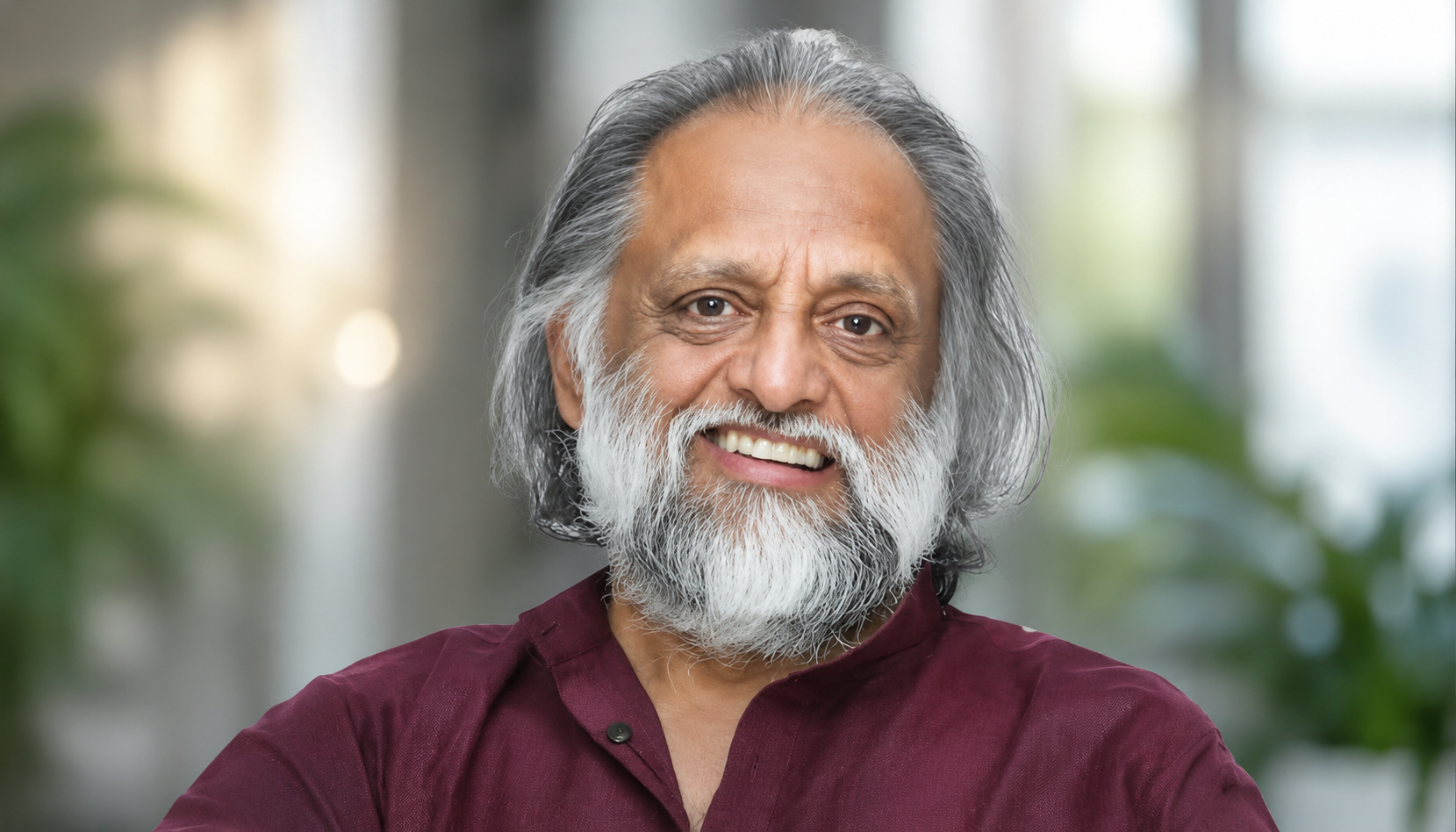
Kaithapram Damodaran Namboothiri
Lyricist and poet
Kaithapram Damodaran Namboothiri, simply known as Kaithapram, is a Malayalam lyricist, poet, music director, actor, singer, screenwriter, music therapist and performer of Carnatic music. Kaithapram Damodaran Namboothiri was born in Kaithapram village in Payyanur Taluk of Kannur district of Kerala and he is currently residing in Thiruvannur in Kozhikode District. He got his Veda education from his grandfather. Later on he continued his education under well-known gurus (teachers) including Pazhassi Thamburan (a descendant of Pazhassi Raja) and SVS Narayanan. He pursued his studies in acting and music at Natyagruha.
Key Factors
Full Name: Kaithapram Damodaran Namboothiri
Born: 4 August 1950
Birthplace: Kaithapram village, Payyanur Taluk, Kannur district, Kerala
Residence: Thiruvannur, Kozhikode district, Kerala
Occupation: Lyricist, poet, music director, singer, actor, screenwriter, music therapist
Years Active: 1980s to present
Known For: Malayalam film lyrics, philosophical poetry, devotional music, music therapy initiatives
There are certain voices in Kerala’s cultural memory that seem inseparable from the land itself. They rise from temple courtyards, from rain-soaked paddy fields, from the melancholy of dusk, from the devotional stillness of old homes where music once floated alongside oil-lamp light. Kaithapram Damodaran Namboothiri belongs to that rare tradition. Across decades, his lyrics carried not merely melody, but philosophy, longing, memory, spirituality, and emotional truth. Whether writing for cinema, composing music, performing Carnatic traditions, or speaking about healing through sound, Kaithapram consistently approached art as something sacred and deeply human. His songs did not merely accompany Malayalam films; they became emotional landmarks in Malayali life itself. Honoured with the Padma Shri in 2021, he remains one of Kerala’s most outstanding cultural figures, an artist whose words continue to echo across generations long after the music fades.
A Childhood Shaped by Tradition
Long before Malayalam cinema discovered him, Kaithapram belonged to an older Kerala.
He was born in the culturally rich village of Kaithapram in Kannur district, a region where ritual, music, Sanskrit learning, and temple traditions formed part of daily existence. The village itself carried deep associations with Vedic heritage, and that atmosphere would permanently shape his artistic imagination.
His father, Keshavan Namboothiri, popularly known as Kannadi Bhagavathar, was a respected musician and disciple of the legendary Chembai Vaidyanatha Bhagavatar. Music in the household was not entertainment. It was discipline, prayer, inheritance, and emotional language.
The young Kaithapram absorbed not only ragas and rhythms, but also the cadences of Sanskrit chants, temple recitations, and the philosophical vocabulary of Kerala’s traditional learning systems. His grandfather introduced him to Vedic education early in life, grounding him in classical thought before cinema or literary fame entered the picture.
That grounding mattered.
Even decades later, when he wrote film songs about love, separation, or memory, traces of this early spiritual and literary upbringing remained visible. His lyrics often carried the texture of ancient Malayalam poetry while remaining emotionally accessible to ordinary listeners.
He later trained under gurus including Pazhassi Thamburan and S. V. S. Narayanan, while also pursuing studies in acting and music at Natyagruha. Unlike many lyricists who entered cinema through journalism or literature alone, Kaithapram approached art from multiple directions simultaneously: music, philosophy, theatre, language, and spirituality.
That multidimensional foundation would define his career.
The Poet Who Entered Cinema
Kaithapram’s entry into Malayalam cinema in 1986 arrived with unusual force.
The film was Ennennum Kannettante, directed by Fazil, with music composed by Jerry Amaldev. The song “Devadundubhi Sandralayam” immediately drew attention for its lyrical richness and emotional intensity.
Malayalam cinema had already witnessed several generations of great lyricists by then, including Vayalar Ramavarma, O. N. V. Kurup, and Yusufali Kechery. Yet Kaithapram’s arrival felt distinct.
His writing carried a classical weight without sounding distant. There was poetry in his songs, but also intimacy. He could move effortlessly between philosophical reflection and deeply personal emotion.
At a time when film lyrics across Indian cinema were increasingly becoming conversational and simplified, Kaithapram retained literary elegance without alienating listeners. That balance became his signature.
The success of Ennennum Kannettante opened the doors of Malayalam cinema to him, but more importantly, it introduced audiences to a lyricist whose songs sounded rooted in Kerala’s cultural memory.
The Language of the Malayali Soul
What distinguished Kaithapram most was not merely vocabulary or poetic skill, but emotional architecture.
His lyrics often felt meditative. Nature imagery appeared frequently, rivers, rain, lamps, birds, dusk, temple bells, paddy fields, monsoon winds, not as decorative metaphors, but as emotional extensions of human experience.
He possessed an unusual ability to write about longing without sentimentality.
Love in Kaithapram’s songs often carried spiritual undertones. Devotion and romance sometimes merged seamlessly. Nostalgia became philosophical reflection. Even sorrow arrived with restraint rather than melodrama.
Listeners across Kerala connected deeply with this emotional honesty.
His songs also reflected linguistic confidence. Kaithapram embraced classical Malayalam vocabulary at a time when many writers were moving toward simplified colloquial expression. Yet his language rarely felt artificial because it emerged organically from rhythm and feeling.
There was also music inside his words.
That quality explains why so many composers valued his writing. His lyrics already carried melodic movement before composition began.
Legendary Collaborations
Kaithapram collaborated with nearly every major Malayalam music composer of his era, including Raveendran, Mohan Sithara, Vidyasagar, and Ouseppachan.
But his artistic partnership with Johnson remains especially significant in Malayalam cinema history.
Together, the Kaithapram–Johnson combination produced some of the most emotionally resonant songs in Malayalam film music. Their collaborations carried extraordinary emotional depth because both artists shared a sensitivity toward silence, mood, and melody.
Johnson’s orchestration often gave Kaithapram’s words space to breathe.
The result was music that felt intimate rather than manufactured.
Many of these songs remain deeply embedded in Malayali cultural memory, not merely as film tracks, but as emotional experiences tied to specific periods of life.
Beyond Lyrics: Music, Cinema, and Performance
Although widely celebrated as a lyricist, Kaithapram consistently resisted artistic confinement.
He became a music director with Desadanam, and the film’s music immediately attracted critical appreciation for its classical depth and emotional refinement. His approach to composition reflected his broader artistic philosophy: music should elevate emotional experience rather than overwhelm it.
He also acted in films such as His Highness Abdullah, Aryan, Swathi Thirunal, and Theerthadanam. Often, he portrayed classical or semi-classical musicians, roles that naturally aligned with his own artistic temperament.
His screen presence carried quiet dignity rather than dramatic flamboyance.
Kaithapram also explored storytelling through screenplay writing. The film Sopanam, directed by Jayaraj, emerged from his story and screenplay, revealing yet another dimension of his creative identity.
Through all these mediums, poetry remained central.
Even when composing or acting, he approached art as an emotional and philosophical act.
Music as Healing: The Therapist and Teacher
One of the lesser-discussed but deeply important aspects of Kaithapram’s life has been his work in music therapy.
Unlike many artists who treat music purely as performance, Kaithapram often spoke about sound as healing energy. His interest in the therapeutic potential of music eventually led to organized music therapy initiatives across Kerala.
Through the Music Therapy Foundation, he promoted structured sessions aimed at emotional and psychological well-being. These efforts reflected his belief that music could restore inner balance, especially in an increasingly anxious and fragmented world.
He also serves as Managing Trustee of Swathithirunal Kala Kendram in Kozhikode, a music school that trains hundreds of students. The institution represents more than music education; it reflects Kaithapram’s commitment to preserving classical traditions while making them accessible to younger generations.
For him, cultural continuity mattered deeply.
The Personal Side of Kaithapram
Despite fame, Kaithapram’s public persona has often remained marked by simplicity and introspection.
He married Devi Antharjanam, daughter of actor Unnikrishnan Namboothiri, and together they built a family deeply connected to the arts. Their elder son, Deepankuran, also entered music composition and singing.
His relationship with his younger brother Kaithapram Viswanathan was another important part of Kerala’s artistic landscape. The brothers represented a rare household where classical learning, cinema music, spirituality, and cultural tradition coexisted naturally.
Those who have interacted with Kaithapram frequently describe him as philosophical, emotionally sensitive, and deeply attached to Kerala’s cultural roots.
Even his public speeches often move beyond cinema into reflections on language, spirituality, memory, and artistic responsibility.
Awards, Recognition, and Cultural Legacy
Kaithapram has received numerous honours throughout his career, including two Kerala State Film Awards for Best Lyricist and the Harivarasanam Award in 2025.
But the most nationally visible recognition arrived in 2021, when the Government of India honoured him with the Padma Shri.
The award symbolized more than personal achievement.
It represented recognition of a cultural tradition that Kaithapram had spent decades preserving through poetry, music, and language. His career consistently defended artistic depth in an era increasingly driven by speed and commercial simplification.
That commitment gave Malayalam culture some of its most enduring artistic expressions.
A Voice That Still Echoes Across Kerala
Across generations, Malayalis have encountered Kaithapram in deeply personal ways, through a song heard during childhood, a devotional lyric sung in a temple festival, a melancholy melody playing during monsoon evenings, or a philosophical line that suddenly articulated an emotion difficult to explain.
That is the rare power of his art.
Kaithapram Damodaran Namboothiri never functioned merely as a film lyricist. He became a cultural bridge between classical Kerala and modern Malayalam life, between spiritual tradition and cinematic emotion, between poetry and everyday memory.
Even today, his songs continue to live not only inside films, but inside Malayali consciousness itself.
And that enduring emotional presence is why Kaithapram remains one of Kerala’s truly outstanding artistic voices, a poet whose words continue to breathe through the cultural soul of an entire people.
Awards
Civilian honours
2021 – Padma Shri
Kerala State Film Awards
1993 – Best Lyricist: Paithrukam
1996 – Best Lyricist: Azhakiya Ravanan
1997 – Best Music Director: Karunyam
Kerala Film Critics Association Awards
1990 – Best Lyricist: Innale
1992 – Best Lyricist: Kudumbasametham, Kamaladalam, Savidham
1996 – Best Lyricist: Sallapam, Desadanam
1997 – Best Music Director: Ennu Swantham Janakikutty, Kaliyattam
1998 – Best Lyricist: Agnisakshi, Ormacheppu
2002 – Best Lyricist: Yathrakarude Sradhakku
2010 – Best Lyricist: Holidays
Filmfare Awards South
1996 – Best Music Director: Desadanam
1997 – Best Music Director: Kaliyattam
Asianet Film Awards
2005 – Best Lyricist Award: Anandabhadram