Ambika Pillai
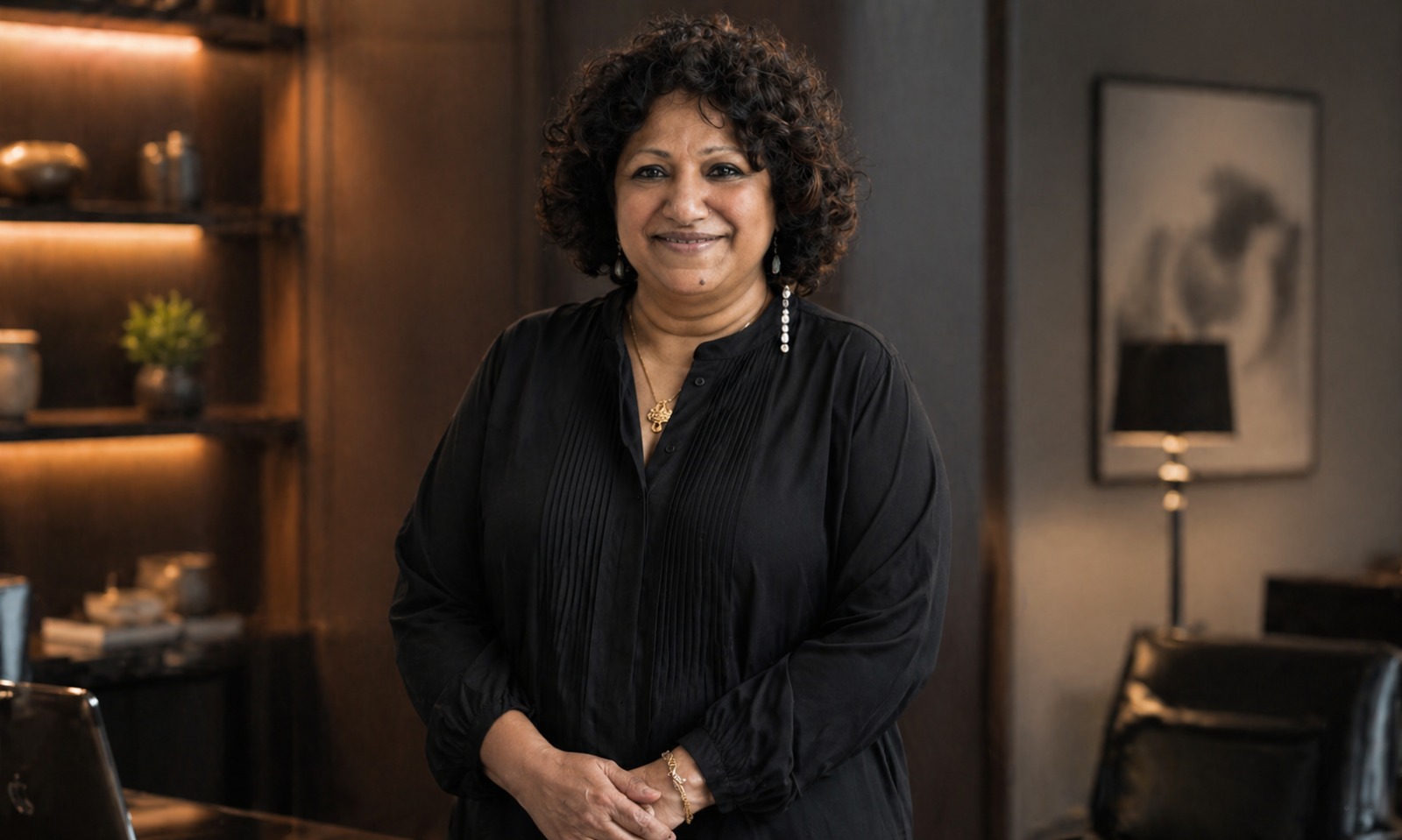
Ambika Pillai is a hair stylist and make-up artist from Kollam, Kerala, India. Her work regularly appears in advertising campaigns, catwalk shows, fashion films, and editorials. She started her career as a hair stylist and moved on to make-up. When Ambika started her first salon it was called Visions by Ambika. She later decided to develop it as a brand. At present Ambika Pillai is a brand by itself. Pillai’s salon has branches in South Extension, Punjabi Bagh, Rajouri Garden, Malviya Nagar and Model Town in the Delhi National Capital Territory; Gurgaon in Haryana; Chhatarpur in Madhya Pradesh; and Kochi and Trivandrum in Kerala.
Key Facts
Full Name: Ambika Pillai
Born: Thiruvananthapuram, Kerala, India
Raised In: Kollam, Kerala
Title: Celebrity Hair Stylist & Make-up Artist, Entrepreneur
Occupation: Beauty Industry Professional, Salon Brand Founder
Known For: High-fashion styling, celebrity makeovers, and building a premium salon brand in India
There is a certain choreography to the backstage of a fashion show, a controlled chaos where models line up under harsh lights, stylists move with clipped urgency, and every detail must fall into place before the runway call. In these moments, Ambika Pillai is less visible than the faces she prepares, yet her presence is unmistakable. It is in the precision of a contour, the discipline of a hairline, the consistency across a line-up of models that her signature reveals itself, measured, confident, and quietly authoritative.
Her story begins far from these backstage corridors, in Kollam, Kerala, where she spent much of her childhood. Born in Thiruvananthapuram and raised in a family that provided both comfort and exposure, Pillai’s early life was marked by a degree of independence that would later define her career choices. Her father, involved in business, and her upbringing in a relatively privileged environment meant she was not immediately constrained by necessity. Instead, she developed a sensitivity to lifestyle and aesthetics early on, observing how presentation and grooming influenced perception.
Her schooling included time in Ooty, a boarding school environment that subtly expanded her worldview. Away from home, she encountered different cultures, styles, and social dynamics, experiences that would later help her navigate the diverse, often unpredictable world of fashion and beauty.
A turning point came early. At 17, she married and moved to Calcutta, now Kolkata, a city that was culturally rich but unfamiliar. The shift from Kerala to an urban eastern metropolis was significant. It introduced her to a different pace of life, a broader social landscape, and perhaps most importantly, the realization that independence would have to be built, not inherited.
The marriage, however, did not define her long-term trajectory. Over time, Pillai moved toward carving out her own professional identity. Entering the beauty industry in India during the late 1970s and early 1980s was not an obvious or structured choice. The sector was largely unorganized, with few formal training systems, limited professional recognition, and almost no visibility as a viable career.
Her initial steps into hair styling were driven more by curiosity and instinct than by formal planning. She began learning through observation and practice, gradually understanding the technical aspects of hair and grooming. The transition into make-up artistry followed, expanding her skill set and positioning her more firmly within the emerging beauty ecosystem.
At that time, beauty services in India were largely associated with small, local salons catering to routine needs. High-fashion styling, editorial work, and celebrity grooming were still evolving domains. Pillai entered this space when its boundaries were undefined, which, while challenging, also allowed room for experimentation and growth.
Her entrepreneurial journey began with the launch of her first salon, often cited under the name “Visions.” It was more than just a business venture; it was an attempt to create a space that treated beauty as a professional service rather than a casual offering. Over time, this evolved into the Ambika Pillai brand, which expanded across Delhi NCR and became synonymous with premium, high-quality styling.
The salons were not just commercial spaces; they functioned as extensions of her philosophy. Clean aesthetics, disciplined service, and a focus on client experience set them apart in a market that was still standardizing itself. As India’s urban middle and upper classes began to invest more in personal grooming, brands like hers found a growing audience.
Parallel to her salon business, Pillai’s work in fashion and media expanded significantly. She became a regular presence at major fashion weeks, working with designers, photographers, and production teams. Her involvement in editorial shoots and advertising campaigns further cemented her reputation.
Unlike some stylists who are defined by a singular, dramatic aesthetic, Pillai’s work is often described as adaptable. She understands the demands of different formats, whether it is the boldness required for runway shows, the subtlety needed for editorial spreads, or the precision demanded by film and advertising.
Her collaborations with designers and celebrities have been extensive, though she has rarely positioned herself as a celebrity in the conventional sense. Instead, her authority comes from consistency and reliability, traits that are highly valued in an industry where timelines are tight and expectations high.
An important, often understated aspect of her journey is the role of family. Pillai trained her sisters, Gopika, Renuka, and Devika, bringing them into the business and creating a network of professionals who shared her standards. This was not just about expanding operations but about building a support system in an industry that can be both competitive and isolating.
Through this, she contributed to a broader ecosystem of beauty professionals, mentoring talent and setting benchmarks for training and execution. At a time when formal institutions for beauty education were limited, such mentorship played a crucial role in shaping the next generation of stylists.
Sustaining relevance over decades in the beauty industry requires constant reinvention. Trends shift rapidly, influenced by global fashion, social media, and changing consumer preferences. Pillai’s ability to adapt, without losing her core identity, has been central to her longevity.
She has navigated the transition from traditional salon services to a more holistic beauty approach that includes advanced treatments, personalized styling, and an emphasis on wellness. The rise of digital platforms and influencer culture has also reshaped how beauty is consumed and perceived, adding another layer of complexity to the business.
Yet, her approach remains grounded. Rather than chasing every trend, she has focused on maintaining quality and understanding her clientele. This balance between innovation and stability has allowed her brand to remain relevant without becoming volatile.
Today, Pillai divides her time between New Delhi and Kerala, maintaining a connection to both her professional base and her roots. This duality reflects in her work, a blend of metropolitan sophistication and a certain understated elegance often associated with her Kerala background.
Her legacy is not defined solely by the number of shows she has styled or the salons she has built. It lies in the professionalization of beauty services in India. She belongs to a generation that helped transform the industry from an informal, largely invisible sector into a structured, aspirational domain.
For aspiring stylists and entrepreneurs, her journey offers a template that is both instructive and realistic. It underscores the importance of skill, discipline, and adaptability in an industry that is often perceived as glamorous but demands rigorous effort behind the scenes.
In the broader context of India’s beauty industry, which has grown into a multi-billion-dollar market, figures like Ambika Pillai represent the foundational layer. They built credibility when the industry lacked it, created standards where none existed, and demonstrated that beauty could be both an art and a business.
As the lights dim after a fashion show and the backstage frenzy dissolves into silence, what remains is not just the memory of a collection, but the craftsmanship that made it possible. In that quiet aftermath, Ambika Pillai’s influence persists, subtle yet enduring, a career shaped by instinct, discipline, and an outstanding commitment to her craft.