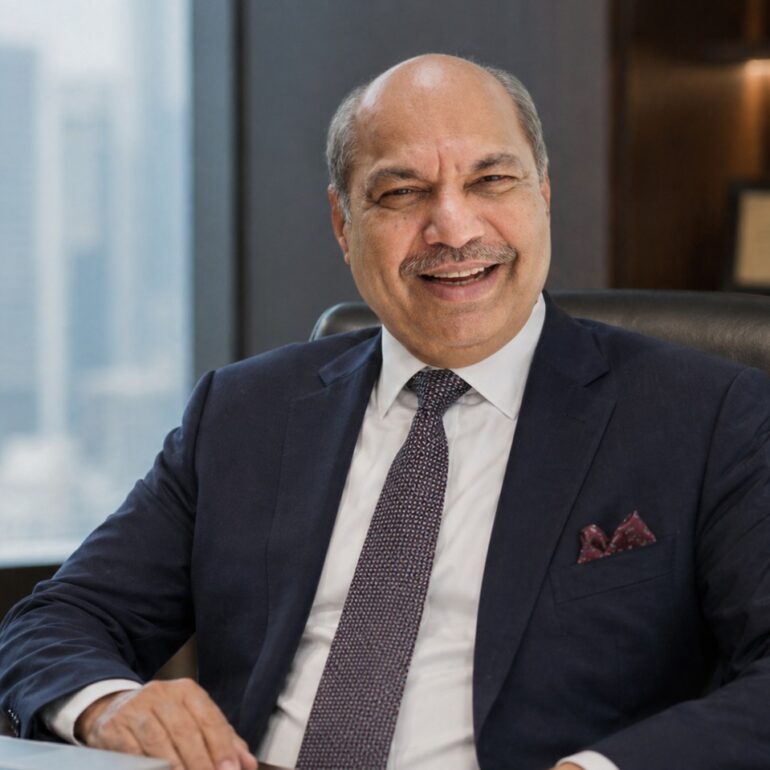
Joseph M. Kadambukattil
Founder and visionary behind Mercely’s Ice Cream
Joseph M. Kadambukattil is the primary founder and visionary behind Mercely’s Ice Cream. A seasoned industry veteran with over 30 years of experience, Kadambukattil established the Kerala-based brand focusing on natural ingredients, prebiotics, and probiotics. The company, which rebranded to Mercely’s, is recognized for its automated production and premium quality.
Key Factors
Full Name: Joseph M. Kadambukattil
Place: Kerala, India
Title: Founder, Mercely’s Ice Cream
Occupation: Entrepreneur, Ice Cream Manufacturer
Known For: Founder of Mercely’s Ice Cream; promoting natural, farm-to-spoon ice cream with a focus on health and sustainability
From Farm to Freezer
Step into a Mercely’s outlet in Kerala and the experience feels subtly different. The aroma is lighter, less artificial. The colours are softer, closer to nature than neon. The flavours carry a sense of familiarity, fruit-forward, dairy-rich, and almost nostalgic. It is not just branding. It reflects a deeper philosophy.
For Joseph M. Kadambukattil, ice cream was never meant to be just a sugary indulgence. It was an opportunity to rethink the category itself, to bring together nutrition, taste, and ethical sourcing into a single product. This idea, simple in principle but difficult in execution, defines the foundation of Mercely’s Ice Cream.
Origins and Early Vision
Publicly available information on Kadambukattil’s early life remains limited, and there are few detailed records outlining his formative years. What emerges instead is a pattern common among Kerala’s first-generation entrepreneurs, a combination of observation, persistence, and a willingness to build slowly.
His entry into the ice cream industry appears to have been driven less by trend and more by conviction. At a time when the market was dominated by mass-produced, artificially flavoured products, he chose a more demanding path, focusing on natural ingredients and product integrity.
This decision would shape everything that followed.
Building Mercely’s: A Philosophy First
Mercely’s was not built around aggressive expansion or flashy marketing. It was built around a philosophy.
At its core is a “farm-to-spoon” approach, a model that emphasises sourcing fresh milk and fruits directly from trusted producers, ensuring minimal processing and maximum authenticity. The company’s own narrative stresses three pillars: quality, nutrition, and happiness. These are not abstract values but operational guidelines that influence sourcing, production, and distribution.
The brand’s insistence on natural ingredients is particularly significant in an industry where artificial stabilisers, colours, and flavour enhancers are standard. Mercely’s positions itself against this norm, opting instead for cleaner formulations.
That choice comes with trade-offs, shorter shelf life, higher sourcing costs, and stricter quality control. But it also builds trust.
Product Philosophy: Rethinking Indulgence
Mercely’s Ice Cream operates on a clear premise, indulgence does not have to come at the cost of health.
The company highlights its use of fresh milk, real fruits, and functional ingredients such as probiotics and prebiotics. These additions are not merely marketing tools; they reflect a broader attempt to align ice cream with wellness trends.
In practical terms, this means avoiding artificial additives and focusing on formulations that are both flavourful and nutritionally conscious. The result is a product that appeals to a growing segment of consumers, those who are willing to pay a premium for transparency and quality.
In Kerala, where food culture is deeply rooted in freshness and local sourcing, this positioning resonates.
Building an Ecosystem, Not Just a Brand
One of the less visible but more important aspects of Mercely’s is its ecosystem approach.
The company’s model involves working closely with farmers, suppliers, and distributors, creating a supply chain that supports local economies while maintaining product integrity. This is particularly relevant in a state like Kerala, where small-scale agriculture remains a significant part of the economy.
By integrating sourcing with production, Mercely’s reduces dependence on industrial intermediaries. This not only improves quality control but also aligns with a broader shift toward sustainable and community-driven business practices.
It is a quieter form of impact, but a meaningful one.
Growth Without Noise
Unlike many modern consumer brands, Mercely’s has not relied heavily on aggressive advertising or rapid, venture-backed expansion. Its growth appears to have been steady, driven by product acceptance and customer loyalty.
Over the years, the brand has established a visible presence across Kerala, building a reputation that is reinforced by word-of-mouth and repeat consumption. Listings on local business directories and consumer platforms indicate a strong regional footprint, though exact scale metrics are not always publicly disclosed.
This approach reflects a deliberate strategy, prioritising consistency over speed.
In a market where many brands expand quickly and struggle to maintain quality, Mercely’s has taken the opposite route.
Leadership Style: Quiet but Intentional
Joseph M. Kadambukattil is not a highly visible public figure in the way many contemporary entrepreneurs are. There are limited interviews, few public appearances, and minimal personal branding.
But his influence is evident in the product.
The consistency of Mercely’s offerings, the emphasis on ingredient quality, and the adherence to a clear philosophy suggest a leadership style that is hands-on and detail-oriented. Rather than delegating vision, he appears to have embedded it into the organisation’s DNA.
This kind of leadership is often overlooked in an era that celebrates visibility. Yet it remains crucial in industries where product trust is everything.
Challenges in a Competitive Industry
The Indian ice cream market is intensely competitive. Large national players dominate distribution networks, while smaller regional brands compete on price and familiarity.
Within this landscape, Mercely’s occupies a niche, premium yet local, health-conscious yet indulgent.
Maintaining this position is not easy.
Natural ingredients increase production costs. Health positioning requires continuous consumer education. And scaling without compromising quality is a persistent challenge.
There is also the broader question of consumer perception. While urban markets are increasingly open to health-focused products, price sensitivity remains high in many segments.
For Mercely’s, the challenge is to expand without diluting its core identity.
The Kerala Context
Kerala’s food and beverage sector has seen significant transformation over the past two decades. Rising incomes, increased urbanisation, and exposure to global trends have reshaped consumer expectations.
At the same time, there is a strong cultural attachment to authenticity, locally sourced ingredients, traditional flavours, and freshness.
Mercely’s sits at the intersection of these two forces.
It offers a modern product that aligns with global wellness trends while remaining rooted in local sourcing and taste preferences. This balance is not accidental; it reflects a deep understanding of the market.
Legacy and Future Outlook
Mercely’s ambition, as stated in its own narrative, is to evolve into a globally recognised brand. This is a significant leap, particularly in a category dominated by multinational corporations.
The path forward will likely depend on how effectively the company can scale its farm-to-spoon model beyond regional boundaries. This involves logistical challenges, supply chain complexities, and the need to maintain product integrity at larger volumes.
But the foundation is already in place.
By focusing on quality, sustainability, and consumer trust, Joseph M. Kadambukattil has created a brand that is resilient. It may not be the fastest-growing ice cream company in India, but it is one that has built a clear identity.
And in today’s market, identity matters as much as scale.
Reflection
Joseph M. Kadambukattil’s story is not about rapid disruption or headline-making expansion. It is about quiet persistence, about choosing a harder path and staying committed to it.
In redefining what ice cream can be, he has challenged industry norms and opened up new possibilities for regional brands. His work demonstrates that innovation does not always come from technology or capital; sometimes, it comes from rethinking the fundamentals.
As Mercely’s continues to grow, its success will depend on how well it can preserve this philosophy while adapting to a larger market.
For now, it stands as an outstanding example of how thoughtful entrepreneurship can create lasting impact, one scoop at a time.