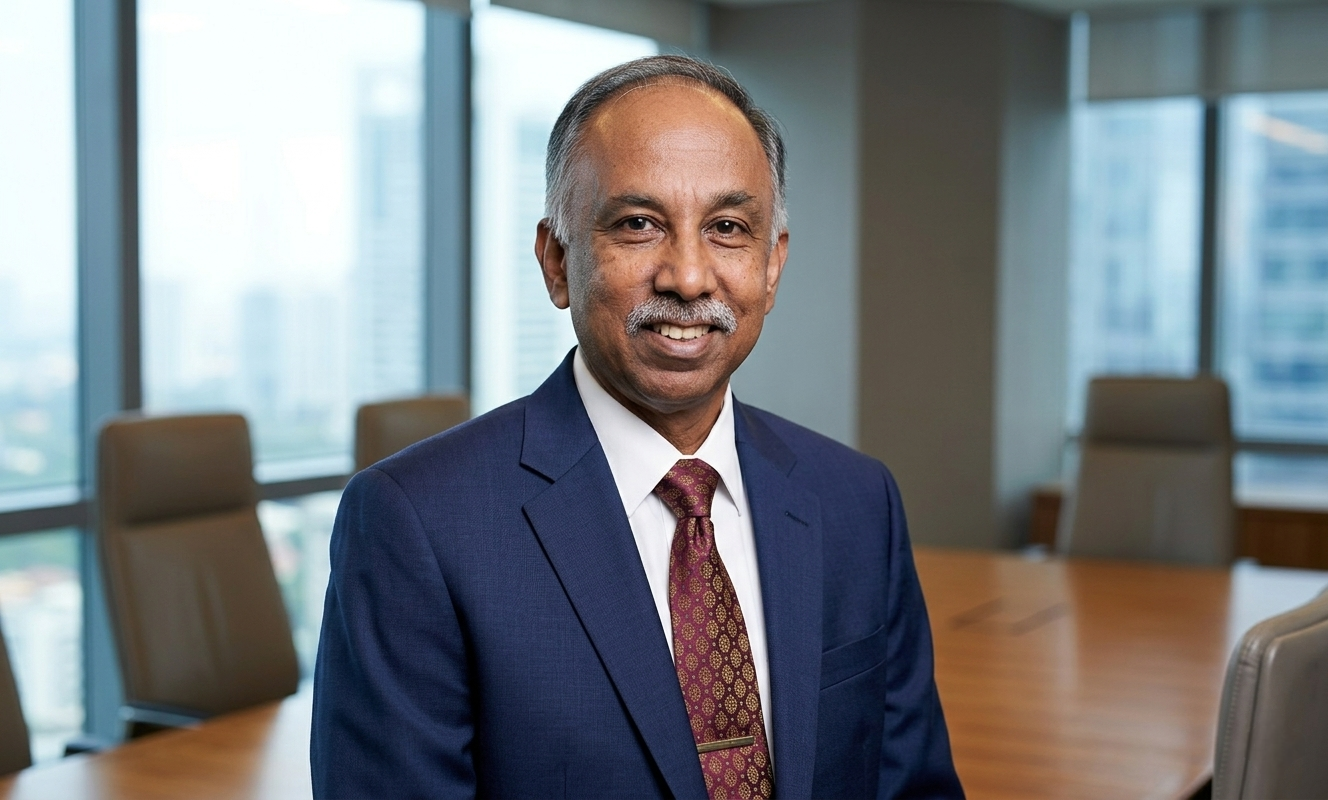
S.D. Shibulal
Co-founder of Infosys
S. D. Shibulal, better known as Shibulal, is an Indian business executive. He was the chief executive officer and managing director of Infosys, and one of its seven founding members. Shibulal cofounded business incubator Axilor Ventures together with former Infosys colleague Senapathy Gopalakrishnan. He also chairs The Tamara, a boutique resort chain, which his daughter Shruti founded and runs.
Key Facts
Full Name: Sarojini Damodaran Shibulal
Born: 1 March 1955 (age 71)
Education: Maharaja’s College, Ernakulam, Boston University
Title: Co-Founder, Infosys and Axilor Ventures
Years active: 1981–present
Board member of: Boston University, Globethics.net, Seoul International Business Advisory Council (SIBAC)
S. D. Shibulal: The System Builder Behind a Global Code
Long before India learned to speak the language of global technology, there were a handful of engineers writing code in borrowed spaces, navigating unreliable systems, and imagining a future that did not yet exist.
In one such room, sometime in the early 1980s, S. D. Shibulal sat before a terminal that flickered more than it functioned. The work was slow, the infrastructure fragile, the ambition immense.
There was no ecosystem to lean on, no precedent to follow. Only a belief that Indian engineering could travel beyond borders, quietly, precisely, without spectacle.
Shibulal was never the loudest voice in the room. But he was among the most exacting.
Decades later, as Infosys became a symbol of India’s software revolution, his imprint remained embedded in its architecture, not visible on the surface, but essential to everything that worked beneath it.
The Early Code
Born in Kerala in 1955, Shibulal grew up in a world far removed from the global tech corridors he would later help shape. His academic path, BSc in Physics followed by a Master’s in Computer Science from Boston University, reflected a transition from curiosity to clarity.
In the late 1970s and early 1980s, computing in India was still an emerging discipline. Systems were limited, access was restricted, and ambition often outpaced infrastructure.
Before Infosys, Shibulal worked at Patni Computer Systems, where he met N. R. Narayana Murthy and a group of engineers who shared a similar restlessness. It was here that the seeds of something larger were quietly sown.
Seven Men, One Idea
In 1981, Infosys was born, not as a grand corporate launch, but as a fragile experiment. Seven co-founders, modest capital, and a vision that felt almost improbable at the time.
Shibulal was part of this founding group, but his role was distinct. While others focused on leadership and expansion, he gravitated toward systems, delivery, execution.
He became the architect of Infosys’s Global Delivery Model, a framework that would redefine how software services were executed across geographies.
This was not just operational innovation. It was strategic imagination. The idea that work could be distributed globally, seamlessly integrated, and delivered with consistency became the backbone of India’s IT services industry.
The Discipline of Delivery
If Infosys built trust with global clients, much of that trust was engineered through Shibulal’s obsession with delivery precision.
He led large-scale projects, managed international clients, and built processes that ensured reliability at scale. In an industry where credibility was everything, execution became the company’s strongest currency.
Shibulal’s leadership style was understated but rigorous. He was known for asking difficult questions, insisting on clarity, and building systems that could outlast individuals.
He did not chase visibility. He built frameworks.
At the Helm
In 2011, Shibulal became CEO and Managing Director of Infosys. It was a moment of transition, both for the company and the industry.
The global IT landscape was shifting. Clients were demanding more than cost efficiency, they wanted innovation, agility, and strategic partnership.
Shibulal’s tenure focused on strengthening Infosys’s consulting capabilities, investing in platforms, and navigating a more competitive environment.
It was not an easy phase. Growth pressures mounted, margins were scrutinized, and the company faced questions about its future direction.
Yet, even in turbulence, his approach remained consistent, structured, methodical, grounded in long-term thinking rather than short-term optics.
Beyond Infosys
After stepping down in 2014, Shibulal did not retreat from public life. Instead, he shifted focus.
Through his family office and philanthropic initiatives, he began investing in education, entrepreneurship, and social impact.
The Shibulal Family Philanthropic Initiatives (SFPI) have supported institutions, research, and programs aimed at building long-term capacity rather than immediate visibility.
His investments reflect a familiar pattern, patience over hype, systems over spectacle.
The Man Behind the Machine
There is a certain paradox in Shibulal’s journey.
He helped build one of the most visible symbols of India’s IT success, yet he remains one of its least flamboyant architects.
Colleagues often describe him as introspective, precise, and deeply thoughtful. He speaks less, but when he does, it carries weight.
In an era that often rewards noise, Shibulal represents a different model of leadership, one rooted in discipline, intellectual rigor, and quiet conviction.
Reflection
S. D. Shibulal’s story resists easy dramatization. There are no sudden leaps, no theatrical turns, no loud declarations.
Instead, there is a steady accumulation of decisions, each precise, each deliberate, each contributing to something larger than itself.
He belongs to a generation that did not inherit an industry but built one, line by line, system by system, often without recognition.
In a world increasingly drawn to speed and visibility, his journey offers a quieter lesson.
That what truly endures is not what is seen first, but what is built to last.