C. P. Krishnan Nair
Founder of The Leela Group
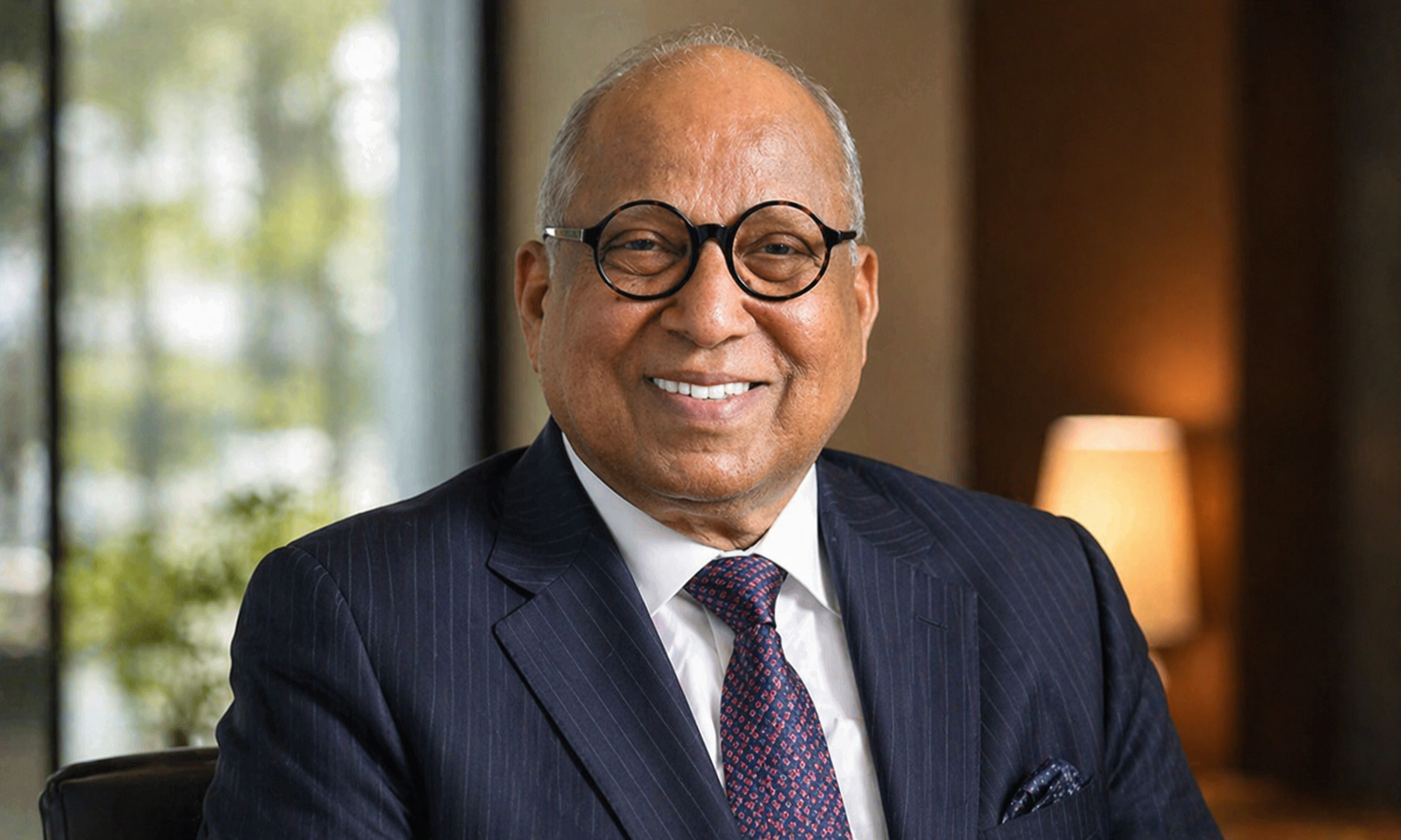
Captain Chittarath Poovakkatt Krishnan Nair was an Indian businessman who founded The Leela Group. He was a 2010 recipient of the Padma Bhushan, given by Government of India. He was sometimes popularly known as Captain Nair due to his service in the Indian Army.
Key Facts
Born: 9 February 1922
Place: Kannur, Kerala, India
Title: Founder The Leela Group
A Palace Conceived Late
In the world of hospitality, timing is everything. Capital cycles, global tourism flows, and consumer expectations shape when and how luxury is built. Yet C. P. Krishnan Nair defied that logic. In his sixties, when most executives consolidate or retire, he chose to enter one of the most capital-intensive and unforgiving industries. The vision was audacious, to create an Indian luxury hotel brand that could stand alongside global icons. The result was The Leela Group, a portfolio of properties that would redefine hospitality in India. His journey represents an outstanding paradox: a late start that produced one of the country’s most distinctive luxury brands.
Discipline from Kerala
C. P. Krishnan Nair was born in Kerala, in a period when India was still under colonial rule. His early life was shaped by a mix of traditional values and emerging modern influences.
Kerala’s socio-cultural environment, with its emphasis on education and discipline, played a formative role. Nair’s upbringing instilled a sense of order and self-reliance, traits that would later define his leadership.
His worldview expanded through education and early exposure to broader national currents. This was not yet the cosmopolitan outlook he would later embody, but it laid the groundwork for it.
What stands out in retrospect is not a single defining influence, but a pattern. Discipline, adaptability, and an openness to learning.
Military Career and Transition: Structure Before Strategy
Nair’s early professional life began in the Indian Army.
Military service provided him with more than a career. It gave him a framework for thinking about leadership, hierarchy, and execution.
In the armed forces, decisions are clear, accountability is direct, and outcomes are immediate. This environment shaped his approach to management. Precision mattered. Discipline was non-negotiable.
After leaving the army, Nair transitioned into civilian life, a move that many officers struggle with. For him, it became an opportunity.
He carried forward the structural clarity of military life into business. This transition is often overlooked, but it is critical. It explains his later insistence on operational excellence in hospitality, an industry where execution is everything.
Raymond Years: Learning the Language of Luxury
Nair’s entry into the corporate world came through Raymond, the textile and apparel company, where he joined after marrying into the family.
At Raymond Limited, he played a significant role in expanding exports and building the brand’s global presence. This phase was transformative.
Raymond was not just a business. It was a brand built on quality, precision, and aspiration. Nair learned how luxury is communicated, not just through product, but through perception.
He understood the importance of consistency. A premium brand cannot afford variability.
His work in exports exposed him to international markets, customer expectations, and global standards. This experience would later prove invaluable when he entered hospitality.
Raymond taught him the language of luxury.
The Late Leap: Founding The Leela Group
Starting a luxury hotel chain in one’s sixties is not conventional. For Nair, it was a calculated risk.
The idea behind The Leela was rooted in a gap he observed. India had hotels, but few that matched the experience of global luxury brands.
He envisioned a chain that would combine Indian hospitality with international standards.
The first major property, The Leela Mumbai, set the tone.
It was not merely a hotel. It was a statement. Entering hospitality required significant capital. Land acquisition, construction, interiors, and service training demanded long-term investment with delayed returns.
Nair approached this with patience. He was not building for immediate profitability. He was building for legacy.
Building a Luxury Icon: Scale, Design, and Experience
The expansion of The Leela Group followed a deliberate strategy. Each property was designed to be distinctive.
The Leela Goa drew on Portuguese and coastal influences. The Leela Udaipur embraced palace architecture, integrating itself into the landscape of Lake Pichola. The Leela Delhi positioned itself as a modern palace in the capital.
This was differentiation through design. Rather than replicating a standard model, Nair focused on creating experiences rooted in location and culture.
Service was equally critical. Luxury hospitality is defined not just by infrastructure, but by human interaction. Nair emphasized training, discipline, and attention to detail.
The Leela’s positioning was clear. It would compete with global chains, not just domestic players.
Leadership Philosophy and Brand Ethos: Detail as Strategy
Nair’s leadership style was shaped by his earlier eexperiences. From the army, he brought discipline.
From Raymond, he brought an understanding of brand and quality.
In hospitality, these translated into an obsession with detail.
Everything mattered.
The texture of fabrics, the alignment of furniture, the tone of service interactions. This level of attention is what distinguishes luxury from premium.
He also emphasized Indian hospitality.
Warmth, personalization, and cultural sensitivity became core to The Leela experience. This allowed the brand to differentiate itself from international chains, which often operated with standardized service models.
Nair’s philosophy was not abstract. It was operational.
Challenges, Debt, and Industry Realities
Luxury hospitality is one of the most capital-intensive iindustries. High fixed costs, long gestation periods, and sensitivity to economic cycles make it inherently risky.
The Leela Group faced these realities.
As the portfolio expanded, so did debt. Building iconic properties required significant borrowing, and returns were often delayed. Global financial crises and domestic slowdowns impacted occupancy rates and revenue.
At various points, the group faced financial stress, leading to restructuring efforts and asset sales. These challenges highlight a critical tension.
Building luxury creates long-term value, but sustaining it requires financial discipline. Nair’s decisions reflect both ambition and risk.
The ambition to build world-class assets.
The risk of over-leveraging in a cyclical industry.
The Human Behind the Brand
The Leela brand is named after Nair’s wife, Leela Nair. This is not merely symbolic.
It reflects a personal dimension to the business. Nair’s approach to hospitality was shaped by his own experiences of travel, aesthetics, and relationships. His personal discipline extended into his professional life.
He maintained high standards, not just for the organization, but for himself. This alignment between personal values and business decisions is a recurring theme.
The brand was not an abstraction. It was an extension of his worldview.
Redefining Indian Luxury Hospitality
C. P. Krishnan Nair’s contribution to Indian hospitality lies in redefining expectations.
Before The Leela, luxury in India was often associated with heritage properties or international chains. Nair created a brand that combined both.
Indian identity with global standards.
His work elevated the perception of Indian hotels on the global stage. It also influenced competitors, raising the bar for design, service, and experience.
The Leela became part of a broader shift. India was no longer just a destination. It was a provider of world-class hospitality.
The Meaning of Late Success
C. P. Krishnan Nair’s journey challenges conventional narratives about entrepreneurship.
He did not build his most significant business in his youth. He built it later, with accumulated experience, clarity, and conviction.
This timing shaped his approach.
He was not chasing trends. He was executing a vision.
His story is not one of rapid disruption, but of deliberate construction. Of understanding an industry deeply before entering it. Of accepting the risks inherent in building something enduring.
In the end, his legacy is not just The Leela Group.
It is the idea that ambition does not have an age.
That experience, when applied with discipline and imagination, can create something lasting.
An outstanding example of how vision, even when realized late, can redefine an industry.
Awards
Lifetime Achievement Award by The American Academy of Hospitality Sciences (AAHS)
1999 – Global 500 Roll of Honour Award by The United Nations Environment Programme (UNEP)
2010 – Padma Bhushan, by Government of India
2010 – “Hotelier of The Century” Award by International Hotels and Restaurant Association, based in Geneva, Switzerland