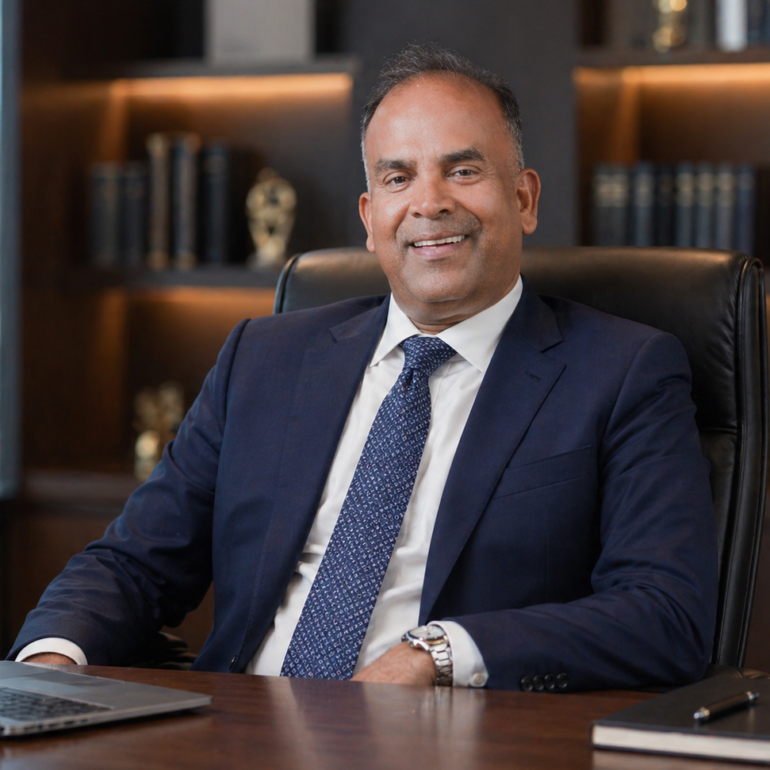
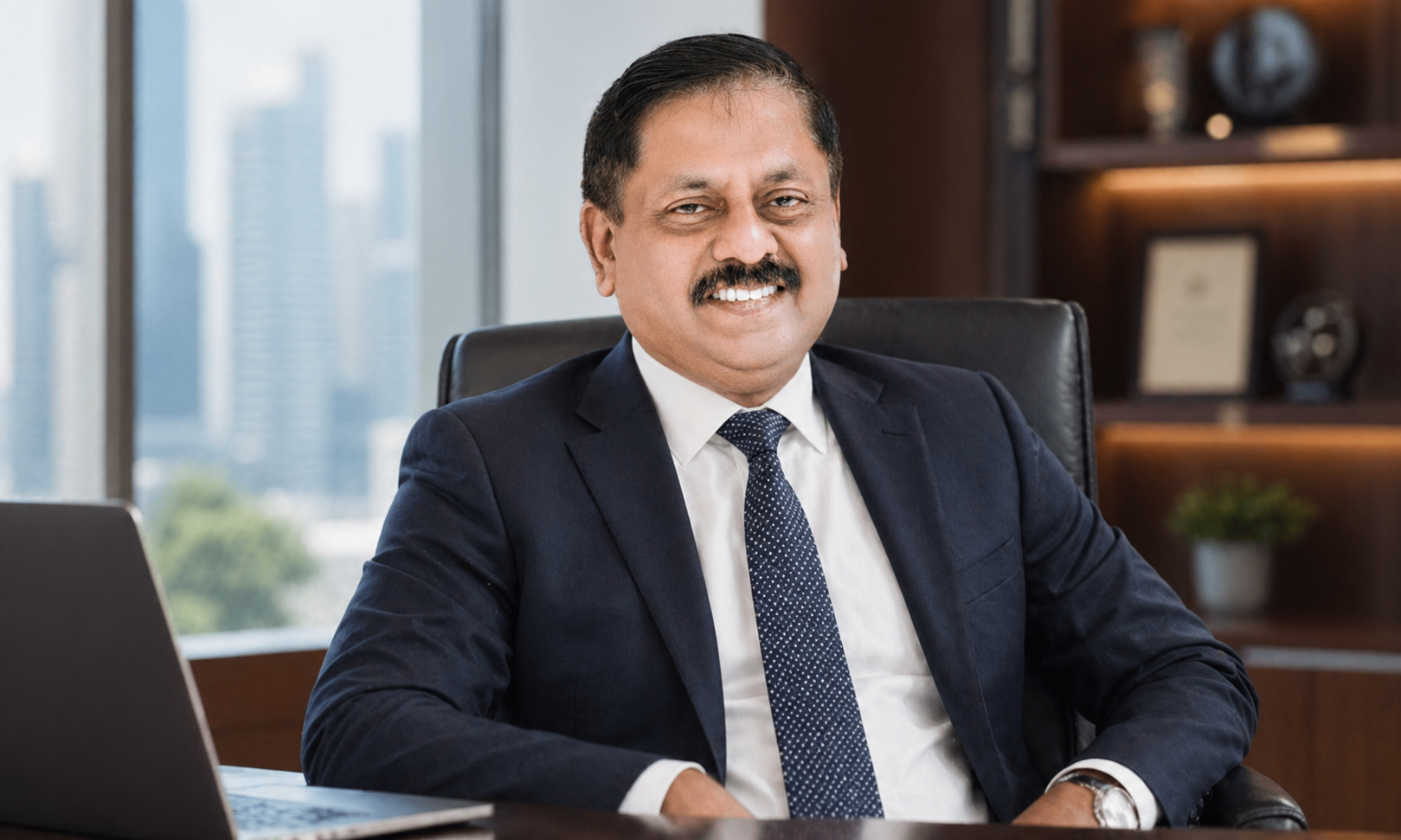
Sohan Roy
Indian entrepreneur and film director and producer
Sohan Roy is an Indian entrepreneur and film director and producer based at Sharjah. He is the founder, chairman, and CEO of Aries Group of Companies, and a Naval Architect. Sohan Roy had his BTech in Naval Architecture and Ship Building at Department of Ship Technology CUSAT. Roy directed the film DAM999 whose screenplay was added to the permanent core collection in the library of the Academy of Motion Picture Arts and Sciences. His Aries group has taken over actor Mohanlal’s Vismayas Max studio complex, Kerala’s first DTS studio, situated at Thiruvananthapuram. He worked as Project Designer of World’s second CSR movie – Aickarakkonathe Bhishaguaranmaar. He is the founder-director of Concept Indywood, Founder President of Indywood Billionaires Club. Roy is also a poet and author, he has been writing four line short poetry, known as ‘Anukavyam’ every day for the past two years.
As a filmmaker and cultural entrepreneur, he stepped into narratives far removed from shipyards. The arc of his journey, spanning engineering, media, and literary expression, reflects an outstanding attempt to bridge technical expertise with creative ambition, though not without debate over scale, impact, and execution.
Key Facts
Full Name: Sohan Roy
Place: Kochi, Kerala, India
Title: Founder, Chairman, and CEO, Aries Group of Companies
Occupation: Entrepreneur, Naval Architect, Film Director, Producer, Author
Known For: Maritime innovation, Aries Group, film DAM999, Indywood initiative
Early Life and Technical Foundations
Sohan Roy’s early trajectory follows a path familiar to many engineers from Kerala, rooted in technical education and oriented toward global opportunity. He studied at the Cochin University of Science and Technology, specifically in the Department of Ship Technology, a program that has historically supplied skilled professionals to India’s maritime and offshore industries.
Training in naval architecture involves a combination of structural engineering, hydrodynamics, and materials science. It is a discipline defined by precision and safety, where small miscalculations can have large consequences. This background would later influence Roy’s approach to business, systems-driven, process-oriented, and scale-conscious.
His early career as a naval architect and marine surveyor placed him within the global maritime ecosystem, particularly in the Gulf, where shipping, offshore energy, and marine engineering intersect. These environments are often transactional and technical, far removed from the narrative-driven worlds he would later enter.
From Startup to Global Enterprise
In 1998, Roy founded Aries Marine & Engineering Services in Sharjah. The timing was significant. The late 1990s saw increasing demand for marine consultancy services in the Gulf, driven by expanding offshore operations and shipping activity.
Aries began as a specialized service provider but gradually expanded into a diversified group under the umbrella of Aries Group of Companies. The group’s activities span inspection, surveying, engineering consultancy, and technical services across multiple geographies.
Publicly available information suggests that Aries operates in numerous countries, with offices across the Middle East, Europe, and Asia. However, precise operational scale, such as revenue or workforce size, is not consistently disclosed in public filings and should be interpreted cautiously.
Roy’s business philosophy appears to emphasize vertical integration and service diversification. Rather than remaining confined to a single niche, the company expanded into adjacent sectors, building a broader service portfolio.
This approach reflects a common strategy among mid-sized engineering firms seeking resilience in cyclical industries. By diversifying services, companies can mitigate risks associated with fluctuations in specific sectors.
Cinema and Creative Pursuits
Roy’s transition into filmmaking marks a significant departure from his engineering background. His directorial debut, DAM999 (2011), is a multilingual film inspired by themes related to dam safety and human consequences of infrastructural failure.
The film received international attention, including its inclusion in the library of the Academy of Motion Picture Arts and Sciences. It was also submitted as India’s official entry to the Academy Awards, though it did not secure a nomination.
The project reflects Roy’s attempt to merge technical awareness with storytelling. Rather than entering cinema purely as entertainment, his work often engages with social and infrastructural themes.
Subsequent projects, including CSR-driven films such as Aickarakkonathe Bhishaguaranmaar, indicate a continued interest in socially oriented narratives, though their reach and reception have been more limited compared to mainstream cinema.
This phase of his career highlights a broader trend, entrepreneurs entering creative industries with the intent of shaping narratives, not just consuming them.
Indywood and Industry Ambitions
One of Roy’s more ambitious initiatives is Concept Indywood, an effort to create a structured ecosystem for Indian cinema. At its core is the idea of integrating financing, production, and distribution within a unified framework.
The Indywood Billionaires Club, a component of this initiative, aims to mobilize significant investment into the film industry. The concept envisions a scale comparable to global entertainment hubs, though its practical implementation remains a work in progress.
Such initiatives reflect an understanding of structural gaps in Indian cinema, particularly the fragmentation of financing and the lack of institutional frameworks comparable to Hollywood.
However, the scale of ambition also invites scrutiny. Building such ecosystems requires not just capital but alignment across multiple stakeholders, including producers, distributors, and regulatory bodies.
Expanding into Media Infrastructure
Roy’s involvement in media infrastructure includes Aries Group’s acquisition of Vismayas Max Studio in Kerala. The studio is known for housing one of the state’s early DTS-equipped sound facilities.
This move aligns with a broader strategy of building capabilities within the media value chain, not just content creation but also production infrastructure.
Kerala’s film industry, while rich in content, has historically faced limitations in infrastructure. Investments in studios and post-production facilities contribute to addressing these gaps, though the scale of such impact varies.
The Poet and Thinker
Alongside engineering and filmmaking, Roy has cultivated a literary practice. His work Anukavyam is described as a collection of short poetic reflections, often written in a disciplined format of four lines per day.
This practice suggests a personal framework for reflection and expression, distinct from his professional pursuits. The themes explored in his writing, based on available descriptions, include philosophy, human experience, and introspection.
Such creative outlets are not uncommon among entrepreneurs, particularly those operating across multiple domains. They provide a space for articulation beyond structured business environments.
Legacy, Influence, and Criticism
Sohan Roy’s career is marked by multiplicity. He operates across engineering, media, and literature, each with its own demands and metrics of success.
In the maritime sector, his contribution lies in building a consultancy that has achieved international presence. In cinema, his work reflects an attempt to integrate technical themes with storytelling, though its commercial impact remains limited.
Initiatives like Indywood position him as a thinker attempting to reshape industry structures, but their realization remains partial.
This duality, ambition and execution, defines much of the discourse around his work. Supporters view him as a visionary attempting to bridge gaps between industries, while critics point to the challenges of translating large-scale concepts into sustained outcomes.
Between Systems and Stories
Sohan Roy’s journey does not fit neatly into conventional categories. It moves between shipyards and studios, between engineering calculations and cinematic narratives.
At its core, his work reflects a consistent theme, the desire to build systems. Whether in maritime consultancy or film industry frameworks, the focus remains on structure and scale.
Yet, the effectiveness of such systems depends on alignment, execution, and time. Some of his initiatives have achieved tangible presence, while others remain aspirational.
In the broader context of Indian entrepreneurship, his career illustrates both the possibilities and limits of cross-domain ambition. It raises questions about how expertise translates across industries and how vision interacts with reality.
That tension, between what is built and what is imagined, defines his legacy. In its scope and ambition, it remains a distinctly outstanding attempt to navigate multiple worlds at once.
Awards and accomplishments
Forbes listed Roy among top Indian leaders of the Arab world four times in a row since 2015 to 2019.
He was honored with the Honorary Professional Doctorate Certificate in Global Leadership and Management by European International University (EIU), Paris.
He was awarded with Knighthood of Parte Guelfa, thus becoming first Indian to be awarded with this award.