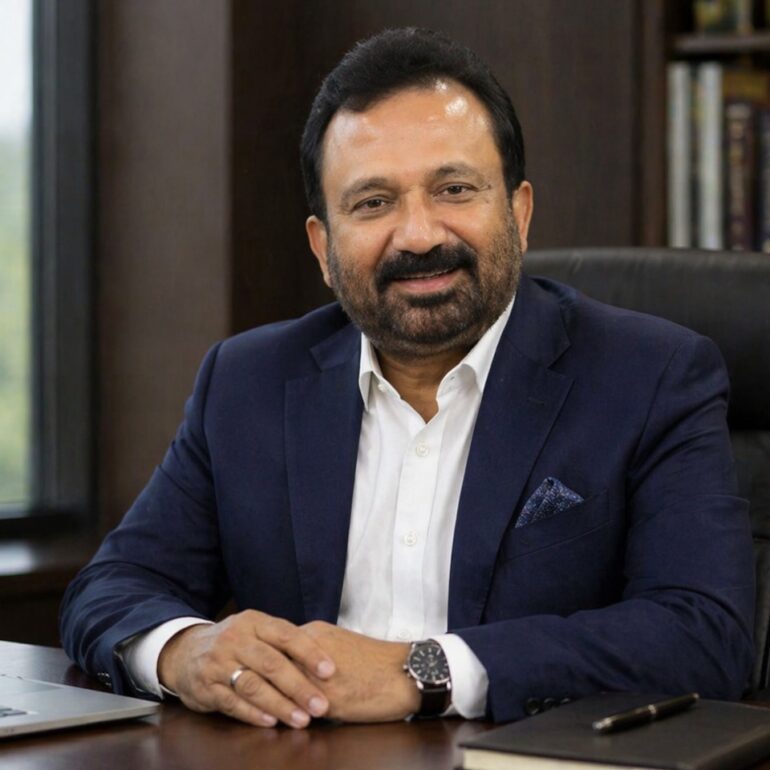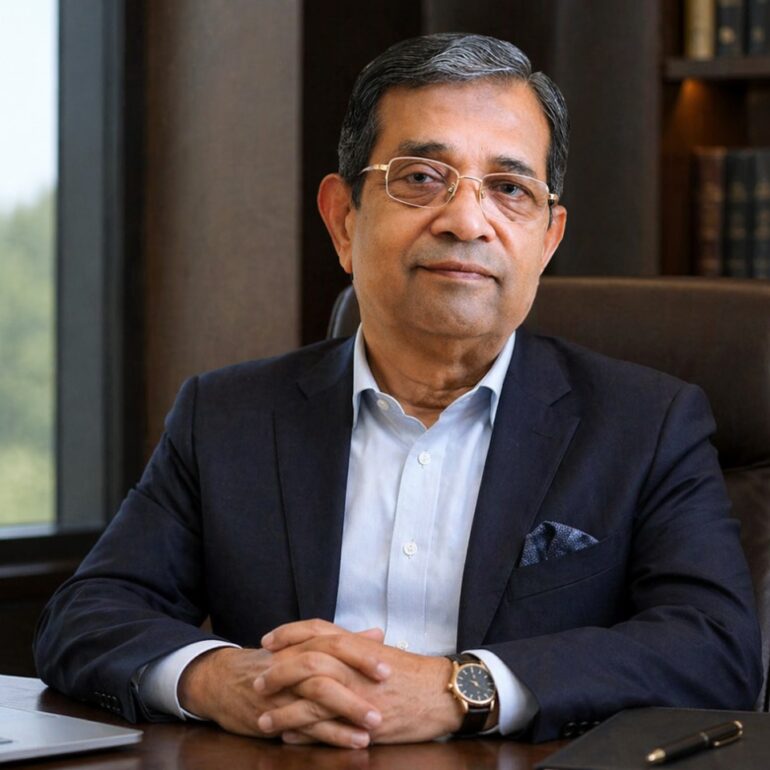
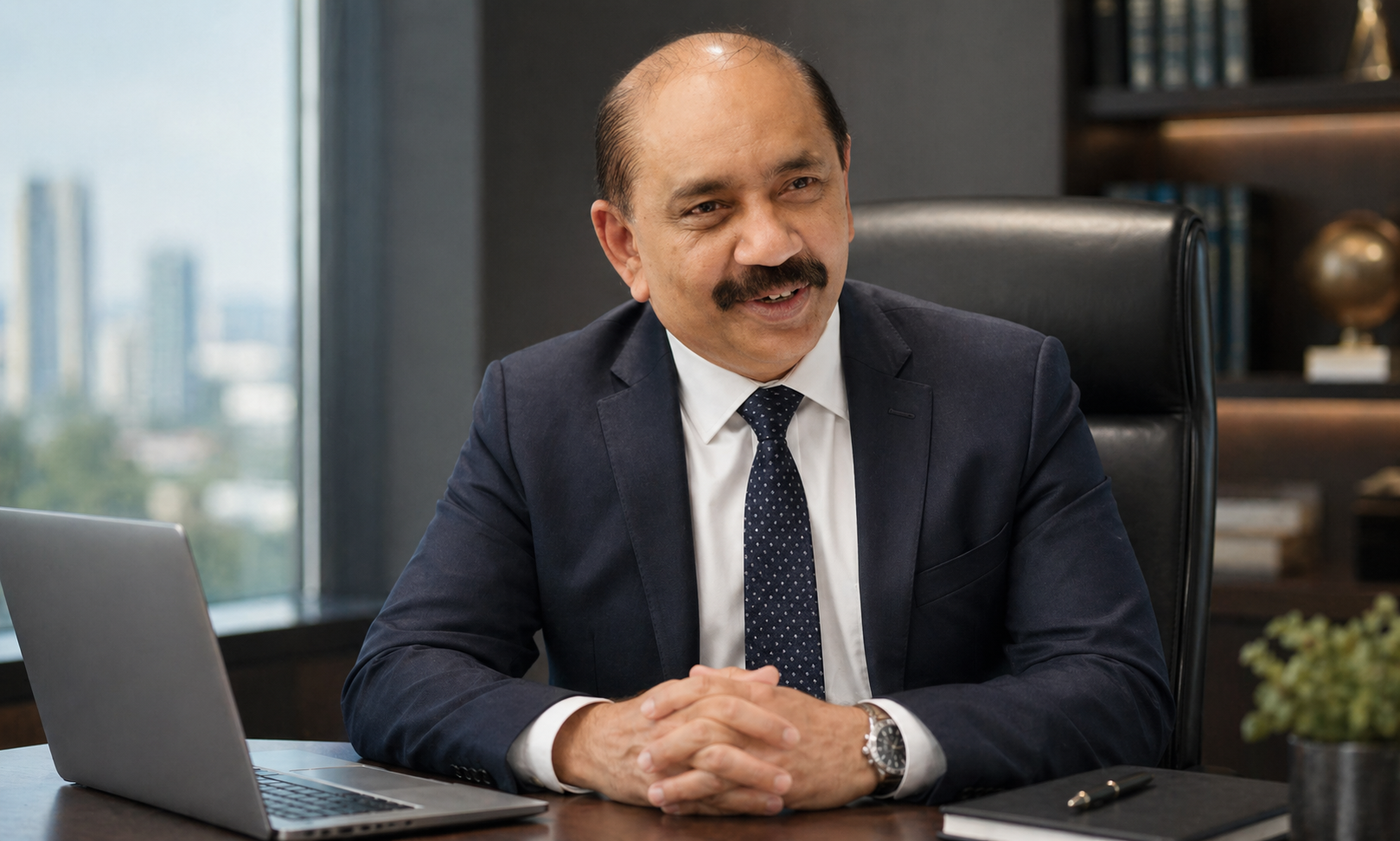
P. K. Abdulla Koya
Founder and Chairman of AKNOVEL Group
P K Abdulla Koya is an Indian entrepreneur from Abu Dhabi and Garshom Award winner. He is the founder and chairman of the AKNOVEL Group. Abdulla Koya has helped over 50,000 people across country to gain self-employment. Based in Abu Dhabi and leading AKNOVEL Group, he represents a generation of entrepreneurs who began with limited means and went on to create networks of businesses across industries. His journey, rooted in hardship and shaped by opportunity, is not just about personal success. It is about enabling others, through employment, enterprise, and mentorship. In that sense, his trajectory stands as an outstanding reflection of how migration can evolve into economic ecosystems.
Key Facts
Full Name: P. K. Abdulla Koya (Palliyulla Kariat Abdulla Koya)
Date of Birth: 13 February 1957
Place of Origin: Calicut, Kerala, India
Current Base: Abu Dhabi, UAE
Title: Founder & Chairman, AKNOVEL Group
Occupation: Entrepreneur, Industrialist
Known For: SME ecosystem building, self-employment initiatives, philanthropy
Notable Recognition: Garshom Award
From Migration to Multipliers
To understand Abdulla Koya’s journey, one must begin in Calicut, in a time when economic opportunities in Kerala were limited and migration was often the only path forward. Born in 1957, he grew up in a socio-economic environment where stability was not guaranteed, and work began early.
The Gulf migration wave of the 1970s and 80s was driven by necessity as much as ambition. For many young men from Kerala, the decision to leave was less about exploration and more about survival. In 1978, Koya joined this movement, arriving in the United Arab Emirates at a time when the region itself was still building its modern infrastructure.
These early years are often defined by uncertainty. Migrants took on whatever work was available, adapting quickly to new systems, languages, and expectations. For Koya, this phase appears to have been formative, shaping both resilience and an instinct for identifying opportunity in constrained environments.
Building an Entrepreneurial Foundation
The transition from employee to entrepreneur is rarely immediate. It involves observation, accumulation of experience, and an understanding of market gaps. In the UAE, Koya’s early work exposed him to small-scale business ecosystems, trading networks, and service sectors that supported the region’s rapid development.
Entrepreneurship in such environments often begins with modest ventures, small trading operations, service contracts, or partnerships. These businesses operate on thin margins but offer critical insights into supply chains and customer behavior.
While detailed documentation of his earliest ventures is limited in publicly available sources, his eventual trajectory suggests a gradual shift from participation in existing systems to building independent enterprises.
The key here is not a single breakthrough moment, but a series of incremental steps, each expanding capability and confidence.
Business Expansion and the AKNOVEL Group
Over time, these efforts coalesced into what is now known as AKNOVEL Group, a diversified business platform with interests spanning multiple sectors.
The group’s portfolio includes ventures across manufacturing, infrastructure, telecom-related services, and materials. Among the companies associated with this network are entities such as Sun Stamper, linked with Japanese technology through Addprint, MELTRAX Electro Mechanical & Communication Systems, National Tile Works, Beta Granite Pvt Ltd, Walayar Steels, Musou Micro Flash Foams Pvt Ltd, and Crest Wood.
Each of these ventures operates in industries that are foundational rather than consumer-facing. They supply components, materials, or services that support larger economic systems, construction, telecommunications, and manufacturing.
This positioning is strategic. Operating in foundational sectors allows for steady demand and long-term contracts, though it also requires technical expertise and capital investment.
The diversification across industries reflects both opportunity and risk management. By spreading operations across sectors, the group reduces dependency on any single market.
Impact on Self-Employment
One of the more distinctive aspects of Abdulla Koya’s work is its reported impact on self-employment. Public narratives around his career often highlight his role in enabling thousands of individuals, sometimes cited as over 50,000, to establish livelihoods or small businesses.
While precise verification of such figures can be challenging and should be approached cautiously, the broader pattern is consistent with the way diaspora entrepreneurs often operate. They create networks, subcontracting opportunities, partnerships, and mentorship structures that extend beyond their immediate enterprises.
This model has a multiplier effect. Instead of concentrating economic activity within a single company, it distributes opportunities across a wider network of individuals and small businesses.
In the context of expatriate communities, this approach carries particular significance. It allows newcomers to integrate into economic systems more quickly, often with guidance from those who have already navigated the path.
Philanthropy and Social Commitment
Parallel to his business activities, Abdulla Koya has been involved in philanthropic initiatives, particularly in healthcare. He is associated with the CARE Foundation, which focuses on cancer and related ailments.
He has also served as Vice Chairman of the MVR Cancer Centre and Research Institute, an institution that plays a significant role in providing oncology services in Kerala.
These engagements reflect a pattern seen among many Gulf-based Indian entrepreneurs, where philanthropy is directed toward healthcare and education, sectors that have immediate social impact.
The approach appears to emphasize institutional support rather than isolated donations. By contributing to hospitals and research centers, the focus shifts toward long-term capacity building.
Leadership Style and Legacy
Abdulla Koya’s leadership style is characterized less by public visibility and more by network-building. Unlike high-profile entrepreneurs who operate in media-heavy sectors, his work remains largely within industrial and community frameworks.
Decision-making in such environments often relies on practical considerations, market demand, operational feasibility, and relationship management. Long-term thinking is essential, particularly in sectors like manufacturing and infrastructure where returns are gradual.
Within business and community circles, his reputation appears tied to his ability to create opportunities for others, not just through employment but through enabling entrepreneurship.
This form of leadership is less centralized. It operates through influence rather than control, through networks rather than hierarchies.
The Larger Story
The story of P. K. Abdulla Koya is inseparable from the broader narrative of Kerala’s migration to the Gulf. It reflects a journey that begins with necessity but evolves into enterprise, community building, and institutional impact.
His work through AKNOVEL Group illustrates how small beginnings can scale into diversified operations, while his contributions to self-employment and philanthropy highlight the social dimension of entrepreneurship.
In a global economy where migration continues to shape labor markets and business ecosystems, such stories offer insight into how individuals move from participation to influence.
Koya’s legacy is not defined solely by the companies he has built, but by the networks he has enabled and the systems he has contributed to. It is a story of resilience, adaptation, and incremental growth, one that remains deeply connected to its origins while extending far beyond them. In that continuity lies a narrative that is both grounded and, in its own quiet way, outstanding.
Awards
2018: Garshom International Award