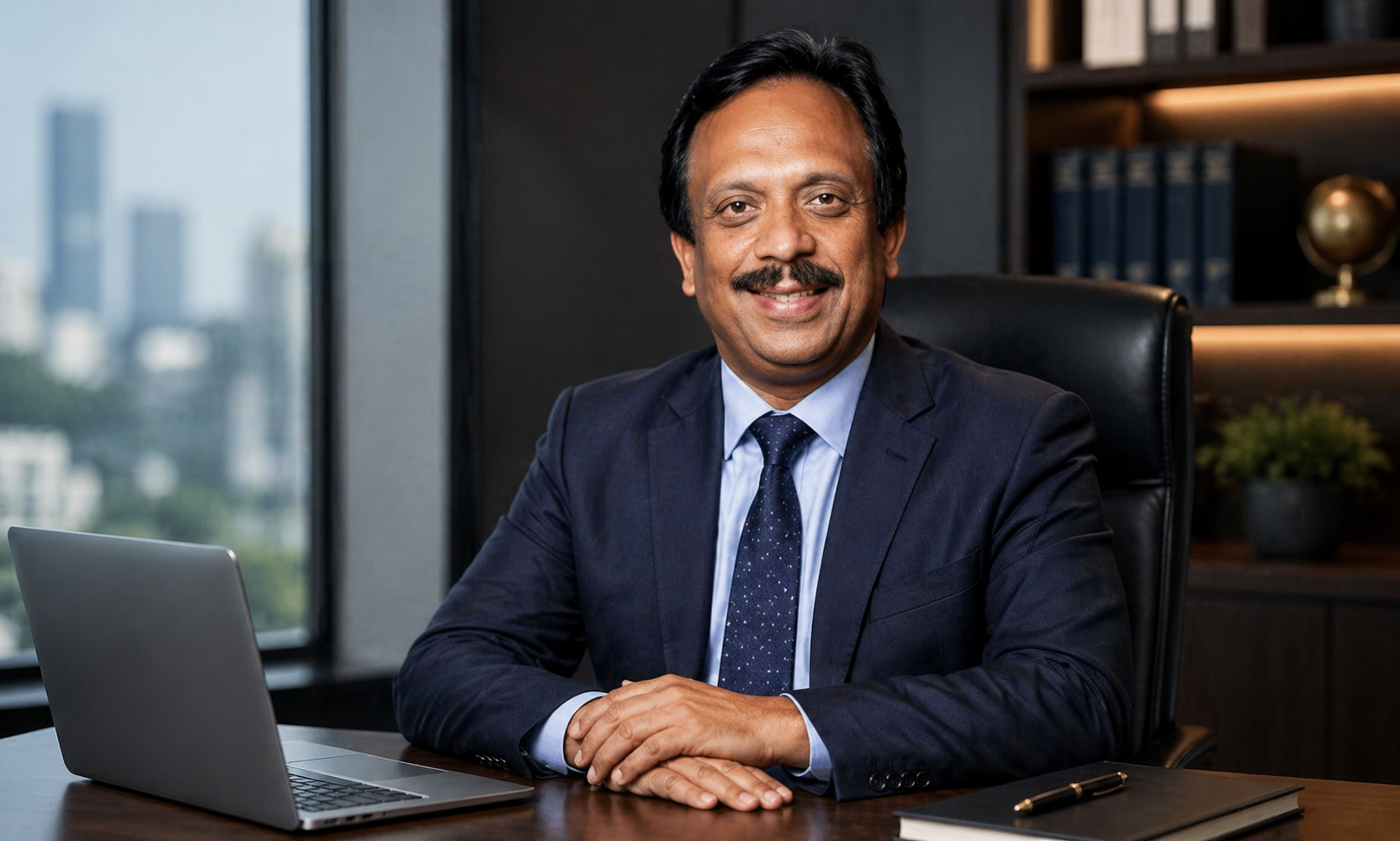
Sajan Pillai
Founder, chairman, and CEO of McLaren Strategic Ventures
Sajan Pillai is an India-born American businessman and investor. He is the former CEO of UST, which he helped build into a company employing over 25,000 people. He is currently the founder, chairman, and CEO of McLaren Strategic Ventures. Sajan Pillai was a part of the founding team of UST in 1999 and later became CEO. He is co-credited with building the firm into an information technology giant employing 25,000 people, catering to Fortune 500 companies, and generating revenue of more than $1 billion. As CEO, Pillai launched a program called Step It Up America, which trained minority women to work in STEM and IT sectors. He retired from UST in 2019 to start McLaren Strategic Ventures and Season Two Ventures. As part of his investment venture, Pillai has invested $300 million towards development of chip design and product engineering projects in the United States.
Key Facts
Full Name: Sajan Pillai
Place of Origin: Kerala, India
Nationality: Indian-American
Title: Founder, Chairman, and CEO of McLaren Strategic Ventures
Occupation: Business Executive, Investor
Known For: Scaling UST into a billion-dollar IT enterprise; investing in semiconductor and engineering innovation
The Sajan Pillai Trajectory
In the late 2010s, as UST crossed the billion-dollar revenue mark, the narrative around Indian IT companies was already shifting. Traditional outsourcing models were being challenged by automation, cloud computing, and platform-driven services. Inside boardrooms, the question was no longer about growth alone, but about relevance. Sajan Pillai, then CEO, was navigating this transition, balancing legacy delivery models with the demands of digital transformation. His eventual decision to step away from day-to-day leadership in 2019 was not abrupt. It reflected a broader pivot, from scaling an enterprise to investing in the technologies that would define its future. That transition, deliberate and forward-looking, marks an outstanding inflection point in his career.
Building UST: From Startup to Scale
UST was founded in 1999, during a period when India’s IT services sector was expanding rapidly. Sajan Pillai was part of the founding team and went on to play a central role in its growth over the next two decades.
The company’s trajectory reflects a familiar pattern in Indian IT, early focus on offshore delivery, gradual expansion into global markets, and increasing engagement with large enterprise clients. Under Pillai’s leadership, UST built relationships with Fortune 500 companies, particularly in sectors such as healthcare, financial services, and retail.
By the late 2010s, the company had crossed $1 billion in annual revenue and employed over 25,000 people globally, figures widely reported in company disclosures and media coverage. This scale placed UST among the significant mid-tier players in the global IT services landscape.
What distinguishes UST’s journey is its positioning. Rather than competing directly with the largest IT firms on scale alone, it focused on niche capabilities, customer-centric delivery, and long-term client relationships.
Leadership Philosophy and Impact
Sajan Pillai’s leadership style has often been described as execution-driven, with an emphasis on operational discipline and customer alignment. In an industry where margins are influenced by efficiency, such an approach is critical.
His tenure coincided with a period of transition in the IT services sector. The rise of digital technologies required companies to move beyond traditional outsourcing models toward consulting, platform integration, and digital engineering.
At UST, this translated into investments in digital capabilities and talent development. The company’s delivery model evolved to incorporate agile methodologies, cloud services, and data-driven solutions.
Culture also played a role. Building a global workforce requires managing diversity, aligning teams across geographies, and maintaining consistency in delivery. Pillai’s approach appears to have focused on creating a cohesive organizational framework while allowing flexibility at the operational level.
Step It Up America
Beyond corporate performance, Pillai was involved in initiatives aimed at social impact, most notably Step It Up America. The program focused on training minority women in STEM fields and preparing them for careers in technology.
This initiative reflects a broader recognition within the tech industry of the need to address diversity gaps. By targeting underrepresented groups, the program aimed to create pathways into high-growth sectors.
While the scale and long-term outcomes of such initiatives vary, they highlight an important dimension of leadership, the ability to extend influence beyond immediate business objectives.
The Strategic Exit
In 2019, Sajan Pillai stepped down from his role as CEO of UST. Leadership transitions at this level are rarely isolated events. They are typically aligned with broader strategic shifts, both within the company and in the industry.
For Pillai, the transition marked a move away from operational leadership toward investment and venture building. Having spent two decades scaling a services company, he turned his attention to areas where he saw future growth potential.
The timing is notable. The late 2010s saw increasing interest in deep technology sectors, including semiconductors, advanced engineering, and product development. These areas require significant capital and long-term commitment, making them distinct from traditional IT services.
McLaren Strategic Ventures and Season Two Ventures
Following his exit from UST, Pillai founded McLaren Strategic Ventures, positioning it as a platform for investing in deep-tech companies.
The firm’s focus areas include semiconductor design, product engineering, and advanced manufacturing technologies. These sectors are increasingly important in the global technology landscape, driven by demand for computing power, connectivity, and digital infrastructure.
Publicly reported figures indicate that the firm has committed significant capital, with investment strategies often cited in the range of hundreds of millions of dollars. However, specific deployment timelines and portfolio details are subject to ongoing developments and should be interpreted cautiously.
In parallel, Pillai has been associated with initiatives such as Season Two Ventures, further reinforcing his focus on early-stage and growth-stage technology companies.
This phase of his career reflects a shift from building a single enterprise to supporting multiple ventures, each operating in high-impact sectors.
Investment Thesis and Future Outlook
Pillai’s investment focus on semiconductors and engineering reflects broader global trends. The semiconductor industry, in particular, has become central to discussions around supply chain resilience, national security, and technological leadership.
By investing in design and engineering capabilities, his approach aligns with efforts to build alternative supply chains and reduce dependency on concentrated manufacturing hubs.
This strategy also recognizes the increasing convergence of hardware and software. As technologies such as artificial intelligence, 5G, and edge computing evolve, the integration between these domains becomes more critical.
His role, therefore, is not just as an investor but as a participant in shaping the next phase of technology infrastructure.
Legacy and Influence
Sajan Pillai’s legacy can be viewed across two distinct phases. The first is his contribution to building UST into a global enterprise. This phase reflects the broader rise of Indian IT services and the ability of Indian-origin leaders to operate at scale.
The second phase is his transition into venture investment, particularly in deep technology sectors. This reflects a shift in focus from services to innovation, from delivery to creation.
Within business circles, Pillai is often seen as a pragmatic leader, someone who understands both the operational and strategic dimensions of technology businesses.
His journey also contributes to a larger narrative of Indian-origin executives shaping global industries, not just through corporate leadership but also through investment and ecosystem building.
As technology continues to evolve, the impact of such leaders will be measured not only by the companies they build but also by the systems they enable.
In that sense, Sajan Pillai’s career reflects continuity as much as change. From scaling an enterprise to backing future technologies, the underlying theme remains consistent, building structures that can sustain growth over time. That continuity, grounded in experience and forward-looking strategy, remains distinctly outstanding.