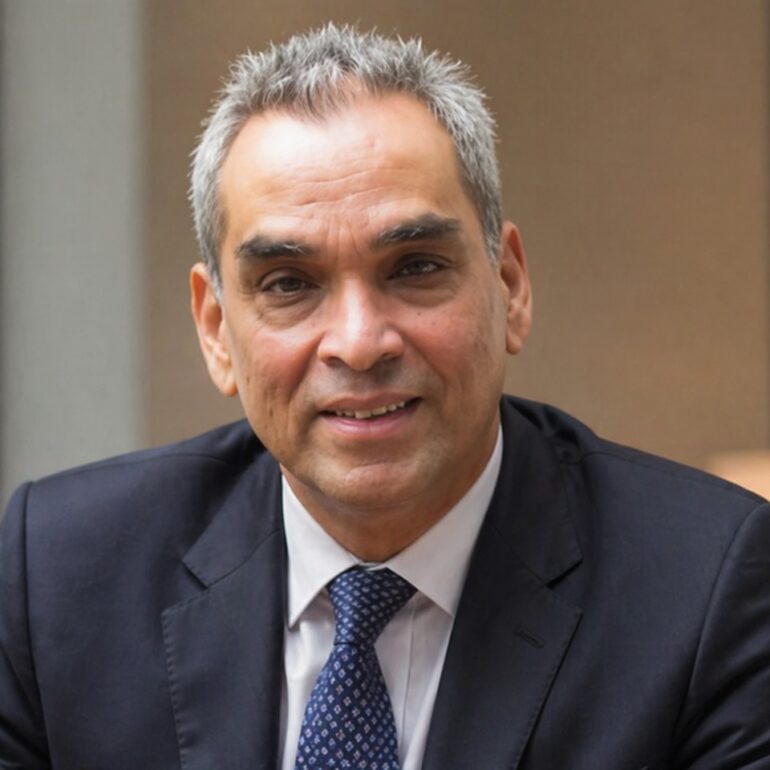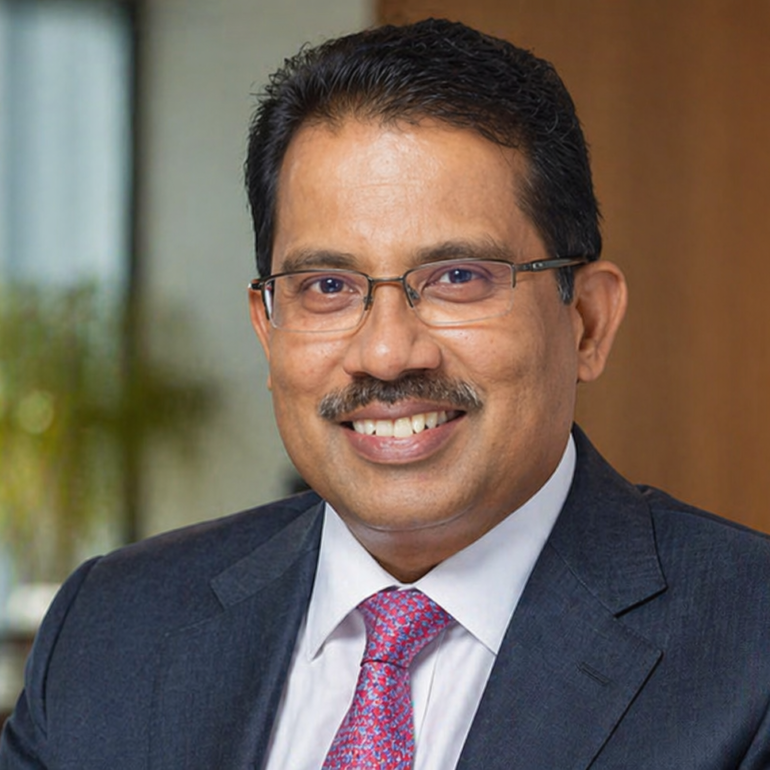
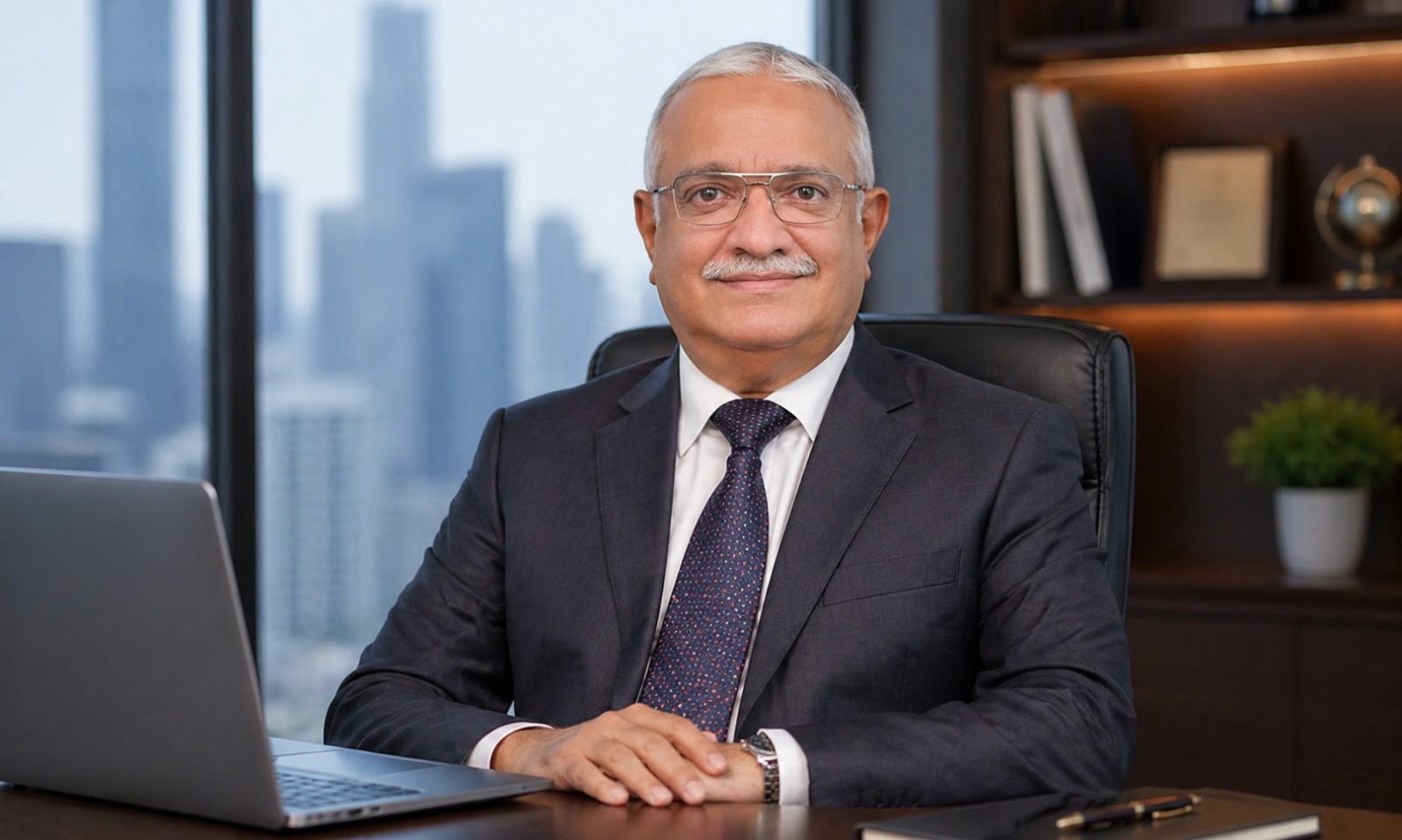
Ramesh Kunhikannan
Founder and managing director of electronics manufacturer Kaynes Technology
Ramesh Kunhikannan is the founder and managing director of electronics manufacturer Kaynes Technology, headquartered in Mysore, a city in southern India. As the founder and managing director of Kaynes Technology, he has spent over three decades constructing an engineering-led enterprise far from the glare of startup hubs. What began as a small unit in Mysore has evolved into a key player in electronics manufacturing services (EMS), supplying to sectors as varied as automotive, aerospace, industrials, and medical technology. In an ecosystem often dominated by software narratives, Kunhikannan’s journey matters because it reflects something harder to build, hardware capability at scale.
Key Factors
Full Name: Ramesh Kunhikannan
Title: Founder & Managing Director, Kaynes Technology
Occupation: Entrepreneur, Electronics Manufacturing Leader
Known As: Founder of Kaynes Technology; contributor to India’s electronics, aerospace, and defense supply chain
In cleanrooms and assembly lines that rarely make headlines, components move with precision, circuit boards are populated layer by layer, and systems are tested against unforgiving tolerances. Somewhere within India’s expanding electronics ecosystem, companies like Kaynes Technology have become invisible enablers of visible achievements, from automotive electronics to aerospace systems. It is here, in the quiet choreography of manufacturing, that Ramesh Kunhikannan’s work becomes legible. His journey, stretching from a modest setup in Mysore in the late 1980s to participation in globally relevant supply chains, reflects a form of industrial ambition that is both incremental and outstanding, built not on hype but on capability.
The Early Years
Kunhikannan’s early life is not extensively documented in public narratives, but his professional trajectory points clearly to a technical foundation. Trained as an electrical engineer, he entered the workforce at a time when India’s industrial ecosystem was still constrained by licensing regimes, limited access to capital, and restricted exposure to global technology.
The late 1980s were not an obvious moment to start an electronics manufacturing company in India. The country’s capabilities in electronics were fragmented, supply chains were underdeveloped, and imports often filled critical gaps. For an engineer with limited capital, the path forward required not just technical competence but persistence.
Mysore, unlike Bangalore, did not yet command attention as a technology hub. But it offered something else, lower costs, manageable scale, and proximity to emerging industrial clusters. It was here that Kunhikannan began building what would become Kaynes Technology.
Building Kaynes Technology
Founded in the late 1980s, widely cited as around 1988 or 1989, Kaynes Technology began as a small contract manufacturing unit. The early focus was on printed circuit board (PCB) assembly and basic electronics manufacturing services.
At the time, EMS as a concept was still evolving globally. In India, it was even less defined. Companies largely produced for captive use or limited domestic demand. Building a contract manufacturing business required convincing clients to outsource, a shift that depended on trust and demonstrated reliability.
Kaynes’ early growth appears to have followed a cautious trajectory. Rather than scaling rapidly, the company focused on capability building, developing expertise in PCB assembly, testing, and system integration. Over time, this expanded into a broader EMS offering, including design support and end-to-end manufacturing solutions.
This gradual evolution is significant. EMS companies are only as strong as their process discipline and quality control. In sectors like aerospace or medical electronics, tolerance for error is effectively zero. Building credibility in such industries takes years, sometimes decades.
Scaling Against the Odds
Scaling a manufacturing business in India has historically been more complex than scaling a software company. Capital intensity is higher, margins are tighter, and infrastructure constraints are persistent.
Kunhikannan navigated these challenges by diversifying Kaynes’ sectoral exposure. The company expanded into automotive electronics, industrial systems, aerospace and defense, railways, and medical equipment. Each of these sectors carries its own regulatory requirements and technological demands.
Entering aerospace and defense, for instance, requires adherence to stringent quality certifications and long approval cycles. Similarly, automotive electronics demand reliability at scale, while medical electronics require compliance with global standards.
Kaynes’ ability to operate across these sectors suggests a deliberate strategy, not dependence on a single market, but building a portfolio that balances risk and opportunity.
At the same time, the company gradually expanded its manufacturing footprint, setting up multiple facilities across India. This expansion reflects both demand growth and the need to optimize logistics and supply chain efficiency.
Breakthrough and Recognition
A major inflection point in Kaynes’ journey came with its public listing. The company launched its initial public offering (IPO) in 2022, which was widely reported to have been well received by investors. The listing not only provided capital for expansion but also brought greater visibility to a company that had largely operated outside mainstream attention.
The IPO signaled a broader shift in India’s manufacturing narrative. Investors, long focused on software and services, were beginning to recognize the potential of electronics manufacturing as a strategic sector.
Kaynes’ involvement in high-profile projects, including contributions to India’s space and defense programs, has also been reported in various sources. While specific details of such engagements are often limited due to confidentiality, the association itself indicates a level of technical credibility.
In particular, India’s space missions, including those under ISRO, rely on a network of private suppliers for components and systems. Companies like Kaynes form part of this ecosystem, even if their roles remain largely behind the scenes.
Leadership Style and Vision
Kunhikannan’s leadership style reflects an engineering mindset. Unlike founders who prioritize rapid expansion or brand visibility, his approach appears grounded in process, quality, and long-term capability building.
This distinction matters. Manufacturing rewards consistency more than charisma. Systems, once established, must function with minimal deviation. Leadership, in this context, is about creating structures that endure.
Family involvement has also played a role in Kaynes’ evolution. Publicly available information indicates that Savitha Ramesh, his spouse, has been associated with the company’s leadership. Such involvement is common in Indian manufacturing enterprises, where continuity and trust are critical.
Kunhikannan’s vision aligns with a broader industrial perspective, building infrastructure that supports long-term growth rather than chasing short-term valuation spikes.
The Bigger Picture
Kaynes Technology’s journey must be understood within the context of India’s evolving manufacturing ambitions. Initiatives such as “Make in India” have emphasized the need to develop domestic capabilities in electronics, defense, and semiconductor-related sectors.
Electronics manufacturing, in particular, has emerged as a strategic priority. Global supply chains are being reconfigured, and countries like India are seeking to position themselves as alternatives to traditional manufacturing hubs.
Within this landscape, EMS companies play a critical role. They act as intermediaries between design and production, enabling scalability and specialization.
Kaynes’ presence in multiple sectors positions it as a participant in this transition. However, challenges remain. India’s electronics ecosystem still depends heavily on imported components, and building end-to-end capability requires sustained investment.
Kunhikannan’s work reflects both progress and constraint, an industry moving forward, but not without structural limitations.
Reflection
Ramesh Kunhikannan’s journey does not fit the dominant narrative of Indian entrepreneurship. There are no viral moments, no rapid pivots, no dramatic valuations. Instead, there is a steady accumulation of capability, built over decades in a sector that rarely attracts attention.
His story represents a different kind of ambition, one that values infrastructure over visibility, systems over spectacle. In a country seeking to strengthen its manufacturing base, such journeys are not just relevant; they are necessary.
The future of companies like Kaynes Technology will depend on how effectively they can navigate global competition, technological shifts, and domestic policy frameworks. But the foundation, built through years of disciplined execution, is already in place.
In that sense, Kunhikannan’s work offers a reminder that industrial transformation is rarely dramatic. It is incremental, often invisible, and sustained over time. And in that quiet persistence lies something undeniably outstanding.