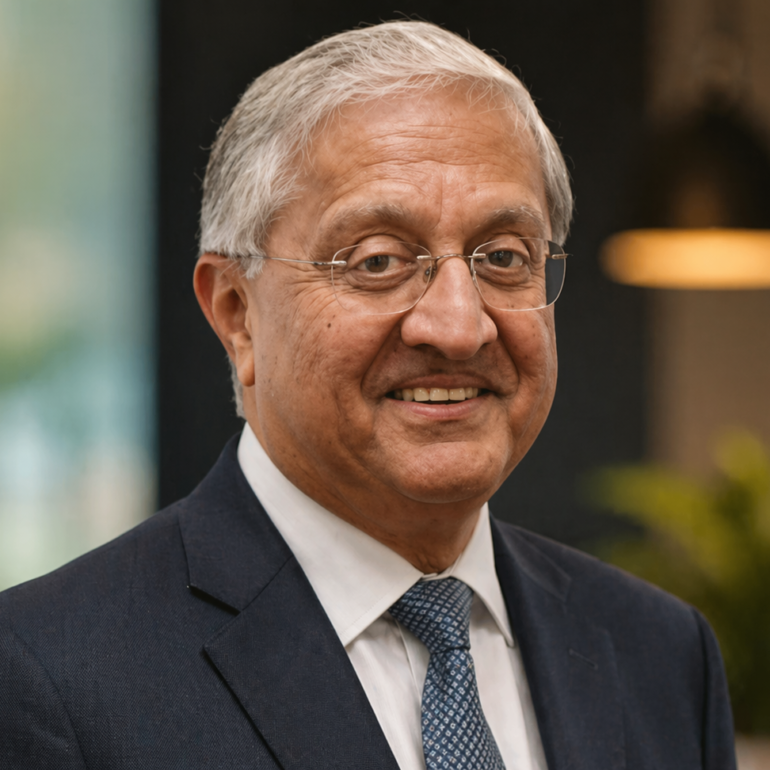
M. P. Ahammed
Chairman of Malabar Group of Companies
M. P. Ahammed is an Indian businessman and the chairman of the Malabar Group of Companies. He is the founder of Malabar Gold & Diamonds, one of the world’s largest retail jewellery groups.
Key Facts
Born: 1 November 1957 (age 68)
Place: Kozhikode, Kerala, India
Years active: 1991 – present
Known for: Chairman of Malabar Group of Companies
A Store That Feels Like a System
In a sprawling showroom in the Gulf, the counters are never still. Customers lean over glass displays, weighing design against price, emotion against assurance. Behind the choreography sits a tightly run system, inventory synced across geographies, purity certified, pricing transparent. For M. P. Ahammed, this scene is not just retail theatre; it is the culmination of a long shift from uncertainty to structure. The rise of Malabar Gold & Diamonds is not a sudden leap but a sequence of decisions that turned a volatile trading mindset into a standardized retail engine. It is an outstanding story of how a business built on risk-heavy commodities reoriented itself around trust, systems, and scale, and in doing so helped redefine how jewellery is bought and sold across markets.
The Making of an Entrepreneur
M. P. Ahammed’s early years in Kozhikode were shaped by a familiar Kerala template, small-scale trade, exposure to agriculture, and a close view of how value moved through informal markets. Business was not abstract; it was immediate, negotiated, and often uncertain.
His first serious engagement came through agro-products and spice trading. This was a sector where margins could be attractive, but volatility was constant. Prices fluctuated with monsoons, exports, and global demand. Inventory could turn into loss overnight.
Those years were formative. They taught him how markets behave when there is no safety net. They exposed him to the mechanics of supply chains long before the term became fashionable. Most importantly, they revealed the limits of commodity businesses.
In commodities, control is minimal. You react more than you shape. This realization would later become central to his pivot.
Discovering the Power of Brand
Commodity trading offers scale, but not stability. Ahammed experienced this firsthand. Periods of profit were often followed by sharp corrections. Planning long-term became difficult when the underlying product itself lacked predictability.
The turning point was conceptual. He began to understand that while commodities fluctuate, brands endure. A branded product allows control over perception, pricing, and customer relationship.
Jewellery, at that time, sat in an interesting space. It was both a commodity, gold priced globally, and a retail product shaped by design, trust, and experience. The Indian jewellery market, however, was largely unorganised. Trust depended on local jewellers, and standardisation was limited.
This gap was an opportunity. Moving into jewellery was not just diversification. It was a strategic shift from price-driven trading to trust-driven retail.
Building Malabar Gold & Diamonds
In 1993, Ahammed opened the first Malabar Gold showroom in Kozhikode. The timing was significant. India had just begun liberalising its economy. Consumer markets were slowly opening, and aspirations were rising.
The jewellery sector, however, remained fragmented. Entering this space required not just capital, but a differentiated approach.
From the beginning, Malabar emphasized three elements. Purity, ensured through transparency in gold content and certification. Pricing, aligned with market rates rather than opaque margins. And customer experience, structured rather than informal.
These were not radical ideas globally, but in the local context, they represented a shift.
The early years were not easy. Convincing customers to trust a new brand in a category dominated by legacy jewellers required consistency. Every transaction had to reinforce credibility. Over time, that consistency began to compound.
Scaling a Global Retail Empire
The expansion beyond Kerala marked the second phase.
The Gulf was a natural extension. A large Malayali diaspora created demand for familiar brands. At the same time, the region’s retail infrastructure allowed for scale. Malabar’s entry into the Middle East was strategic.
It leveraged cultural familiarity while adapting to global retail standards. Over time, the company expanded across the UAE, Saudi Arabia, and other markets, building a strong presence among expatriate and local customers.
Back in India, growth accelerated across states. The company moved from being a regional brand to a national player. Showrooms multiplied, each designed to deliver a consistent experience.
A defining feature of this growth was its investor-partnership model. Instead of relying solely on institutional capital, Malabar brought in individual investors into its expansion plans. This created a network of stakeholders aligned with the company’s growth.
Operationally, the scale became significant. Hundreds of showrooms across multiple countries, a workforce running into thousands, and a supply chain that integrated sourcing, manufacturing, and retail.
At this level, jewellery retail is no longer about selling ornaments. It becomes a system.
Leadership Philosophy and Business Model
Ahammed’s leadership philosophy revolves around shared growth.
Employees, investors, and partners are treated as stakeholders rather than transactional participants. This alignment reduces friction and creates long-term commitment.
Standardisation is another cornerstone. In a category historically driven by personal relationships, Malabar introduced processes. Purity checks, billing transparency, and consistent pricing created predictability.
This predictability is what enabled scale. Risk-taking remains part of the model, but it is structured. Expansion into new markets is calculated. Inventory management is disciplined. Capital allocation is deliberate.
The balance between risk and control defines the business.
Diversification and the Malabar Ecosystem
While jewellery remains the core, the Malabar Group has expanded into adjacent and complementary sectors.
Manufacturing capabilities have been strengthened to support scale. Real estate investments, particularly in retail spaces, provide both operational and financial leverage. The idea is not diversification for its own sake, but ecosystem building.
By controlling more parts of the value chain, the group enhances efficiency and resilience. This approach reflects a broader understanding of modern retail, where margins are influenced not just by sales, but by supply chain integration.
Philanthropy and Social Responsibility
For Ahammed, social responsibility is positioned as a core function rather than an afterthought.
The Malabar Group allocates a portion of its profits to charitable initiatives. These include housing projects for the underprivileged, healthcare programs, and hunger relief efforts.
The scale of these initiatives reflects the company’s growth, but the intent remains consistent. In markets like India, where businesses operate within deeply interconnected communities, such engagement also reinforces trust.
CSR, in this context, is both ethical and strategic.
The Man Behind the Empire
M. P. Ahammed is not a flamboyant public figure.
His presence is more operational than performative. Interviews and public appearances tend to focus on business principles rather than personal narrative. Colleagues often describe him as disciplined and long-term oriented.
Decision-making is measured. Expansion is pursued with clarity rather than urgency. There is a visible emphasis on systems over personality.
At the same time, his willingness to enter new markets and adopt new models indicates a comfort with calculated risk. This combination, caution with ambition, defines his leadership style.
Legacy and Future Outlook
Today, Malabar Gold & Diamonds stands among the largest jewellery retail chains globally, with a presence across multiple continents.
Its success reflects not just scale, but a shift in how jewellery retail is structured. The challenges ahead are equally significant.
Competition is intensifying, both from organised players and digital platforms. Consumer behaviour is evolving, with younger buyers valuing design and experience as much as gold content.
Regulatory frameworks are also tightening, particularly around gold sourcing and financial transparency. Navigating these shifts will require the same principles that built the company, adaptability grounded in discipline.
For Ahammed, success is no longer about establishing credibility. It is about sustaining relevance.
His legacy lies in transforming jewellery retail from a trust-based informal sector into a system-driven organised industry.
That transformation is not just commercial. It is structural.
And that is what makes his journey outstanding, not because it ends with scale, but because it redefines the rules of the market itself.