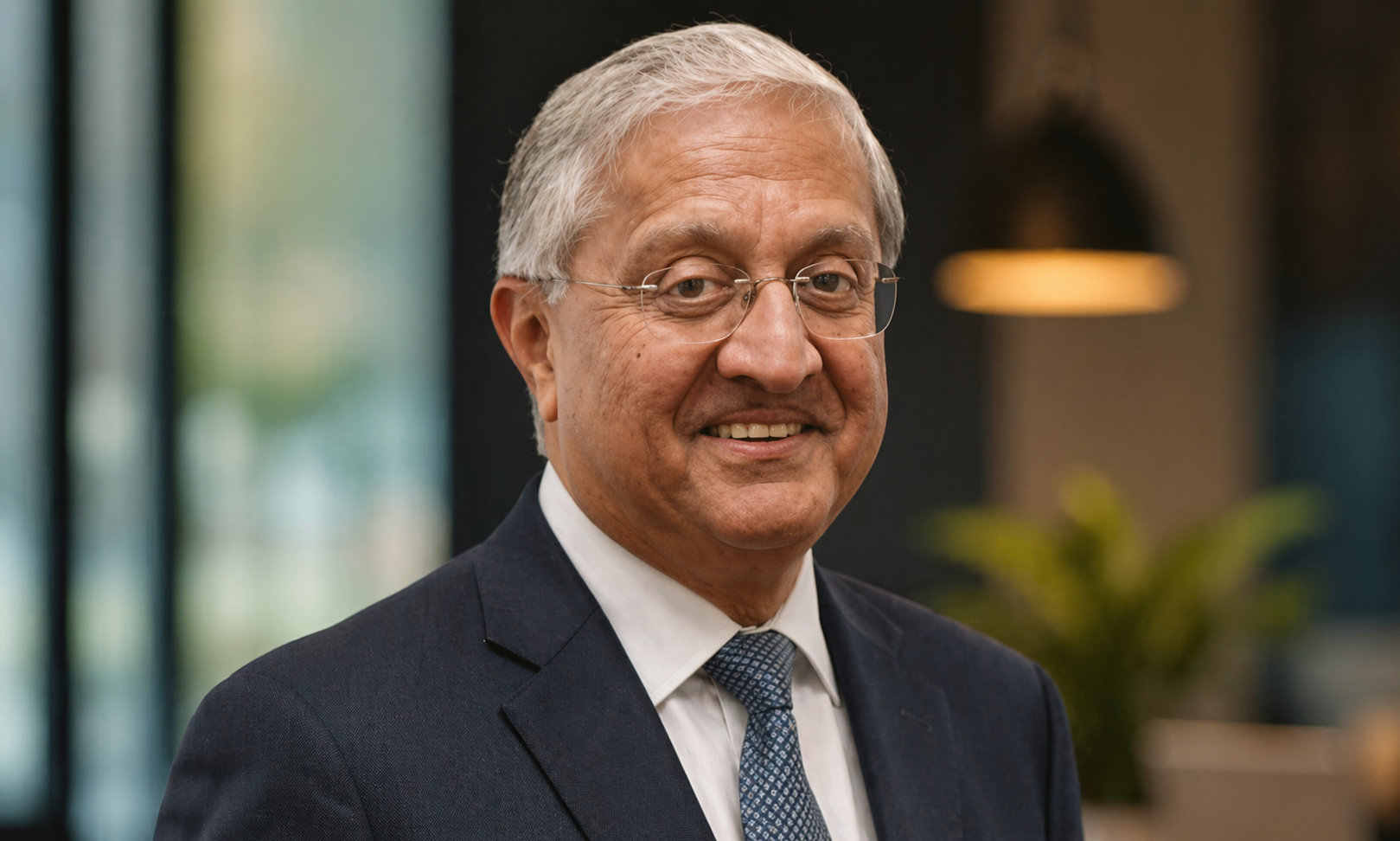
R. Gopalakrishnan
Independent Director & Non-Executive Chairman for Castrol India Limited
Ramabadran Gopalakrishnan is an Indian businessman and author. Until his retirement he was an executive director of Tata Sons Ltd and served on the boards of Tata Power, Tata Technologies, AkzoNobel India, Castrol India and ABP Pvt. Ltd. Before joining Tata, he was Vice Chairman of Hindustan Lever, the Indian subsidiary of Unilever plc.
Key Facts
Full Name: Ramabadran Gopalakrishnan
Born: 25 December 1945 (age 80)
Education: IIT Kharagpur, Harvard Business School
Title: Business executive, Author
The Executive Who Chose Reflection Over Noise
In an era where corporate leadership is often defined by visibility, soundbites, and quarterly narratives, R. Gopalakrishnan represents a quieter tradition. He is not remembered for dramatic turnarounds or headline-making deals, but for something more enduring, the ability to think clearly inside complex systems. Whether in the corridors of Hindustan Unilever or the expansive ecosystem of Tata Sons, his influence has been intellectual rather than performative. Over decades, he has shaped decisions, mentored leaders, and translated complexity into clarity. His career is an outstanding reminder that in large organizations, the most valuable leaders are not always the most visible, but the ones who make sense of the chaos others must navigate.
Engineering a Way of Thinking
R. Gopalakrishnan’s intellectual foundation was laid in a post-independence India that valued engineering as both a discipline and a pathway to nation-building.
He studied at Indian Institute of Technology Kharagpur, one of India’s earliest IITs. The training was not merely technical. It cultivated a structured way of thinking, breaking down problems, understanding systems, and working through constraints. This analytical grounding would later define his approach to management.
Unlike leaders who emerge from purely financial or marketing backgrounds, Gopalakrishnan brought an engineer’s mindset into business. He viewed organizations as interconnected systems rather than isolated functions. This perspective became central to his career.
Unilever Years: Learning the Discipline of Scale
Gopalakrishnan spent over three decades at Hindustan Unilever, one of India’s most sophisticated corporate training grounds.
At Hindustan Unilever, he rose through the ranks to become Vice Chairman and Managing Director. This period exposed him to the full spectrum of business operations, brand building, supply chains, distribution networks, and consumer behavior.
Unilever’s systems are famously rigorous. Decisions are data-driven. Processes are standardized. Execution is relentless. Working within this environment instilled in Gopalakrishnan a deep respect for discipline.
He learned that scale is not achieved through inspiration alone. It requires repeatable systems. This phase also shaped his understanding of markets.
India’s FMCG sector operates at the intersection of affordability, aspiration, and distribution complexity. Managing such a business requires sensitivity to both macro trends and micro realities.
These lessons would later inform his work at Tata.
Transition to the Tata Group: From Operator to Thinker
Gopalakrishnan’s move to Tata Sons marked a shift in role and responsibility.
At Tata Sons, he served as Executive Director, working across a wide array of businesses within the Tata Group.
Unlike Unilever, which operates within a defined industry, the Tata Group is a conglomerate spanning sectors, steel, automobiles, IT services, hospitality, and more. This required a different kind of leadership. Not operational depth in one domain, but strategic breadth across many.
Gopalakrishnan’s role involved advising, mentoring, and shaping decisions across companies. He became a connector within the group, helping align diverse businesses with broader strategic goals.
His influence was often indirect. But in large conglomerates, indirect influence can be more powerful than direct control.
Simplifying Complexity
At the core of Gopalakrishnan’s leadership philosophy is a commitment to clarity.
He has often emphasized that complex problems are not solved by adding more complexity, but by simplifying them.
This is not simplification in the sense of reduction. It is simplification in the sense of understanding.
He approaches decisions by identifying underlying patterns, separating signal from noise, and focusing on what truly matters. This mindset is particularly valuable in conglomerates.
Multiple businesses, geographies, and market dynamics create layers of complexity. Leaders must navigate ambiguity without losing direction.
Gopalakrishnan’s approach provides a framework. Think in systems, act with clarity, and avoid overcomplication.
The Author and Intellectual Voice: Translating Experience into Insight
Beyond his corporate roles, Gopalakrishnan has established himself as a significant voice in Indian management thought.
His books, including The Case of the Bonsai Manager, A Biography of Innovations, and Crash, reflect a consistent theme.
Management is not just about metrics. It is about understanding human behavior, systems, and unintended consequences.
In The Case of the Bonsai Manager, he explores the idea that organizations, like bonsai trees, can be constrained by the environments they are placed in. Growth is not just a function of capability, but of context.
In A Biography of Innovations, he examines how ideas evolve, emphasizing that innovation is rarely linear. It is shaped by experimentation, failure, and adaptation.
His writing is notable for its accessibility. He avoids jargon and focuses on storytelling, using analogies to explain complex concepts. This has made his work influential beyond corporate circles.
Boardroom Influence and Governance: The Strategic Advisor
Gopalakrishnan’s influence extends into corporate governance.
He has served on the boards of multiple companies, contributing to strategic oversight and decision-making. His reputation in boardrooms is distinct.
He is seen not as an operator driving execution, but as a thinker shaping direction. This distinction matters.
Boards require individuals who can step back from operational detail and assess long-term implications.
Gopalakrishnan’s ability to contextualize decisions within broader systems makes him particularly effective in this role.
He brings perspective. And in governance, perspective is often more valuable than immediacy.
Authority Without Assertion
Those who have worked with Gopalakrishnan often describe him in similar terms.
Calm. Analytical. Measured.
He does not dominate conversations. Instead, he listens, processes, and responds with clarity. This style creates a different kind of authority. Not one based on hierarchy, but on insight.
As a mentor, he emphasizes thinking over instruction. Rather than providing answers, he encourages others to arrive at their own conclusions.
This approach fosters independence. It also reflects his broader philosophy.
Leadership is not about control. It is about enabling better thinking.
The Value of Thoughtful Leadership
R. Gopalakrishnan’s career spans a period of significant transformation in Indian business.
From a controlled economy to a liberalized, globally integrated market, he has witnessed and contributed to this evolution.
His legacy lies not in a single company or decision, but in a way of thinking.
In an era increasingly defined by speed and disruption, his emphasis on clarity, systems thinking, and long-term perspective remains relevant.
Younger leaders often face pressure to act quickly. Gopalakrishnan’s work suggests a counterpoint. Think first. Act with understanding.
His influence continues through his writing, mentorship, and board roles.
In the broader narrative of Indian corporate history, he represents a distinct archetype.
The thinker within the system. The leader who does not seek attention, but shapes outcomes.
An outstanding example of how intellectual rigor, applied consistently over time, can quietly define the direction of large and complex organizations.