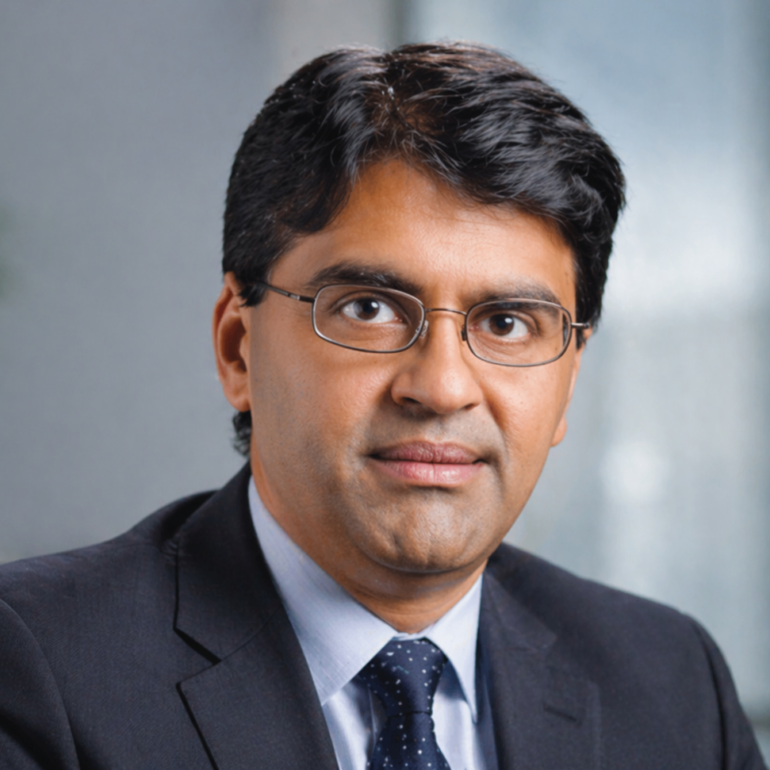

Arun Kumar
Entrepreneur, Pharmaceutical Industry Leader
Arun Kumar is the Founder and Promoter Director of Strides Pharma Science Limited (formerly Strides Arcolab Ltd.), which he established in 1990 in Vashi, Navi Mumbai. As a first-generation entrepreneur, he developed Strides into a major pharmaceutical company focused on niche finished dosage formulations, later managing the integration of the Shasun Pharmaceuticals merger. He founded Strides, steering it towards a focus on “difficult to operate” market segments to build a global pharmaceutical company. He has a Bachelor’s degree in Commerce and moved to Mumbai in 1982 to pursue his career, working at Bombay Drug House and British Pharmaceuticals Limited before starting his own venture. He Guided the company through major strategic moves, including the 2013 sale of Agila Specialties to Mylan and the merger with Shasun Pharmaceuticals.
Key Facts
Full Name: Arun Kumar
Title: Founder, Chairman, and Managing Director, Strides Pharma Science Limited
Occupation: Entrepreneur, Pharmaceutical Industry Leader
Known For: Building Strides Pharma Science, strategic deal-making including Agila sale, niche-focused pharma strategy
The $1.75 Billion Decision
In December 2013, when Strides announced the sale of its Agila Specialties division to Mylan for up to $1.75 billion, it was not just a transaction. It was a statement of intent. For many companies, divesting a high-performing injectable business would signal retreat. For Arun Kumar, it marked a recalibration.
The deal crystallized a philosophy that had quietly guided Strides for years, exit when value peaks, redeploy capital into segments where competition is limited and complexity is high. In an industry often driven by scale and consolidation, Kumar’s decision stood out for its willingness to break from linear growth narratives.
Early Life and Career Beginnings
Arun Kumar’s entry into the pharmaceutical industry was not shaped by legacy or formal scientific training. With a Bachelor’s degree in Commerce, his pathway into pharma began through exposure rather than specialization.
His move to Mumbai in 1982 placed him at the center of India’s pharmaceutical trading ecosystem. Early stints at Bombay Drug House and British Pharmaceuticals Limited offered him a ground-level understanding of how the industry functioned, distribution networks, pricing structures, regulatory dynamics, and the interplay between domestic and export markets.
This phase was less about technical expertise and more about pattern recognition. Kumar observed where margins existed, where inefficiencies persisted, and where opportunities might emerge for a new entrant willing to operate differently.
Founding of Strides
When Kumar founded Strides Arcolab in 1990 in Vashi, Navi Mumbai, the Indian pharmaceutical landscape was undergoing transformation. Liberalization was beginning to reshape industry structures, but competition in generics was already intense.
As a first-generation entrepreneur, Kumar lacked the institutional backing that many of his contemporaries enjoyed. What he had instead was clarity, a willingness to operate in segments that others found operationally challenging.
In its early years, Strides focused on building capabilities in finished dosage formulations rather than bulk drug manufacturing. This decision positioned the company closer to end markets and regulatory frameworks, areas that offered both complexity and higher margins.
he challenges were significant. Regulatory compliance, capital constraints, and the need to establish credibility in export markets created pressure. Yet, these constraints also reinforced the company’s strategic discipline.
Building a Niche Pharmaceutical Model
At the heart of Strides’ growth lies a deliberate focus on “difficult-to-operate” markets. In pharmaceutical terms, this includes segments that require stringent regulatory approvals, complex manufacturing processes, or specialized distribution channels.
Instead of competing in commoditized generics, where price erosion is constant, Strides invested in capabilities that allowed it to operate in higher-barrier categories. These included softgel capsules, injectables, and regulated market products.
This approach reflects a broader shift within Indian pharma. While early growth was driven by volume generics, companies like Strides began exploring differentiated strategies that emphasized complexity and compliance.
Kumar’s model was not without risk. High-barrier segments require sustained investment in infrastructure, quality systems, and regulatory alignment. However, they also offer insulation from the intense pricing pressures that characterize commodity markets.
Scaling to a Global Enterprise
Over time, Strides expanded its footprint beyond India, establishing manufacturing facilities and market presence across multiple geographies. Today, the company operates in over 50 countries, supported by a network of manufacturing sites spanning India and international locations, including Europe.
The company’s manufacturing capabilities cover a wide range of dosage forms, including softgel capsules, tablets, and injectables. Its research and development center in Bengaluru, Strides Technology & Research (STAR), serves as a critical hub for product development and regulatory filings.
Strategic partnerships have also played a role in scaling operations. By collaborating with global generic companies, Strides positioned itself within supply chains that serve both retail and institutional markets.
This global orientation reflects a key characteristic of Indian pharma’s evolution, the transition from domestic focus to export-driven growth.
Strategic Milestones and Corporate Decisions
The sale of Agila Specialties remains one of the most defining moments in Strides’ history. By divesting a high-value injectable business at a premium valuation, Kumar demonstrated a willingness to prioritize capital efficiency over asset retention.
Equally significant was the merger with Shasun Pharmaceuticals, which led to the formation of Strides Shasun. The integration aimed to combine complementary capabilities, particularly in active pharmaceutical ingredients and formulations.
Such mergers, however, come with inherent complexities. Aligning operations, cultures, and strategic priorities requires careful execution. The eventual rebranding back to Strides Pharma Science reflects both an evolution and a simplification of the company’s identity.
These decisions highlight Kumar’s approach to corporate strategy, opportunistic yet calculated, with a focus on long-term value creation rather than incremental growth.
Global Health and Institutional Impact
Beyond commercial markets, Strides has played a role in global health initiatives. The company’s involvement in supplying affordable medicines for HIV/AIDS, tuberculosis, and malaria positions it within a critical segment of the pharmaceutical industry.
Collaborations with organizations such as the Clinton Foundation and recognition by the World Health Organization as a pre-qualified supplier underscore its role in institutional supply chains.
Additionally, partnerships with entities like UNICEF and global funding programs have enabled the distribution of essential medicines in developing regions. These engagements reflect a dual aspect of Strides’ business model, commercial viability alongside social impact.
Leadership Style and Strategic Thinking
Arun Kumar’s leadership style is defined by a willingness to make unconventional decisions. His career reflects a pattern of entering complex segments, building value, and exiting or restructuring when necessary.
This approach requires a high tolerance for risk, but also a clear understanding of market cycles. Rather than adhering to a fixed trajectory, Kumar has repeatedly demonstrated the ability to pivot.
His focus on capital allocation is particularly notable. In an industry where long-term investments are the norm, the decision to monetize assets at peak valuation reflects a nuanced understanding of value creation.
At the same time, this strategy demands constant reinvention. Each exit or restructuring creates the need to identify new growth avenues, ensuring that the organization remains relevant.
Challenges, Criticism, and Market Realities
The pharmaceutical industry is inherently complex, shaped by regulatory scrutiny, pricing pressures, and global competition. For companies like Strides, operating in regulated markets adds another layer of challenge.
Compliance requirements in regions such as the United States and Europe are stringent, with inspections and approvals impacting timelines and revenues. Any lapses can have significant consequences.
The integration of Shasun Pharmaceuticals also presented challenges. Mergers in pharma often involve aligning disparate systems and processes, a task that can strain operational efficiency.
Additionally, the broader generics market has faced pricing pressures, particularly in the U.S., affecting profitability across the industry. Navigating these dynamics requires continuous adaptation.
Legacy and Future Outlook
Arun Kumar’s legacy within Indian pharma lies in his emphasis on specialization. By focusing on complex, regulated segments, he contributed to a shift in how Indian companies approach global markets.
Strides Pharma Science today operates as a diversified pharmaceutical company with a presence across multiple therapeutic and dosage segments. Its future trajectory will depend on its ability to sustain innovation while navigating regulatory and market challenges.
For Kumar, the journey reflects a broader narrative, that of Indian entrepreneurship evolving from replication to strategic differentiation. His approach underscores the importance of choosing where to compete, not just how to compete.
Reflection
Arun Kumar’s story is not defined by linear expansion but by strategic recalibration, knowing when to build, when to pivot, and when to exit. In an industry where scale often dominates discourse, his focus on complexity and value creation offers a different blueprint. As Strides continues to evolve within a rapidly changing pharmaceutical landscape, the principles that shaped its growth remain relevant, making his journey, in both ambition and execution, undeniably outstanding.
Awards & Recognition
E&Y Entrepreneur of the Year in the Healthcare sector (2000).
Business Today India Best CEO Award – Mid-Sized Companies Category and Best CEO in the Pharma & Healthcare Industry (2014).