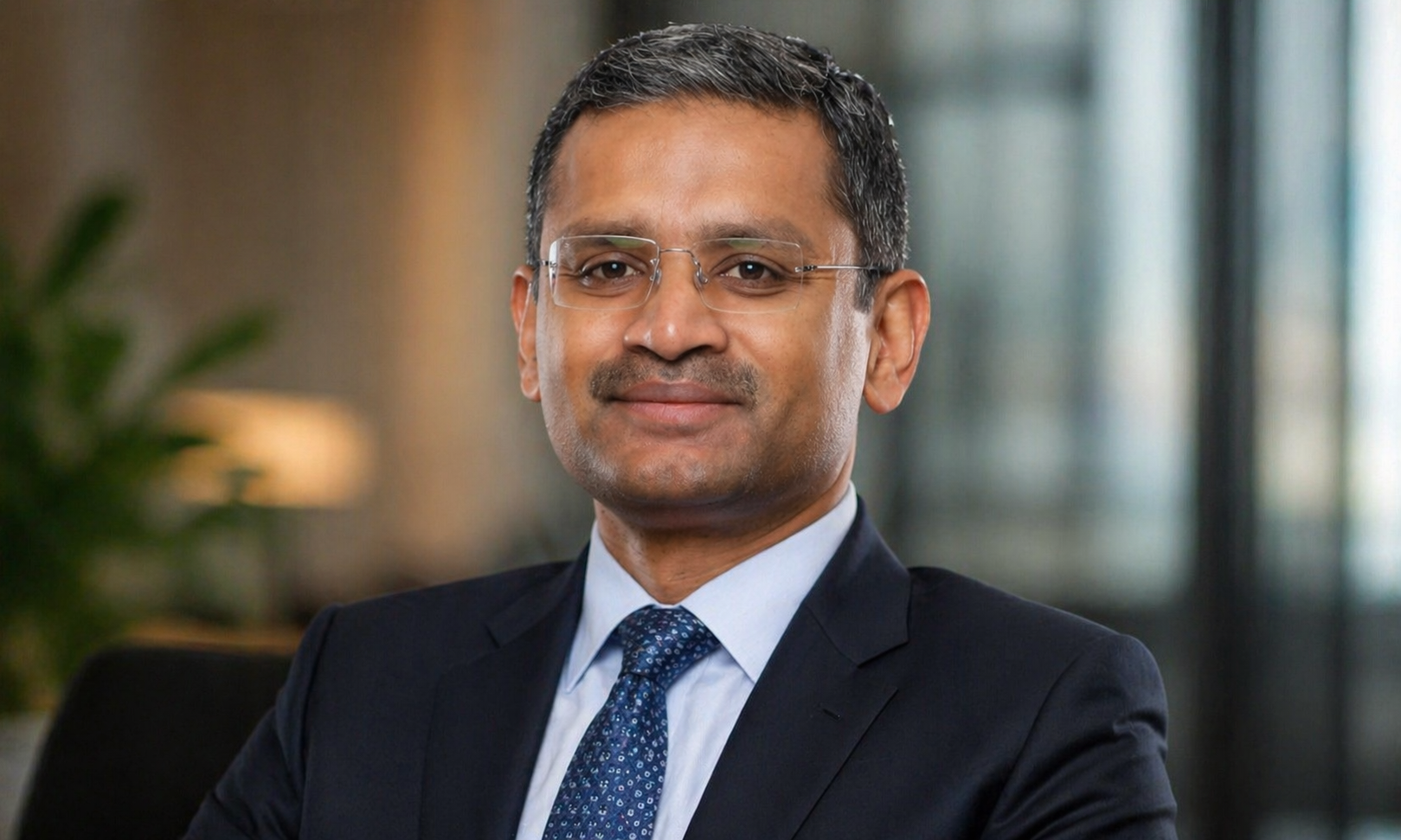
Rajesh Gopinathan
Former CEO and MD of Tata Consultancy Services
Rajesh Gopinathan is a business leader with over 25 years’ experience in the global technology industry. He is currently working at IIT Bombay on strengthening the interface between academia, corporates, and the startup ecosystem to enable programmatic translation of academic research to real world solutions. is an Indian Executive who was former CEO and MD of Tata Consultancy Services (TCS), an Indian IT services and consulting organization and one of the country’s largest employers. He was elevated to the role of Chief Executive in February 2017 after serving as the Chief Financial Officer since 2013. At time of his appointment, Rajesh was one of the youngest CEOs in the Tata Group. Now join as board in NSE
Key Facts
Born: Kerala, India
Education: NIT Tiruchirappalli (B.Eng.), IIM Ahmedabad (MBA),
Occupation: Professor of Practice IIT Bombay
Known for: Former CEO of Tata Consultancy Services
The Call That Signaled Continuity and Change
On an earnings call in early 2023, as analysts parsed margins and deal pipelines, Rajesh Gopinathan spoke in the measured cadence that had come to define his tenure. There was no theatrics, no grand proclamations, just clarity on execution, resilience, and continuity. Within weeks, his announcement to step down as CEO of Tata Consultancy Services after six years at the helm surprised the market. Yet, in retrospect, it aligned with a career defined less by spectacle and more by disciplined transitions. Gopinathan’s leadership represents an outstanding case of managing scale in one of the world’s largest IT services firms, where growth is not about disruption alone, but about sustaining momentum across decades.
Engineering Meets Financial Discipline
Rajesh Gopinathan’s trajectory begins in India’s highly competitive academic ecosystem. He graduated from Indian Institute of Technology Delhi with a degree in electrical engineering, a training that instilled systems thinking and analytical rigor.
He later pursued an MBA from Indian Institute of Management Ahmedabad, one of India’s premier business schools. This combination, engineering precision and managerial strategy, would become a defining feature of his leadership.
Unlike founders who build companies from scratch, Gopinathan belongs to a generation of professional managers who navigate large institutions. His early influences were less about entrepreneurial risk-taking and more about structured problem-solving within complex organizations.
Entry into TCS and Early Career: Learning the Engine Room
Gopinathan joined TCS in 2001, at a time when the company was transitioning from a domestic IT services provider into a global outsourcing powerhouse.
His early roles were in finance and business strategy. He worked closely with senior leadership on capital allocation, pricing models, and large deal structuring. This exposure gave him a deep understanding of how TCS operated at scale, its cost structures, delivery models, and client relationships.
Before becoming CEO, he served as CFO. In this role, he played a critical part in maintaining TCS’s industry-leading margins, often exceeding 25 percent operating margins, a benchmark few global IT services firms could match. His tenure as CFO also coincided with increasing investor scrutiny, making financial discipline central to his approach.
Becoming CEO: Inheriting Scale, Managing Expectations
In 2017, Gopinathan succeeded Natarajan Chandrasekaran as CEO of TCS. This was not a typical leadership transition.
Chandrasekaran had led TCS through a period of extraordinary expansion, transforming it into India’s most valuable IT company. Gopinathan inherited a firm that was already dominant, with revenues exceeding $17 billion and a global client base.
The challenge was not turnaround. It was continuity at scale.
The IT services industry itself was undergoing change. Traditional outsourcing models were being reshaped by cloud computing, automation, and digital transformation. Clients were no longer looking only for cost savings, they wanted innovation.
Gopinathan’s immediate priority was clear. Position TCS not just as a services provider, but as a partner in digital transformation.
From Services to Solutions
Gopinathan’s strategy focused on expanding TCS’s capabilities in digital, cloud, analytics, and enterprise transformation.
Rather than abandoning the traditional outsourcing model, he layered digital services on top of it. This allowed TCS to retain its core strengths while adapting to new client demands.
Large deals became central. TCS increasingly pursued multi-year, multi-billion-dollar contracts with global enterprises. These deals required not just technical capability but organizational scale, delivery consistency, and risk management.
Under his leadership, TCS strengthened its positioning in areas such as cloud migration, cybersecurity, and platform-based services. The approach was evolutionary, not disruptive. This distinction is important.
While many technology narratives emphasize disruption, Gopinathan’s strategy was about integrating new capabilities into an existing, highly efficient system.
Scale Without Volatility
During Gopinathan’s tenure, TCS continued to deliver consistent financial performance.
Revenue grew from approximately $17 billion in 2017 to over $25 billion by 2023. More importantly, margins remained stable, a critical metric in an industry where pricing pressure is constant.
TCS maintained its position as India’s largest IT services firm, ahead of competitors like Infosys and Wipro.
Its market capitalization crossed $150 billion at its peak, making it one of the most valuable IT services companies globally. This consistency is noteworthy.
Unlike high-growth startups, TCS operates in a mature industry. Growth is incremental, margins are scrutinized, and execution must be flawless.
Gopinathan’s contribution lies in sustaining this balance.
Navigating Industry Shifts: COVID, Cloud, and Automation
The COVID-19 pandemic represented one of the most significant challenges of Gopinathan’s tenure.
Almost overnight, TCS had to transition its workforce, over 400,000 employees, to remote operations. This was not just a logistical challenge but a test of delivery resilience.
TCS’s response was notable. The company maintained service continuity, secured new deals, and even accelerated digital transformation projects for clients adapting to remote work and online operations.
Automation and AI also reshaped the industry. Rather than viewing them as threats, TCS integrated these technologies into its service offerings, enhancing productivity and creating new revenue streams.
Talent management remained critical. Scaling a workforce of hundreds of thousands while maintaining quality required continuous investment in training, reskilling, and organizational processes.
Discipline Over Charisma
Rajesh Gopinathan’s leadership style is often described as understated.
He is not a charismatic figure in the traditional sense. Instead, he operates through clarity, consistency, and data-driven decision-making.
This approach aligns with TCS’s culture. The company prioritizes process, predictability, and long-term relationships over short-term gains.
Internally, Gopinathan is seen as a “systems leader.” He focuses on ensuring that the organization functions efficiently at scale, rather than relying on individual brilliance.
Among investors and analysts, his reputation is that of a reliable executor. He communicates clearly, avoids overpromising, and delivers consistent results.
A Measured Departure
In March 2023, Gopinathan announced his decision to step down as CEO, with K. Krithivasan succeeding him.
The timing raised questions. Why step down when the company was performing well?
The answer lies partly in TCS’s institutional approach to leadership. Transitions are planned, not reactive.
By stepping down at a point of strength, Gopinathan ensured continuity rather than disruption. Market reaction was initially cautious but stabilized quickly.
The transition reinforced TCS’s reputation as a company where leadership changes do not destabilize operations.
The Architecture of Consistency
Rajesh Gopinathan’s legacy is not defined by a single transformative event. It is defined by continuity.
He led TCS through a period of technological transition without sacrificing its core strengths. He expanded its capabilities in digital and cloud while maintaining industry-leading margins.
In the broader narrative of India’s IT services industry, his tenure represents a maturation phase. The shift from growth-driven expansion to disciplined scaling.
Looking ahead, the industry faces new challenges, artificial intelligence, geopolitical shifts, and evolving client expectations.
Gopinathan’s experience positions him for continued influence, whether within the Tata ecosystem or in broader technology and investment roles.
His career underscores a fundamental insight. In large, complex organizations, leadership is less about disruption and more about alignment, aligning strategy, execution, and culture over time.
That is his outstanding contribution. Not the creation of something entirely new, but the ability to sustain and evolve something already vast, ensuring that scale becomes a strength rather than a constraint.
Awards and recognition
2021 – India’s Best CEO in the category of Super large companies by Business Today (India)
2020 – Outstanding Business Leader of the Year – CNBC TV18 India Business Leader Awards’ (IBLA)
2019 – Management Man of the Year – 40th Bombay Management Association Corporate Leadership and Academic Awards
2019 – CEO Force for Good Award – Globe by CECP
2018 – Best CEO (First Place) – Institutional Investor’s 2018 All Asia Executive Team Rankings
2014 – Young Alumni Achiever’s Award – Corporate Leader Category Indian Institute of Management Ahmedabad