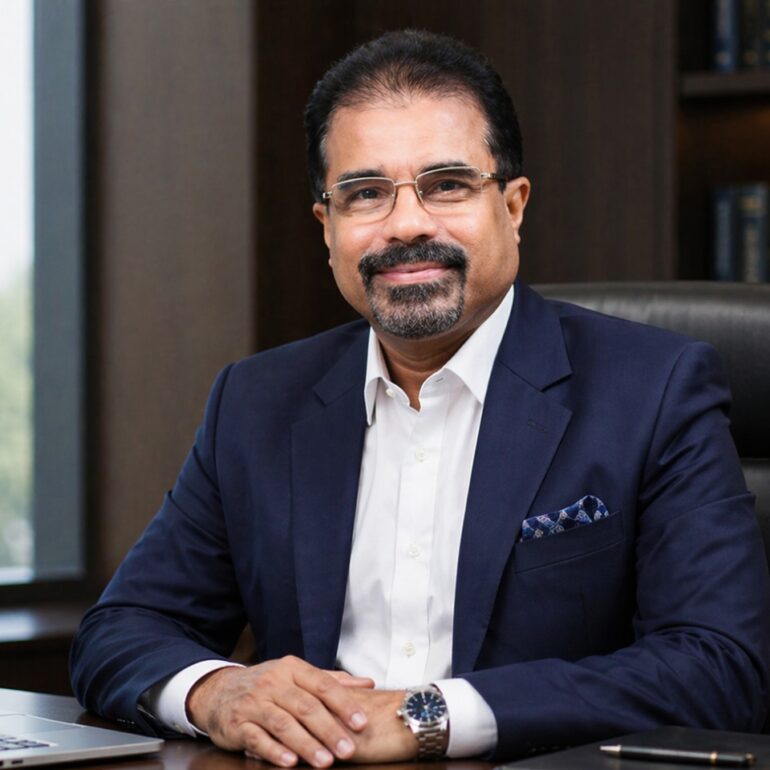
Siddeek Ahmed
Indian entrepreneur and philanthropist
Siddeek Ahmed is an Indian entrepreneur and philanthropist. He is the chairman of Eram Group, a business conglomerate with operations in several sectors including oil and gas, power, construction, manufacturing, travel, healthcare, IT, media, logistics, automotive and training and education. He also works for the benefit of rural India. Ahmed was the recipient of the Pravasi Bhartiya Samman Award in 2021 for his work in various domains like that of education, business, medicine, employment and the environment. Because of his work towards improved toilet hygiene, Prime Minister Narendra Modi gave the Toilet Titan Award to Dr. Ahmed at the Safaigiri Summit in 2015. He is also listed as the top Indian business leader in the Middle East by Forbes in 2021.
Key Facts
Full Name: Siddeek Ahmed
Born: 1 May 1968
Place: Mankarai, Palakkad, Kerala, India
Title: Chairman
Organization: Eram Group
Occupation: Entrepreneur, Philanthropist
Known For: Building a multi-country conglomerate; pioneering eToilet sanitation solutions; rural skill development initiatives; Pravasi Bharatiya Samman Award (2021); Toilet Titan Award (2015); recognition by Forbes Middle East
Building Scale with Purpose
The story often begins with departure. In the late 1980s, as migration from Kerala to the Gulf intensified, a young Siddeek Ahmed left Mankarai, a village shaped by agriculture and modest incomes, for a region defined by oil wealth and rapid infrastructure growth. The journey was neither unusual nor easy. Thousands had gone before him, and thousands would follow. What set him apart was not the act of migration, but what he chose to build from it.
In those early years, the Gulf was both opportunity and filter. It rewarded resilience, adaptability, and the ability to navigate unfamiliar systems. For first-generation entrepreneurs like Ahmed, entry points were rarely glamorous. Work came through networks, persistence, and an ability to identify gaps in a fast-evolving market.
Ahmed’s background in electronics, though not extensively documented in public detail, appears to have shaped his early orientation toward technical sectors. More importantly, his upbringing in a large household in Palakkad instilled a sense of collective responsibility, a theme that would later echo in his philanthropic initiatives.
The Leap: Learning the Gulf Economy from the Ground Up
Ahmed’s early years in the Middle East unfolded within the broader context of Gulf industrial expansion. The region’s demand for infrastructure, engineering services, and technical expertise created opportunities for small firms to grow into specialized service providers.
Like many expatriate entrepreneurs, Ahmed began by working within existing systems before attempting to build his own. Publicly available accounts suggest that his early career involved gaining exposure to the operational realities of Gulf businesses, procurement cycles, client relationships, and the importance of reliability in a contract-driven environment.
The transition from employee to entrepreneur is rarely a single decision. It is a gradual accumulation of insight and risk tolerance. By the early 1990s, Ahmed had begun laying the groundwork for what would eventually become Eram Group.
Building Eram: Diversification as Strategy
Founded in Al Khobar, Saudi Arabia, Eram Group grew from a modest operation into a diversified multinational presence. Today, the group operates across sectors including oil and gas services, construction, healthcare, IT, logistics, and education, with a footprint reported across more than a dozen countries.
The group’s expansion reflects a familiar Gulf strategy, diversification anchored in core competencies. Oil and gas services provided the initial base, offering stable demand and long-term contracts. From there, Eram moved into adjacent sectors, leveraging existing relationships and technical expertise.
What distinguishes Eram’s trajectory is its attempt to integrate emerging sectors such as healthcare and technology into its portfolio. This shift mirrors broader trends within Gulf economies, which have increasingly sought to reduce dependence on hydrocarbons and invest in knowledge-driven industries.
However, precise financial metrics, such as revenue or workforce size, are not consistently disclosed in public sources, making it difficult to quantify the group’s scale with complete accuracy. What is evident is its sustained presence across multiple geographies and sectors over several decades.
Innovation with Purpose: The eToilet Intervention
If Eram Group represents Ahmed’s commercial footprint, Eram Scientific Solutions represents his attempt to translate business capability into social innovation.
The development of the eToilet, an automated, self-cleaning public sanitation system, emerged in response to India’s persistent sanitation challenges. Unlike conventional toilets, eToilets integrate sensors, automated cleaning mechanisms, and remote monitoring systems, reducing the need for manual intervention.
The initiative aligned with national programs such as Swachh Bharat Abhiyan, which aimed to improve sanitation infrastructure across the country. It also drew attention from international platforms, including associations with organizations like the Bill & Melinda Gates Foundation in the broader sanitation innovation ecosystem.
While exact deployment numbers vary across reports, eToilets have been installed in multiple Indian states and public spaces, including transport hubs and urban centers. The project has also been showcased in global forums, including United Nations platforms, as an example of technology-driven sanitation.
Yet, like many social innovations, it raises practical questions. Maintenance, scalability, and cost remain critical factors in determining long-term impact. Technology can solve access, but sustainability depends on governance and usage patterns.
Philanthropy Beyond CSR: Systems, Not Charity
Ahmed’s philanthropic approach appears to extend beyond conventional corporate social responsibility. Through various initiatives, he has focused on education, healthcare, sanitation, and youth empowerment.
One notable effort involves skill development programs linked to Kerala’s workforce initiatives. Through collaborations such as those with the Kerala Academy for Skills Excellence, Ahmed has supported training platforms aimed at improving employability among youth.
His contributions during crises, such as the 2018 Kerala floods, and support for medical treatments, including assistance for heart transplant patients, have been reported in regional coverage. These interventions reflect a pattern, targeted support rather than broad-based charity.
However, comprehensive data on the scale and impact of these initiatives is not always publicly consolidated, making it difficult to assess their full reach.
Diaspora Networks and Leadership Philosophy
Ahmed’s journey is inseparable from the broader ecosystem of Indian diaspora entrepreneurship in the Gulf. Kerala’s migration history has created dense networks of business, capital, and social exchange across the Middle East.
Within this ecosystem, trust and reputation function as currency. Long-term contracts, especially in sectors like oil and gas, depend on reliability and relationship-building as much as technical capability.
Ahmed’s leadership style, as reflected in interviews and public statements, emphasizes long-term thinking, ethical business practices, and a balance between profitability and social responsibility. This positioning aligns with a growing expectation that large enterprises contribute to societal outcomes.
At the same time, the challenge lies in maintaining this balance. Diversified conglomerates often face competing pressures, market expansion, cost management, and stakeholder expectations.
Recognition and Global Standing
Ahmed’s contributions have been recognized through several awards and acknowledgments. The Pravasi Bharatiya Samman Award, conferred in 2021, is among the highest recognitions for overseas Indians.
Earlier, he received the “Toilet Titan” award at the Safaigiri Summit, presented by Narendra Modi, reflecting his role in sanitation innovation.
Additionally, his inclusion in lists such as Forbes Middle East’s recognition of influential Indian business leaders highlights his standing within the Gulf’s entrepreneurial landscape.
Awards, however, capture moments, not trajectories. Their significance lies as much in what they represent as in what they omit.
Legacy and the Question of Impact
Siddeek Ahmed’s story sits at the intersection of migration, enterprise, and social innovation. It reflects a broader pattern within India’s diaspora, where business success often evolves into social engagement.
Yet, his journey also raises larger questions. Can social innovation driven by private enterprise achieve systemic change? How scalable are models like eToilets in diverse and resource-constrained environments? And what role should diaspora entrepreneurs play in shaping development outcomes in their home regions?
Eram Group’s future trajectory will likely depend on its ability to navigate shifting economic landscapes, both in the Gulf and globally. Diversification, while a strength, also introduces complexity.
Ahmed’s legacy, therefore, may not rest solely on the scale of his business, but on the durability of the systems he has attempted to build, systems that aim to address real-world challenges beyond the balance sheet.
In the broader narrative of Indian entrepreneurship, his journey offers a case study in how ambition, migration, and purpose can converge. It is a story that resists simple categorization, rooted in both opportunity and responsibility, and in that sense, remains quietly, persistently outstanding.
Awards
Recipient of the diaspora award representing Saudi Arabia.
Recipient of First Gulf Madhyamam Indo-Arab Business Icon Award for promoting trade relations between Saudi Arabia and India
P.V. Sami Memorial Industries and Socio-cultural Award, Instituted in memory of P.V. Sami, founder of the KTC group
2021 – Pravasi Bharatiya Samman Award
2015 – Toilet Titan Award
Recognition by Forbes Middle East