Sheela
Indian Actress
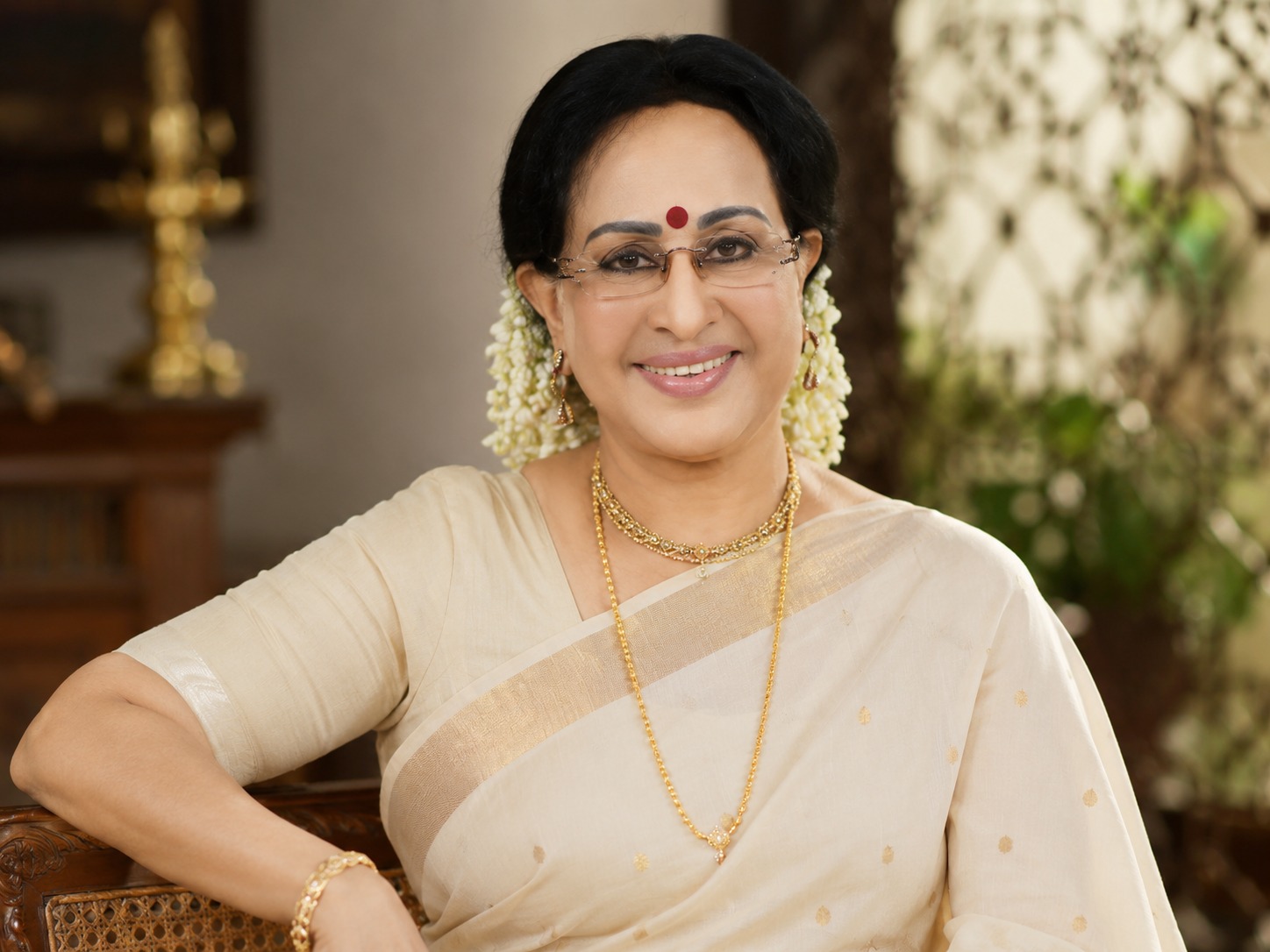
Sheela, is an Indian actress and director who appears predominantly in Malayalam cinema. In 2005, she won the National Film Award for Best Supporting Actress for her role in the Malayalam film Akale. In 2019, Sheela was honoured with the J C Daniel Award, the Kerala government’s highest honour for outstanding contribution to Malayalam cinema. Sheela was born at Kanimangalam in Thrissur, Kerala. She was brought up in Ooty. Since her father was working with the railways, she was brought up in different places before finally settling down at Chennai. As a result, she had her primary education at various places, including Thiruvananthapuram, Thrissur, Ooty, Tiruchirappalli, Salem, Edappally, and St. Francis Anglo-Indian Girls School, Coimbatore.
Key Factors
Full Name: Sheela Celine
Date of Birth: 24 March 1945
Birthplace: Kanimangalam, Thrissur, Kerala
Major Awards: National Film Award, Kerala State Film Awards, J. C. Daniel Award
Few actresses in Indian cinema have occupied the emotional imagination of an entire generation the way Sheela did in Malayalam cinema. At the height of her fame in the 1960s and 1970s, Sheela was not merely a heroine appearing beside male superstars. She was herself a phenomenon, a commanding screen presence whose performances shaped the emotional vocabulary of Malayalam films for decades. Whether portraying tragic lovers, resilient village women, aristocratic heroines, or emotionally wounded mothers, she brought an unusual mix of vulnerability and strength that transformed the portrayal of women in regional Indian cinema.
Born Sheela Celine on 24 March 1945, she rose from theatre stages to become one of Malayalam cinema’s most dominant female stars, acting in hundreds of films across multiple languages. Her legendary partnership with Prem Nazir became part of cinema history itself, eventually earning a Guinness World Record for appearing together in the largest number of films as hero and heroine. Yet her legacy extends beyond stardom. Sheela emerged as a filmmaker, writer, and independent creative force during an era when women rarely exercised authority behind the camera. Her life in cinema reflects not only the story of a superstar, but also the story of Malayalam cinema growing into modernity itself.
Before Malayalam cinema learned to celebrate women-led narratives, Sheela had already become its emotional center.
The theatre is overflowing. Ceiling fans turn lazily above rows of restless viewers. Somewhere in Kerala during the early 1970s, a black-and-white frame flickers onto the screen and the audience erupts before a single line of dialogue is spoken. Prem Nazir has appeared. Moments later, Sheela enters the frame, and the applause grows louder.
For decades, this scene repeated itself across Kerala.
Their films were not merely releases. They were events. Families travelled long distances to watch them together. Posters covered tea shops and town walls. Songs drifted from radio sets across villages. And somewhere inside those stories of love, sacrifice, folklore, and heartbreak stood Sheela, carrying entire emotional worlds with her gaze alone.
Malayalam cinema has produced many great actresses. But few transformed female stardom the way Sheela did.
A Childhood Across Railways and Changing Landscapes
Long before cinema discovered her, Sheela belonged to railway quarters, moving towns, and shifting landscapes.
Born in Kanimangalam in Thrissur district to Antony and Gracy, she grew up in a post-independence South India still redefining itself socially and culturally. Her father’s railway job meant the family constantly moved between cities including Ooty, Thiruvananthapuram, Salem, Tiruchirappalli, Coimbatore, Chennai, and Thrissur.
For a young girl, this transient upbringing became an education in people, accents, languages, and emotional adaptability.
Railway families of that era lived between impermanence and community. Stations connected worlds. Languages overlapped. Cultures merged. Sheela absorbed these environments quietly, long before she entered cinema. The mobility that could have destabilized another child instead gave her unusual confidence and social intelligence.
She learned to observe.
Those who later watched her performances often noticed how naturally she inhabited different emotional and social worlds on screen. Part of that ability may have begun here, in the experience of constantly belonging and not belonging at the same time.
Her artistic instincts appeared early. Theatre fascinated her. Performance did not intimidate her. And by adolescence, she had already begun moving toward the stage.
From Theatre Girl to Film Discovery
At thirteen, Sheela entered theatre through the legendary S. S. Rajendran and his S.S.R Nataka Mandram.
The South Indian theatre circuit of the late 1950s and early 1960s functioned as both artistic laboratory and star-making institution. Performers travelled relentlessly, rehearsed rigorously, and developed emotional discipline through live performance. For teenage girls, however, entering theatre and cinema remained socially complicated.
Indian cinema still carried stigma for women.
Yet Sheela adapted quickly to performance culture. Her expressive face and stage confidence drew attention almost immediately. During this period, she reportedly came to the notice of M. G. Ramachandran, who recognized her screen potential and renamed her “Sheela Devi.”
Her Tamil debut arrived through Paasam in 1962. Soon after came her Malayalam debut in Bhagyajathakam.
The Malayalam industry she entered was still evolving structurally. Studios were expanding. Literary adaptations were gaining importance. Family melodramas dominated screens. Yet heroines often remained secondary emotional supports to male-centered narratives.
Sheela would change that equation.
The Rise of Malayalam Cinema’s Defining Heroine
By the late 1960s, Sheela had become impossible to ignore.
Her rise was astonishing not only because of her productivity, but because of the emotional authority she carried on screen. She could shift effortlessly between glamour and realism, tragedy and tenderness. Unlike many actresses limited by typecasting, Sheela displayed remarkable emotional elasticity.
Films like Chemmeen revealed her ability to embody longing and heartbreak with haunting subtlety. In Kallichellamma, she brought extraordinary emotional intensity to maternal suffering and social humiliation. Oru Penninte Kadha positioned her within narratives centered directly around female experience rather than merely romance.
Sheela’s performances often reflected changing ideas of womanhood in Kerala society.
Post-independence Malayalam cinema increasingly explored female interiority, desire, vulnerability, and resistance. Sheela became one of the most important faces through which those transitions were visualized.
In folklore dramas like Kannappanunni and Kadathanattu Makkam, she carried mythic grandeur. In films like Akale decades later, she revealed aging, grief, and memory with devastating restraint.
Her acting style was unusually modern for its time. She rarely relied on theatrical exaggeration. Instead, she communicated emotion through rhythm, pauses, and expression. Even in melodramatic narratives, she maintained psychological realism.
That realism helped audiences believe in her completely.
The Prem Nazir–Sheela Phenomenon
No discussion of Sheela is complete without understanding her legendary partnership with Prem Nazir.
Together, they appeared in more than a hundred films, creating one of the most iconic screen pairings in Indian cinema history and earning a Guinness World Record for acting together in the highest number of films as hero and heroine.
But statistics alone cannot explain their cultural impact.
Malayalam audiences saw something emotionally complete in them. Nazir represented romantic charm and emotional sincerity. Sheela brought emotional intelligence, complexity, and depth. Together, they created cinematic intimacy that felt deeply familiar to Malayali audiences.
Their films traversed romance, tragedy, folklore, domestic drama, and musical storytelling. Viewers grew up watching them together across decades, which gave their pairing emotional continuity beyond individual films.
They became part of family memory itself.
Importantly, Sheela was never overshadowed within the partnership. If anything, her emotional performances often anchored the films more strongly than the hero-centric narratives surrounding them.
In an industry where heroines frequently disappeared after brief stardom, Sheela remained central.
A Woman Ahead of Her Industry
By the 1970s, Sheela had become one of Malayalam cinema’s most powerful women, both artistically and financially.
Reports from the industry often suggested she commanded salaries comparable to, and sometimes higher than, male actors. That alone was extraordinary for Indian cinema during the era.
But her ambition extended beyond acting.
She moved into writing and direction at a time when filmmaking remained overwhelmingly male-dominated. Films like Yakshaganam and Shikharangal reflected her willingness to shape narratives from behind the camera as well.
She also contributed screenplay work, including for Onnu Chirikku.
This transition matters historically because Sheela belonged to one of the earliest generations of Malayalam actresses who demanded creative agency beyond performance alone.
She was not simply participating in cinema. She was helping shape it.
Silence, Withdrawal, and Life Away From Cinema
In 1983, Sheela stepped away from cinema.
For audiences who had grown up watching her constantly, the absence felt enormous. She moved to Ootacamund and gradually distanced herself from the relentless machinery of film stardom.
The withdrawal carried a quiet melancholy.
Malayalam cinema moved forward into new generations and changing styles. Yet memories of Sheela lingered powerfully among audiences. Television reruns, magazine retrospectives, and songs kept her presence alive even during her absence.
Unlike many former stars who aggressively maintained visibility, Sheela disappeared with dignity.
That disappearance, paradoxically, deepened her mythology.
The Comeback That Became Emotional History
When Sheela returned through Manassinakkare in 2003, the reaction inside Kerala was emotional in ways difficult to describe.
Audiences were not merely welcoming an actress back. They were reconnecting with their own memories.
Directed by Sathyan Anthikad, the film reintroduced Sheela to a younger generation while reminding older audiences why she mattered so profoundly. She no longer returned as glamorous heroine, but as a mature performer carrying history within her face and voice.
Then came Akale, directed by Shyamaprasad.
Her performance in the film was extraordinary, layered with loneliness, fragility, and emotional exhaustion. It earned her the National Film Award for Best Supporting Actress and confirmed that her comeback was not nostalgia alone.
Sheela had returned as an actor of even greater emotional depth.
Legacy Beyond Awards
Over decades, Sheela accumulated honors including Kerala State Film Awards, Filmfare recognition, the prestigious J. C. Daniel Award, and National recognition.
Yet her true legacy lies elsewhere.
It exists in how Malayalam cinema learned to center women emotionally. It exists in the realism she brought to melodrama. It exists in generations of actresses who inherited stronger female roles partly because Sheela had already expanded the possibilities of female stardom.
Outside cinema, she also pursued painting and charity work, including contributions during the Chennai floods.
Within the industry, she remains deeply respected not simply for longevity, but for artistic seriousness.
The Woman Who Became an Era
Today, when Malayalam cinema is praised globally for realism, emotional intelligence, and layered female characters, it is impossible not to see traces of Sheela within that evolution.
She was never merely a heroine beside powerful men. She was herself an institution, a performer capable of carrying entire films through emotional force alone. Through folklore dramas, romantic tragedies, literary adaptations, and intimate family narratives, she became woven into Kerala’s collective cultural memory.
For many audiences, remembering Sheela also means remembering childhood cinemas, old songs on the radio, crowded theatre balconies, and the emotional landscapes of another Kerala.
That is perhaps the rarest achievement possible for an actor.
Not immortality through awards or records, but through memory itself.
And decades after her first appearance on screen, Sheela still remains what she always was, an outstanding presence who did not merely act in Malayalam cinema’s golden era, but helped create it.
Awards
National Film Awards
- 2005 Best Supporting Actress – Akale
Kerala State Film Awards
- 1969 – Kerala State Film Award for Best Actress for Kallichellamma
- 1971 – Kerala State Film Award for Best Actress for Oru Penninte Kadha, Sarassayya, Ummachu
- 1976 – Kerala State Film Award for Best Actress for Anubhavam
- 2004 – Second Best Actress for Akale
Filmfare Awards South
- 1977 – Best Malayalam Actress – Lakshmi
- 2000 – Filmfare Lifetime Achievement Award – South
- South Indian International Movie Awards
- 2021 – Lifetime Achievement Award
Other Awards
- 2019 J. C. Daniel Award
- 2019 Jayan Ragamalika Award
- 2020 Malayala Puraskaram
- 2024 Mazhavil Entertainment Awards – Evergreen Entertainer Award