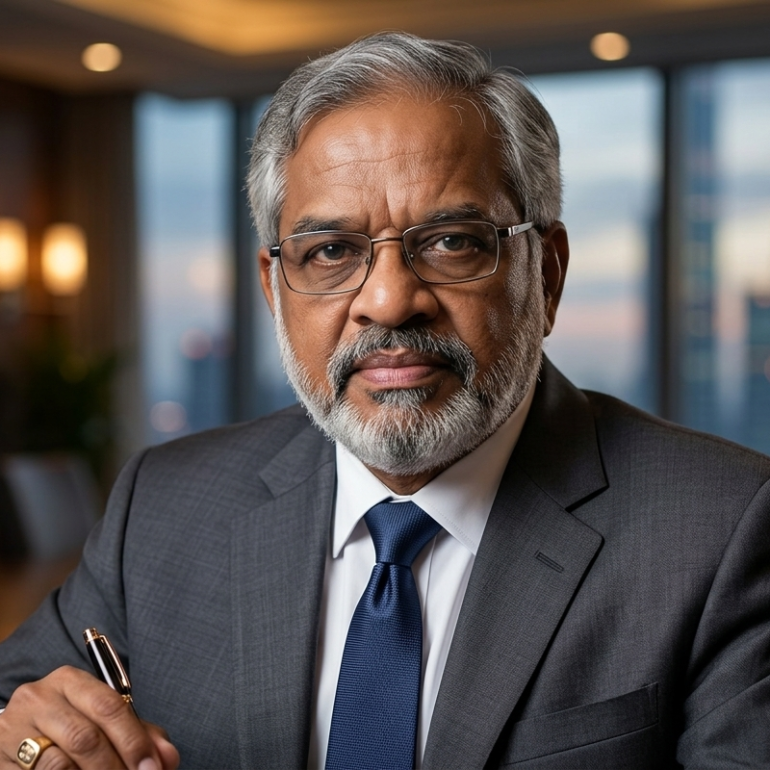

G. Venugopal
Indian Playback Singer and Composer
G. Venugopal is one of the most respected playback singers in Malayalam cinema, celebrated for his melodious voice and timeless romantic and devotional songs. With a career spanning more than four decades, he has lent his voice to hundreds of film songs while also excelling in devotional, light music, and stage performances. His effortless singing style and emotional depth have earned him a special place in the hearts of music lovers across Kerala.
Key Facts
• Full Name: G. Venugopal
• Born: 10 December 1960
• Birthplace: Taliparamba, Kannur, Kerala, India
• Profession: Playback Singer, Composer, Musician
• Active Since: 1980s
In Malayalam film music, some voices do not just sing songs—they settle into memory. G. Venugopal is one of those rare singers whose voice feels less like performance and more like familiarity.
Soft, unhurried, and emotionally precise, his singing carries a quiet sincerity that made him a defining playback voice of the 1980s and 1990s. At a time when Malayalam cinema was moving through rapid stylistic changes, Venugopal’s voice remained steady—rooted in melody, restraint, and lyrical clarity.
Early Life and Musical Foundation
G. Venugopal was born and raised in Kerala, where music was not an external ambition but something that gradually became part of his identity. Like many singers of his generation, his early exposure came through school competitions, light music stages, and radio broadcasts that once played a central role in Kerala’s cultural life.
He did not arrive in cinema overnight. Instead, his journey into playback singing was shaped by steady training, stage experience, and a growing reputation in light music circles. This foundation later helped him develop a controlled vocal style—one that rarely overreaches, yet carries strong emotional weight.
Entry into Malayalam Cinema
Venugopal entered the Malayalam film industry during a period when playback singing was evolving rapidly. The industry already had strong, established voices, but there was also space opening up for singers who could bring a softer, more contemporary tone to film music.
His early songs quickly stood out for their simplicity. Unlike highly ornate classical renditions or heavily orchestrated vocal styles, Venugopal’s singing leaned toward emotional directness. He had the ability to make even simple lines feel intimate, as if they were being spoken rather than performed.
This quality made him particularly suitable for romantic melodies and reflective songs that required emotional subtlety rather than vocal display.
Rise as a Popular Playback Voice
Through the late 1980s and 1990s, G. Venugopal became one of the most recognizable male voices in Malayalam cinema. His songs were not defined by vocal power alone, but by clarity, tone, and emotional balance.
He worked across a wide range of compositions, collaborating with leading music directors of the time. What made him stand apart was his consistency—his voice rarely felt out of place, whether in a light romantic track, a melancholic melody, or a devotional song.
Listeners often associated his voice with calmness. In many ways, it became a sound that represented a certain emotional softness in Malayalam film music of that era.
Style and Vocal Identity
Venugopal’s singing style is often described in terms of restraint. He does not push his voice unnecessarily, nor does he rely on dramatic modulation. Instead, his strength lies in controlled expression.
There is a natural smoothness in his delivery, with careful attention to pronunciation and lyrical flow. This makes his songs particularly memorable in repeated listening, where subtle variations in tone become more noticeable over time.
His voice also carries a certain warmth that works especially well in Malayalam’s lyrical structure, where meaning and emotion are closely tied to language rhythm.
Contribution to Malayalam Film Music
Over the years, G. Venugopal has contributed to a wide range of Malayalam films, especially during a period when the industry was transitioning between classic orchestration and more modern sound design.
His songs often served as emotional anchors in films—moments where narrative paused to allow feeling to take over. Whether in romantic sequences or reflective scenes, his voice helped shape the emotional tone of many films without overwhelming the visuals.
Even as musical trends changed, his presence remained steady, representing a continuity in Malayalam playback tradition.
Beyond Cinema: Stage and Light Music
Outside films, Venugopal has remained active in stage performances and light music programs. These platforms allowed him to maintain a close connection with audiences, especially in Kerala, where live music culture has always been strong.
His stage presence reflects the same qualities as his playback singing—calm delivery, emotional clarity, and minimal excess. Rather than turning performances into spectacle, he focuses on preserving the mood of the song.
Recognition and Respect in the Industry
While Venugopal may not always be associated with the loudest commercial milestones, he has earned deep respect within the Malayalam music industry. Musicians and listeners often describe him as a “composer’s singer”—someone who understands the structure of a song and adapts to its emotional requirements with precision.
His longevity in the industry also reflects adaptability. Even as newer voices emerged and musical styles changed, he continued to remain relevant through selective and meaningful contributions.
A Voice That Blends Into Memory
What makes G. Venugopal distinct is not just his discography, but the emotional association his voice carries for listeners who grew up during his peak years.
For many, his songs are tied to memory—school days, early cinema experiences, radio evenings, and the quiet soundscape of everyday life in Kerala during the late 20th century.
His voice does not demand attention; it earns it slowly, and often permanently.
Legacy in Malayalam Music
In the larger story of Malayalam playback singing, Venugopal occupies a space between tradition and transition. He belongs to the generation that followed the golden-era giants but still retained a strong melodic identity before the full shift toward contemporary digital soundscapes.
His contribution lies in preserving a certain emotional texture in Malayalam music—one that values simplicity, lyricism, and restraint.
Even today, his songs continue to be revisited not as nostalgia alone, but as examples of how a voice can carry emotion without excess.