Top Religions in Kerala
An in-depth look at the most followed, historically significant, and culturally influential religions in Kerala
- Hinduism
- Islam
- Christianity
- Jainism
- Buddhism
- Sikhism
- Judaism
- Tribal Religions (Indigenous Beliefs)
Religions in Kerala
Kerala stands out in India for something rare, religious diversity with deep coexistence. Unlike many regions where one religion overwhelmingly dominates, Kerala presents a more balanced landscape shaped by centuries of trade, migration, and cultural exchange.
Today, the state’s population is primarily divided among three major religions, Hinduism, Islam, and Christianity, which together account for more than 99% of the population. According to census data, Hindus form about 54.7%, Muslims 26.5%, and Christians 18.3% of Kerala’s population.
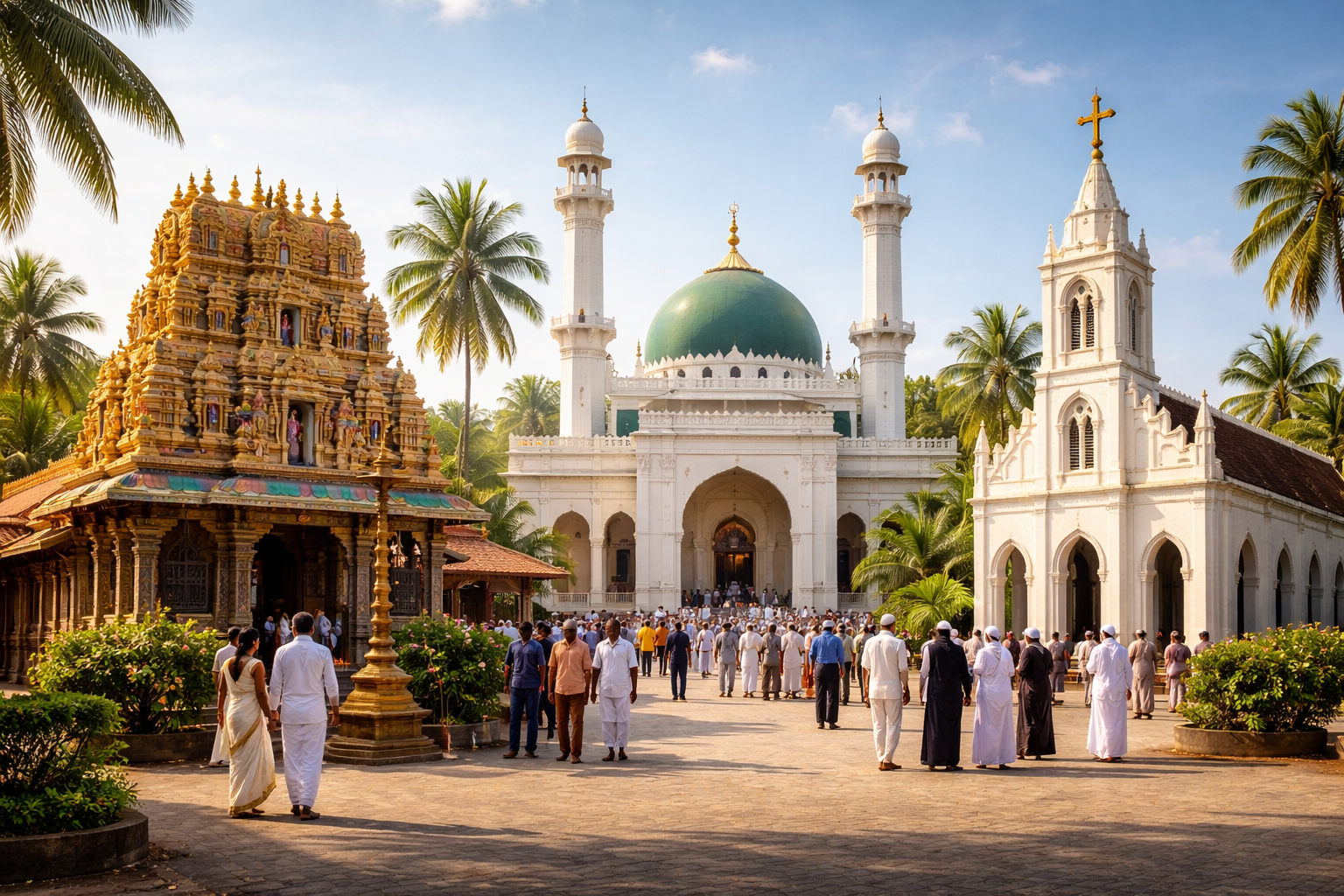
What makes Kerala unique is not just these numbers, but the way religions are woven into everyday life. Temples, mosques, and churches often exist within walking distance of each other. Festivals like Onam, Eid, and Christmas are celebrated across communities, reflecting a shared cultural rhythm.
This article explores the most prominent religions in Kerala, ranked by importance, influence, and presence, while also highlighting smaller but historically significant communities that add depth to the state’s identity.
1. Hinduism
Hinduism is the largest and most influential religion in Kerala, forming the cultural and historical foundation of the state. With over half the population identifying as Hindu, its presence shapes festivals, traditions, architecture, and daily life.
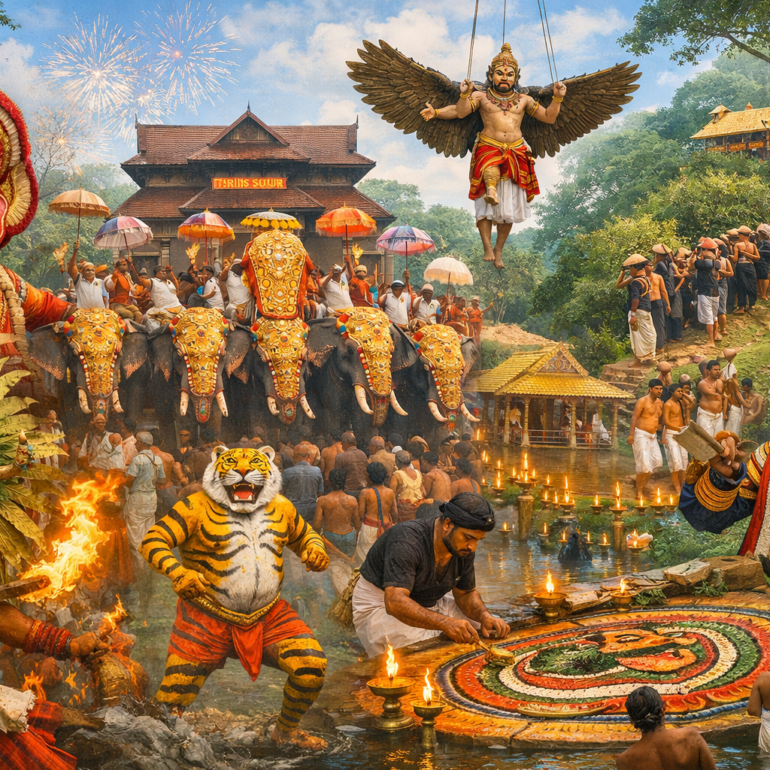
Kerala’s Hinduism is distinct from other parts of India. It blends Vedic traditions with local Dravidian practices, creating a rich, layered spiritual system. Rituals here are deeply rooted in temple culture, with elaborate ceremonies, classical art forms like Kathakali, and ritual performances such as Theyyam.
Temples like Sabarimala and Guruvayur are not just religious centers, but massive cultural institutions attracting millions of devotees annually. The rituals are precise, often following ancient customs preserved over centuries.
Philosophically, Kerala has contributed significantly to Hindu thought. The state is the birthplace of Adi Shankaracharya, the proponent of Advaita Vedanta, one of the most influential schools of Indian philosophy.
Hindu festivals such as Onam and Vishu transcend religion, becoming cultural events celebrated across communities.
Hinduism in Kerala is not monolithic. It varies across regions and communities, reflecting a diversity within itself.
What makes it stand out is its deep integration with art, philosophy, and everyday life, making it the backbone of Kerala’s cultural identity.
2. Islam
Islam is the second-largest religion in Kerala, with a strong presence particularly in northern districts like Malappuram and Kozhikode. It accounts for over a quarter of the state’s population, making it a major cultural and social force.
What sets Islam in Kerala apart is its history. Unlike many regions where Islam spread through conquest, in Kerala it arrived primarily through Arab traders along the Malabar Coast. This led to a more organic integration with local culture.
The Mappila Muslim community is central to Kerala’s Islamic identity. Their traditions reflect a fusion of Arab and Malayali influences, visible in language, cuisine, music, and dress.
Mosques in Kerala often feature unique architectural styles, blending traditional Kerala design with Islamic elements. The Cheraman Juma Masjid is believed to be one of the oldest mosques in India, symbolizing the early arrival of Islam in the region.
Islamic festivals like Eid are widely celebrated, often with participation beyond the Muslim community.
In modern Kerala, Muslims play a significant role in business, education, and politics, contributing to the state’s dynamic social structure.
Islam in Kerala is defined by its historical depth, cultural integration, and strong community networks.
3. Christianity
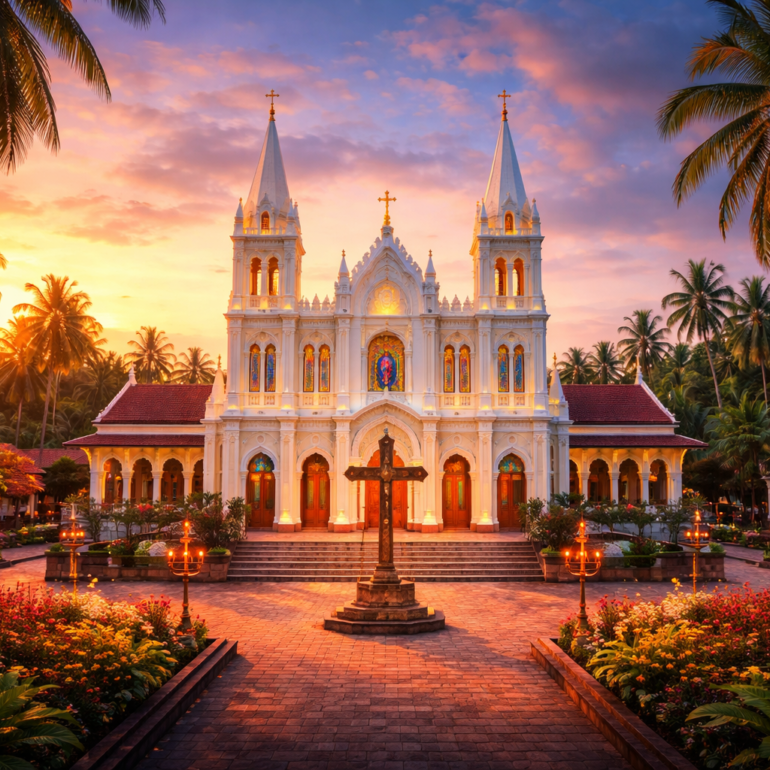
Christianity in Kerala is one of the oldest in the world outside the Middle East. According to tradition, it dates back to the arrival of St. Thomas the Apostle in the 1st century AD.
Today, Christians form nearly one-fifth of Kerala’s population, making it one of the largest Christian communities in India.
Kerala’s Christian community is diverse, including Syrian Christians, Latin Catholics, and various Protestant denominations. Among them, Syrian Christians are particularly prominent, known for their deep historical roots and influence in education, healthcare, and business.
Church architecture in Kerala reflects both European and local influences, with grand cathedrals and traditional-style churches coexisting.
Christian festivals like Christmas and Easter are widely celebrated, often becoming community-wide events rather than strictly religious occasions.
The community has played a crucial role in Kerala’s development, especially in education and healthcare sectors.
Christianity in Kerala stands out for its ancient origins, institutional influence, and cultural integration.
4. Jainism
Jainism has a small but historically significant presence in Kerala. Though the population is minimal today, its influence dates back to ancient times.
Jain communities were once active in trade and cultural exchange, especially in regions like Wayanad and Palakkad.
The remains of Jain temples and caves in these areas serve as reminders of a once-thriving community.
Jain philosophy, emphasizing non-violence and simplicity, has subtly influenced Kerala’s broader cultural ethos.
Today, Jainism remains a minority religion, but its historical footprint adds depth to Kerala’s religious landscape.
5. Buddhism
Buddhism once had a strong presence in Kerala, particularly between the 3rd century BCE and early medieval period.
Though it declined over time, its influence remains visible in Kerala’s culture, temple architecture, and social practices.
Many historians believe that certain Hindu temple traditions in Kerala evolved from earlier Buddhist practices.
Today, Buddhism has a very small following in Kerala, but its historical impact is significant.
6. Sikhism
Sikhism has a very small presence in Kerala, mainly among migrant communities and professionals.
There are a few gurudwaras in cities like Kochi, serving as spiritual and community centers.
Though numerically small, the Sikh community contributes to Kerala’s multicultural fabric.
7. Judaism
Kerala is home to one of the oldest Jewish communities in India, known as the Cochin Jews.
The Paradesi Synagogue in Kochi stands as a historic landmark, reflecting centuries of Jewish presence in the region.
Though the community is now very small, its legacy remains an important part of Kerala’s history.
8. Tribal Religions (Indigenous Beliefs)
Kerala’s tribal communities follow indigenous belief systems rooted in nature worship.
These traditions involve rituals connected to forests, ancestors, and local deities.
Though many tribal communities have integrated with mainstream religions, their original practices continue to survive in parts of Wayanad and the Western Ghats.
These belief systems represent the oldest spiritual traditions in Kerala.
Final Take
Kerala’s religious landscape is not just diverse. It is deeply interconnected.
What makes Kerala special is not just the presence of multiple religions,
but the way they coexist, influence each other, and create a shared cultural rhythm.
In Kerala, religion is not just belief.
It is heritage, identity, and everyday life.