Top Most Important Rituals of Kerala
A deep dive into the most powerful, symbolic, and enduring rituals of Kerala
- Theyyam
- Kathakali
- Padayani
- Kummatti Kali
- Garudan Thookkam
- Pulikali
- Kalamezhuthu Pattu
- Arattu
- thiruvathira
- kavadiyattam
Outstanding Rituals of Kerala
What makes Kerala unique is the diversity of its ritual practices. From elaborate Kerala temple rituals to intense folk performances and seasonal celebrations, each ritual carries layers of mythology, symbolism, and community identity. Many of these practices blur the line between art and spirituality, turning devotion into a visual and sensory experience.
This guide explores the top 10 most important traditional rituals in Kerala, chosen for their historical depth, cultural significance, and continued relevance. Together, they offer a window into a state where ritual is not just practiced, it is lived.
1. Theyyam
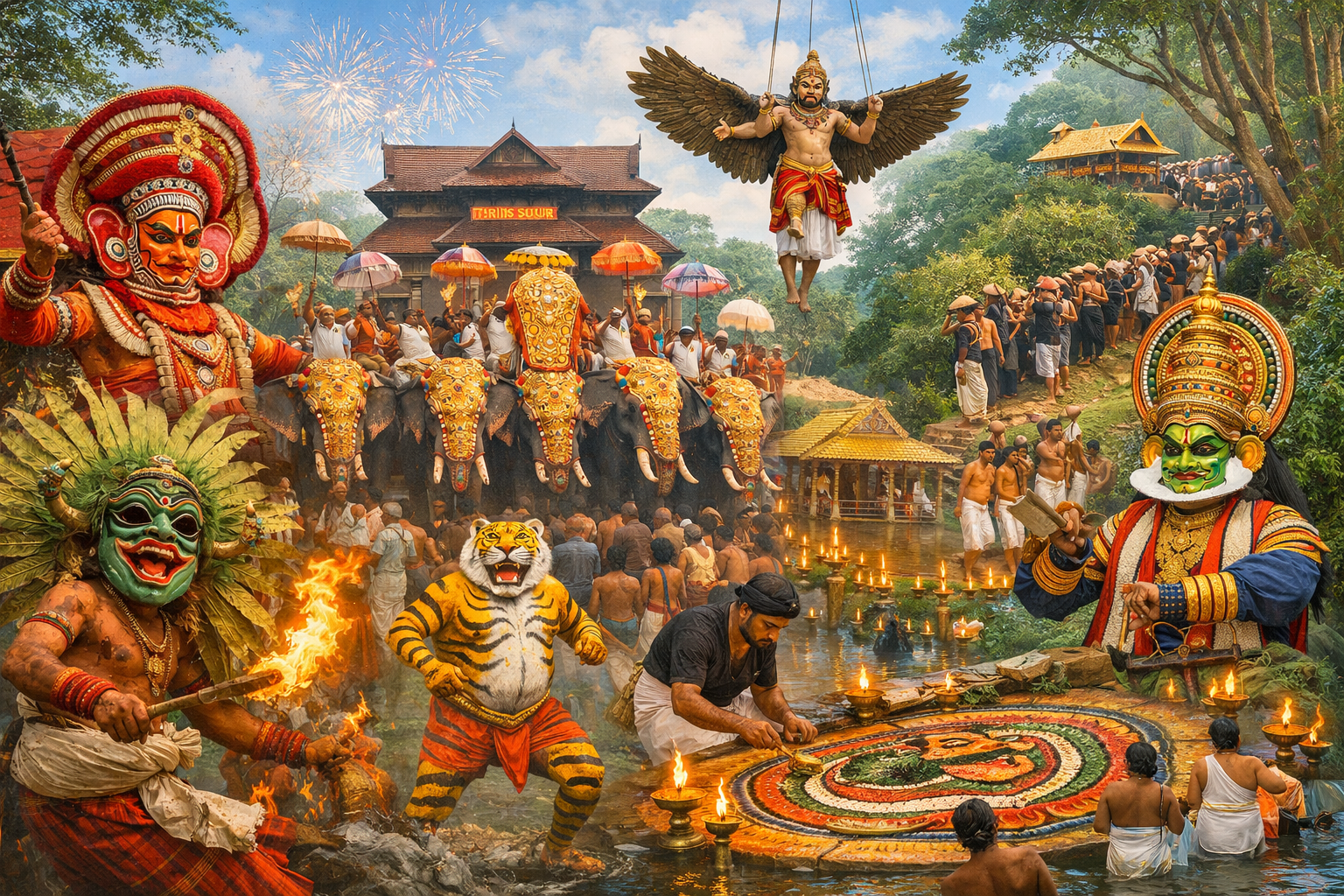
Theyyam is one of the most visually striking and spiritually intense folk rituals of Kerala, primarily practiced in the northern districts of Kannur and Kasaragod. It is not merely a performance, but a transformation, where the performer becomes the deity.
The origins of Theyyam are rooted in tribal traditions and ancient Dravidian worship systems. Over time, it integrated into temple culture, but retained its raw, community-driven essence. Unlike classical temple rituals, Theyyam is deeply accessible. The deity speaks directly to devotees, listens to grievances, and offers blessings.
The ritual begins with elaborate preparation. The performer undergoes hours of makeup and costume design, creating towering headgear and intricate facial patterns. Once the ritual starts, drums intensify, chants rise, and the performer enters a trance-like state.
Fire is a central element. Many Theyyam forms involve walking through flames or performing near blazing structures, symbolizing divine power and fearlessness.
What makes Theyyam unique is its egalitarian nature. Performers often come from marginalized communities, yet during the ritual, they are revered as gods.
Today, Theyyam has gained global attention, drawing tourists and researchers. Yet, at its core, it remains a deeply local, spiritual experience.
2. Kathakali Ritual Performance
Kathakali is often seen as a classical dance form, but its origins are deeply ritualistic. Traditionally performed in temple precincts, it was part of devotional storytelling rituals in Kerala.
The performances narrate episodes from epics like the Mahabharata and Ramayana, using a highly codified language of gestures, expressions, and movements.
Preparation itself is ritualistic. Artists undergo hours of makeup application, transforming into larger-than-life characters. The green face (pacha) represents noble heroes, while red and black signify villains and demonic forces.
The performance unfolds slowly, often overnight, accompanied by traditional percussion and vocal music.
What makes Kathakali unique is its fusion of art and ritual. It is not just entertainment, but a spiritual offering.
Today, it has gained international recognition, but its temple roots continue to define its essence.
3. Padayani
Padayani is a vibrant ritual art form performed in central Kerala, especially in Pathanamthitta district. It is associated with Bhadrakali temples and reflects folk ritual traditions in Kerala.
The ritual involves large, colorful masks known as kolams, representing deities and mythical beings. Performers wear these masks and dance in rhythmic patterns around temple grounds.
The origin of Padayani is linked to ancient rituals of appeasing deities and warding off evil forces.
Drums and chants create an intense atmosphere, while fire torches illuminate the night, adding a dramatic visual layer.
Padayani stands out for its visual symbolism and community participation, making it both a ritual and a cultural celebration.
4. Kummatti Kali
Kummatti Kali is a traditional ritual dance associated with the Onam festival, particularly in Thrissur.
Performers wear wooden masks and grass costumes, representing mythological characters. The dance is playful yet symbolic, reflecting themes of prosperity and celebration.
Children play a central role, making it a community-driven ritual.
Kummatti Kali stands out for its joyful energy and cultural continuity, especially during Onam.
5. Garudan Thookkam
Garudan Thookkam is one of the most intense and physically demanding temple rituals in Kerala. It is performed in Bhadrakali temples as an act of devotion.
The ritual involves performers being suspended by hooks attached to their skin, symbolizing sacrifice and devotion.
It is believed to reenact mythological stories related to Garuda, the eagle mount of Lord Vishnu.
The ritual is both shocking and deeply symbolic, representing endurance and faith.
6. Pulikali
Pulikali, or the “tiger dance,” is a popular Onam ritual in Thrissur.
Performers paint their bodies as tigers and dance through the streets, accompanied by drums.
The ritual celebrates strength, playfulness, and community spirit.
Pulikali stands out for its visual appeal and festive energy, making it a major tourist attraction.
7. Kalamezhuthu Pattu
Kalamezhuthu Pattu is a unique ritual combining art and music.
Intricate floor drawings of deities are created using colored powders, followed by devotional songs and rituals.
The art is temporary, symbolizing impermanence.
It stands out for its aesthetic and spiritual depth.
8. Arattu
Arattu is a temple ritual where idols are taken in procession and ceremonially bathed in water.
It symbolizes purification and renewal.
The procession includes elephants, music, and large crowds, making it both a spiritual and visual experience.
9. Thiruvathira
Thiruvathira is one of Kerala’s most graceful and culturally rooted rituals, closely associated with women, devotion, and traditional dance. Celebrated mainly during the Malayalam month of Dhanu, the ritual is linked to the worship of Lord Shiva and is especially significant among Hindu households in Kerala.
Women dressed in traditional Kerala attire gather around oil lamps, performing the elegant Thiruvathirakali dance in rhythmic circular movements accompanied by devotional songs. Beyond its religious meaning, Thiruvathira has evolved into a powerful cultural symbol of Kerala’s feminine traditions, community bonding, and classical artistic heritage.
10. Kavadiyattam
Kavadiyattam is a deeply spiritual ritual performance connected to the worship of Lord Murugan, especially prominent in temples across parts of Kerala and Tamil cultural regions. Devotees carry beautifully decorated kavadis on their shoulders as an act of devotion, penance, and fulfillment of vows.
The ritual is intense, energetic, and emotionally charged, often accompanied by traditional percussion instruments, chanting, and temple processions. In many places, Kavadiyattam becomes both a spiritual offering and a visually striking cultural event that reflects devotion, endurance, and collective faith.
Final Bow
The rituals of Kerala are not just traditions. They are living expressions of belief, identity, and history.
From fire rituals to forest pilgrimages, from masked dances to sacred art, each one tells a story.
And together, they make Kerala not just culturally rich,
but spiritually unforgettable.