Mohiniyattam
Dance of the enchantress
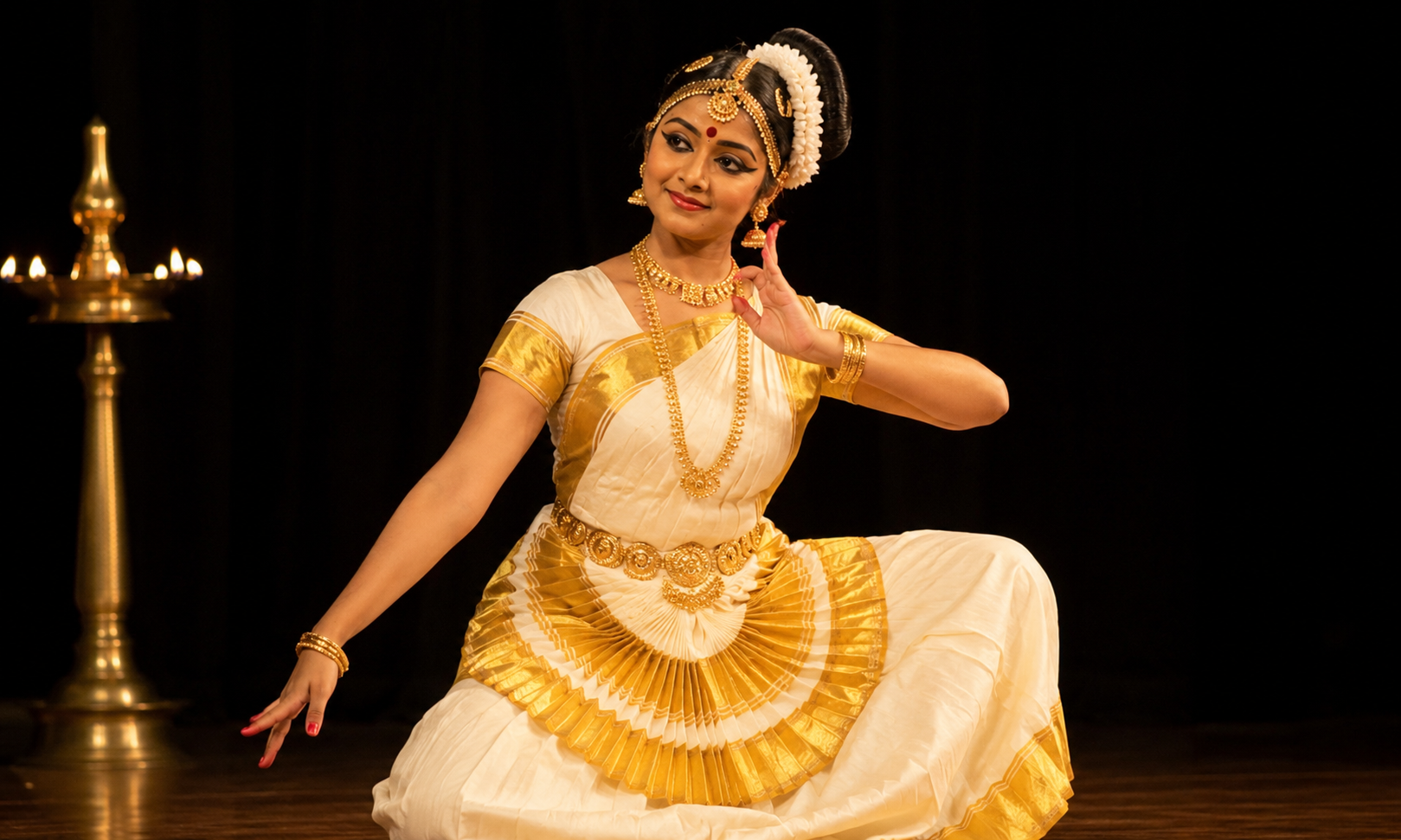
When the soft rhythm of classical music begins and a dancer slowly glides across the stage in a flowing white-and-gold costume, Mohiniyattam creates an atmosphere of calm beauty and elegance. Every movement feels gentle and natural. The eyes speak emotions, the hands tell stories, and the graceful swaying of the body resembles the movement of Kerala’s backwaters and coconut palms dancing in the breeze.
Mohiniyattam is one of the most beautiful forms of Indian classical dance and one of the greatest cultural treasures of Kerala. Known for its graceful movements, expressive storytelling, and feminine elegance, the dance reflects the artistic soul of Kerala’s culture and heritage.
Unlike energetic dance traditions filled with dramatic jumps and fast movements, Mohiniyattam moves gently and rhythmically. The performance feels peaceful, emotional, and deeply connected to devotion and storytelling.
Today, Mohiniyattam remains an important part of Kerala culture, performed at temples, cultural festivals, tourism programs, and classical art stages around the world. For visitors exploring Kerala’s artistic traditions, witnessing a live Mohiniyattam performance is an unforgettable experience.
What is Mohiniyattam?
Mohiniyattam is a classical dance form that originated in Kerala. It is known for its soft movements, expressive storytelling, and graceful style.
The name “Mohiniyattam” comes from two words:
- Mohini – the enchantress form of Lord Vishnu in Hindu mythology
- Attam – which means dance or rhythmic movement in Malayalam
According to Hindu mythology, Lord Vishnu took the form of Mohini, a beautiful enchantress, to protect goodness and restore balance in the universe. The dance form is inspired by this idea of beauty, grace, charm, and emotional expression.
Mohiniyattam is one of the eight recognized classical dance forms of India and represents Kerala’s feminine artistic tradition. Through movements, facial expressions, and hand gestures called mudras, dancers narrate stories from mythology, devotion, love, and human emotions.
What makes Mohiniyattam special is its simplicity and emotional depth. The dance does not try to overwhelm the audience with speed or spectacle. Instead, it slowly draws viewers into a world of rhythm, expression, and quiet beauty.
Origin and History
The roots of Mohiniyattam can be traced back to the ancient Sanskrit text Natya Shastra, one of India’s oldest treatises on performing arts. Over centuries, the dance evolved within Kerala’s temple and court traditions.
Mohiniyattam gained significant royal patronage during the reign of Maharaja Swathi Thirunal Rama Varma of Travancore in the 19th century. A great supporter of music and arts, he encouraged the development of classical dance and composed many songs that are still used in Mohiniyattam performances today.
The dance form flourished in temples and royal courts, where artists performed devotional and mythological themes before audiences.
However, during the colonial period under British rule, many traditional Indian art forms faced decline. Social changes and lack of patronage affected Mohiniyattam as well, pushing it toward near disappearance.
The revival of Mohiniyattam came largely through the efforts of poet and cultural visionary Vallathol Narayana Menon, who founded Kerala Kalamandalam in 1930. The institution played a major role in preserving and teaching Kerala’s classical arts.
Through dedicated teachers, dancers, and scholars, Mohiniyattam slowly regained recognition and respect. Today, it stands proudly as one of India’s most admired classical dance traditions.
Characteristics of Mohiniyattam
One of the defining qualities of Mohiniyattam is its graceful and gentle style. The dance belongs to the Lasya tradition, a style associated with softness, elegance, and feminine expression.
The movements are smooth and flowing rather than sharp or aggressive. Dancers sway gently from side to side, creating a rhythm that often reminds viewers of Kerala’s natural landscapes.
Many people compare Mohiniyattam to:
- The flowing movement of Kerala’s backwaters
- Coconut trees swaying in the breeze
- The gentle rhythm of ocean waves
Footwork in Mohiniyattam is soft and controlled. Instead of dramatic leaps, dancers move gracefully across the stage with subtle expressions and carefully balanced gestures.
Facial expressions play an important role in storytelling. Through eye movements, smiles, sadness, devotion, and emotion, dancers communicate the inner feelings of the characters they portray.
Mudras, or symbolic hand gestures, help narrate stories and emotions. Even without spoken words, audiences can understand the meaning through expression and movement.
This graceful simplicity is what gives Mohiniyattam its timeless beauty.
Costume and Appearance
The costume of Mohiniyattam is one of the most elegant elements of the dance form.
Dancers traditionally wear a white or cream-colored costume with golden borders, inspired by Kerala’s famous Kasavu saree tradition. The simplicity of the costume reflects Kerala’s cultural aesthetics and natural elegance.
The outfit usually includes:
- A pleated skirt
- Golden-bordered blouse and shawl
- Traditional Kerala jewelry
- Waist ornaments and necklaces
Hair is neatly tied into a bun on one side of the head and decorated with jasmine flowers, adding softness and fragrance to the appearance.
The makeup is graceful rather than dramatic. Red lips, darkened eyes, and expressive eye makeup help enhance facial expressions during storytelling.
Dancers also wear Chilanka, or ankle bells, which create rhythmic sounds that match the movements and music.
Together, the costume and appearance create a visual identity that is deeply connected to Kerala’s traditional beauty and cultural heritage.
Music and Instruments
Music in Mohiniyattam is calm, devotional, and emotionally expressive. The dance is strongly influenced by Carnatic classical music, one of South India’s major musical traditions.
Many songs used in performances are written in Manipravalam, a poetic blend of Sanskrit and Malayalam.
The music creates a peaceful atmosphere that supports the dancer’s expressions and storytelling.
Important instruments used in Mohiniyattam include:
- Mridangam – a classical percussion instrument
- Edakka – a traditional Kerala drum known for its melodic tone
- Veena – a string instrument associated with classical Indian music
- Flute – adding softness and melody
- Cymbals – maintaining rhythm
The slow rhythm and emotional depth of the music perfectly complement the graceful movements of the dance.
Mohiniyattam in Kerala Today
Today, Mohiniyattam continues to thrive across Kerala and beyond.
Performances are regularly held at temples, classical dance festivals, tourism programs, cultural centers, and international art events. Visitors to Kerala often experience Mohiniyattam performances in places like Kochi, Thiruvananthapuram, and Thrissur.
Institutions such as Kerala Kalamandalam remain central to preserving and teaching the dance tradition.
Mohiniyattam has also gained global recognition. Artists from different countries now study and perform the dance, helping spread Kerala’s cultural heritage worldwide.
Traditionally associated with female performers, Mohiniyattam today also includes talented male dancers who contribute to the art form’s evolution while respecting its classical roots.
Modern artists continue to experiment carefully with themes and choreography while preserving the graceful identity of the dance.
Cultural Importance
Mohiniyattam is much more than a stage performance. It is an important symbol of Kerala’s cultural identity and artistic heritage.
The dance preserves ancient storytelling traditions, devotional themes, music, poetry, and classical performance techniques that have been passed down for generations.
Its emphasis on feminine grace and emotional expression makes it unique among India’s classical dances. Through calm movements and storytelling, Mohiniyattam reflects values of beauty, patience, spirituality, and inner emotion.
For Kerala, Mohiniyattam represents pride in tradition and artistic excellence. It is one of the cultural treasures that connects modern audiences to the state’s rich historical and spiritual heritage.
For visitors and international audiences, experiencing Mohiniyattam offers a deeper understanding of Kerala beyond landscapes and tourism. It reveals the artistic soul of the region.
Conclusion
Mohiniyattam is not simply a dance. It is a flowing expression of Kerala’s history, devotion, grace, and cultural identity.
Every gentle movement, expressive glance, and rhythmic step carries centuries of tradition and storytelling. Like Kerala’s rivers, backwaters, and monsoon breeze, the dance moves with quiet elegance and emotional depth.
In a fast-moving world, Mohiniyattam reminds audiences of the beauty of patience, expression, and simplicity. It invites viewers not just to watch, but to feel.
For anyone exploring the cultural heart of Kerala, witnessing a live Mohiniyattam performance is an unforgettable experience, one that stays in memory long after the music fades.