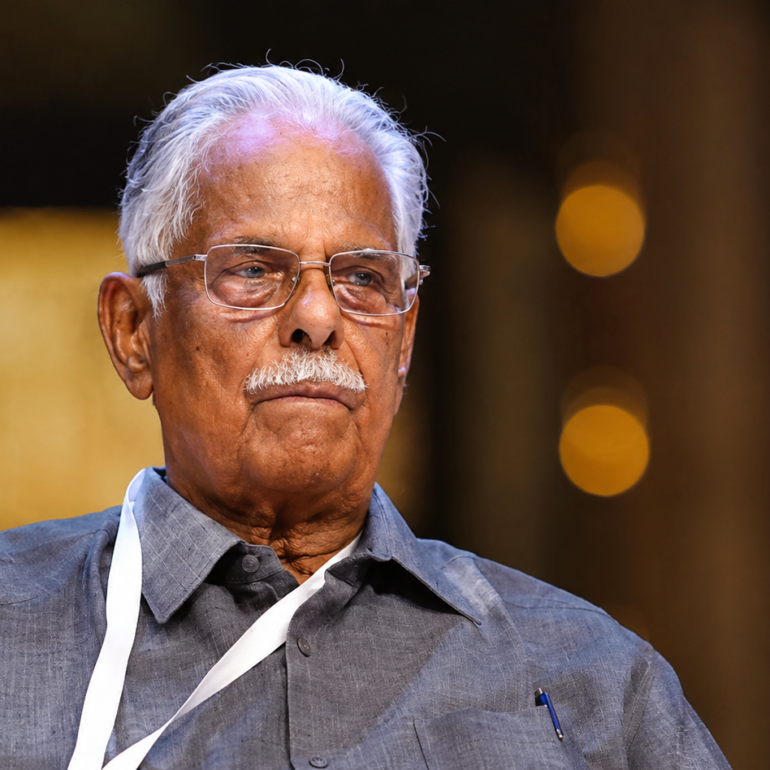
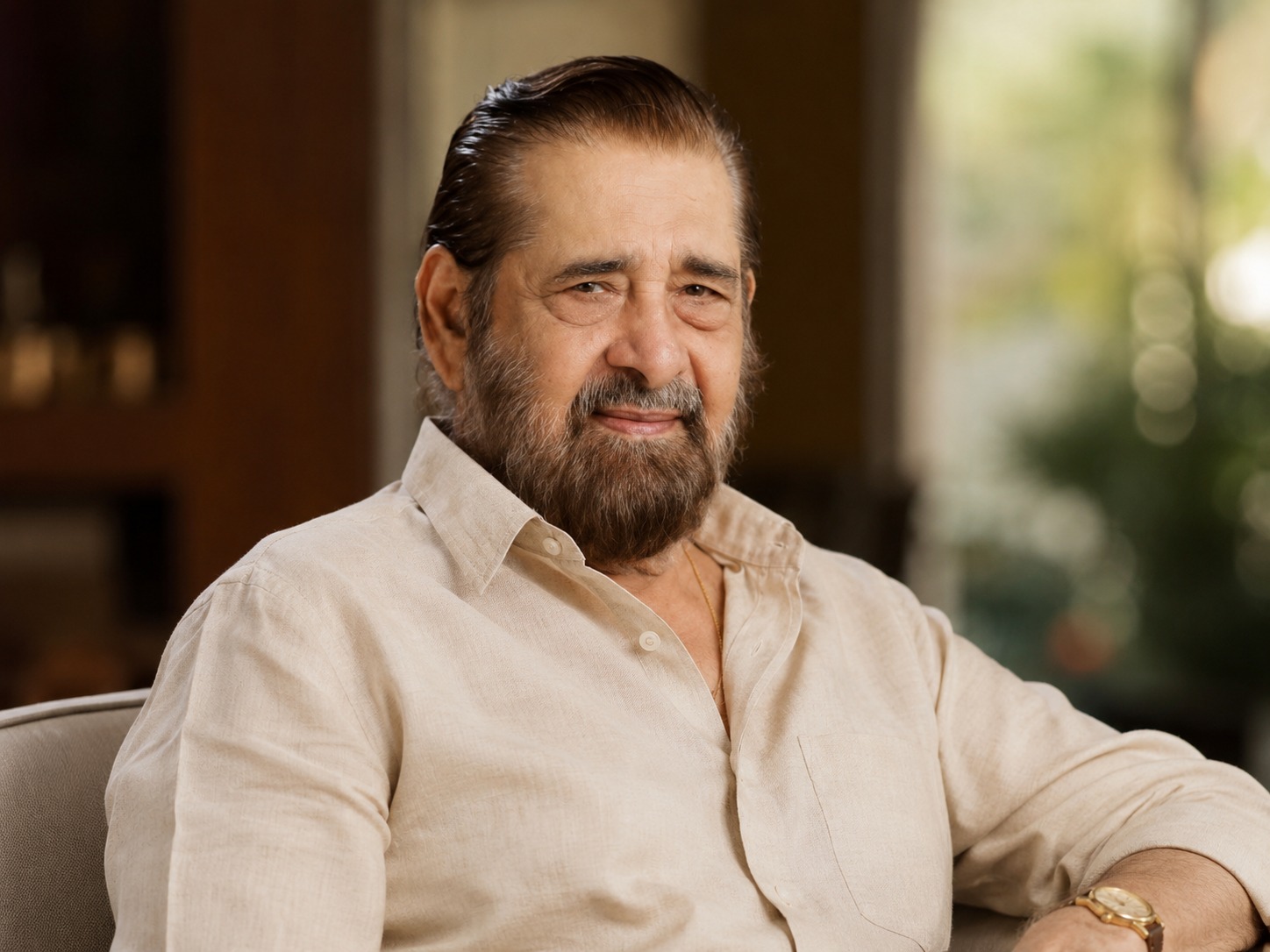
Madhu
Indian actor
Madhu, is an Indian actor, director, producer, former college lecturer and former film studio owner, who works in Malayalam cinema and a certain number of Hindi and Tamil films. He was a prominent lead actor during the 1960s, 1970s and 1980s and has acted in more than 400 films. He was born on 23 September 1933 at Gowreesapattom in the erstwhile Travancore. He did a pre-university degree at Mahatma Gandhi College and graduated in Hindi from University College. He did his postgraduation in Hindi from Banaras Hindu University (BHU).
Key Facts
Full Name: Madhavan Nair
Date of Birth: 23 September 1933
Birthplace: Gowreesapattom, Travancore
Occupation: Actor, Director, Producer, Lecturer, Studio Owner
Major Honors Padma Shri (2013), J. C. Daniel Award (2004)
There are certain faces in cinema that do not merely belong to films. They belong to memory, to language, to the emotional architecture of an entire culture. Madhu, born Madhavan Nair on 23 September 1933, remains one of those rare presences in Malayalam cinema. Long before the industry became globally celebrated for realism and literary depth, Madhu embodied those qualities with quiet conviction. In an era shaped by towering personalities like Prem Nazir and Sathyan, he carved his own space not through flamboyance, but through intelligence, restraint, and emotional precision. His performances carried the stillness of literature and the rhythm of lived experience.
Across more than four hundred films, Madhu evolved from actor to filmmaker, producer, studio owner, and cultural thinker. He moved effortlessly between commercial successes and parallel cinema, between haunting black-and-white classics and politically conscious storytelling. To speak about Madhu is not merely to discuss an actor’s career. It is to revisit the transformation of Malayalam cinema itself, from theatrical melodrama into a mature artistic language. Even today, decades after his rise, his screen presence retains an outstanding dignity that feels increasingly rare in modern cinema.
From Lecturer to Cinema Dreamer
Before Malayalam cinema discovered Madhu, he belonged to classrooms and books.
Born in Gowreesapattom in the erstwhile princely state of Travancore, Madhu grew up in an environment shaped by discipline, education, and cultural awareness. Kerala in the 1940s and 1950s was itself undergoing intellectual transformation. Literature, theatre, political consciousness, and social reform movements were deeply influencing public life. For a young man like Madhavan Nair, education was not merely a path toward employment. It became a way of understanding society.
He excelled academically and eventually worked as a college lecturer, teaching Hindi. Those who knew him during those years often described him as thoughtful, soft-spoken, and intensely observant. Yet somewhere beneath the stability of academic life lived another ambition, one connected to performance, storytelling, and theatre.
His involvement with drama gradually expanded his artistic horizons. The stage gave him something classrooms could not: emotional movement. Unlike many aspiring actors who entered cinema through glamour or financial ambition, Madhu’s entry was rooted in artistic curiosity.
A crucial turning point came through his association with the National School of Drama and theatre circles influenced by progressive cultural movements. These experiences exposed him to performance styles far removed from exaggerated commercial acting traditions common in Indian cinema during that period.
He was learning something essential: silence could be more powerful than spectacle.
Breaking Into Malayalam Cinema
When Ninamaninja Kalpadukal introduced Madhu to Malayalam audiences in the early 1960s, the industry was still heavily shaped by theatrical performance traditions. Acting often relied on dramatic gestures, heightened dialogue delivery, and emotional excess.
Madhu appeared different almost immediately.
His acting style was inward-looking, measured, and psychologically grounded. Instead of “performing” emotions loudly, he allowed them to emerge gradually through expression, posture, and pauses. It was a subtle shift, but an important one.
Malayalam cinema during the 1960s was entering a transitional phase. Audiences still adored heroic charisma, but there was also growing appetite for realism and literary adaptation. Madhu arrived at exactly the right moment.
Unlike some of his contemporaries, he did not cultivate a larger-than-life star image. He often played educated men, emotionally conflicted individuals, or characters carrying moral ambiguity. His screen presence conveyed intelligence. Viewers believed he had a life beyond the frame.
This quality helped him establish a unique identity in an industry already dominated by giants.
Chemmeen and the Rise of a Cultural Icon
If one film transformed Madhu into a national figure, it was Chemmeen.
Directed by Ramu Kariat and based on Chemmeen, the film was more than a commercial success. It altered how Indian cinema viewed Malayalam storytelling.
Released in 1965, Chemmeen carried the smell of the sea, the sorrow of forbidden love, and the realism of Kerala’s fishing communities. Its visual language felt startlingly authentic compared to much of mainstream Indian cinema at the time.
Madhu’s performance added emotional gravity to the film’s poetic realism. He brought restraint and humanity into a narrative already rich with folklore and tragedy.
When Chemmeen won the President’s Gold Medal, becoming the first South Indian film to receive the honor, Malayalam cinema suddenly entered national conversation in a new way. The industry was no longer viewed as regionally confined. It had announced artistic seriousness.
Around the same period, Madhu delivered memorable performances in films such as Bhargavi Nilayam, often considered Malayalam cinema’s first true horror classic. The film demonstrated his remarkable adaptability. He could move between realism and atmosphere without losing emotional credibility.
Films like Udhyogastha and Veettu Mrugam further reinforced his versatility. Whether portraying vulnerability, moral conflict, or quiet romance, Madhu rarely repeated himself mechanically.
The Actor Who Bridged Commercial and Parallel Cinema
Few actors in Indian cinema have navigated mainstream popularity and artistic cinema as fluidly as Madhu.
During the 1970s, Malayalam cinema began witnessing the emergence of parallel filmmaking movements influenced by realism, political awareness, and literary adaptation. Directors such as Adoor Gopalakrishnan and P. N. Menon were redefining cinematic language.
Madhu became one of the rare established stars willing to participate in these experiments.
Swayamvaram, directed by Adoor Gopalakrishnan, remains one of the most important milestones in Indian parallel cinema. The film stripped away commercial excess and embraced realism with uncompromising honesty.
Madhu’s performance was central to that transformation.
He understood stillness. He understood ordinary human disappointment. In Swayamvaram, he did not act like a movie star trying to appear realistic. He simply existed within the emotional texture of the story.
This ability made him deeply respected among filmmakers and critics while preserving his connection with mainstream audiences.
He became a bridge between two cinematic worlds often treated as opposites.
Madhu the Filmmaker and Visionary
Acting alone could not contain Madhu’s ambitions.
As director and producer, he explored themes that reflected social anxieties, emotional complexity, and moral tension. Films like Priya became notable for pushing Malayalam cinema toward more contemporary narrative styles.
His work behind the camera often carried the same qualities visible in his performances: restraint, seriousness, and emotional intelligence.
Madhu also established Uma Studio, an important infrastructure contribution to Malayalam cinema. At a time when the industry still struggled with technical limitations and resource constraints, studios mattered enormously. They created creative ecosystems where filmmakers, technicians, writers, and actors could collaborate.
His role as studio owner therefore extended beyond business. It represented institutional investment in Malayalam cinema’s future.
One of his most socially relevant films as filmmaker was Mini, which earned National recognition. The film reflected his continued interest in stories shaped by social realities rather than commercial formula.
Even as Malayalam cinema evolved across decades, Madhu retained intellectual curiosity. He was never trapped by nostalgia.
Beyond Malayalam Cinema
Long before “pan-Indian cinema” became fashionable terminology, Madhu had already crossed linguistic boundaries.
His appearance in Saat Hindustani connected him to the early career of Amitabh Bachchan. Though his Hindi film career remained selective, it demonstrated how Malayalam actors were beginning to participate in broader Indian cinema conversations.
He also appeared in Tamil films including Dharma Dorai.
At a time when regional industries often remained culturally isolated, Madhu represented Malayalam cinema with sophistication and credibility outside Kerala.
The Intellectual Face of Malayalam Cinema
Perhaps the most distinctive aspect of Madhu’s career was his deep relationship with literature.
Malayalam cinema has historically shared strong connections with literary culture, and Madhu became one of its most important interpreters. He portrayed characters drawn from the worlds of Vaikom Muhammad Basheer, Thakazhi Sivasankara Pillai, M. T. Vasudevan Nair, and Uroob with rare authenticity.
His theatre background and involvement with IPTA Kerala further shaped his artistic worldview. He approached cinema not merely as entertainment, but as cultural expression.
This intellectual seriousness distinguished him from many stars of his generation. Yet he never appeared inaccessible. Audiences trusted him because his performances remained emotionally human.
Personal Life and Human Grace
Behind the public figure existed a remarkably disciplined and private individual.
Madhu’s marriage to Jayalakshmi and his family life remained largely away from sensational publicity. Unlike many celebrities, he cultivated dignity through restraint rather than visibility.
Within the industry, he became known for professionalism, punctuality, and calmness. Younger actors frequently described him as courteous and encouraging. Even as generations changed and cinema transformed technologically, Madhu retained respect across ideological and stylistic divisions within Malayalam cinema.
There was something deeply old-world about him, a gentleness that survived despite decades inside a demanding industry.
Legacy: The Last Gentleman of a Golden Era
To revisit Madhu today is to revisit the evolution of Malayalam cinema itself.
He arrived during an era when the industry was searching for identity. He helped move acting away from theatrical excess toward emotional realism. He stood inside both commercial cinema and artistic experimentation without betraying either. He nurtured institutions, encouraged serious storytelling, and represented Malayalam cinema nationally long before global recognition arrived.
More importantly, he carried dignity into stardom.
In contemporary cinema culture dominated by speed, noise, and relentless visibility, Madhu’s legacy feels almost radical in its quietness. He never needed spectacle to command attention. His intelligence, restraint, and emotional honesty were enough.
That may ultimately explain why generations continue returning to his films. They do not merely preserve nostalgia. They preserve a philosophy of cinema itself, one rooted in humanity, literature, and observation.
And somewhere inside the vast history of Malayalam cinema, among fishermen, revolutionaries, haunted mansions, lovers, teachers, and dreamers, Madhu still remains what he always was: the outstanding gentleman who gave Malayalam cinema one of its most graceful souls.
Accolades
Civilian Awards
- 2013 Padma Shri
National Film Award
- 1995 National Film Award for Best Film on Family Welfare for Mini (Produced by Madhu, Directed by P. Chandrakumar)
Kerala State Film Award
- 2004 J. C. Daniel Award for Lifetime Achievement from the Government of Kerala.
- 1995 Kerala State Film Award for Best Children’s Film for Mini (Produced by Madhu, Directed by P. Chandrakumar)
- 1992 Kerala State Film Award (Special Jury Award) in 1992 for Kudumbasametham
- 1980 Kerala State Film Award (Special Jury Award) in 1980 for multiple films
- 1971 Kerala State Film Award for Second Best Film for Sindooracheppu (Directed by Madhu)
- 1970 Kerala State Film Award for Second Best Film for Priya (Directed by Madhu) in 1970
Kerala Film Critics Association Awards
- 1994 Chalachitra Ratnam Award for Lifetime Achievement
- 1979 Kerala Film Critics Association Award for Best Actor for Idavazhiyile Poocha Minda Poocha
- 1977 Kerala Film Critics Association Award for Best Actor for Yuddha Kandam, Itha Ivide Vare
Filmfare Awards South
- 1994 Filmfare Lifetime Achievement Award – South
- 1977 Filmfare Award for Best Actor – Malayalam – Yuddha Kaandam
- 1976 Filmfare Award for Best Actor – Malayalam – Theekkanal
- 1972 Filmfare Award for Best Actor – Malayalam – Swayamvaram (inaugural winner)
Other awards
- 2013 Honored by the President of India during 100 years of Indian Cinema celebration held at Chennai
- 2013 Honour from the Government of Kerala for completing 5 decades in Malayalam film industry
- 2013 Honoured by AMMA (Association of Malayalam Movie Artists) for his contributions to the Malayalam film industry, spanning over 50 years
- 2013 Honour from MACTA on completion of 50 years in Malayalam Cinema
- Award from Thunchath Ezhuthachan Malayalam University, in recognition of his contributions to Malayalam cinema
- MACTA Legends Honour Award
- Sathyan Award 2012
- Prem Nazir Foundation Award
- Ramu Kariat Award
- Dr. Sukumar Azhikode Award
- Thoppil Bhasi Smaraka Prathibha Puraskaram
- P. Bhaskaran Foundation Award
- Thilakan Foundation Award
- Narendra Prasad Puraskaram
- Bahadoor Foundation Award in 2005
- Muthukulam Raghavan Pillai Memorial Award
- Asianet Film Awards 2002 – Best Lifetime Achievement Award
- Malayalam Puraskaram 1199 – Lifetime Achievement Award by Malayala Puraskara Samithi in 2024