Koodiyattam
Classical temple theatre performance
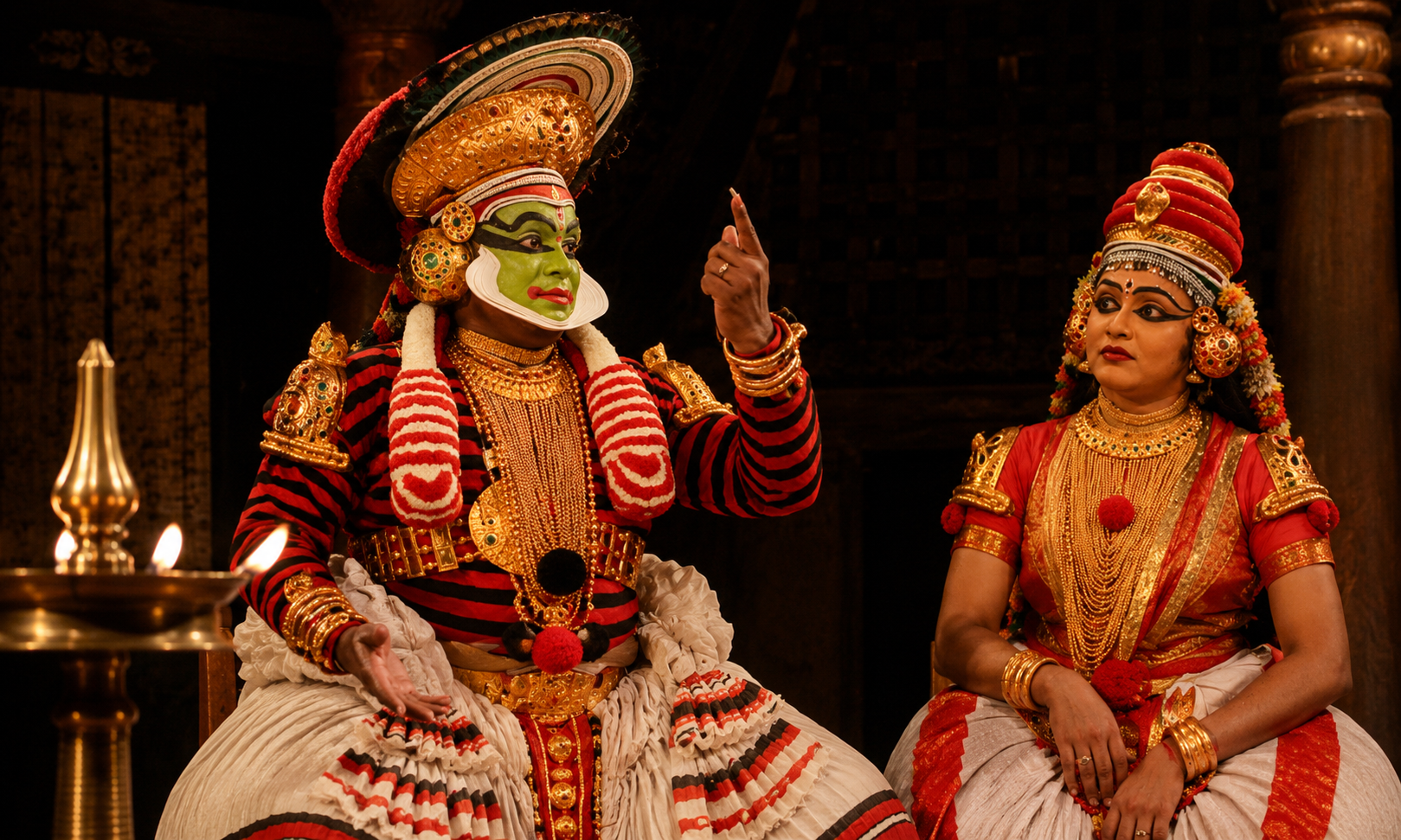
Inside a dimly lit koothambalam, the traditional temple theatre of Kerala, rows of oil lamps flicker against wooden pillars carved centuries ago. The deep rhythm of the mizhavu drum slowly fills the sacred space. A performer steps onto the stage with elaborate makeup, expressive eyes, and controlled movements that seem almost timeless. Every glance, gesture, and expression unfolds slowly, carrying layers of meaning and emotion.
This is Koodiyattam, one of Kerala’s oldest and most respected performing arts. Considered one of the world’s oldest surviving Sanskrit theatre traditions, Koodiyattam is a rare art form where theatre, ritual, spirituality, storytelling, music, and classical acting come together in extraordinary detail.
For more than a thousand years, Koodiyattam survived inside temple theatres in Kerala, preserved by generations of dedicated artists and communities. Today, it is recognized globally as a priceless cultural treasure and was officially declared by UNESCO as a Masterpiece of the Oral and Intangible Heritage of Humanity.
More than just a stage performance, Koodiyattam is a living bridge connecting modern Kerala to its ancient cultural and spiritual roots.
What is Koodiyattam?
The word “Koodiyattam” comes from two Malayalam words that together mean “combined acting” or “acting together.” The name reflects the collaborative nature of the performance, where actors, musicians, and storytellers work together to bring ancient Sanskrit dramas to life.
Koodiyattam combines elements of classical Sanskrit theatre with older koothu traditions that existed in South India for centuries. It is deeply rooted in Kerala’s temple culture and was traditionally performed as a sacred offering inside temple theatres.
Unlike modern theatre, Koodiyattam moves slowly and with intense detail. Performers use facial expressions, eye movements, mudras (hand gestures), music, and ritualistic acting to tell stories from mythology and classical Sanskrit literature.
The performances often explore themes from Hindu epics and ancient dramas, focusing on emotion, philosophy, devotion, and human conflict.
Koodiyattam is officially recognized by UNESCO as a Masterpiece of the Oral and Intangible Heritage of Humanity, highlighting its global cultural importance and its role as one of humanity’s oldest living theatre traditions.
History and Origin
The roots of Koodiyattam are linked to ancient Sanskrit theatre traditions described in the Natya Shastra, one of India’s oldest texts on performing arts. At the same time, the art form also carries influences from older koothu traditions mentioned in Sangam literature from South India.
Over centuries, Koodiyattam developed within Kerala’s temple culture and became a highly refined performance tradition.
One of the most important figures associated with the development of Koodiyattam was King Kulasekhara Varma, a medieval ruler believed to have introduced important reforms and performance structures that shaped the art form into its present style.
Traditional Sanskrit plays performed in Koodiyattam include classics such as:
- Subhadradhananjayam
- Tapatisamvarana
- Nagananda
- Abhiseka
These performances were not meant for quick entertainment. They were deeply spiritual and artistic experiences that unfolded slowly over several days.
For centuries, Koodiyattam survived mainly inside temple theatres, protected and preserved by hereditary performer communities who treated the art as both sacred duty and cultural heritage.
Where Koodiyattam is Performed
Traditionally, Koodiyattam performances take place inside the koothambalam, a specially designed temple theatre unique to Kerala.
Koothambalams are sacred performance spaces built according to ancient architectural principles. Constructed mainly from wood with sloping roofs and beautifully carved interiors, they create an atmosphere that feels both spiritual and intimate.
The glow of oil lamps, the sound of drums, and the quiet concentration of the audience make a Koodiyattam performance feel almost meditative.
Several places in Kerala remain closely associated with Koodiyattam traditions, including:
- Irinjalakuda
- Thrissur
- Thiruvananthapuram
- Moozhikkulam
Today, cultural institutions and heritage organizations also organize public performances outside temples to help preserve and promote the art form for wider audiences.
Performance Style and Acting
One of the most fascinating aspects of Koodiyattam is its acting style. The performances are highly detailed, emotionally intense, and extremely expressive.
Performers use:
- Powerful eye movements
- Facial expressions
- Mudras (symbolic hand gestures)
- Controlled body movements
Every emotion is explored slowly and deeply. A single scene or emotional moment may take several minutes or even hours to unfold fully.
Koodiyattam performances traditionally follow a structured format:
- Purappadu
The introductory stage where the character first appears and establishes mood and presence.
- Nirvahanam
A detailed narrative section where the character explains past events and emotional background.
- Main Performance
The central dramatic portion where the story progresses fully.
Unlike modern theatre, Koodiyattam does not rush storytelling. The audience is invited to experience emotion, psychology, symbolism, and character depth in extraordinary detail.
Many traditional performances continue over multiple days, making Koodiyattam one of the most immersive theatre experiences in the world.
Music, Makeup, and Costumes
Music plays a central role in creating the emotional atmosphere of Koodiyattam.
The most important instrument is the mizhavu, a large copper drum traditionally played by members of the Nambiar community. Its deep and rhythmic sound controls dramatic tension and emotional intensity during performances.
Other instruments include:
- Edakka
- Kuzhithalam (metal cymbals)
The costumes and makeup in Koodiyattam are elaborate yet symbolic. Different facial colors and designs represent emotional qualities, character types, and dramatic moods.
Performers wear traditional ornaments, layered costumes, and carefully designed makeup that enhances facial expressions visible even from a distance.
Combined with oil lamp lighting inside the koothambalam, the visual experience becomes deeply theatrical and almost mystical.
Legendary Artists and Revival
Several legendary artists played a crucial role in preserving and reviving Koodiyattam during the modern era.
Among them, Māni Mādhava Chākyār is regarded as one of the greatest masters of the art form. He was instrumental in bringing Koodiyattam outside temple spaces for the first time, introducing it to wider audiences across India and internationally.
His performances demonstrated that Koodiyattam was not only a sacred temple tradition but also one of the world’s great theatre arts.
Other major artists include:
- Ammannur Madhava Chakyar
- Kapila Venu
Institutions that contributed significantly to preservation and revival include:
- Nepathya
- Margi
- Natanakairali
These organizations continue to train artists, organize performances, and preserve Kerala’s ancient theatre traditions.
UNESCO Recognition and Preservation
In 2001, UNESCO officially recognized Koodiyattam as a Masterpiece of the Oral and Intangible Heritage of Humanity. This recognition brought international attention to the importance of preserving the art form.
Despite this recognition, Koodiyattam still faces several challenges today.
Traditional performances require years of training, deep knowledge of Sanskrit literature, and immense dedication. Financial difficulties, changing entertainment habits, and declining audiences have made survival difficult for many artists.
However, efforts to preserve Koodiyattam continue through cultural institutions, festivals, tourism programs, and dedicated teachers who train younger generations.
Many schools and heritage organizations now introduce students and visitors to Koodiyattam through workshops, demonstrations, and shorter performances designed for modern audiences.
Preserving Koodiyattam is important not only for Kerala, but for the world’s cultural heritage as a whole.
Conclusion
Koodiyattam is not merely a performance tradition. It is a living bridge connecting modern Kerala to ancient India’s artistic, spiritual, and theatrical heritage.
Inside the sacred atmosphere of a koothambalam, every expression, drumbeat, and gesture carries centuries of memory and storytelling. The art form reminds audiences that theatre can be slow, meditative, emotional, and deeply human.
At a time when much of the world moves quickly, Koodiyattam invites people to pause, observe, and experience emotion with patience and depth.
For travelers and culture lovers visiting Kerala, witnessing a live Koodiyattam performance is far more than watching a play. It is an opportunity to step into one of the oldest surviving theatre traditions on Earth and experience the timeless spirit of Kerala’s cultural soul.