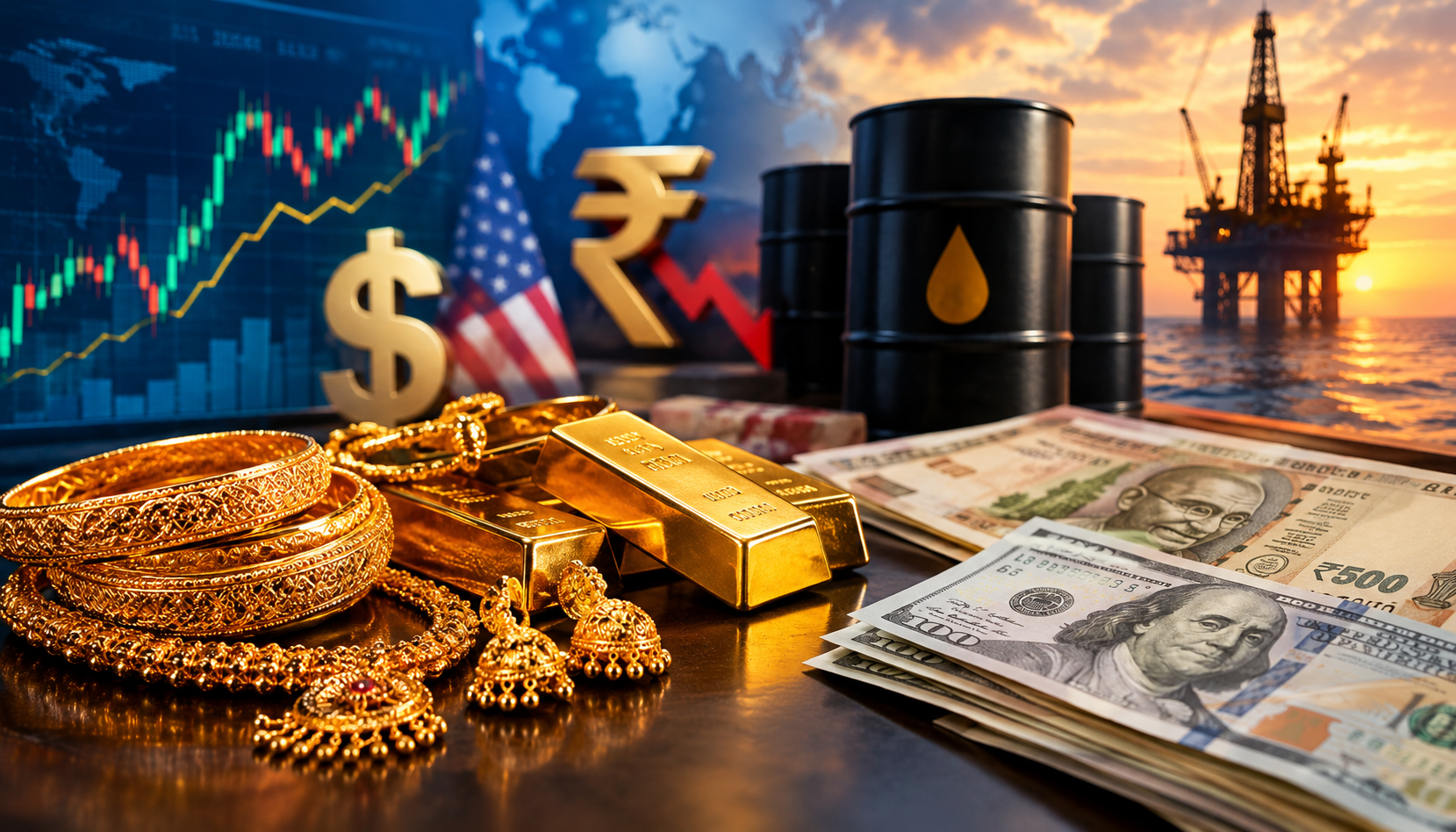
Gold prices in Kerala are being shaped by a combination of geopolitical tensions, crude oil prices, currency movements and interest-rate expectations, rather than by the Middle East conflict alone, according to Kerala Gold and Silver Merchants Association General Secretary Adv. S. Abdul Nazer.
The renewed escalation of tensions in the Middle East has brought concerns over global oil supplies back to the forefront. Brent crude has moved close to the $100-a-barrel mark, adding another layer of uncertainty to an already volatile global economic environment.
Higher oil prices can push up costs across transportation, manufacturing and power generation, raising concerns about a fresh acceleration in inflation. This, in turn, could influence the monetary policy outlook in the United States and the direction of global financial markets.
For gold, the impact is more complicated.
Geopolitical uncertainty traditionally supports demand for gold as investors look for relatively defensive assets. However, a sustained rise in oil prices could keep inflation elevated and reduce expectations of near-term interest-rate cuts by the US Federal Reserve. Higher interest rates tend to weigh on gold because the metal does not generate interest income.
This creates competing forces in the international gold market. While geopolitical risks can strengthen demand for gold, higher inflation and elevated interest rates can exert downward pressure on prices. The result has been increased volatility in international bullion markets.
On September 8, spot gold was around $4,385 an ounce, while crude oil was trading at approximately $99.46 a barrel, highlighting the close interaction between commodity markets and broader economic expectations.
Rupee adds another layer of pressure
For Indian consumers, global gold prices tell only part of the story. The rupee-dollar exchange rate is equally important because India relies heavily on imported crude oil and gold.
A rise in crude prices increases India’s dollar requirements for energy imports, potentially putting additional pressure on the rupee. With the rupee moving above ₹95 against the US dollar, currency depreciation can add to the domestic cost of imported gold.
As a result, even if international gold prices ease, Indian gold prices may not decline by the same extent if the rupee weakens against the dollar.
Why gold did not immediately surge when the conflict began
The assumption that gold will automatically rise whenever a war begins does not always hold true. The initial market response to the 2026 Middle East conflict was weaker than might typically be expected from a traditional safe-haven asset.
The market reaction has evolved as the conflict has continued. The focus has increasingly shifted from geopolitical risk alone to the potential impact on oil supplies, inflation, interest rates, bond yields and currencies.
According to Abdul Nazer, this marks a significant change from the market environment six months ago. What was initially viewed primarily as a geopolitical crisis has developed into a broader economic risk involving energy supplies, inflation and monetary policy.
For Kerala’s gold market, therefore, the direction of prices will depend on several interconnected variables. Middle East tensions remain important, but crude oil, the US dollar, the rupee, US interest rates and global bond yields are now equally significant in determining where gold prices head next.